

Your car may be burning oil if the oil level drops with no visible leaks and you notice blue smoke, oily tailpipe residue, or fouled spark plugs; a loss of about 1 quart every 1,000 to 2,000 miles is worth investigating. Let that continue, and you can damage catalytic converters, foul sensors, and end up with low-oil engine wear. This guide shows how to separate burning oil from leaks and points you to seals, rings, or PCV faults based on the symptoms.
Start with a simple sequence: verify the dipstick drop, look for external leak evidence, observe when the smoke appears, inspect plugs and the PCV path, then move to compression and leak-down testing if the pattern points to internal oil loss.
Burning oil or leaking oil?
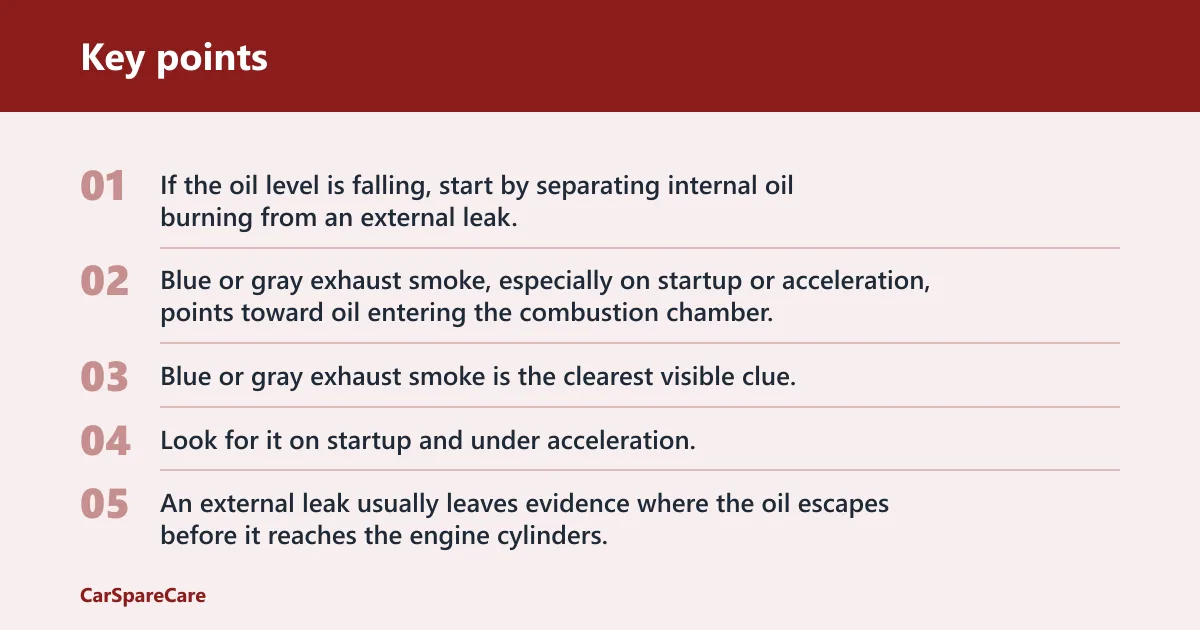

If the oil level is falling, start by separating internal oil burning from an external leak. Blue or gray exhaust smoke, especially on startup or acceleration, points toward oil entering the combustion chamber. A wet engine, a fresh drip under the car, or oily residue around the pan, filter, valve cover, or drain plug points more toward a leak.
What visible smoke points to internal oil burning
Blue or gray exhaust smoke is the clearest visible clue. Look for it on startup and under acceleration. A brief puff after an overnight park may point to valve stem seals, while smoke that keeps returning during hard acceleration more often points to ring wear or another internal fault. Timing tells you more than smoke alone.
What signs point to an external leak instead
An external leak usually leaves evidence where the oil escapes before it reaches the engine cylinders. Look for drips on the driveway, wet areas around the oil pan gasket, valve cover gasket, front or rear crank seals, oil filter housing, or drain plug. A burnt-oil smell without exhaust smoke can also come from oil dripping onto hot parts.
Why the dipstick matters before you chase repairs
The engine oil dipstick tells you whether the car is actually losing oil, not just showing a smell or a stain. Check the oil on level ground after the engine has sat long enough for oil to drain back to the sump. A low level with no puddle nearby raises suspicion for internal oil loss, but it still does not prove the oil is burning rather than leaking slowly.
| Symptom pattern | Most likely cause | Next check |
|---|---|---|
| Brief blue smoke after overnight parking | Valve stem seals | Watch a cold start after sitting overnight; see whether smoke clears within about 30–60 seconds. |
| Blue smoke under hard acceleration | Piston rings | Check for continuous oil use, then book a compression test. |
| Burning-oil smell with no visible smoke | Oil leak onto hot exhaust parts | Inspect the valve cover area, oil filter area, and underbody for wet oil. |
| Low dipstick level with no puddle | Internal oil consumption or a slow leak | Clean the engine, recheck after a few days, and look for fresh seepage plus smoke timing. |
| Oil-fouled spark plugs on one or two cylinders | Valve seals or ring wear in those cylinders | Note which cylinders are affected and follow with compression testing. |
| Rough idle or misfire with oily plugs | Oil entering the combustion chamber | Scan for misfire codes and inspect plugs, coils, and compression. |
| Smoke after idling at a light or in a driveway | Valve stem seals or PCV-related oil pull into the intake | Rev the engine lightly after idle and see whether smoke appears on tip-in. |
| Used-car history shows top-ups and cold-start smoke | Existing oil consumption problem | Review service records and inspect for overnight smoke before buying. |
Say your sedan sits overnight, then throws a one-second blue puff on the first start and clears right away. That pattern may fit valve stem seals more closely than ring wear, especially if the level drops slowly and there is no drip under the car. The next check is a cold start after an overnight park.
Suppose a pickup smokes blue only when merging hard onto the highway, then quiets down at cruise. That pattern leans more toward ring wear or a crankcase ventilation problem than a simple external leak. The next check is oil level, then a mechanic diagnostic if the smoke repeats under load.
How to check your oil level correctly
Check the oil level on level ground after the engine has had time to settle. A reading taken too soon after shutdown can mislead you. The goal is to learn whether the level is truly dropping between checks, and whether the loss is fast enough to justify a repair visit.
-
Park on level ground.
Stop the car on a flat surface and leave it there. A slope changes where the oil pools and can distort the dipstick reading. -
Let the oil settle.
Wait several minutes after shutdown so oil drains back to the sump. This gives a more stable reading and avoids confusing a temporary high or low mark. -
Pull and wipe the dipstick.
Remove the engine oil dipstick, wipe it clean, reinsert it fully, then pull it out again. Read both sides if the markings are hard to see. -
Note the exact level.
Record whether it is near full, halfway, or below the minimum mark. A low reading without any puddle under the car points you toward internal consumption or a slow leak that may not reach the ground. -
Top up only after documenting.
Add the correct oil grade only after you have noted the level and symptom pattern. Do not use additives first; they can hide the real source of the problem.
A fast drop matters because serious ring wear can drive oil use near one quart per 1,000 to 2,000 miles. That is not a normal amount for many engines. If the level falls that quickly, or if the low light returns soon after a top-up, the car needs a proper diagnostic check.
What a fast drop in level means
Rapid loss with no puddle usually means the oil is going somewhere inside the engine or exhaust system. Blue smoke, oily plug deposits, and reduced engine performance make that more likely. A leak can still be present, but a fast drop without visible dripping deserves attention sooner rather than later.
What to note before you top up
Write down the mileage, the amount added, the smoke timing, and any smell or misfire. Those details help separate a cold-start seal issue from a load-related ring issue or a PCV fault. If you skip the notes, the engine may look fine after the top-up while the underlying cause keeps getting worse.
What does burning oil smell like?
Burning oil often smells like hot, acrid oil rather than raw gasoline. You may notice it in the cabin, outside the car, or after idling in traffic. Smell by itself does not prove internal oil burning, because oil dripping onto hot exhaust parts can create the same odor without any visible exhaust smoke.
Smell without smoke
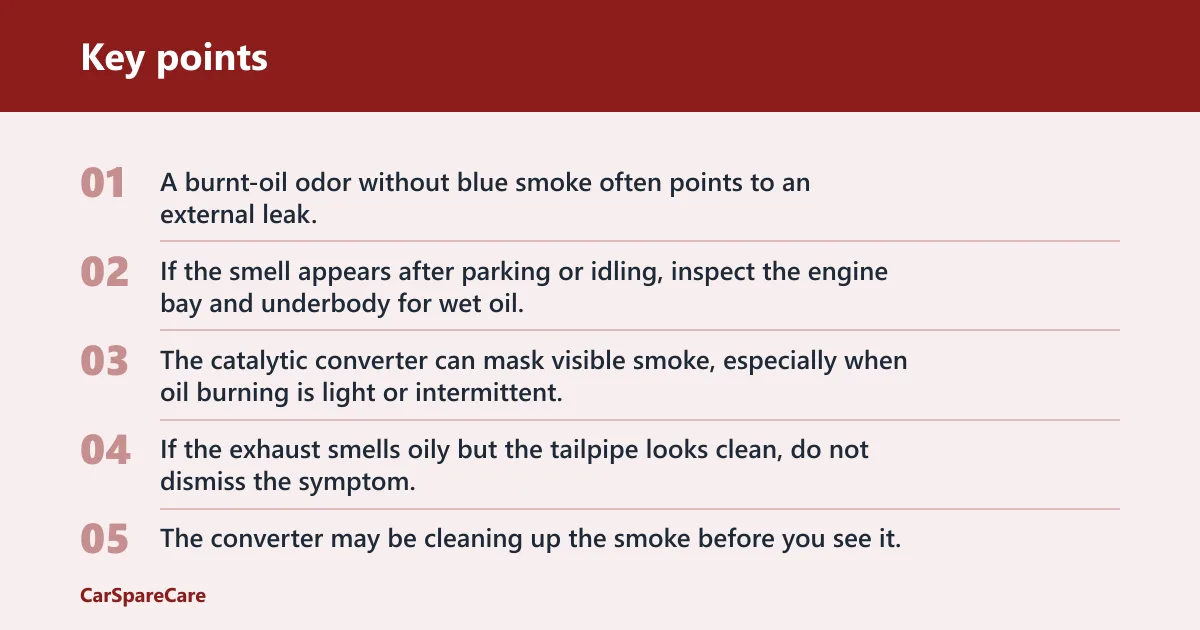
A burnt-oil odor without blue smoke often points to an external leak. Oil can land on the exhaust manifold, turbo housing, or other hot surfaces and burn off before you ever see smoke out the tailpipe. If the smell appears after parking or idling, inspect the engine bay and underbody for wet oil.
Why the catalytic converter can hide smoke
The catalytic converter can mask visible smoke, especially when oil burning is light or intermittent. It can also be damaged by long-term oil burning. If the exhaust smells oily but the tailpipe looks clean, do not dismiss the symptom. The converter may be cleaning up the smoke before you see it.
When a burnt-oil odor means a leak onto hot parts
If the smell is strongest with the hood open or after a short drive, check for seepage above the exhaust path. Valve cover gaskets, oil pressure switches, and filter housings are common places for oil to drip onto hot surfaces. That problem can smell serious even when the engine is not burning oil internally.
Which parts usually cause oil burning?
The most common internal causes are valve stem seals, piston rings, and a faulty PCV valve. Spark plugs can help narrow the problem by showing which cylinder is affected. Visual symptoms tell you where to start; tests tell you which part is actually at fault.
Valve stem seals
Valve stem seals can harden, shrink, or crack with age and heat cycles. They often cause cold-start blue smoke after overnight parking because oil pools above the valves while the engine sits. A brief puff that clears quickly fits this pattern well.
Piston rings
Piston rings seal the combustion chamber. When they wear, oil can enter the chamber during running, which often creates continuous oil consumption and smoke under acceleration. If the smoke is load-related and the oil level falls quickly, ring wear becomes more likely.
PCV valve
The PCV valve, or Positive Crankcase Ventilation valve, manages crankcase pressure. A malfunctioning PCV valve can create pressure imbalance that forces oil into the intake or past seals. That can mimic ring or seal problems, so it should be checked before anyone assumes the engine needs major internal work.
Spark plugs and cylinder clues
Spark plugs can show oily or fouled deposits and help identify the affected cylinders. One oily plug may point to a more localized problem, while several oily plugs may suggest broader oil entry. Reduced engine performance and rough idle can follow when the plugs start firing through oil fouling.
-
Inspect the plugs carefully.
Remove the spark plugs and look for wet oil, ash, or heavy black fouling. Note whether the problem is one cylinder or several, because that pattern helps separate a local seal issue from wider ring wear. -
Check the intake and PCV path.
Look for oil pooling in the intake tube, throttle body, or hose leading from the PCV system. Oil in those areas supports a ventilation fault rather than a simple tailpipe leak. -
Book a compression test.
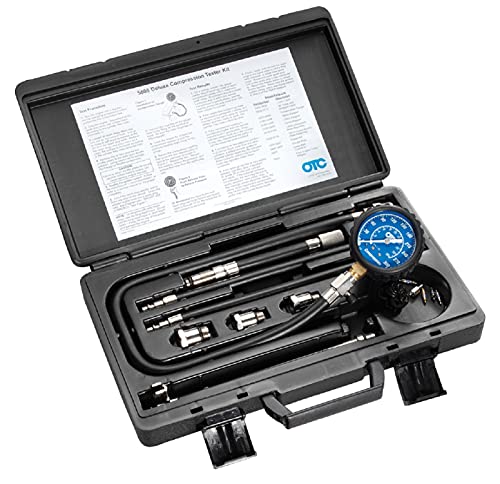
A compression test helps distinguish ring wear from seal problems. Low or uneven compression points more strongly to ring or cylinder wear, while a normal compression reading can push attention toward valve stem seals or PCV-related oil entry. -
Follow with leak-down testing.
A leak-down test is more specific than visual symptoms alone and helps confirm where compression loss is occurring. It can point toward rings, valves, or another sealing problem that a glance at the exhaust cannot confirm.
One common first-timer mistake is to add a bottle of oil treatment before checking the plugs or ventilation system. That can delay the real diagnosis and sometimes make the evidence harder to read later. Start with the pattern, then the test, then the repair decision.
Used-car oil checks before you buy
A used-car pre-purchase inspection should focus on oil consumption history and smoke patterns. Ask for service records, check whether the seller has been topping up oil between changes, and watch the cold start. A car that looks fine after a warm restart can still smoke on the next overnight start.
Cold-start smoke patterns
Ask to see the engine start after sitting long enough to cool down. Blue smoke that appears right away and clears quickly points toward valve stem seals more than a leak. Smoke that shows up under acceleration, or keeps returning after warm-up, raises the odds of ring wear or a PCV issue.
Service records and oil-top-up history
Look for repeated top-offs between oil changes, shorter-than-normal oil change intervals, or notes about low oil warnings. A seller who cannot explain the oil usage history should trigger more scrutiny, not less. Service records will not diagnose the fault, but they can reveal whether the problem has been ongoing.
What to ask the seller
Ask when the oil level was last checked, how much oil was added, and whether the car ever smoked on startup or while driving. Also ask whether the catalytic converter, spark plugs, or PCV valve have been replaced recently. Those answers help you decide whether to budget for diagnostics or walk away.
Frequently asked questions
How to tell if your car is burning oil while driving
Look for blue or gray exhaust smoke during acceleration, a burning-oil smell, reduced engine performance, and a falling dipstick level. Smoke that appears under load points more toward internal oil burning than a simple leak. If the smoke is brief at startup instead, valve stem seals become more likely.
How to tell if your car is burning or leaking oil
Burning oil usually shows up as blue smoke, oily plugs, or smoke under acceleration or after idling. A leak usually leaves wet engine parts or drips on the ground. If you smell oil but see no smoke, inspect hot surfaces, because oil can leak onto exhaust parts and burn there.
What to do if a car is burning oil
Check the level, document the smoke pattern, inspect for leaks, and avoid adding additives before the cause is known. If the smoke is repeatable, the level drops quickly, or the engine runs rough, book a mechanic for compression and leak-down testing. Do not wait for the catalytic converter to fail.
Can a mechanic tell if a car is burning oil?
A mechanic can usually narrow it down with symptoms plus tests, but not from one sign alone. Compression testing helps separate ring wear from seal problems, and leak-down testing can confirm where compression loss is occurring. Spark plug condition, PCV operation, and service history add useful context.

Hi, I’m Melvin, an automobile engineer with extensive experience in automobile equipment. I currently work for a local automobile firm, where I specialize in the car parts industry. I’ve had the opportunity to collaborate with seasoned inspectors, gaining invaluable hands-on experience that goes beyond just theory.
My passion for automotive care started at a young age, which led me to create CarSpareCare. Through CarSpareCare, I share the knowledge and skills I’ve acquired over the years to help others navigate the world of car maintenance and repairs.
My goal is to provide practical tutorials, essential safety advice, and the latest industry insights so that anyone—whether a beginner or an expert—can confidently tackle their automotive projects.

