
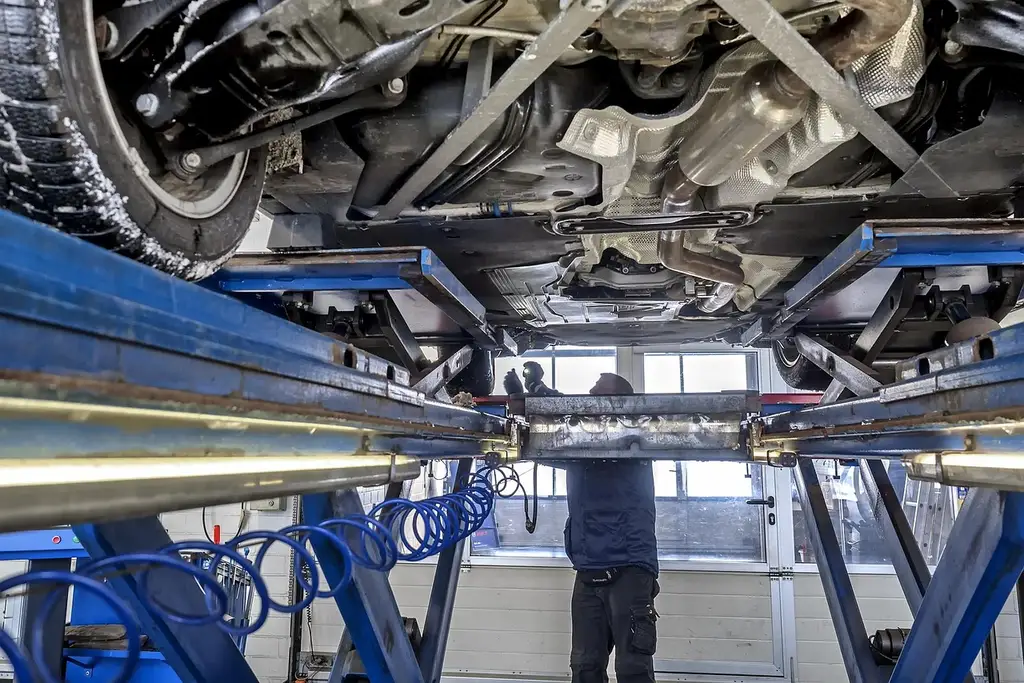
A bad control arm usually shows up as a knock over speed bumps or driveway lips, steering that drifts or needs constant correction, tire wear on one inside or outside edge, or a torn bushing you can see. If the ball joint has any free play, treat it as urgent. Ignoring it can lead to rapid tire wear, failed alignment, poor control, and a joint that can separate. This guide shows how to tell control arm, bushing, ball joint, and strut symptoms apart before you pay for parts or alignment.
What a control arm does
The control arm connects the car’s wheels to the frame and helps the suspension move up and down. It also keeps wheel alignment in range while letting the wheel travel over bumps. Most cars have two control arms per wheel: one upper and one lower, and some rear suspensions use control arms too.
Upper and lower arms do not always fail the same way. On many front suspensions, the lower control arm is the common wear point, while the upper arm may be the part that creates looseness or alignment complaints on designs that use one. Rear control arms affect tracking, so rear-end movement can be part of the symptom set.
Why the arm affects alignment and wheel movement
When the arm wears or bends, the wheel can change toe or camber as the suspension loads and unloads. That is why a bad control arm can create steering pull, wobble, or uneven tire wear. A damaged control arm can also make the car jerk during turns, and bad arms can increase braking distance because tire grip is reduced.
What the symptoms usually feel like
The most common clues are clunking, knocking, squeaking, pull, wandering, and vibration. A failing control arm often produces clunking, knocking, or squeaking noises, and worn arms can throw wheel alignment out of range. The key is to match the noise or steering change to when it happens.
Clunking, knocking, and squeaking
A clunk over a speed bump or driveway edge often points to looseness at the arm, bushing, or ball joint. Squeaking can come from a dry or worn bushing, especially during slow suspension movement. A sharp knock during braking or turning needs quicker attention, because it can reflect movement at the joint rather than simple rubber wear.
Pulling, wandering, and vague steering
If the car pulls to one side or feels vague at center, the fault may be a control arm, a bushing, a tie rod, or alignment. A bad control arm bushing can reduce steering responsiveness and cause wandering. A damaged control arm can also make the car pull to one side or jerk during turns.
Uneven tire wear and vibration
Uneven tire wear is a common result of worn control arms. Tire wear can show up on the inside or outside edge when alignment is affected. Vibration can appear with worn joints, bent arms, or related problems such as a wheel bearing or a tire issue, so the wear pattern matters as much as the noise.
A bad control arm bushing usually shows up as clunking, wandering, or a dull knock when the suspension moves. The bushing absorbs shock during driving and affects cornering comfort, so when the rubber wears out, symptoms begin to appear. Cracks, separation, and looseness are the visual clues to watch for.
Noise and feel from a worn bushing
If the noise is more of a dull thud than a metallic click, bushing wear moves higher on the list. A worn bushing can let the arm shift under braking and acceleration, which can make the car feel loose during lane changes or when entering a driveway at an angle. The steering may feel delayed rather than sharply wrong.
What visible damage means
Look for rubber that has split away from the sleeve, pulled off-center, or collapsed so the arm no longer sits squarely. Polyurethane bushings can also wear or loosen, but the failure pattern may look different from cracked rubber. If the bushing looks damaged but the ball joint is still tight, the arm may be serviceable only by bushing replacement on some designs.
How to tell if the lower control arm is bad
The lower control arm is often a front suspension failure point. On many cars it is linked to pull, clunk, and uneven tire wear. If the lower arm bends, cracks, or its joints wear out, you may feel the car drift under braking, jerk in turns, or knock over bumps even when the rest of the suspension seems quiet.
Common front-end signs
Lower-arm problems often show up first as a repeated clunk from one corner, especially when the wheel moves up and down quickly. Steering that changes under braking is another clue. If the car feels like it tugs as the road cambers or when one front wheel hits a bump, the lower arm and its bushing deserve a close look.
When lower-arm wear looks like alignment trouble
A lower arm problem can mimic a simple wheel alignment issue, because the alignment may be off due to worn metal or rubber rather than just adjustment. If the car keeps pulling after alignment, or if the tire wear returns quickly, the underlying wear part may still be moving. That is why checking the arm first matters.
How to tell if upper or rear control arm is bad
Upper control arm symptoms depend on the suspension design, but they often show up as steering looseness, alignment issues, or clunks from the upper part of the wheel well. Rear control arm wear is different again: it can cause rear-end movement, poor tracking, or instability that feels like the back of the car is not following the front cleanly.
Upper control arm symptoms on some suspension designs
If the upper arm wears, the steering may feel vague or the car may need frequent alignment correction. Because the upper arm helps control camber on some layouts, wear there can tilt the symptom toward tire edge wear and a steering wheel that does not stay settled. Check for torn boots and play at the pivot point.
Rear control arm symptoms and rear-end instability
Rear control arm wear can be easy to miss because it does not always create obvious steering symptoms. Instead, the car may feel unsettled in fast lane changes, over rough pavement, or during braking. If the rear of the car feels like it steps sideways or tracks poorly, inspect the rear arms and their bushings for movement.
A common first-timer mistake is blaming a front strut for a rear-end wiggle. If the rear tire wear is uneven and the car feels nervous on highway grooves, a rear control arm or its bushings may be the real fault.
Control arm diagnosis matrix
Use this table to match the symptom pattern to the most likely fault. It is not a replacement for inspection, but it can help you avoid replacing the wrong part first.
| Symptom pattern | Likely fault | Noise type | When it happens | Steering feel | Tire wear pattern | Urgency | Recommendation |
|---|---|---|---|---|---|---|---|
| Clunk over bumps, visible bushing cracks, mild wandering | Control arm bushing | Dull clunk or knock | Over bumps, braking, driveway edges | Loose or delayed response | Inside or outside edge wear possible | Moderate | Book inspection |
| Sharp knock, boot torn, detectable looseness at joint | Ball joint | Metallic knock or pop | Turning, braking, suspension travel | Unstable, can dart or jerk | Uneven wear may spread quickly | High | Do not drive |
| Pull to one side, uneven tire wear, alignment keeps drifting | Lower control arm | Clunk, knock, or squeak | Bumps, acceleration, braking | Pulling, vague center | Inside or outside edge wear | High | Drive carefully |
| Steering looseness on some designs, camber-related wear | Upper control arm | Squeak, light clunk | Turns, uneven pavement, suspension movement | Loose or imprecise | Inside edge wear possible | Moderate to high | Book inspection |
| Rear-end movement, poor tracking, instability | Rear control arm | Clunk or dull knock | Lane changes, braking, rough roads | Car feels unsettled from the rear | Rear tire edge wear possible | High | Drive carefully |
| Knock with bounce, no control-arm play found, rebound feels wrong | Strut | Knock, bounce noise, top mount noise | Road dips, rebound, sharp bumps | Floaty or bouncy | Feathering or cupping possible | Moderate | Book inspection |
| Play at wheel, toe change, steering wander without arm looseness | Tie rod | Click or knock | Steering input, bumps | Loose steering, poor straight-line hold | Rapid toe wear | High | Do not drive |
How to read the matrix
If the noise appears mostly over bumps, start with the bushing and ball joint. If steering wander leads the complaint, check tie rods, alignment, and the arm together. If the rear of the car feels unstable, do not assume the front suspension is at fault; rear control arm wear can create its own tracking problem.
Frequently asked questions
How to tell if a control arm bushing is bad
A bad bushing often makes a dull clunk, a knock during braking, or a wandering feel at speed. Visually, look for rubber cracks, separation from the sleeve, or collapse that lets the arm shift. If the arm moves too much but the ball joint feels tight, the bushing is a stronger suspect.
How do you know if your control arm is bad on your car?
Match the symptom to the wheel location and the timing. Front clunks and pull point toward a front arm, while rear instability points toward a rear arm. Then inspect with the wheel unloaded. The right answer usually comes from combining noise, steering feel, tire wear, and visible damage.
How to tell if strut or control arm is bad
A strut problem usually brings bounce, poor rebound control, or noise from the upper mount area. A control arm problem more often creates clunking with steering pull, wandering, or tire-edge wear. If the wheel shows play at the arm and the strut looks dry but tight, the arm is more likely.
Is it safe to drive with a bad control arm?
Sometimes, but only with caution and only if the problem is limited to a worn bushing and the joint is still tight. If the ball joint has play, the arm is bent, or the car jerks during turns, do not drive it normally. A broken control arm can lead to a complete suspension failure.

Hi, I’m Melvin, an automobile engineer with extensive experience in automobile equipment. I currently work for a local automobile firm, where I specialize in the car parts industry. I’ve had the opportunity to collaborate with seasoned inspectors, gaining invaluable hands-on experience that goes beyond just theory.
My passion for automotive care started at a young age, which led me to create CarSpareCare. Through CarSpareCare, I share the knowledge and skills I’ve acquired over the years to help others navigate the world of car maintenance and repairs.
My goal is to provide practical tutorials, essential safety advice, and the latest industry insights so that anyone—whether a beginner or an expert—can confidently tackle their automotive projects.

