After a tire change, a TPMS light usually stays on for one of three reasons: one or more tires are still below the placard pressure, the system needs a relearn or reset, or a sensor was damaged during service. According to the NHTSA tire safety guidance below, a TPMS warning should always be verified with a pressure gauge before assuming the system itself has failed. This guide shows how to tell which fault you have and what to do next.
What the TPMS light means
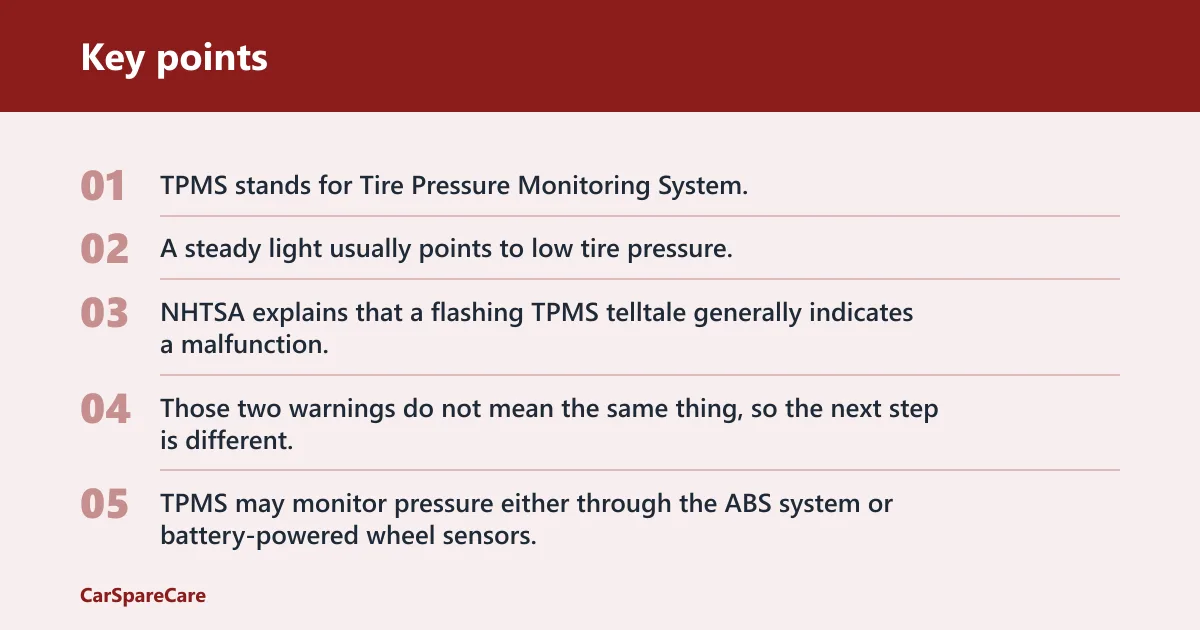
TPMS stands for Tire Pressure Monitoring System. A steady light usually points to low tire pressure, while a blinking or flashing light usually points to a system fault such as a dead sensor battery or a communication problem. NHTSA explains that a flashing TPMS telltale generally indicates a malfunction, not just low pressure. Those two warnings do not mean the same thing, so the next step is different.
Direct and indirect systems
TPMS may monitor pressure either through the ABS system or battery-powered wheel sensors. Direct TPMS uses individual sensors in each tire. Indirect TPMS relies on the ABS system to detect pressure changes from wheel-speed variance. Both can trigger a warning after tire work, but they fail in different ways.
That difference matters after service. A direct system can need a relearn, sensor programming, or a new sensor if one was damaged or not recognized. An indirect system can need a reset after the tire size, pressure, or wheel positions change. The dash light tells you there is a problem. It does not tell you which one.
What the warning can and cannot tell you
A TPMS light is a prompt to verify pressure, not a substitute for a gauge. It can point to a real tire issue, a setup issue, or both at once. A tire can be low because of a slow leak, a bead problem after mounting, or a valve stem that started leaking when the wheel was removed.
Check tire pressure before anything else
Use a tire pressure gauge on all four tires first, when the tires are cold if possible, and compare the readings to the vehicle door placard or owner’s manual, not to a generic number from the internet or a guess from the tire shop. The placard is the setting that matters for that vehicle.
Use the placard, not a guess
The door placard gives the recommended cold pressure for the tires on the vehicle. That number can differ from dealer advice or from the pressure at which the TPMS warning appears. If the tires are all within spec and the light is still on, the fault is more likely in the system or the relearn, not in inflation.
Why temperature changes can trigger the light
Temperature changes can shift tire pressure enough to turn the light on. A cold snap can lower all four tires enough to set a steady warning, especially right after a service visit when the tires were filled in warmer conditions. That is a pressure issue first, not a sensor problem first.
Picture a car that left the shop with four tires filled to placard pressure on a warm afternoon. The next morning is 20 degrees colder, and the light comes on for all four tires. That pattern points to a pressure drop from temperature, so the first move is to recheck all four tires with a gauge.
Why is my TPMS light on after a tire change?
After a tire change, the light is usually on because the relearn was not completed, the wheel positions changed, or a sensor was damaged or not programmed. Those are common post-service failures, and they often look like a tire problem at the dash even when the tires themselves are correctly inflated.
Relearn or initialization was not completed
TPMS can require a reset after adding air, rotating tires, or replacing tires. Some vehicles need a manual reset, some need a drive cycle, and some need a scan tool. If the shop changed tires or wheels and skipped the relearn, the light may stay on even when pressures are correct.
For vehicle-specific procedures, many owners check the reset steps in the owner’s manual or the manufacturer service information. If you want a related walkthrough, see How to Reset TPMS After Tire Rotation.
The wheel positions were changed
If the tire positions changed, the vehicle may no longer match the sensor IDs or wheel-speed pattern it expects. That is common after rotation, a seasonal swap, or a winter set installation. The warning can stay on until the system relearns the new wheel locations.
A sensor was damaged or not programmed
A new sensor that was not programmed, or an old sensor that was damaged during mounting or demounting, can keep the warning active. In direct TPMS, each wheel sensor has to be recognized by the vehicle. If the ID is missing, wrong, or unreadable, the light can blink or stay on depending on the vehicle.
TPMS diagnostic checklist
Use this table to sort the most common post-service cases. Start with the symptom you see on the dash, confirm actual pressure with a gauge, then check whether the issue points to a tire problem or a system problem. That keeps you from replacing parts that are not actually failed.
| Symptom | Likely cause | Quick verification | Next step |
|---|---|---|---|
| Steady TPMS light | One or more tires are under-inflated | Check all four tires with a gauge and compare to the door placard | Inflate to placard pressure and recheck for leaks |
| Blinking or flashing light | System fault, often a dead sensor battery or communication issue | See whether the light blinks for a period and then stays steady or goes out | Schedule TPMS diagnosis; a scan tool may be needed |
| All four tires warning after a cold snap | Temperature-related pressure drop | Measure all four pressures when the tires are cold | Adjust to placard pressure and monitor for a repeat warning |
| One tire only after service | Slow leak, bead leak, valve stem leak, or puncture | Soap test the valve area and inspect tread for nails, screws, or damage | Repair the leak before resetting anything |
| Tire rotation without relearn | Wheel positions changed and the system was not initialized | Confirm the service record shows a TPMS reset or relearn | Perform the vehicle-specific relearn or scan-tool procedure |
| New sensor not programmed | Sensor ID mismatch or missing registration | Check whether the new sensor ID was entered into the vehicle | Program the sensor and complete the relearn |
| Valve stem leak | Corroded stem, damaged seal, or loose retaining nut | Inspect the stem, seals, and nut after wheel removal | Replace the service kit parts and recheck pressure |
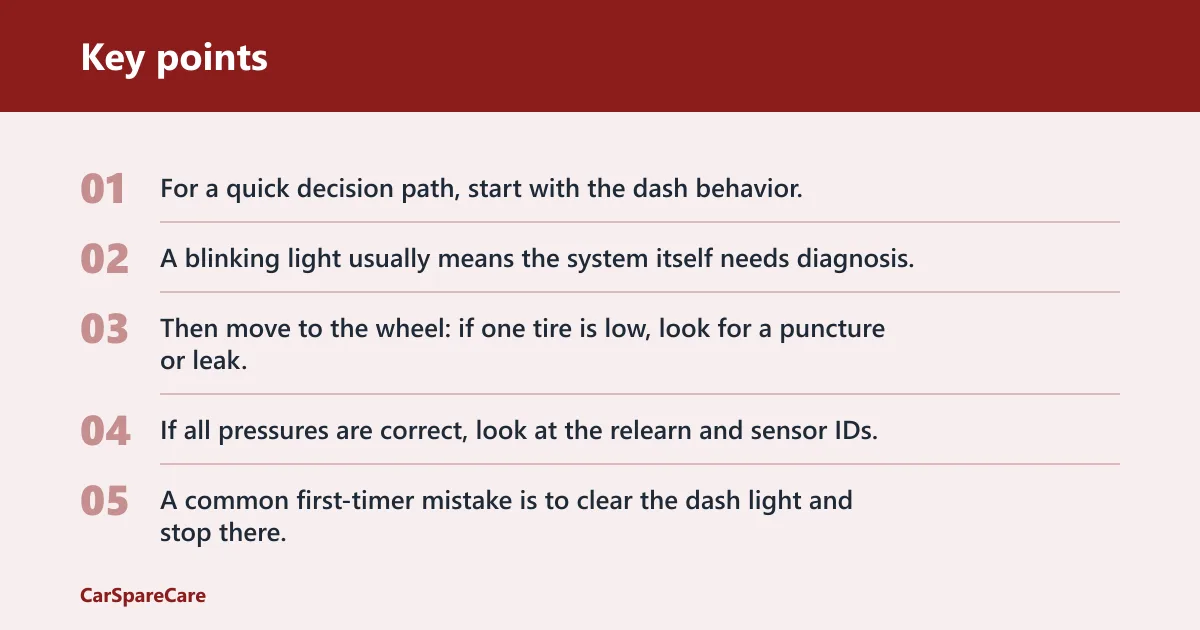
For a quick decision path, start with the dash behavior. A steady light usually means pressure. A blinking light usually means the system itself needs diagnosis. Then move to the wheel: if one tire is low, look for a puncture or leak. If all pressures are correct, look at the relearn and sensor IDs.
A common first-timer mistake is to clear the dash light and stop there. If the tire was low because of a slow leak, the light will come back. If the wheels were rotated and the vehicle never relearned the new positions, the warning can stay on even after every tire is inflated correctly.
Can a tire service cause a TPMS problem?
Yes. Tire service can cause a TPMS problem through valve stem leaks, sensor damage during mounting or demounting, or a new sensor that was installed but not programmed. Manufacturers and TPMS suppliers commonly list these as normal service-related failure points, which is why many repair guides also separate TPMS sensor replacement from seal-and-nut service. If the warning is tied to sensor replacement costs, see TPMS Sensor Replacement Cost Guide.
Valve stem and service kit leaks
Valve stems, seals, and retaining nuts can corrode or leak after wheel removal or tire mounting. That is why the service kit matters. If the stem seal was reused when it should have been replaced, the tire may hold air for a while and then slowly drop again.
Sensor damage during mounting or demounting
A direct TPMS sensor sits inside the wheel, so careless mounting can crack the sensor body, damage the valve stem, or disturb the seal. That kind of failure often appears as a one-tire warning after service, not a full-set warning.
New sensor battery or ID issues
Most direct TPMS sensors use a sealed battery that is not meant to be replaced separately; when the battery fails, the sensor is typically replaced as an assembly. Service life varies by make and model, but many suppliers and OE service references treat aging sensors as wear items that commonly fail after years of heat and road exposure. If a new sensor was installed, it still has to be programmed and recognized by the vehicle.
Suppose a winter wheel set gets new sensors on all four wheels, but the IDs are not entered into the car. The tires may be inflated correctly, yet the warning stays on because the car cannot match the wheels to the stored sensor IDs. That is a programming issue, not a pressure issue.
How do you reset TPMS after changing tires?
There is no single reset method that works on every vehicle. Some vehicles use a button reset, some use a drive cycle or automatic relearn, and some need scan-tool or dealer programming. The owner’s manual is the first place to check.
Button reset systems
Some vehicles have a dedicated TPMS reset button or menu item. These systems often need the tire pressure corrected first, then the reset command, then a drive. If the warning returns right away, the system may still see low pressure or a sensor fault.
Drive cycle or automatic relearn systems
Other vehicles relearn during driving after the wheel positions are corrected and the pressures are set. The vehicle may need a specific speed and time pattern before it accepts the new sensor positions. If the system never relearns, the light can stay on after the tire work is finished.
Scan-tool or dealer programming systems
Some direct TPMS systems need a scan tool to register sensor IDs or force a relearn. That is more common when sensors were replaced, wheels were swapped, or a seasonal set was added. If the warning persists after inflation and a reset attempt, this is the path that often clears the mismatch.
When should you drive, stop, or return to the shop?
If the light is steady and one or more tires are low, recheck pressure immediately and drive only after the tires are at placard pressure. If the light blinks, or if one tire keeps losing pressure after refill, stop and inspect for a leak, damage, or a service error before longer driving.
All-four-tires pressure loss after a cold snap
If all four tires are low after a temperature drop, it is usually reasonable to inflate them to spec and recheck the light. That is a common pressure-related warning. If the light goes away after correction, the issue was likely the temperature shift, not a failed sensor.
One-tire-only warning after service
A one-tire warning after service deserves closer attention. Slow leaks, punctures, bead leaks, and valve stem problems are all possible. A slow leak is one of the most common reasons the light stays on after air is added. If the pressure keeps dropping, the tire needs inspection.
When a blinking light needs prompt diagnosis
A blinking TPMS light usually indicates a system issue such as a dead sensor battery or another communication fault. That does not always mean an emergency, but it does mean the warning is not just a simple low-pressure alert. If the light blinks after tire service, the car may need sensor diagnosis, not only inflation.
Frequently asked questions
Why is my TPMS light on after changing tires?
It is usually on because the tires are still under-inflated, the vehicle needs a relearn or reset, or a sensor was damaged or not programmed during service. Check pressure first with a gauge, then confirm whether the wheel positions or sensor IDs changed.
Is it normal for tire pressure light to come on after getting new tires?
It can happen, but it is not something to ignore. New tires may need a TPMS reset, initialization, or relearn. If the light stays on after the tires are set to placard pressure, the problem is more likely a setup issue or a service fault.
Why is my tire pressure light on after tire rotation?
Rotation can move the wheel positions enough that the system needs a relearn. On direct systems, the sensor IDs may no longer match the stored positions. On indirect systems, the ABS-based reference can also need recalibration after the wheels are moved.
Do you need to reset TPMS after new tires?
Often, yes. TPMS can require a reset after replacing tires, adding air, or rotating tires. Some vehicles reset with a button, some with a drive cycle, and some with a scan tool. The owner’s manual should list the method for that vehicle.
How long does TPMS relearn take after tire service?
It depends on the vehicle. Some systems relearn during a short drive after a button reset, while others need a manual procedure or scan-tool programming first. If the light does not clear after the correct procedure, the issue may be a sensor fault or a leak.
Is it safe to drive with the TPMS light on after a tire change?
If the light is steady and the tires are at the correct placard pressure, short driving may be reasonable while you sort out the reset or relearn. If the light is blinking, or a tire is low or losing air, stop and inspect it before driving far.
Should TPMS sensors be replaced when new tires are installed?
Not automatically. Replace them when age, failure, damage, or access makes it sensible. Sealed sensor batteries are not serviceable on most vehicles, and older sensors can fail to communicate even if the tire itself is fine. If a sensor tests weak, leaks, or fails to communicate, replacement is the right call.
Sources
NHTSA tire safety and TPMS guidance
Schrader TPMS sensor FAQ
Continental TPMS technical information

Hi, I’m Melvin, an automobile engineer with extensive experience in automobile equipment. I currently work for a local automobile firm, where I specialize in the car parts industry. I’ve had the opportunity to collaborate with seasoned inspectors, gaining invaluable hands-on experience that goes beyond just theory.
My passion for automotive care started at a young age, which led me to create CarSpareCare. Through CarSpareCare, I share the knowledge and skills I’ve acquired over the years to help others navigate the world of car maintenance and repairs.
My goal is to provide practical tutorials, essential safety advice, and the latest industry insights so that anyone—whether a beginner or an expert—can confidently tackle their automotive projects.