
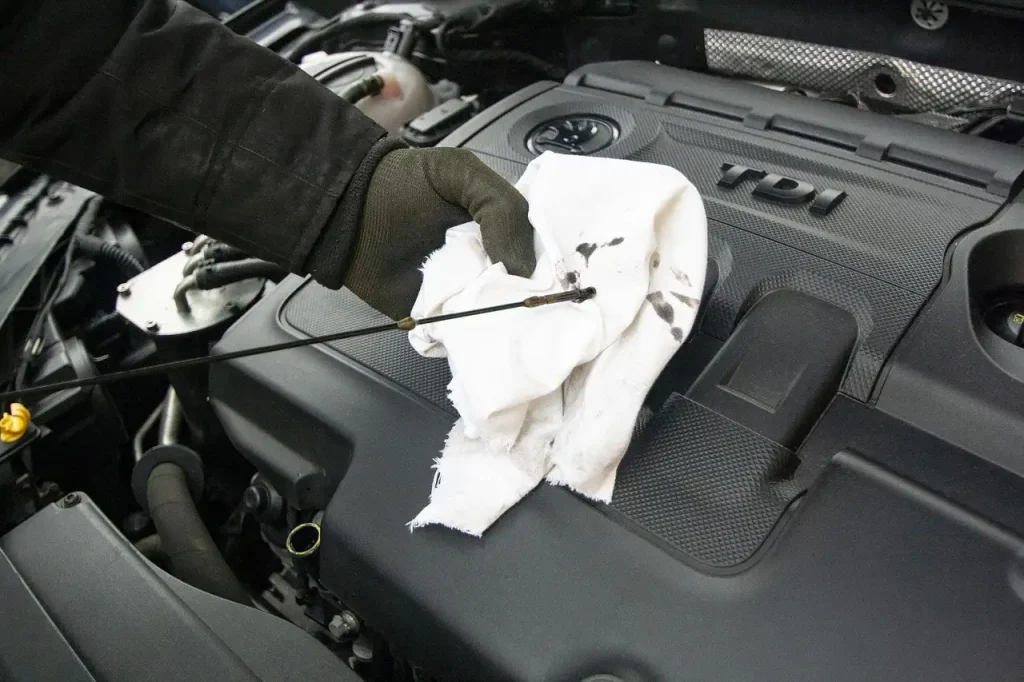
If the steering wheel vibrates only at idle, the usual causes are a rough engine idle, worn engine or transmission mounts, or extra load from the air conditioner; if the shake also appears while driving, look elsewhere. Ignoring a rough idle can hide a misfire, a failing mount, or steering-column wear that gets worse and costs more to fix. This guide shows how to trace the vibration path from the engine to the steering column and pinpoint the likely fault.
This guide is part of our Power steering and brake problems series.
How to narrow down the cause by symptom pattern



Idle-only shake usually starts where the engine is least stable and then moves through the mounts, column, or linkage to the wheel. That is why the symptom pattern matters more than the shake itself. Tire pressure and wheel balance still deserve a baseline check, but stationary vibration points first to engine-side transfer, not road-speed causes.
At a stop, the engine is the only major moving source. If the idle is rough, if a mount has softened, or if accessory load changes engine speed, the steering wheel can pick up the motion even though the car is not moving. Brake rotors and wheel balance are generally less likely to explain a shake that happens only in Park or Neutral.
Idle steering vibration triage
| Symptom pattern | Likely source | Quick check | Next action |
|---|---|---|---|
| Cold idle | Fast-changing idle quality or mount softening | Watch whether the shake fades as the engine warms | Check idle speed and mount condition |
| Warm idle | Worn engine mounts, steering-column bushings, or linkage play | Compare shake at steady warm idle with the hood open | Inspect rubber parts and steering play |
| AC-on pulsing | Accessory load changing idle speed | Turn the AC off and note whether the pulse stops | Check idle control and mount response under load |
| Vibration that disappears above idle | Low idle RPM or mount compliance at low RPM | Raise engine speed slightly while parked | Check idle RPM before replacing parts |
| Visible engine rock | Worn engine mounts | Open the hood and observe engine movement at idle | Inspect mounts for rubber deterioration and collapse |
| Rough idle only | Idle quality problem, often engine-side | Listen for uneven combustion or hunting idle | Check tune, vacuum leaks, and carburetor condition on older cars |
| Wheel vibration with no body vibration | Steering-column bushings or linkage play | Feel for looseness in the wheel while parked | Inspect column bushings and steering linkage |
| Vibration after high-mileage rubber aging | Multiple rubber parts weakening together | Inspect mounts, bushings, and isolators for age cracks | Plan a wider rubber inspection, not one-part replacement |
A common first-timer mistake is assuming a steering wheel that quivers while the car is parked in drive means the tires are out of balance. If the wheel vibrates while the car is still, the fault path is different. Focus on the engine, its mounts, and the parts that isolate motion before looking at components tied to road speed.
Is a bad engine mount the first thing to check?
Often, yes. Worn engine mounts are a leading reason for steering vibration at low RPM because they let engine movement reach the body and steering column. Rubber deterioration over time is a common failure pattern, especially on older vehicles where several rubber parts age together.
Engine mounts can cause violent engine vibration at low RPM, and the steering wheel may be one of the first places you feel it. If the vibration is stronger at idle and eases when engine speed rises, mount wear moves up the list quickly. That is still a diagnosis, not a guarantee.
What a mount failure looks like
Mount problems often show up as visible engine movement at low RPM. With the hood open, the engine may rock, twist, or lift more than expected when the idle drops or when the AC turns on. That visual clue is useful because it separates engine movement from a steering-only issue.
Suppose the wheel shakes at a stop, the hood is open, and the engine visibly rocks when the transmission is in Drive with the brake held. That pattern points strongly toward mount wear or engine imbalance transferring through the mounts. If the engine sits nearly still and only the steering wheel moves, inspect the column and linkage next.
Rubber mountings do not fail all at once. On older vehicles, age can wear these parts together, so one worn mount may reveal another weak point nearby. That is why a single bad part sometimes does not solve the whole complaint.
Can low idle RPM make the steering wheel shake?
Yes. Low idle RPM can magnify normal engine movement and make a steering wheel tremble even when no major part is broken. Low idle RPM should be checked before moving to deeper repairs, because a simple speed correction can turn a harsh idle into a stable one.
Raising idle speed to 700-800 rpm was suggested as a fix for idle shake in some cases. Treat that as a diagnostic clue, not a repair by itself. If the shake drops off as idle speed rises, the underlying issue may be marginal idle control, a vacuum leak, or mount compliance that only shows up at very low RPM.
When idle speed matters more than parts
If the engine is set too low at idle, vibration has more time to build before the next combustion event. That makes the steering wheel feel worse even when the engine is otherwise healthy. Check idle speed first, then decide whether hardware needs replacement.
- Confirm the shake happens while parked.
- Check the tachometer or scan data for idle RPM.
- Note whether the shake improves if idle rises slightly.
- Inspect mounts and rubber parts only after that clue is recorded.
Not every vehicle will want the same idle value, and you should not force a permanent change without knowing the factory specification. The point is simple: if a small rise to 700-800 rpm calms the wheel, the fault path is likely tied to low-speed instability rather than wheel balance or braking hardware.
Why does the AC make the vibration come and go?
Air conditioning adds load at idle, and that extra demand can make a borderline engine or mount shake only when the AC is on. A steering wheel can vibrate at idle only when the AC is on, which is a strong clue that the problem is load-related rather than constant. If the pattern repeats, it is often because the idle system is reacting to compressor demand.
Some reports describe intermittent steering vibration with the AC on repeating every 20 seconds. That kind of cycle suggests the idle is dipping, recovering, and dipping again as the system responds to changing accessory load. The compressor may be part of the answer, but the root can still be weak idle control or worn mounts that cannot isolate those changes well.
How to read an AC-linked pulse
If the vibration appears only when the compressor kicks in, watch the engine while the hood is open. A stronger rock when the AC cycles on points toward mount wear or idle control that cannot hold speed under load. A vibration that stays in the wheel while the body remains calm suggests you should also inspect the steering column.
Say your car idles smoothly at first, then the wheel shakes for a few seconds each time the AC cycles on. If the pulse is regular and tied to the compressor, the first checks are idle speed, mount condition, and whether the engine dips noticeably when the load changes. That gives you a clearer path than replacing steering parts at random.
Could steering-column wear be the source?
Yes. Steering column bushings can wear or soften and let vibration reach the wheel even when the car is stationary. If the engine seems stable but the wheel still buzzes or trembles, the column and linkage deserve attention. Rubber bushings and mountings in older vehicles can age together, so one weak point often points to others.
Steering rod or steering linkage play is another possibility when the vibration is localized to the wheel. If you feel looseness, clunking, or delayed response while parked, that is not the same as engine-mount shake. It means the motion may be moving through the steering hardware itself.
How to separate mount wear from steering wear
Use the hood-open visual engine movement test first. If the engine rocks clearly and the wheel shakes along with that motion, mounts are often the stronger lead. If the engine is calm but the wheel still vibrates, inspect the steering-column bushings and linkage for play or soft rubber.
Older cars need special attention here. Rubber parts do not age at the same rate, and bushings can soften without breaking apart. That is why a vehicle with high mileage may need a broader rubber inspection instead of a single-component fix.
What should you check before replacing parts?
Start with the simplest checks that tell you where the vibration is coming from. Check idle RPM, look for rough idle, and inspect the engine with the hood open. If the shake appears only at a stop, a basic visual test and an idle check are more useful than jumping straight to steering hardware.
On older carbureted vehicles, carburetor-related idle issues are relevant. A rough or low idle can be a root cause of steering wheel vibration while parked, even if the steering system itself is sound. If the carburetor or idle circuit cannot hold a steady idle, the steering wheel may only be reporting the engine problem.
Open-hood test and next steps
- Park safely, apply the brake, and let the engine idle.
- Open the hood and watch the engine at idle.
- Turn the AC on and off to see whether the shake changes.
- Note whether the steering wheel shakes more than the body.
- Check for visible engine rock, rough idle, or wheel looseness.
If the hood-open test shows clear engine movement, mounts move up the list. If the engine is steady but the wheel still shakes, inspect steering-column bushings and linkage. If the idle is rough, especially on an older carbureted vehicle, correct the idle issue before replacing steering parts.
Persistent shaking should not be ignored. A mechanic inspection makes sense if the idle speed seems correct, the mounts look sound, and the wheel still vibrates. At that point, the issue may require a deeper diagnosis of engine balance, idle control, or steering components.
Frequently asked questions
What causes a steering wheel to vibrate at idle?
The most common causes are rough idle, worn engine mounts, or accessory load from the AC. If the shake happens only while parked, the symptom pattern points away from road-speed causes and toward vibration transfer from the engine or steering column. The first check should be where the motion starts.
Is a vibrating steering wheel at idle a bad engine mount?
It can be. Worn engine mounts are a common reason for low-RPM vibration reaching the wheel, especially if the engine visibly moves at idle. But mounts are not the only answer, so check idle quality and steering-column bushings before replacing parts.
Why does the steering wheel shake only when the AC is on at idle?
The AC adds load at idle, and that load can expose a weak mount or an idle system that cannot hold speed cleanly. Some vehicles show an intermittent pulse, even repeating every 20 seconds, as the compressor cycles. That pattern points to load response, not a wheel-speed problem.
How do I tell if the vibration is from engine mounts or steering parts?
Open the hood and watch the engine at idle. If the engine rocks with the shake, mounts are likely involved. If the engine stays steady but the wheel vibrates, inspect steering-column bushings and linkage play. Wheel-localized vibration with a calm engine often points to steering hardware.
Can a rough idle cause steering wheel vibration even when parked?
Yes. A rough idle can send uneven engine pulses through the mounts and into the steering wheel while the car is stationary. On older carbureted vehicles, carburetor or idle circuit problems are especially worth checking because they can create the rough idle that starts the whole complaint.

Hi, I’m Melvin, an automobile engineer with extensive experience in automobile equipment. I currently work for a local automobile firm, where I specialize in the car parts industry. I’ve had the opportunity to collaborate with seasoned inspectors, gaining invaluable hands-on experience that goes beyond just theory.
My passion for automotive care started at a young age, which led me to create CarSpareCare. Through CarSpareCare, I share the knowledge and skills I’ve acquired over the years to help others navigate the world of car maintenance and repairs.
My goal is to provide practical tutorials, essential safety advice, and the latest industry insights so that anyone—whether a beginner or an expert—can confidently tackle their automotive projects.

