Replace a car battery now if it is 3–5 years old and shows slow engine cranking, dim headlights, repeated jump-starts, or a failed load test; replace it soon if it is aging and the symptoms are mild; monitor only if it is under 3 years old and tests strong. I have seen plenty of batteries start a car one day and die the next. Waiting can leave you stuck, strain the charging system, and turn a battery swap into a tow and repair bill. This guide shows when to replace now, soon, or keep watching based on age, symptoms, and driving habits.
When should you replace a car battery before it fails?
A practical rule is: replace now when age and symptoms line up, replace within about 30 days when the battery is aging but still starts the car, and monitor only when the battery is relatively new and tests healthy. A battery can still crank the engine and still be close to failure, so waiting for a no-start usually costs more.
Use a three-tier decision rule
| Action | Age | Symptoms and test results | What it means |
|---|---|---|---|
| Replace now | 3–5 years old or older | Repeated jump starts, slow crank, dim lights, flickering dash lights, or failed load test | Near-term failure risk is high |
| Replace within 30 days | About 2.5–4 years old in harsh use | Mild slow crank, one jump start, weak resting voltage, or short-trip use | It may still start today, but margin is shrinking |
| Monitor | Under 3 years old | Strong test results and no symptoms | Keep watching, especially before winter or long trips |
What makes a battery a near-term failure risk
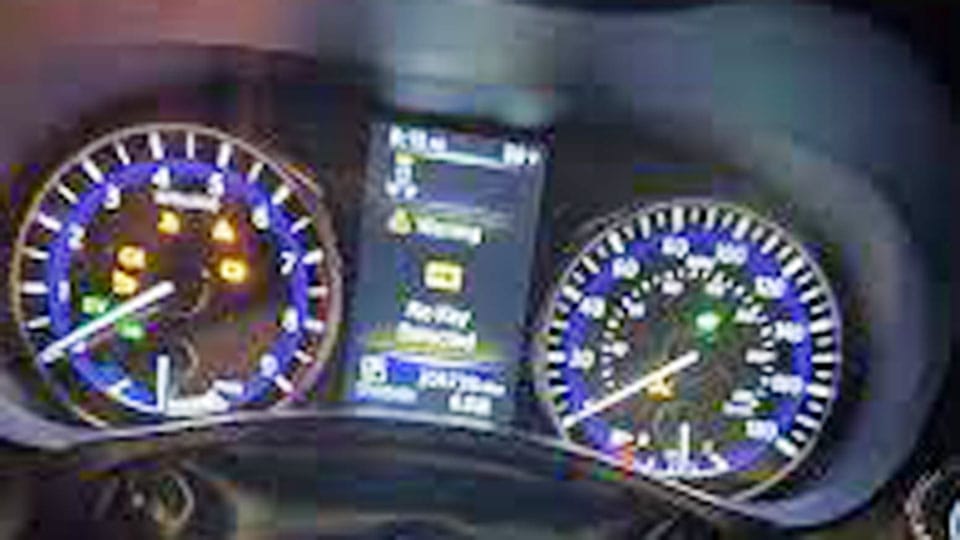
The strongest warning sign is repeated jump-starts. Slow engine cranking is next, especially if it gets worse on cold starts. Dim headlights at idle and dashboard lights flickering under load also matter, because they often show the battery has little reserve power left for starting and accessories.
When a car can still start but the battery should still be changed
Many weak batteries still start the car on a warm day. That does not mean they are healthy. If the battery needs a jump after sitting, cranks slowly in the morning, or fails a load test, it should usually be replaced before it leaves the driver stranded in traffic, at work, or in a cold parking lot.
How long does a car battery last?
Most car batteries last around three to five years, but that is only an average. I treat age as one piece of the picture, not the whole story. Heat, frequent short trips, heavy accessory use, and long idle periods all shorten life. A battery that is already near that range should be treated as a wear item, not a surprise failure waiting to happen.
Why hot climates shorten life faster than mild climates
Heat can shorten battery lifespan because it can speed internal wear and cause the battery’s internal chemistry to dry out sooner. In hot climates, a battery may lose strength well before the driver expects it. That is why age-based replacement should come earlier there, especially if the vehicle also sees short trips or long parking periods.
Why short-trip driving and infrequent use age batteries early
Short trips can shorten battery life because the alternator may not fully recharge the battery after each start. That partial recharge pattern encourages sulfation, which reduces usable capacity over time. Infrequent use has a similar effect. A car that sits for days or weeks may still start, but the battery weakens faster.
What warning signs mean the battery is near the end?
The best warning signs are the ones that show the battery can no longer deliver strong starting power. Slow cranking, repeated jump-starts, dim lights, and flickering dash lights all point toward decline. One symptom can have other causes, but several together make replacement much more likely.
Slow crank and weak-start behavior
Slow engine crank is a warning sign because the starter is asking for high current and the battery cannot keep up. It is most noticeable on cold starts, when a healthy battery should still spin the engine with authority. If the crank gets slower over a few days or weeks, replacement is usually near.
Repeated jump starts
Frequent jump-starts are a clear sign of battery decline. A one-time jump after leaving the lights on is different from a pattern of needing help every few days or after ordinary parking. When jump-starts become routine, the battery has often lost enough reserve capacity that replacement is the practical answer.
Dim lights and erratic electronics
Dim headlights at idle can indicate a weak battery, especially when the brightness improves with higher engine speed. Dashboard lights flickering under load are another warning sign. If the radio, windows, or other electronics act oddly at the same time, the battery may be near failure or the charging system may need testing too.
When does a battery test mean replace it?
A battery test means replace it when the battery shows low resting voltage or fails a load test, especially if the car already has weak-start symptoms. If the numbers are borderline but the battery is still relatively young, a repeat test after a full charge may make more sense than immediate replacement.
Resting voltage and what a low reading means
Resting voltage is measured with the car off after the battery has sat long enough to settle. A low reading suggests the battery is not holding charge well, but the result should be read with symptoms and age in mind. A low reading on an older battery is generally more concerning than the same reading on a battery that is still relatively new.
Load test results that point to replacement
A load test is more useful than resting voltage alone because it shows whether the battery can deliver power under demand. If the battery cannot maintain output during the test, replacement is usually the right call. This matters because a battery can look acceptable on paper and still fail under starter load.
When to test again instead of replacing right away
Test again instead of replacing right away when the battery is young, the symptoms are mild, and the first reading may have been affected by sitting time or a recent short trip. If the battery then passes a proper charge-and-load check, monitoring is reasonable. If it still tests weak, do not keep chasing the problem.
How do you tell battery trouble from alternator trouble?
Battery trouble shows up at starting; alternator trouble shows up while the engine is running and charging the electrical system. A weak battery can mimic a bad alternator, and a bad alternator can make a healthy battery look weak. Replacing the battery blindly can waste money if the charging system is the real fault.
Starting power versus charging power
The battery’s job is to start the engine and support electronics when the engine is off. The alternator’s job is to recharge the battery and run the car once it is moving. If the car starts with a jump but dies again after driving, the alternator or charging circuit deserves attention before another battery is fitted.
Symptoms that look like a dead battery but are not
Dim lights, flickering warning lamps, and a weak crank can come from poor charging, loose connections, or a failing alternator. If the battery is relatively new and still keeps going flat, the battery may not be the root problem. That is why a charging-system check matters before replacement.
Use this replacement checklist before the battery leaves you stranded
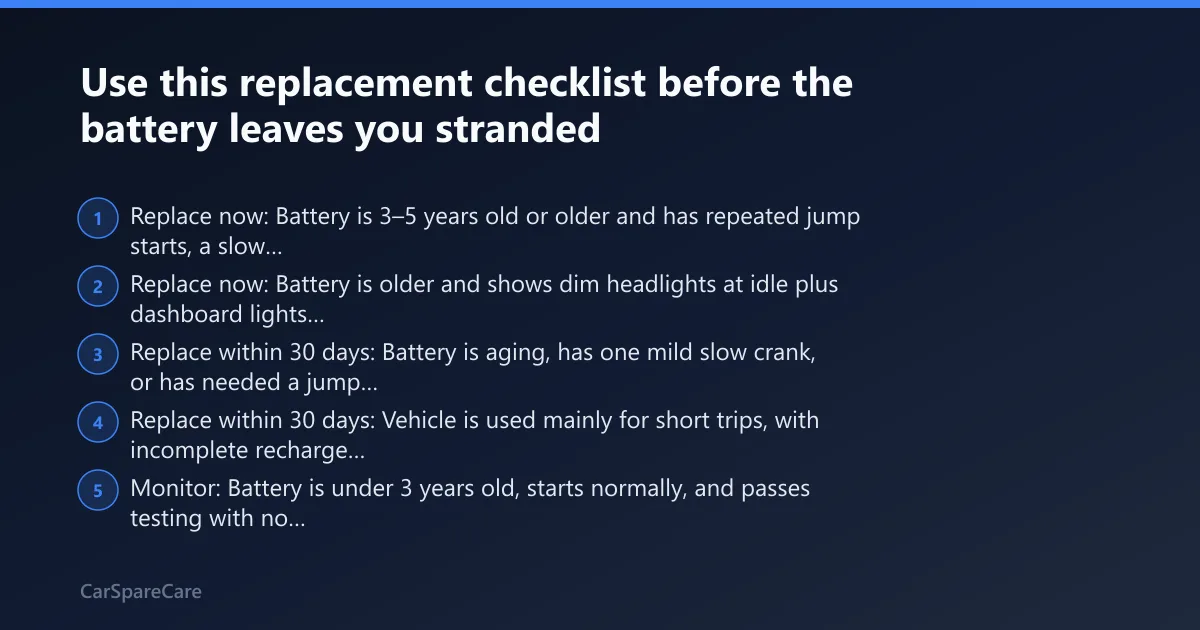
This checklist separates replace now from replace within 30 days and monitor. It combines age, symptom severity, jump-start history, and short-trip use. If multiple items fall into the same column, treat the battery as headed toward failure even if the car still starts today.
Replacement checklist with urgency levels
- Replace now: Battery is 3–5 years old or older and has repeated jump starts, a slow crank that is getting worse, or a failed load test.
- Replace now: Battery is older and shows dim headlights at idle plus dashboard lights flickering under load.
- Replace within 30 days: Battery is aging, has one mild slow crank, or has needed a jump once after routine parking.
- Replace within 30 days: Vehicle is used mainly for short trips, with incomplete recharge between starts.
- Monitor: Battery is under 3 years old, starts normally, and passes testing with no warning signs.
- Monitor: Battery is newer but the car has been sitting; retest after a full charge before deciding.
How climate and driving pattern change the decision
Heat pushes a battery toward replacement sooner. Short-trip driving does too. Heavy accessory use also shortens battery life. A city commuter in a hot climate will often need replacement earlier than a highway driver in mild weather, even if both batteries have the same calendar age.
What battery details from the owner’s manual matter before buying?
The owner’s manual matters because fit and electrical setup are not universal. Check the owner’s manual for battery group size, terminal orientation, and any special replacement procedures, since these can affect fit and may help preserve memory settings and system functions.
Battery group size and terminal orientation
Battery group size tells you whether the case and mounting points match the vehicle. Terminal orientation matters because the cables must reach correctly without strain. On some vehicles, the battery is not under the hood, and some are hidden in the trunk, so the manual is the place I check for battery location first, then cable routing too.
Special replacement steps for memory or start-stop systems
Some vehicles need extra steps during replacement to protect electronic memory or to register the new battery properly. Start-stop systems can be especially sensitive to battery type and condition. If the manual calls for a specific procedure, follow it instead of treating the battery like a generic part.
Frequently asked questions
How long does a car battery last before replacement is needed?
Most car batteries last around three to five years, but climate and driving habits move that window. Heat, short trips, heavy accessory use, and long parking periods can cut life short. A newer battery can still fail early if it never gets fully recharged.
What are the warning signs that my battery is about to die?
The strongest warning signs are slow engine crank, repeated jump-starts, dim headlights at idle, and dashboard lights flickering under load. A battery may still start the car once or twice while already nearing the end. The trend matters more than a single good start.
Should I replace a car battery at the first slow crank?
Not always, but the first slow crank should trigger testing and close attention. If the battery is older, has been jump-started before, or sits in hot-weather service with short trips, replacement is often the smart move. If it is newer, test the battery and charging system before buying one.
How do heat and short trips affect battery replacement timing?
Heat can shorten battery lifespan, and short trips can shorten battery life by leaving the battery partly charged after each start. Together, they speed decline. Drivers in hot climates or heavy stop-and-go use should expect earlier replacement than drivers who make longer, regular drives.
Can a battery still start the car even if it needs replacing soon?
Yes. A battery can still start the car and still be near failure. That happens when it has just enough reserve left for one more start but not enough margin for cold weather, extra loads, or a longer sit. A battery that starts today may still deserve replacement this week.

Hi, I’m Melvin, an automobile engineer with extensive experience in automobile equipment. I currently work for a local automobile firm, where I specialize in the car parts industry. I’ve had the opportunity to collaborate with seasoned inspectors, gaining invaluable hands-on experience that goes beyond just theory.
My passion for automotive care started at a young age, which led me to create CarSpareCare. Through CarSpareCare, I share the knowledge and skills I’ve acquired over the years to help others navigate the world of car maintenance and repairs.
My goal is to provide practical tutorials, essential safety advice, and the latest industry insights so that anyone—whether a beginner or an expert—can confidently tackle their automotive projects.