
A brake pedal that feels hard and spongy at the same time usually means two faults are happening together: the power assist is weak or gone, and the hydraulic side has air, fluid loss, hose expansion, or a master-cylinder problem. If you keep driving, stopping force can fall fast during an emergency stop. This guide separates lost brake assist from hydraulic faults, and shows when the car should not be driven.
Brake pedal diagnostic matrix
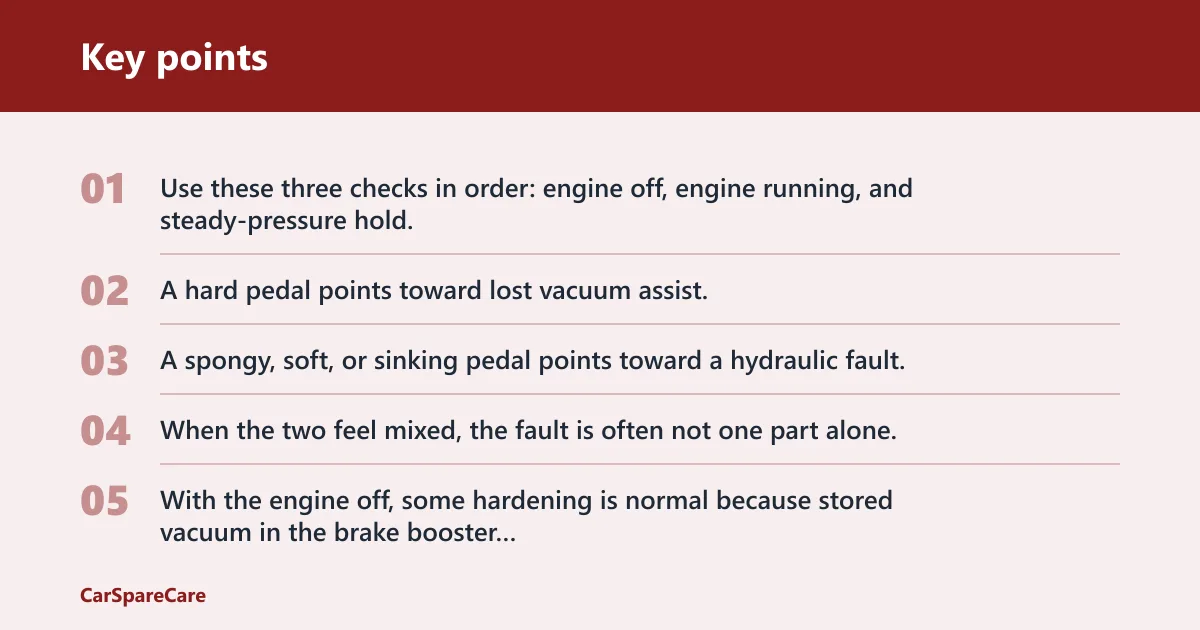
Use these three checks in order: engine off, engine running, and steady-pressure hold. A hard pedal points toward lost vacuum assist. A spongy, soft, or sinking pedal points toward a hydraulic fault. When the two feel mixed, the fault is often not one part alone.
| Test | What you feel | Likely fault combination | Do not drive / tow only | Most likely next check |
|---|---|---|---|---|
| Engine off | Pedal feels hard after 3–4 pumps | Often normal vacuum reserve is used up; booster assist is absent with the engine off | No, this can be normal with the engine off | Start the engine and repeat the test |
| Engine off | Pedal sinks or feels mushy immediately | Hydraulic problem: air, low fluid, leak, or master-cylinder internal bypass | Yes, if the pedal will not hold firmness | Check fluid level, visible leaks, and the master cylinder |
| Engine running | Pedal stays very hard and braking effort is high | Lost power-brake assist: failed booster, vacuum supply issue, or one-way valve fault | Often yes, especially with a brake warning light | Check booster vacuum hose, check valve, and engine vacuum source |
| Engine running | Pedal feels soft, spongy, or longer than usual | Air in lines, boiling fluid, hose expansion, or hydraulic leak | Yes, if the pedal is low or inconsistent | Inspect for fluid loss, recent brake work, and bleed quality |
| Steady-pressure hold | Pedal slowly sinks toward the floor | Master-cylinder internal seal bypass is a strong suspect | Yes | Confirm reservoir level, then test master-cylinder hold performance |
| Steady-pressure hold | Pedal firms up but then changes after repeated presses | Air pocket, trapped air in ABS, or hose expansion that shows up under repeated load | Usually yes until corrected | Look for poor bleeding, ABS service history, and flexible hose swelling |
| Either test | Warning light is on and pedal feel is abnormal | Active brake fault, fluid loss, ABS issue, or assist problem | Yes, tow is the safer call | Do not keep driving to “see what happens” |
What the three tests tell you
With the engine off, some hardening is normal because stored vacuum in the brake booster runs out after a few pumps. A hard pedal in this state does not prove a fault. A pedal that is already soft or sinking with the engine off is different, because the hydraulic circuit should still hold pressure.
With the engine running, a healthy vacuum-assisted braking system should give noticeable assist. If the pedal stays heavy and the car needs much more leg force, the booster side is suspect. If the pedal is still soft or changes shape under pressure, the hydraulic side is suspect. That split matters.
Under a steady hold, a master cylinder with internal seal bypass often lets the pedal drift lower. It may feel firm for a moment, then keep moving. That is not the same as a booster fault, because the booster changes effort at the pedal, while the master cylinder must build and hold hydraulic pressure.
Why can the pedal feel both hard and spongy?
Mixed pedal feel usually means two faults are present, or two parts of the system are behaving differently in the same stop. A weak booster can make the first push feel hard, while air, low fluid, a hose issue, or a master-cylinder fault makes the hydraulic side feel soft or inconsistent. The result can seem contradictory.
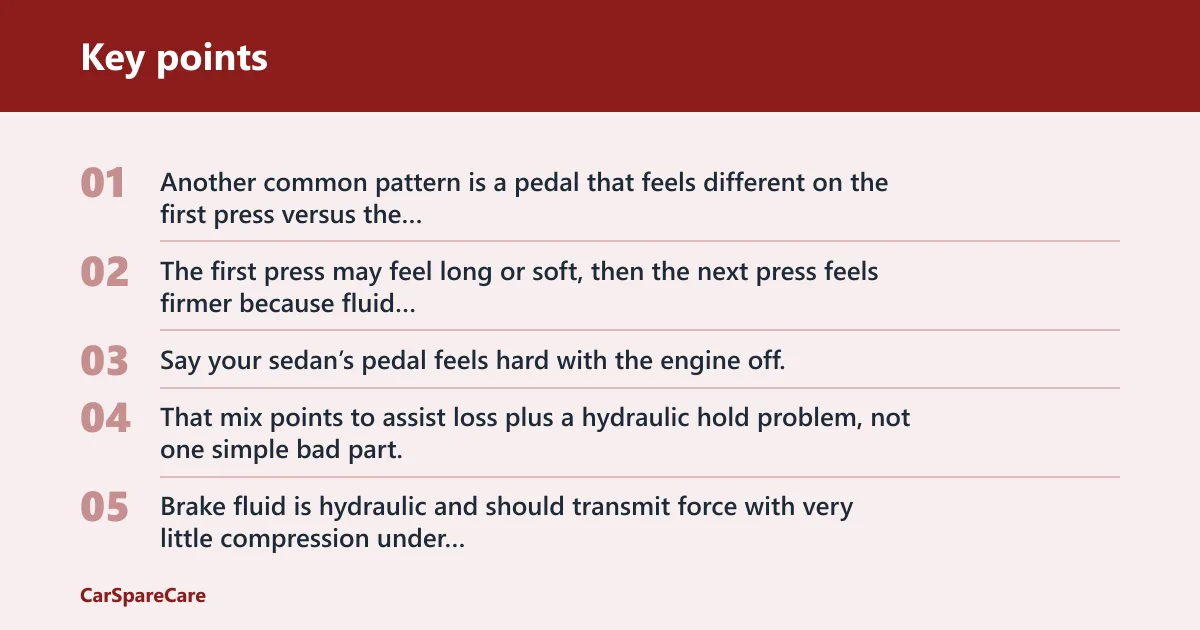
Another common pattern is a pedal that feels different on the first press versus the second press. The first press may feel long or soft, then the next press feels firmer because fluid has moved, a bubble has shifted, or pressure has been temporarily built in one part of the circuit. That pattern is a clue, not a cure.
Say your sedan’s pedal feels hard with the engine off, then still feels heavy after you start it, but the pedal also sinks slightly during a long stop at a light. That mix points to assist loss plus a hydraulic hold problem, not one simple bad part.
One common pattern: lost assist plus hydraulic compressibility
Brake fluid is hydraulic and should transmit force with very little compression under normal conditions. Air is different. It is a compressible gas, so a pocket of air in the circuit can soak up pedal travel and make the pedal feel mushy or low.
If the booster also is not helping, you get both symptoms at once: extra leg force and weak pedal response. That is why a driver may describe the pedal as “hard but also soft.” The pressure is not being boosted properly, and the hydraulic circuit is not holding a clean, solid column of fluid.
Why the first press can feel different from the second press
A first press may move air, flex a swollen hose, or take up slack after recent brake work. The second press can feel different because the system has been partially loaded already. If the difference shows up after new pads, a caliper change, or a bleed, trapped air should be high on the list.
That is also why a pump test is useful. The article’s first diagnostic step is to pump the pedal 3–4 times. If the pedal improves after pumping, that often points to air in the lines or another compressible part of the hydraulic circuit. A booster fault alone does not usually act like that.
Brake booster or hydraulic fault?
A hard pedal usually means lost power-brake assistance, while a spongy or sinking pedal points more toward the hydraulic side. The booster handles effort. The master cylinder and lines handle pressure. If both feel wrong, sort the symptom by test order instead of guessing from the first sensation you notice.
Hard pedal clues that point to the brake booster and vacuum assist
Vacuum-assisted braking should reduce pedal effort when the engine is running. A failed diaphragm, a bad check valve, or a vacuum supply problem can leave you with a hard pedal. A hard pedal with the engine off can be normal after the stored vacuum is used up, so that check only makes sense after you start the car.
A booster fault does not usually create a true spongy feel by itself. It changes how much force you need. If the pedal is hard and also sinks, think booster plus hydraulic fault, or a separate hydraulic issue layered on top of lost assist.
Spongy or sinking clues that point to the master cylinder, air, or fluid loss
A master cylinder with internal seal bypass often shows up as a pedal that sinks under steady pressure. Air in the brake lines is the most common cause of a soft, spongy, or low brake pedal, and it often shows up after brake work or incorrect bleeding. Brake fluid loss, hose expansion, or a leak can produce the same kind of weak hold.
Low fluid should not be read as “leak only” without checking pad wear. Reservoir level can fall as pads wear because the calipers move farther out. Still, a low reservoir with wet backing plates, damp hoses, or a fluid trail is not normal wear. Separate those two possibilities before adding fluid.
How to separate assist loss from hydraulic pressure loss without special tools
- Check the brake warning light. If it is on with abnormal pedal feel, treat the car as unsafe to drive.
- With the engine off, pump the pedal 3–4 times to remove stored vacuum.
- Hold moderate pressure on the pedal, then start the engine.
- If the pedal drops slightly and assist improves, the booster is at least working somewhat.
- If the pedal stays hard, the booster or vacuum supply needs attention.
- If the pedal sinks, feels long, or changes under hold, look for hydraulic faults first.
Air, fluid, and hose problems
Air in the brake lines is a compressible gas pocket inside a circuit that should contain incompressible fluid. That is why a pedal can feel soft, spongy, or inconsistent after brake service, a poor bleed, a fluid loss, or even a caliper replacement. The feel often changes on the first press versus the second.
Air in the brake lines after service or poor bleeding
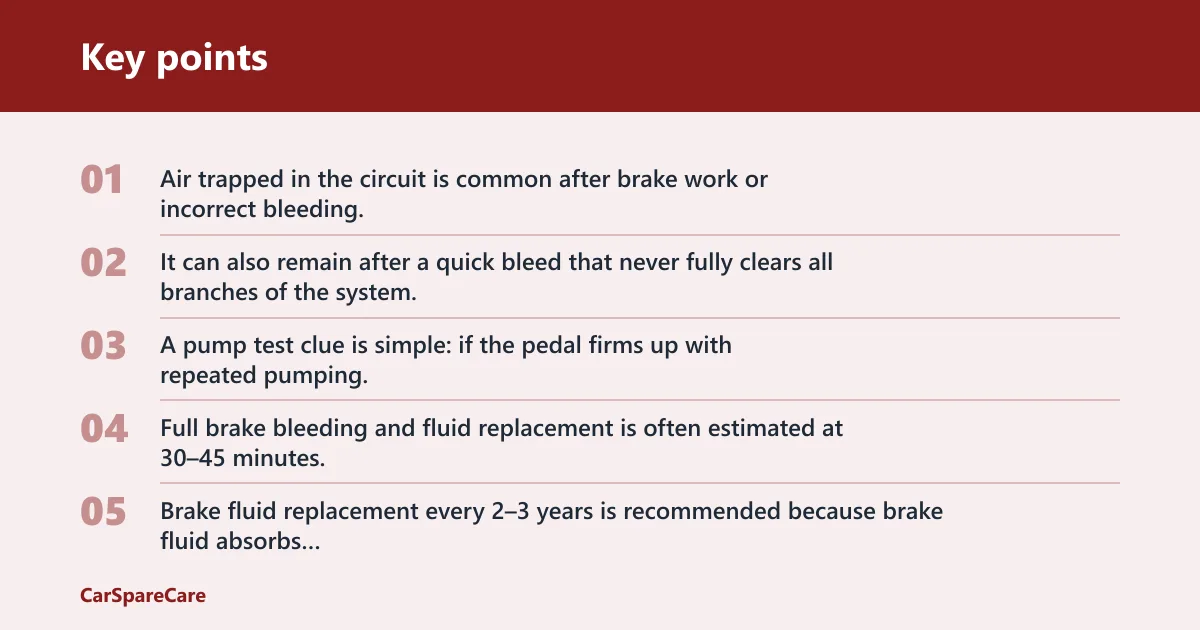
Air trapped in the circuit is common after brake work or incorrect bleeding. It can also remain after a quick bleed that never fully clears all branches of the system. A pump test clue is simple: if the pedal firms up with repeated pumping, air is a likely suspect.
Full brake bleeding and fluid replacement is often estimated at 30–45 minutes, and one article puts the cost at $80–$130. Brake fluid replacement every 2–3 years is recommended because brake fluid absorbs moisture over time. That lowers the boiling point and can contribute to fade or a soft feel after heat.
Low brake fluid, leaks, and what the reservoir level can tell you
A low reservoir can mean normal pad wear, and that is a common reason the level falls. It can also mean fluid loss. The difference is in the inspection: look at calipers, hoses, wheel backs, and line connections for wetness, and look for a warning light if the level is very low.
Do not top off fluid before you know why the level is down. Adding fluid too early can hide the real fault and can overflow the reservoir later during brake service if pad wear is the main reason for the drop. Check pad thickness and inspect for leaks first.
Picture a small hatchback with the reservoir near the minimum mark and one front wheel damp behind the tire. That is not the same as a car with evenly worn pads and a dry underbody. The first needs a leak check; the second may only need service planning.
Brake lines, rubber hoses, calipers, and pressure loss clues
Steel brake lines can corrode, especially in northern climates over 8–10 years. Corrosion can create external leaks and pressure loss. Rubber hoses can swell or balloon under pressure, which softens pedal feel without always leaving an obvious drip. A swollen hose may also make one wheel behave differently from the others.
A brake caliper can leak at the piston seal or blow out a seal and lose fluid fast. A sticking or seized caliper can also confuse the diagnosis because it changes pad contact and pedal travel. That kind of fault does not usually make a pedal truly spongy on its own, but it can add uneven feel.
ABS and trapped air
The ABS hydraulic unit can trap air after repairs, especially if the circuit was opened and the bleed path was not completed in the right order. Some vehicles need a manufacturer-specific bleed procedure, and some need a scan-tool assisted bleed. A generic bleed is not always enough.
Why some vehicles need a scan-tool bleed or a specific sequence
ABS units can hold fluid in internal passages that a normal bleed does not clear well. If the pedal improved after service and then became inconsistent again, trapped air in the ABS unit is a strong suspect. The exact bleed method depends on the vehicle, so the service procedure matters.
That is one reason a “pump until it feels okay” fix can fail. The pedal may feel better for a short time, then turn soft again after a few stops. If that happens after brake repair, the next check should be the ABS bleed procedure, not another guess at the booster.
What to do if the pedal improved and then turned inconsistent again
First, inspect for external leaks. Next, confirm the fluid level and look for recent brake work. Then ask whether the ABS hydraulic unit was opened, replaced, or exposed to air. If the answer is yes, the vehicle may need the exact bleed sequence listed by the manufacturer.
A common first-timer mistake is treating every soft pedal as a simple bleed job. If the pedal goes hard and soft on different presses, the problem can be split across assist and hydraulics. A one-size bleed will not fix a vacuum loss.
Brake warning light and safety
The brake warning light is an urgent safety indicator when pedal feel changes. It can point to low fluid, parking brake issues, hydraulic pressure loss, or a fault that needs immediate attention. With an abnormal pedal, the light changes the decision from “monitor it” to “stop and inspect now.”
When short-distance movement may be acceptable
If the pedal still stops the car, the reservoir is not nearly empty, the warning light is off, and the symptom is mild and stable, moving the car a very short distance to a nearby safe place may be reasonable. Keep speed low, leave extra space, and avoid hills or traffic.
That is a limited move, not normal driving. If the pedal feel changes from one stop to the next, or the car needs much more leg force than usual, do not keep driving to “see if it settles.”
When tow-only is the safer call
Tow-only is the safer call if the pedal sinks, the warning light is on, fluid is visibly leaking, or the pedal remains very hard with poor stopping force. A suddenly hard pedal can increase the force required to stop substantially, and a hydraulic fault can remove reserve quickly. Do not gamble with a brake that already feels unstable.
Frequently asked questions
Why does my brake pedal feel hard and spongy at the same time?
That mix usually means two problems at once: lost brake assist and a hydraulic fault. The booster can make the pedal hard, while air, fluid loss, hose expansion, or a master-cylinder seal bypass makes it spongy or sinking. A single fault rarely explains both sensations as well.
Can air in the brake lines make the pedal feel both stiff and mushy?
Yes. Air is compressible, so it can make the pedal mushy or long. If the booster is also weak, the pedal can feel stiff because you are not getting normal assist. Pumping the pedal 3–4 times is a useful first check because it can temporarily firm the pedal if air is present.
Could a bad brake booster cause a spongy or hard brake pedal?
A bad booster usually causes a hard pedal, not a truly spongy one. It affects effort, not fluid compressibility. If the pedal is hard and also sinks or feels soft, look for a separate hydraulic issue such as air in the lines, low fluid, a leak, or master-cylinder bypass.
Why does my brake pedal feel normal at first, then change as I keep pressing it?
That pattern often points to pressure loss under repeated use. Air can shift, a hose can balloon, or a master cylinder can bypass internally under steady pressure. If the pedal firms briefly and then changes again, the system is not holding pressure cleanly and should be checked before more driving.
Can low brake fluid make the pedal feel hard and soft together?
Yes, but low fluid is only part of the story. A low reservoir can reflect pad wear, or it can reflect a leak. If the system is low and there is air in the lines, the pedal can feel soft or inconsistent while the booster loss makes it feel hard to press.
Do worn pads cause a hard or spongy brake pedal?
Worn pads usually do not create a truly spongy pedal. They can increase pedal travel because the calipers sit farther out, and that can make the pedal feel lower. A soft or mushy pedal points more toward air, a leak, hose expansion, or another hydraulic fault than pad wear alone.

Hi, I’m Melvin, an automobile engineer with extensive experience in automobile equipment. I currently work for a local automobile firm, where I specialize in the car parts industry. I’ve had the opportunity to collaborate with seasoned inspectors, gaining invaluable hands-on experience that goes beyond just theory.
My passion for automotive care started at a young age, which led me to create CarSpareCare. Through CarSpareCare, I share the knowledge and skills I’ve acquired over the years to help others navigate the world of car maintenance and repairs.
My goal is to provide practical tutorials, essential safety advice, and the latest industry insights so that anyone—whether a beginner or an expert—can confidently tackle their automotive projects.

