
A brake hose is likely collapsing internally if one wheel drags or locks, then frees after the system is opened at that wheel, especially when the fault returns after pedal release. Ignoring it can overheat the brake, wear pads fast, pull the car to one side, or leave you with a wheel that brakes unpredictably. This guide shows the symptom pattern, simple driveway checks, and the faults that can look the same.
Brake hose basics
Brake hoses carry pressurized brake fluid from the master cylinder to the brake calipers or wheel cylinders. They must flex with steering and suspension movement while still carrying hydraulic pressure. If a hose narrows inside, fluid can reach the wheel brake more easily than it can return, which changes brake feel and release behavior.
Most vehicles use rubber brake hoses. They have synthetic fiber reinforcement, and age, heat, and road debris can wear them down over time. Stainless steel braided hoses use a Teflon inner core with a steel braid around it, and they resist expansion under pressure. That matters most in demanding use, but the diagnosis clues are similar: one wheel acting differently is the key signal.
What a restriction feels like
A restriction usually shows up as a normal or slightly firm pedal with one corner that stays applied, releases late, or heats more than the others. A soft or spongy brake pedal can happen with hose problems, but it is not proof of collapse by itself. Air in the system, a leak, or another hydraulic fault can create the same pedal feel.
What you’ll need
- Vehicle manual
- Wheel chocks
- Jack and jack stands
- Flashlight
- Gloves
- Helper, if available
- Floor space for a slow roll test
Follow the vehicle manual for jacking points and wheel removal. Never work under a vehicle held only by a jack, never exceed the vehicle’s rated roof, hitch, or tow limit if you move tools or parts, keep items out of airbag zones and the driver’s view, and check local laws.
How do you check a brake hose is collapsed?
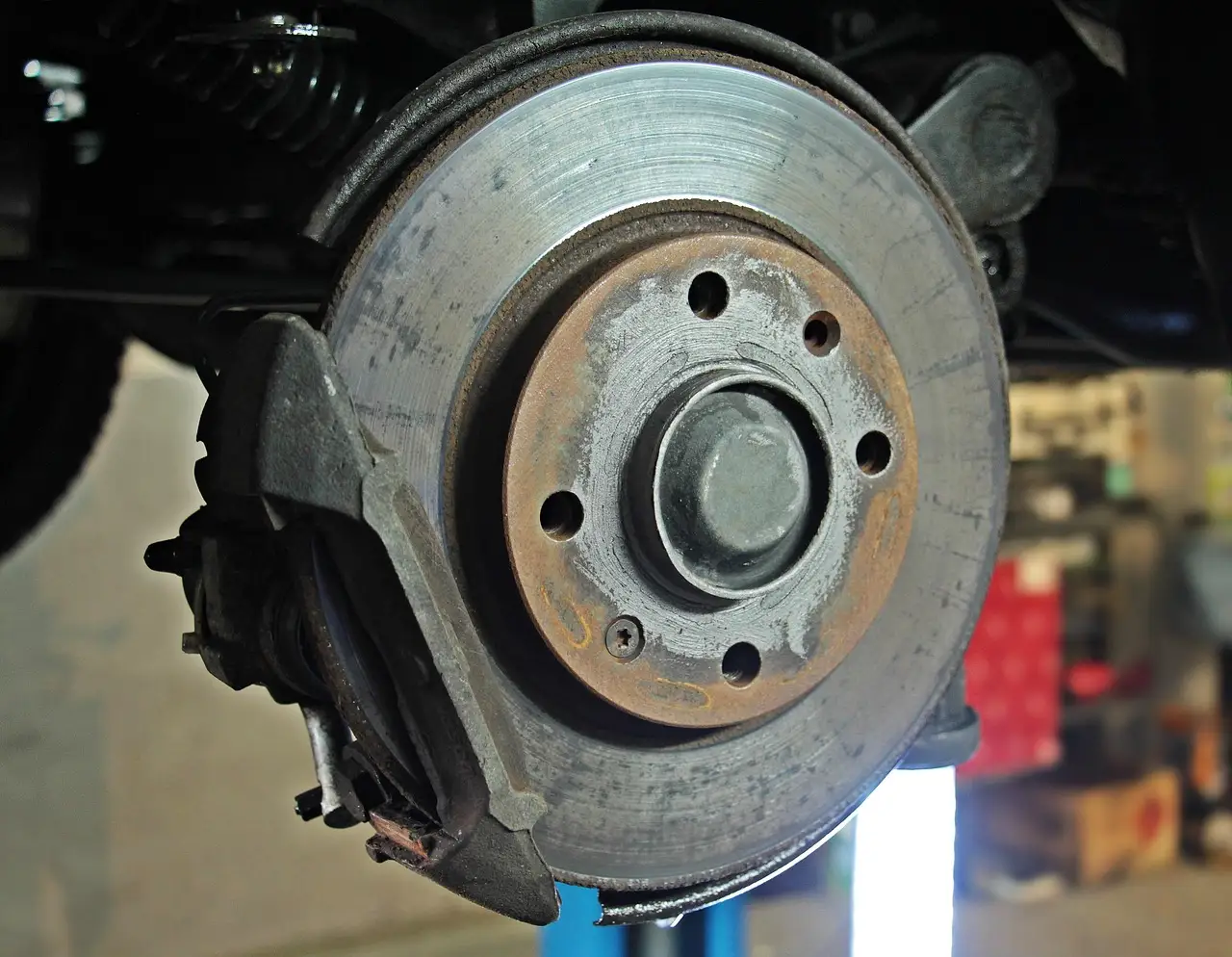
Start with a safe visual check, then compare one wheel against the others before you touch anything hydraulic. A collapsing hose is most convincing when the problem stays with one corner, changes after the pedal is released, and repeats hot or cold in the same place. If two wheels or the whole vehicle act up together, look beyond a single hose.
- Park on level ground, chock the wheels, and inspect the hose at that corner first.
- Look for cracks, bulges, leaks, and wet fluid near the hose ends and along the hose body.
- Spin the wheel by hand with the vehicle safely supported and compare resistance side to side.
- Apply and release the brake, then see whether that wheel frees immediately or stays tight.
- Repeat the same check after a short drive, then note whether the symptom is worse hot than cold.
For example, a left front wheel may turn freely when cold, then start dragging after about a 10-minute drive and stay hot while the other three are normal. That pattern points more toward a hose restriction or caliper release problem at that wheel than toward a master cylinder issue, which usually affects more than one corner.
Suppose the right rear wheel is hard to spin, but cracking a bleeder at the wheel lets it free and the drag comes back after the pedal is pressed again. That one-wheel, repeatable release pattern is a stronger clue for restricted return flow than for air in the system.
Brake hose diagnostic checklist
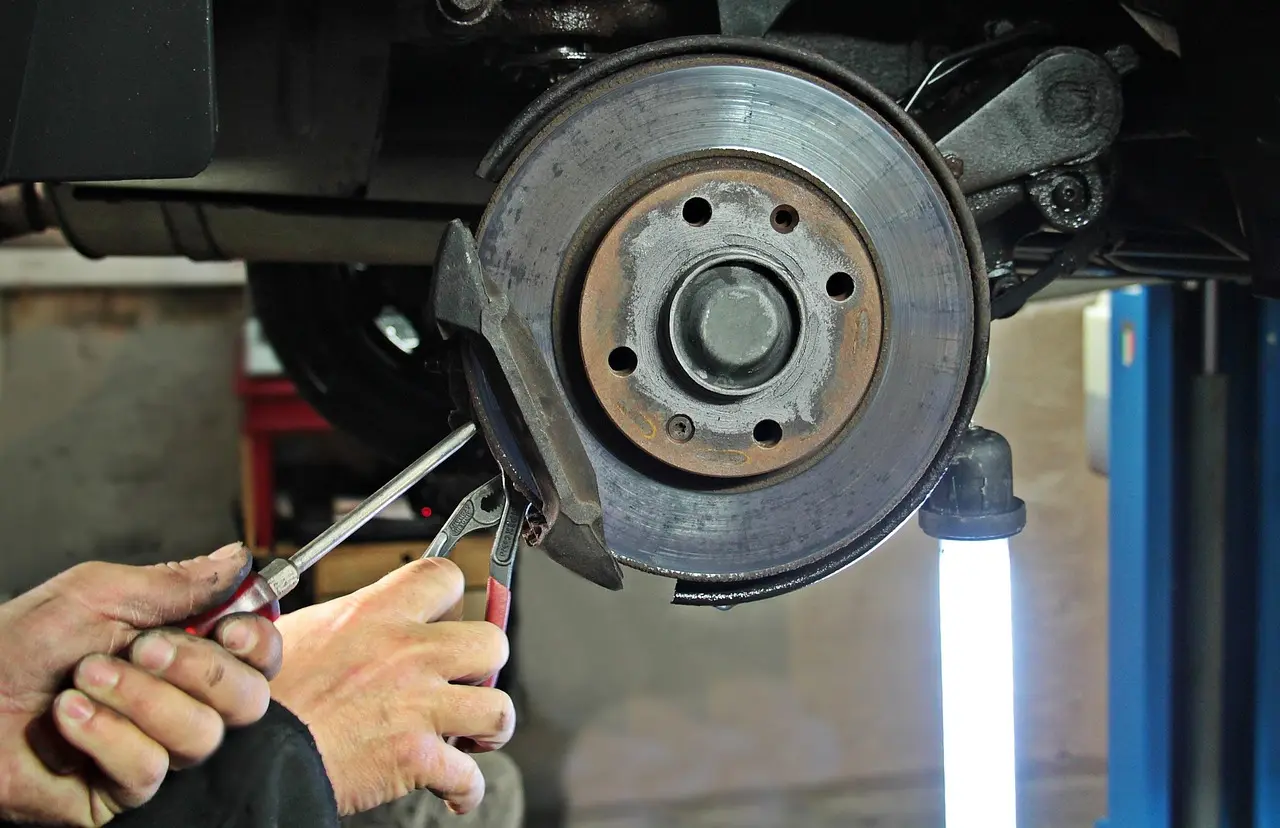
Use this checklist to sort the symptom pattern before you order parts. It is meant for observation, not for opening the hydraulic system or clamping the hose. The strongest clue is a one-wheel symptom that repeats in the same corner while the rest of the brakes behave normally.
| Symptom | Likely hose behavior | What it is not | Next action |
|---|---|---|---|
| One wheel drags after braking | Fluid may go in, then return slowly | Not enough to blame the hose alone | Check that corner for heat, smell, and release delay |
| Delayed release at one wheel | Restriction inside the hose is possible | Not typical of a whole-system air problem | Compare the opposite wheel on the same axle |
| Hot when driving, less obvious cold | Heat can make a weak hose act worse | Not proof of ABS trouble by itself | Inspect that hose and caliper closely after a short drive |
| Pulling under braking | One side may be braking harder or staying applied | Not automatically a tire or alignment issue | Check both front corners first, then rear if needed |
| Soft or spongy pedal with uneven braking | Hose fault is possible, but not alone | Not enough to exclude air or a leak | Look for seepage, low fluid, or recent brake work |
| Seepage at hose connection | External hose failure or fitting issue | Not a normal wear pattern | Stop driving and arrange inspection |
How do you tell hose collapse from caliper drag?
A collapsed hose usually shows delayed release or one-wheel drag that feels like pressure is trapped between the hose and the wheel brake. Caliper drag can look similar, but it more often comes from a seized slide pin, piston, or wheel cylinder problem at the brake end. If only one corner is involved, compare that wheel with the opposite side on the same axle.
Front and rear clues
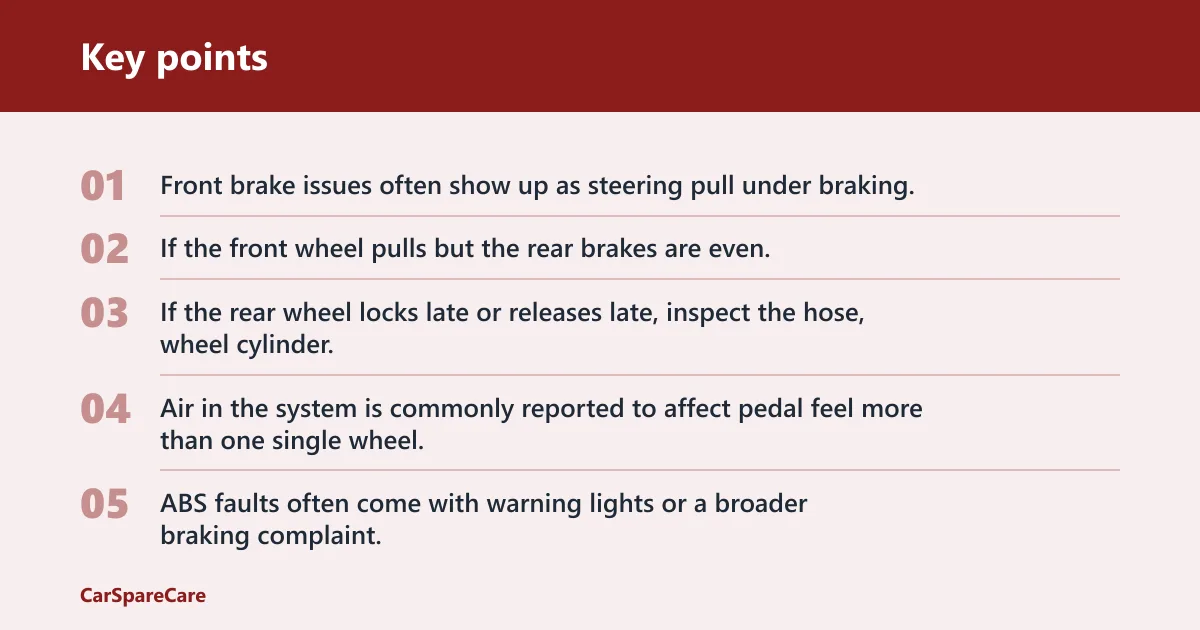
Front brake issues often show up as steering pull under braking, while rear issues may show up as heat, odor, or poor free-rolling after a stop. If the front wheel pulls but the rear brakes are even, focus on the front hose and caliper. If the rear wheel locks late or releases late, inspect the hose, wheel cylinder, and parking brake hardware at that corner.
When air or ABS is more likely
Air in the system is commonly reported to affect pedal feel more than one single wheel. ABS faults often come with warning lights or a broader braking complaint, rather than just one corner staying applied. A leak tends to lower fluid level or leave visible seepage, which makes the fault easier to spot than an internal restriction.
If the problem is one-wheel drag with no warning light and a repeatable delayed release, the hose or the wheel-end hardware deserves attention first. If the pedal is soft at all four corners, shift your focus to air, fluid loss, or master-cylinder trouble before you condemn a single hose.
Common mistakes
Do not clamp a brake hose as a consumer test. It can damage the hose, and it does not give a safe, reliable diagnosis. Do not treat a soft pedal as proof of hose collapse, because air or a leak can feel the same.
Do not ignore a cracked, bulged, or weeping hose while chasing a symptom elsewhere. Visible cracks, visible bulges, and fluid seepage near hose connections are warning signs on their own. If one wheel behaves differently, check that corner first instead of assuming the problem is in the ABS unit or the master cylinder.
A common first-timer mistake is to assume the brake hose is fine just because the pedal still feels normal after a short drive. A better clue is wheel behavior: does one wheel drag, release late, or run hotter than the others after the same stop?
Can you drive with a collapsing brake hose?
Do not keep driving if a wheel locks, stays hot, or pulls hard enough to change the car’s path. That is a safety issue because brake drag can overheat the brake and reduce control. If the hose is leaking, bulged, or seeping, stop driving and arrange a brake inspection immediately.
What to do next
- Park the vehicle and let the brake cool.
- Do not make a long trip with the fault present.
- Book a brake inspection and describe which wheel drags, when it happens, and whether it changes hot versus cold.
- If the symptom is mild and the car still stops evenly, drive only a short distance to a repair shop.
Brake hoses should be inspected during every brake service. They are typically replaced every 5 to 10 years, but condition and vehicle design matter more than a universal clock. Replace the hose if it is cracked, bulged, leaking, or seeping at the connections, and have the system bled professionally after replacement to remove air.
Frequently asked questions
How do I check if a brake hose is collapsed?
Inspect the hose for cracks, bulges, leaks, and wet fluid at the fittings and along the hose body, then compare wheel spin and release side to side with the vehicle safely supported. Do not clamp the hose. If one wheel frees only after the brake is opened at that corner, or if it stays tight after release, book a brake inspection.
What is a collapsed brake hose?
It is a hose that no longer lets brake fluid return normally after pressure is released. Brake fluid can reach the wheel brake, but return flow is restricted. That can leave one caliper or wheel cylinder partly applied, which causes drag, heat, and uneven braking.
What causes brake lines to collapse?
Age, heat, road debris, and deterioration of rubber hoses are common contributors. Rubber hoses are standard on most vehicles and are reinforced with synthetic fiber layers, but they can weaken over time. Damage, contamination, or poor previous installation can also create a restriction at the hose or connection.
Can a rubber brake hose collapse?
Yes. Rubber brake hoses can deteriorate with age and can become susceptible to collapsing as they age. They may still look acceptable on the outside while restricting fluid return inside. That is why inspection during every brake service matters, even when there is no visible leak.
Can a bad brake hose cause a soft pedal?
Yes, but soft pedal is not specific to a hose problem. A hose issue can coincide with spongy feel and uneven braking, yet air in the system or a fluid leak can do the same. Treat soft pedal as a general brake warning and check the wheels, fluid level, and hose condition before deciding.

Hi, I’m Melvin, an automobile engineer with extensive experience in automobile equipment. I currently work for a local automobile firm, where I specialize in the car parts industry. I’ve had the opportunity to collaborate with seasoned inspectors, gaining invaluable hands-on experience that goes beyond just theory.
My passion for automotive care started at a young age, which led me to create CarSpareCare. Through CarSpareCare, I share the knowledge and skills I’ve acquired over the years to help others navigate the world of car maintenance and repairs.
My goal is to provide practical tutorials, essential safety advice, and the latest industry insights so that anyone—whether a beginner or an expert—can confidently tackle their automotive projects.

