The best car interior cleaner for plastic surfaces is a pH-neutral, residue-free interior detailer; choose a matte-safe spray for dashboards and a light protectant only for high-touch trim. Wrong formulas can leave glare, slickness, or brittle residue on plastics. This guide helps you choose by finish, texture, and touch frequency.
Quick comparison
| Product | Badge | Best for | Price | ||
|---|---|---|---|---|---|
 | Armor All Streak-Free Original Protectant SprayArmor All | Our pick | 28 oz · protectant spray · original | $9.98 Price as of 11 Nov 2026 | View |
 | Meguiar’s Quik Interior Detailer CleanerMeguiar’s | Also great | 24 oz · interior detailer · cleaner | $14.49 Price as of 11 Nov 2026 | View |
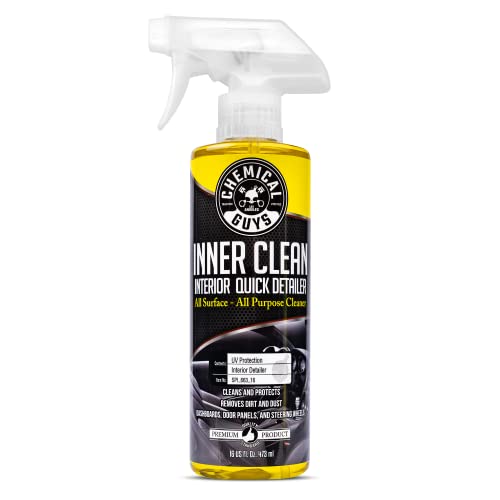 | Chemical Guys, InnerClean Interior Quick DetailerChemical Guys | Also great | 16 oz · quick detailer · protectant | $11.99 Price as of 11 Nov 2026 | View |
 | Griot’s Garage Interior Cleaner Spray for Car SeatsGriot’s Garage | Pair with it | 22 fl oz · interior cleaner · all-purpose | $9.99 Price as of 11 Nov 2026 | View |
The main trade-off is finish control versus cleaning power. On plastic dashboards, door panels, steering wheels, and center consoles, a common safer choice is the one that leaves the least residue and matches the factory sheen.
If you want quick dust removal with a low-risk finish, a detailer spray is usually the first stop. If your cabin has mixed materials and light grime, an all-surface cleaner is often the better fit.
How we chose
Finish control and residue risk
Plastic surfaces can look clean and still feel wrong. Streaking, grabby residue, and a glossy film matter more than marketing claims, especially on steering wheels, piano-black trim, and soft-touch dashboard panels.
Surface compatibility across common plastics
We prioritized products that are listed for vinyl, rubber, and plastic, since many cabins mix those materials across the dashboard, door cards, center console, and trim seams.
Ease of use with microfiber and brushes
A good plastic cleaner should work with a microfiber cloth, and preferably with detail brushes or swabs for vents, buttons, and tight seams. That matters more than a heavy foam or a slick dressing on delicate controls.
Protection claims kept limited
Some products add a light layer of protection, and some list UV-related claims. Those claims are useful only when they are modest and specific, because interior plastics still need shade, cleaning discipline, and periodic reapplication.
Meguiar’s Quik Interior Detailer: best for daily-touch plastics
This is the strongest fit for dashboards, door panels, and center consoles when you want fast cleaning with a controlled finish. Based on the published product details, it works on plastics, leather, and rubber, and it is the most straightforward pick for everyday dust and light grime.
It stands out because it is a true interior detailer spray format, so it suits quick wipe-downs and light agitation with a microfiber cloth. For plastic surfaces that get touched often, that matters more than a heavy coating or a glossy dressing.
The drawback is that it is not the right answer for heavy buildup or for people who want a dramatic darkening effect. If you want a very matte OEM look or need deep grime removal, another product may fit better.
Griot’s Garage Interior Cleaner Spray: best for mixed-material cabins
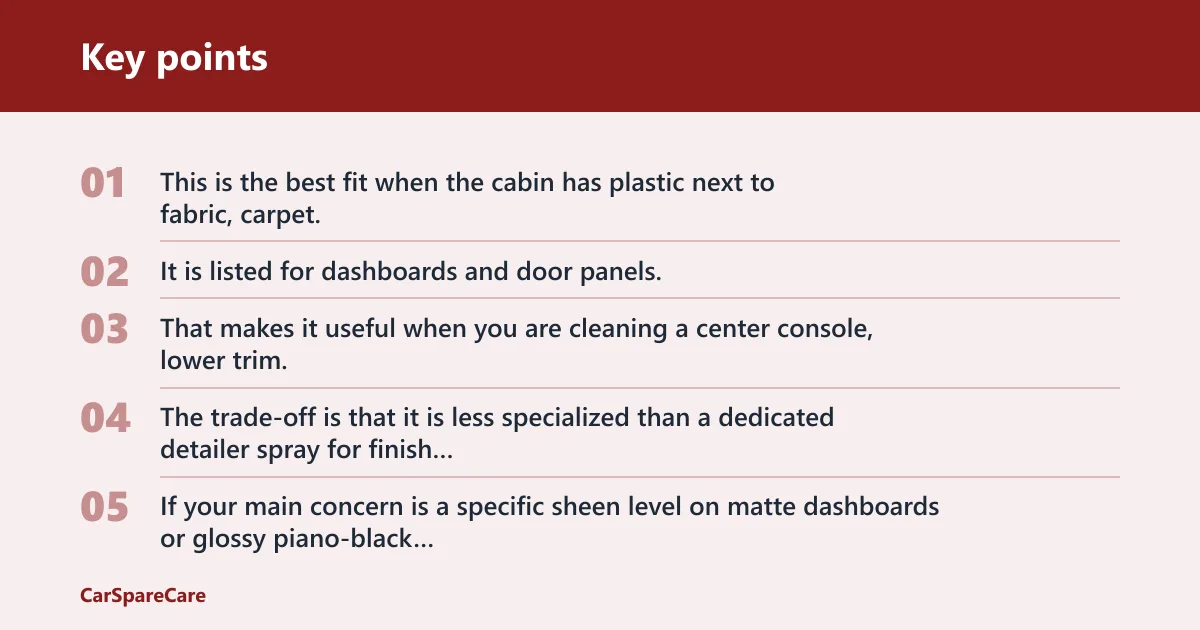
This is the best fit when the cabin has plastic next to fabric, carpet, or upholstery and you want one cleaner for quick work. It is listed for dashboards and door panels, and the product details say it leaves no sticky residue, which is important on plastic surfaces that should not feel tacky after cleaning.
Its strength is broad use. That makes it useful when you are cleaning a center console, lower trim, and adjacent fabric areas in the same session.
The trade-off is that it is less specialized than a dedicated detailer spray for finish tuning. If your main concern is a specific sheen level on matte dashboards or glossy piano-black trim, a more targeted plastic cleaner may be easier to control.
Chemical Guys InnerClean: best for low-shine trim care
This is a sensible choice when you want a non-greasy finish and a cleaner that can leave a little protection behind. Published product details say it is safe on vinyl, plastic, leather, and rubber, and that it leaves a non-greasy finish with dust-resistant technology.
That makes it useful for plastic trim that should look even rather than shiny, especially on dashboards and door panels. For many DIY owners, the appeal is less about deep cleaning and more about keeping the surface looking tidy between full details.
The drawback is that any protectant-style formula can be too much for glossy trim or touch-heavy controls if you apply too much product. On steering wheels, buttons, and piano-black surfaces, light application matters.
Armor All Streak-Free Original Protectant Spray: best for glossy protection
This product fits better as a gloss-forward protectant than as a matte plastic cleaner. The listed benefits include cleaning dirt, dust, and debris on vinyl, rubber, and plastic, plus gloss additives for shine.
That makes it a better match for trim that you want to darken or make more reflective, not for OEM matte plastics where glare is the problem. It can help when a sun-exposed panel has faded and you want a more uniform look.
The drawback is obvious on plastic surfaces that should stay low-glare. On dashboards and steering wheels, added shine can read as slickness, and it is not the first choice if you want a factory-matte finish.
Plastic trim comparison table
| Scenario | Ideal cleaner type | Desired finish | Common mistake to avoid |
|---|---|---|---|
| Matte dashboard | Interior detailer spray | Low-glare, OEM matte | Using a shiny protectant that leaves a film |
| Textured door panel | All-surface interior cleaner | Clean, even, non-greasy | Skipping agitation, which leaves dust in the texture |
| Glossy piano-black trim | Residue-free interior detailer | Clear, streak-free, very light finish | Over-wetting the panel and creating swipe marks |
| Steering wheel | Light interior cleaner, then dry buff | Dry to the touch | Leaving any slick dressing behind |
| Center console | Detailer spray or all-surface cleaner | Balanced, easy to wipe | Applying too much product around buttons and seams |
| Sun-faded trim | Protectant or trim restorer, used lightly | Even color with limited shine | Chasing dark color with a greasy, high-gloss layer |
Which one should you buy?
Choose a detailer spray if you want fast dust removal and a low-residue finish on daily-touch plastics. That is the safest starting point for dashboards, door panels, and center consoles that only need regular maintenance.
Choose an all-surface cleaner if your cabin has mixed materials and the grime is light. It is often the simplest answer when plastic sits next to fabric, rubber, or upholstery.
Choose a matte dressing if your goal is a lower-shine, more uniform look on trim that looks faded or uneven. Keep the application light, because the wrong amount can make OEM plastic look shiny instead of refreshed.
Choose a stronger cleaner only for heavy grime, and only after spot testing. If the surface is delicate, coated, or gloss black, start with the mildest option that can still remove the soil.
What is the best car interior cleaner for plastic surfaces?
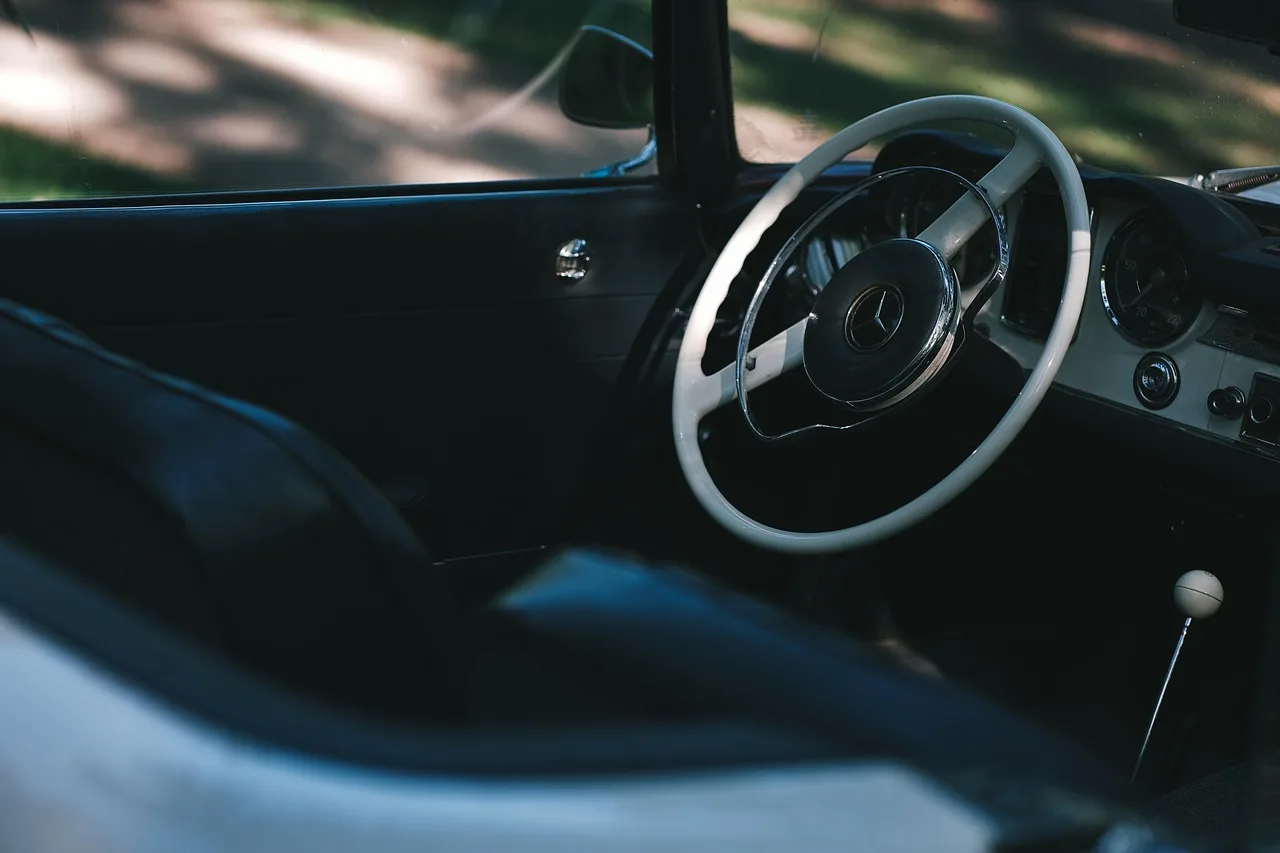
A pH-neutral, residue-free interior detailer that dries clean and stays close to the factory finish is often the best choice. For plastic dashboards, door panels, steering wheels, and center consoles, the safest products are the ones that clean dust and grime without leaving slickness or a bright shine.
If you want one answer for most cabins, start with a detailer spray rather than a heavy dressing. That gives you better control over streaking, feel, and finish on both matte and lightly textured plastics.
Can I use an all-purpose interior cleaner on dashboard plastic?
Yes, if the product is listed as safe on plastic and you use it lightly. An all-surface or all-purpose interior cleaner can work well on dashboard plastic, especially when the cabin has mixed materials and only light dust or road film.
The key is restraint. Spray onto the cloth when possible, use light agitation, and dry buff before the product has a chance to pool in seams or leave a grabby film.
Which interior cleaner leaves a matte finish instead of shine?
A matte-safe interior detailer or a low-gloss trim product is the better choice. Look for wording such as non-greasy finish, low-shine appearance, or residue-free cleaning, since gloss additives and heavy protectants are more likely to make plastic look shiny.
For OEM dashboards and textured door panels, the goal is usually clean and even, not dark and glossy. On piano-black trim, a very light cleaner is usually better than a dressing.
What cleaner is safe for steering wheels and center consoles?
A mild interior detailer or a plastic-safe all-surface cleaner is usually the safest choice for steering wheels and center consoles. Those areas are touched often, so you want a cleaner that removes oils and dust without leaving a slippery coating.
Avoid anything that leaves obvious gloss or a waxy feel. A steering wheel should feel dry and controlled after cleaning, not slick.
How do I clean dusty plastic trim without making it sticky?
Use a spray-and-wipe method with a microfiber cloth, then dry buff the surface. The goal is to remove dust and light grime without leaving a thick film, because thick film is what usually turns dusty plastic into sticky plastic.
Suppose a center console has a thin layer of gray dust and a few fingerprints. A light spray, short dwell time, gentle agitation, and a final dry wipe usually clean it better than soaking the panel.
Use this order
- Test a hidden spot first.
- Apply a small amount of cleaner to the cloth or surface.
- Let it dwell briefly if the label allows it.
- Agitate lightly with microfiber or a soft detail brush.
- Wipe with a clean microfiber towel.
- Dry buff the panel to remove residue.
Do interior cleaners protect plastic from dust buildup?
Some do, but only to a limited degree. Interior detailer sprays and protectant formulas can leave a light layer that may slow dust cling, yet they do not make plastic dust-proof, and heavy residue can make the problem worse over time.
That is why film thickness matters. A very thin layer may help a little, while an over-applied dressing can attract dust and create a dull, greasy look on dashboards and trim.
Which products are best for heavy grime on car interior plastics?
For heavy grime, a stronger plastic-safe cleaner or an all-surface cleaner with more cleaning power is usually the better fit. If the soil is baked-on, oily, or built up around buttons and seams, a soft brush or swab is often more important than the bottle alone.
Picture a door panel with sunscreen smears, road dust, and fingerprint buildup around the pull handle. That is a better case for a more assertive cleaner and careful agitation than for a dressing or shine product.
Is a dedicated interior detailer better than upholstery cleaner for plastic surfaces?
Yes, for plastic surfaces it usually is. Upholstery cleaners are made for fabric soil behavior, while interior detailers are generally better matched to dashboards, trim, and hard plastic panels where residue, sheen, and surface feel matter more.
If the issue is plastic dust, fingerprints, or light road film, choose the interior detailer first. Save upholstery cleaner for cloth seats, carpet, or fabric inserts unless the label specifically says it is safe and effective on plastic.

Hi, I’m Melvin, an automobile engineer with extensive experience in automobile equipment. I currently work for a local automobile firm, where I specialize in the car parts industry. I’ve had the opportunity to collaborate with seasoned inspectors, gaining invaluable hands-on experience that goes beyond just theory.
My passion for automotive care started at a young age, which led me to create CarSpareCare. Through CarSpareCare, I share the knowledge and skills I’ve acquired over the years to help others navigate the world of car maintenance and repairs.
My goal is to provide practical tutorials, essential safety advice, and the latest industry insights so that anyone—whether a beginner or an expert—can confidently tackle their automotive projects.