For odor removal, match the cleaner to the source: enzyme cleaners for pet or food residue, APCs for general grime, and odor neutralizers for smoke, with a deep clean and drying step whenever moisture is involved. Skip the source match, and the smell often returns, or stains and residue stay hidden in fabric, carpet, and vents. This guide shows which cleaner type fits smoke, pet, food, and mildew odors, plus when cleaning alone will not fix the problem.
Quick comparison
| Product | Badge | Best for | Price | ||
|---|---|---|---|---|---|
 | ANGRY ORANGE Stain & Odor RemoverANGRY ORANGE | Our pick | 32oz · enzyme cleaner · orange scent | $21.99 Price as of 10 Nov 2026 | View |
 | Smoke-Out Smoke Odor Eliminator SprayMOROSONO | Also great | 16 oz · deodorizer spray · peppermint lemon | $17.99 Price as of 10 Nov 2026 | View |
 | Meguiar’s Whole Car Air Re-Fresher Odor Eliminator MistMeguiar’s | Upgrade pick | 6-pack · air refresher mist · new car scent | $41.22 Price as of 10 Nov 2026 | View |
 | Activated Charcoal Odor Absorber for Strong Odors in CarVergali | Pair with it | 10-pack · activated charcoal bags · bamboo | $21.99 Price as of 10 Nov 2026 | View |
 | Bissell Woolite® Advantage Pet Stain & Odor Remover + OxyBissell | Budget pick | 2-pack · pet stain remover · oxy | $16.04 Price as of 10 Nov 2026 | View |
Smoke, pet urine, and mildew are source problems, so the product type matters more than the label. A spray can handle fresh surface residue, while foam, enzyme cleaners, or a portable carpet cleaner make more sense when odor has soaked into car interior fabric.
📊 The Drive’s best value pick is 303 All Surface Interior Cleaner. Source: Thedrive.
How we chose
The comparison below focuses on odor source coverage, surface compatibility, effort per job, and cost per use. It also separates surface cleaning from odor neutralization, since a cleaner can make fabric look better and still leave the smell behind.
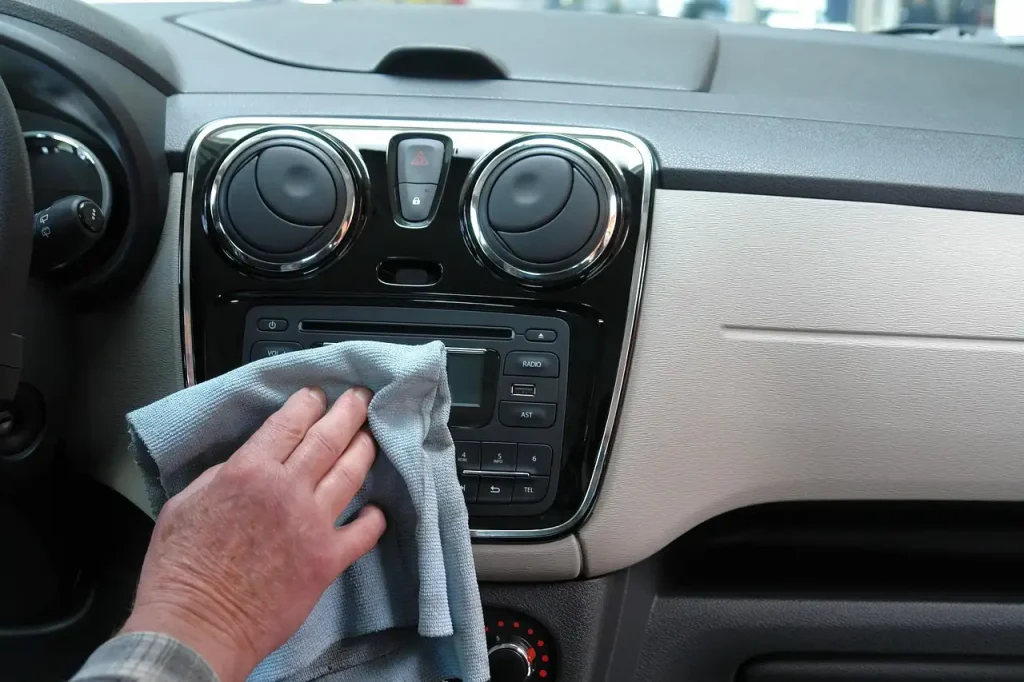
Car interior fabric includes seats, carpets, and the headliner, and those porous surfaces trap odor. Dashboards, steering wheels, and hard trim need a different product type, usually an interior detailer or all-surface cleaner with little residue.
We also weighed when a product needs agitation, dwell time, or extraction. For deep-set odors, especially smoke or wet contamination, a stronger process matters more than a quick wipe.
Foam fabric cleaner: best for upholstery
Foam fabric cleaner is the best first choice for cloth seats, carpet, and other porous surfaces when the smell is tied to a surface spill or light staining. Foam stays on fibers longer than liquid spray, so it gives you more contact time before you scrub or blot it away.
That extra dwell time helps on car upholstery cleaner jobs where odor sits in the top layer of fabric. It is a practical fit for coffee, fast-food spills, or general seat grime that has not soaked deeply into padding.
Its limit is depth. Foam can help with smoke residue on the surface, but smoke odor often clings to fabric and interior panels, and a single pass rarely reaches everything. For mildew, foam is even less likely to solve the problem if the carpet underlay or HVAC system is still damp.
Can one product clean and deodorize?
Yes, sometimes. A single cleaner can handle light residue and leave the interior smelling better, but that is different from neutralizing the odor source. If the smell comes from pet urine, smoke, spoiled food, or moisture, a separate odor eliminator or a deeper extraction step may still be needed.
A product labeled as an odor eliminator is made to attack the source odor, not hide it with fragrance. That matters because scent alone only covers the symptom. If residue stays in fabric, the odor often returns after the scent fades.
Say your child spills milk on a cloth rear seat and you catch it the same day. A foam cleaner or enzyme cleaner may be enough after blotting, agitation, and drying. Suppose the same spill soaked through the seat cushion and the cabin still smells after two days; then a surface cleaner alone is unlikely to finish the job.
Portable carpet cleaner: best for deep-set odors
A portable carpet cleaner is the better choice when odor is soaked into seats, floor mats, or carpet padding, especially after wet contamination. It uses suction and water tanks, so it can pull out loosened residue instead of leaving it in the fibers.
This is the strongest option in this group for deep-set odors and stains. It is also the most involved, because you need fill water, cleaning solution, repeat passes, and drying time. That makes it less convenient than a spray, but more effective when the source is not on the surface anymore.
The drawback is cost and effort. A portable extractor is harder to justify for a fresh snack spill on one seat, but it can be worth it when the smell survives multiple cleanings or when pet urine has reached the carpet backing.
What is the best car interior cleaner for removing odors?
The best cleaner depends on the odor source, not the brand name on the bottle. For pet urine or food residue, choose an enzyme cleaner. For smoke, use an odor neutralizer made for smoke rather than a fragranced wipe. For wet carpet or soaked seats, a portable carpet cleaner is the stronger fix.
For general grime on hard surfaces, an interior detailer or all-surface cleaner is enough. But interior detailer is usually not enough for embedded odor in fabric, carpet, or headliners, because those materials absorb smell below the visible surface.
Among the listed products, ANGRY ORANGE fits pet residue better, MOROSONO fits smoke odor better, and Bissell fits deeper carpet and upholstery cleanup. Those are different jobs.
What cleaner gets rid of smoke smell in a car interior?
Smoke odor is one of the hardest cases because it clings to fabric, headliners, plastic panels, and ventilation paths. A smoke odor eliminator is usually the right starting point, but it works best after vacuuming, wiping hard surfaces, and cleaning the fabrics that absorbed the residue.
For lighter smoke smell, a deodorizer spray can help on seats and trim. For stronger odor, recirculated-air treatments and repeated fabric cleaning are more realistic than one quick spray. If the smell keeps returning, the HVAC system may also need attention.
MOROSONO’s Smoke-Out spray is the most direct match in the list for cigarette and cigar odor. It is still not a cure for soaked fabric, ash residue, or a clogged cabin filter.
What is the best odor remover for car upholstery and carpets?
For upholstery and carpet, the best odor remover is usually an enzyme cleaner or an upholstery shampoo that can reach the source inside the fibers. Foam fabric cleaner is useful because it clings longer than a liquid spray, while a portable carpet cleaner is better when the smell has soaked deeper than the top layer.
The choice depends on how far the odor traveled. A light food spill may need only spot treatment and scrubbing. Pet urine or a wet carpet often needs extraction, because odor can remain in the padding after the visible stain is gone.
Bissell Woolite Advantage is the broadest upholstery-and-carpet choice here for odor plus stain cleanup. ANGRY ORANGE is more source-specific for pet urine and similar organic residue.
Which one should you buy?
If you want the lowest-effort option for fresh fabric odor, start with a foam cleaner or an enzyme spray. If the smell is smoke, buy a smoke odor eliminator first. If the issue is soaked carpet or repeated pet odor, step up to extraction before you spend on more sprays.
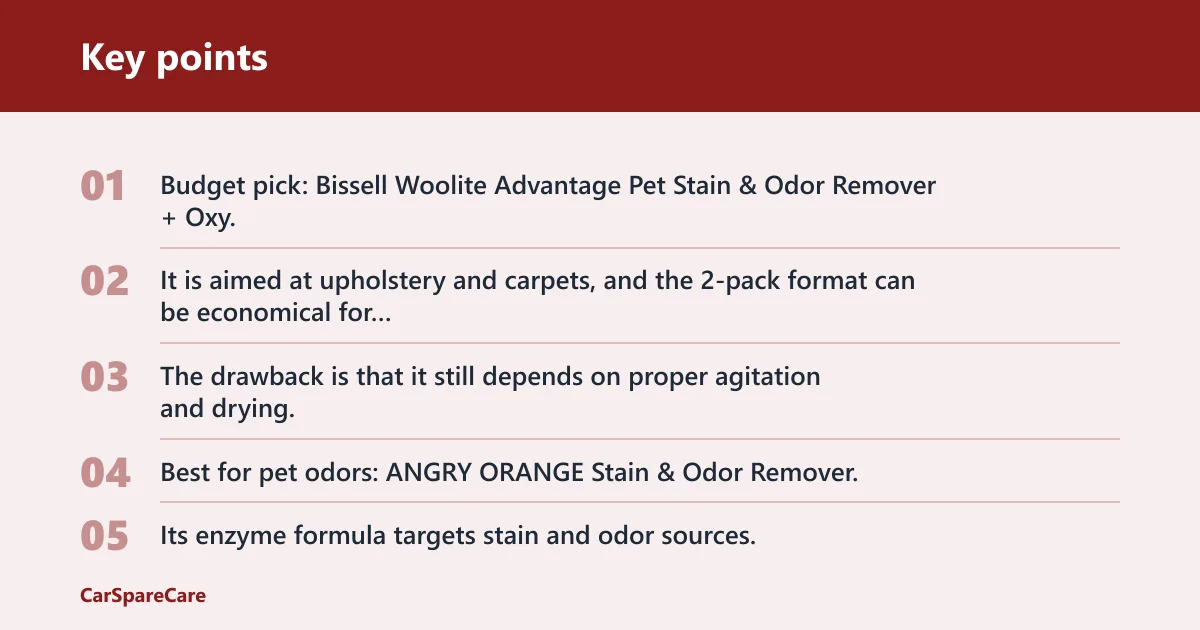
Budget pick: Bissell Woolite Advantage Pet Stain & Odor Remover + Oxy. It is aimed at upholstery and carpets, and the 2-pack format can be economical for repeated spot cleaning. The drawback is that it still depends on proper agitation and drying.
Best for pet odors: ANGRY ORANGE Stain & Odor Remover. Its enzyme formula targets stain and odor sources, which is the right logic for urine and food residue. The drawback is that it is a spot cleaner, not a full-car extraction solution.
Best for smoke: MOROSONO Smoke-Out Smoke Odor Eliminator Spray. It is built for cigarette and cigar odor and is ready to use. The drawback is that smoke trapped in fabrics, vents, and headliners may need more than a spray.
Best for deep cleaning: a portable carpet cleaner such as Bissell Woolite paired with extraction equipment. That is the better choice for wet contamination, repeated spills, or carpets that still smell after surface cleaning. The drawback is higher effort and more drying time.
Best for hard surfaces: a general interior detailer or all-surface cleaner, such as 303 All Surface Interior Cleaner or Mothers Speed Interior Detailer. The drawback is simple: those products clean dashboards and trim well, but they are not the main fix for odor embedded in fabric.
How to choose
Start by identifying the source. Food residue and pet accidents call for enzyme action. Smoke calls for a smoke-specific odor eliminator. Moisture calls for drying, source repair, and often extraction before any deodorizer can work properly.
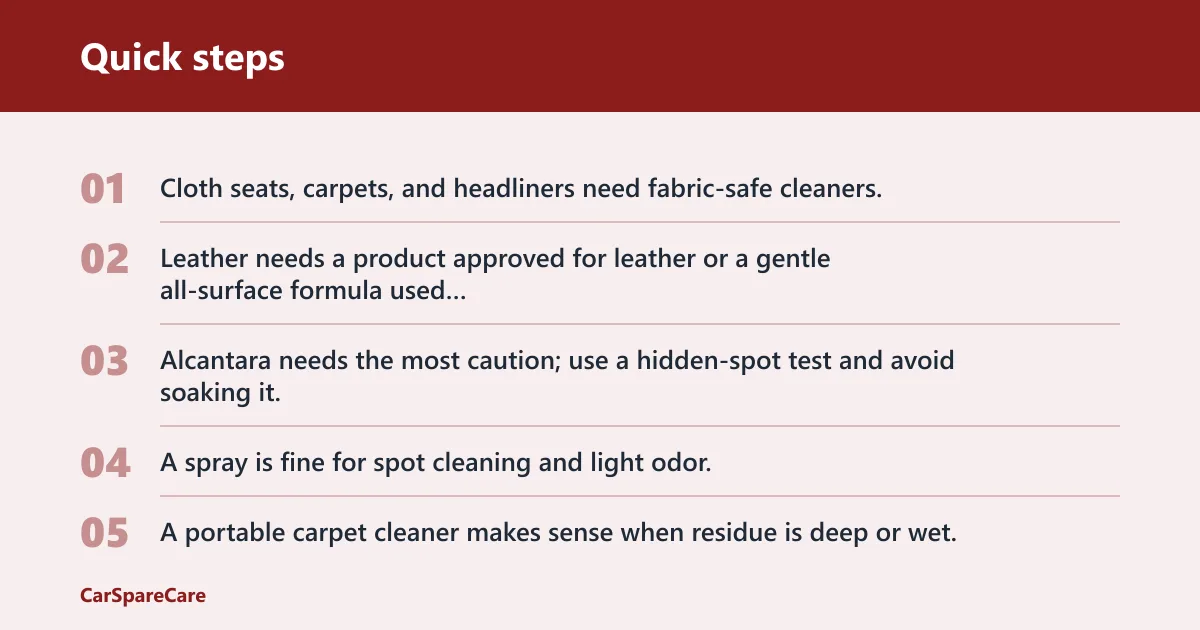
Then match the surface. Cloth seats, carpets, and headliners need fabric-safe cleaners. Leather needs a product approved for leather or a gentle all-surface formula used carefully. Alcantara needs the most caution; use a hidden-spot test and avoid soaking it, because excess liquid can leave marks or stiffness.
Use the right tool next. A spray is fine for spot cleaning and light odor. Foam helps on upholstery because it clings. A portable carpet cleaner makes sense when residue is deep or wet. Interior detailer is for dash, steering wheel, and hard trim, not for embedded smells.
Cost per use matters too. A spray is cheaper and faster for one seat stain. An extractor costs more but can solve a bigger problem in one job, especially if the same odor keeps returning after multiple spot cleanings.
Short checklist: vacuum first, test in a hidden area, apply the cleaner, agitate if the label calls for it, remove residue, and dry the area fully. If the odor comes back, inspect the underlying cause instead of adding more fragrance.
Picture a compact sedan with a damp rear floor after a sunroof leak. A spray may make the carpet smell better for a day, but the odor returns because the padding stayed wet. In that case, drying, leak repair, and extraction matter more than a stronger fragrance.
A common first-timer mistake is using a dashboard detailer on seat fabric because it leaves the cabin looking clean. That helps hard trim, but it does little for odor trapped in porous material, so the smell can remain even when the surfaces look spotless.
Odor decision matrix
| Odor source | Likely material affected | Best product type | Required tools | Estimated effort | When to escalate to extraction or ozone |
|---|---|---|---|---|---|
| Smoke | Seats, carpet, headliner, trim, vents | Smoke odor eliminator spray plus fabric cleaner | Vacuum, microfiber towels, soft brush | Medium to high | Escalate if the smell returns after full fabric cleaning or if the headliner and HVAC still hold odor; ozone only after cleaning and drying, for severe cases |
| Pet urine | Car upholstery fabric, carpet, padding | Enzyme cleaner or portable carpet cleaner | Vacuum, blotting towels, extractor or brush | High | Escalate if the odor remains after enzyme dwell time and extraction, especially if liquid reached the cushion or underlay |
| Food spill | Seats, carpet, console edges | Foam fabric cleaner or enzyme cleaner | Vacuum, microfiber towels, soft brush | Low to medium | Escalate if the spill soaked below the visible layer or if a sour smell remains after cleaning and full drying |
| Mold and mildew | Car interior fabric, floor carpet, HVAC air path | Drying first, then extractor and odor neutralizer | Fan, dehumidification, vacuum, extractor | High | Escalate fast if moisture source is active, the carpet backing is damp, or the smell comes back after drying; ozone is only a late-step option after source repair |
For smoke and mildew, the source often sits outside the surface layer. That is why repeated masking rarely works. If the interior keeps smelling after proper cleaning, look for wet insulation, blocked drains, leaking seals, or HVAC contamination.
What cleaner is safest for cloth seats and dashboards?
For cloth seats, choose a fabric-safe cleaner made for upholstery and carpets, then test a hidden spot first. For dashboards and steering wheels, use an interior detailer or all-surface cleaner that leaves little residue. Keep those jobs separate, because the safest product for trim is not always the best one for fabric.
On leather, avoid saturating the surface. Use a cleaner meant for leather or a gentle interior cleaner with a microfiber towel. On Alcantara, be extra careful with moisture and agitation. A light touch and hidden-spot test matter more there than on standard cloth.
Walmart lists Chemical Guys Foaming Citrus Fabric Clean as an odor eliminator, and that product type fits fabric better than dash trim. Walmart also lists Meguiar’s Carpet & Upholstery Cleaner in a 19 oz size, which signals a fabric-focused use case rather than a hard-surface one.
Frequently asked questions
Can one product clean and deodorize car seats at the same time?
Sometimes, yes. A good upholstery cleaner can remove light soil and reduce odor in one step. But if the seat has pet urine, smoke, or moisture damage, a cleaner may not neutralize the source fully. In those cases, you may need a separate odor eliminator or extractor.
Do I need a spray, foam, or portable extractor for bad car smells?
Use spray for light spot treatment and quick odor control. Choose foam when you want longer contact on fabric and carpets. Pick a portable extractor for deep-set odors, wet contamination, or repeated return smells. The deeper the source, the more likely extraction becomes the better value.
How do I remove pet odors from car interior fabric?
Start with an enzyme cleaner, because pet urine is a source odor, not just a surface stain. Blot first, then apply the cleaner and let it dwell as directed. If the smell returns, urine likely reached the padding, and a portable carpet cleaner or professional extraction becomes the better next step.
What product works best on musty or moldy car smells?
Mold and mildew odors need moisture control first. Dry the interior, fix leaks, and clean the affected fabric and carpet. Then use an odor neutralizer if needed. If the smell keeps coming back, suspect damp padding, drainage problems, or HVAC contamination rather than a simple surface cleaning issue.

Hi, I’m Melvin, an automobile engineer with extensive experience in automobile equipment. I currently work for a local automobile firm, where I specialize in the car parts industry. I’ve had the opportunity to collaborate with seasoned inspectors, gaining invaluable hands-on experience that goes beyond just theory.
My passion for automotive care started at a young age, which led me to create CarSpareCare. Through CarSpareCare, I share the knowledge and skills I’ve acquired over the years to help others navigate the world of car maintenance and repairs.
My goal is to provide practical tutorials, essential safety advice, and the latest industry insights so that anyone—whether a beginner or an expert—can confidently tackle their automotive projects.