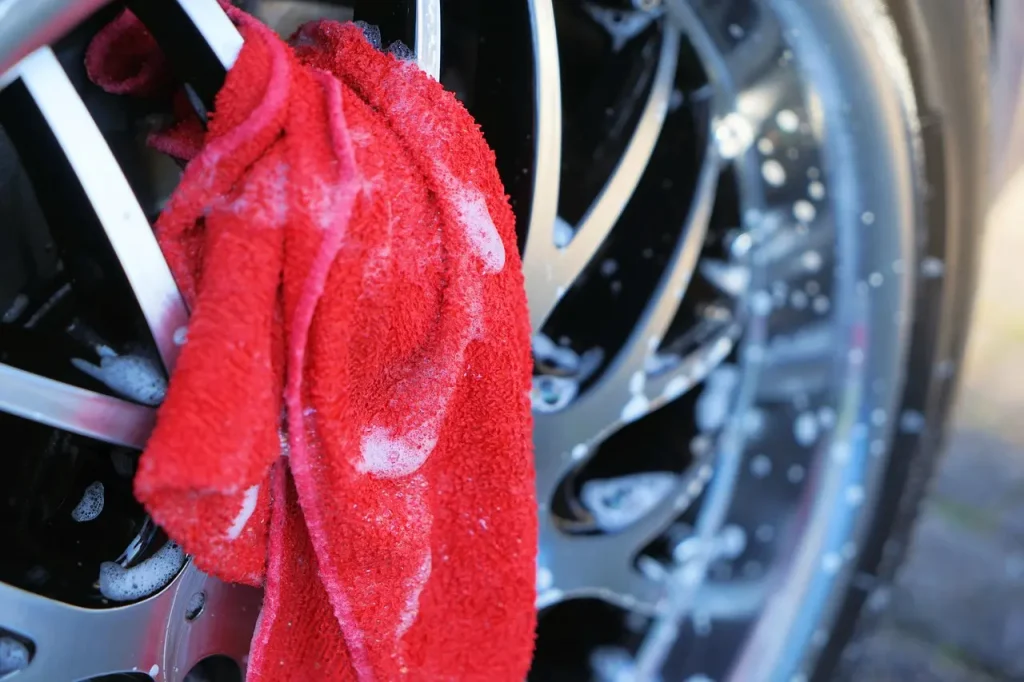
Use a pH-neutral wheel cleaner, soft brush, and microfiber towel. If dust remains after about two gentle passes, stop scrubbing and move to a stronger cleaner or pad inspection. Scrubbing too hard can haze clear coat, stain bare aluminum, and leave polished or machined faces permanently dull. This guide shows a safe cleaning method by wheel finish, how to judge dust severity, and when prevention beats more pressure.
How wheel finish affects cleaning


Brake dust is normal wear from disc brake pads. It can cling to wheel surfaces as a black film, and it shows up more on many alloy wheels and aluminum wheels. You can reduce buildup, but you cannot remove it entirely. The safest approach is to match the cleaner and brush to the finish, then stop when the dust stops lifting cleanly.
What changes the risk
Wheel finish changes the risk. Painted and clear-coated wheels are often reported to tolerate gentle washing better than polished, matte, powder-coated, or machined-face wheels. Some factory machined-face wheels are clear-coated, while others are more delicate, so the label or owner’s manual matters more than the shape of the face alone. If the clear coat is damaged, corrosion can start on aluminum underneath.
When cleaning is enough and when it is not
If the wheel only has light dust, a rinse, a mild cleaner, and a soft brush are usually enough. If the dust is baked on, repeated gentle passes may help, but stained or etched areas may not fully recover by washing alone. At that point, the better fix may be wheel refinishing, a different pad compound, or both.
What you’ll need
- Warm water
- Mild car wash soap
- Wheel-specific cleaner that matches the finish
- Soft bristle brush or foam brush
- Microfiber towels
- Separate rinse bucket
- Wheel protectant for after cleaning
Use a cleaner labeled for wheel surfaces, not a harsh household chemical. For alloy and aluminum wheels, avoid scouring powder, wire bristles, and anything that can scratch the finish. Always spot-test a cleaner on an inconspicuous area first, especially on polished, matte, machined-face, or coated wheels.
How do you clean brake dust safely?
Let the wheel cool, rinse away loose grit, spot-test the cleaner, then clean one wheel at a time with a soft brush and warm water. Rinse fully before the product dries, and dry with microfiber so residue does not bake on. If the wheel starts to haze, stain, or discolor, stop and reassess the finish.
- Park in shade and let the wheels cool before you start.
- Rinse each wheel with warm water to remove loose dust and grit.
- Spray a small amount of wheel cleaner on a hidden area and wait for the label’s dwell time.
- Scrub with a soft bristle brush or foam brush using light pressure.
- Rinse thoroughly, then dry with a microfiber towel before residue can dry on the surface.
Say your front alloy wheels have light black dust after a week of city driving. One gentle wash may clear most of it. Say the rear polished wheels have the same dust but begin to dull after the first pass. Stop there and switch to a milder cleaner, because the finish is reacting before the dust is fully gone.
What do you do about baked-on dust?
Baked-on dust usually needs a second gentle pass before anything stronger. If the residue still clings, check the wheel for staining, etched spots, hazing, or dark patches that do not rinse away. Those signs point to finish damage or embedded contamination, not just loose dirt. Do not keep scrubbing the same area harder and harder.
If that didn’t work, try this next
- Repeat the cleaner on the problem area and let it dwell only as long as the label allows.
- Use fresh warm water and a clean microfiber towel to remove softened residue.
- If the wheel is painted or clear-coated and the label allows it, use a stronger wheel-formulated cleaner before considering harsher methods.
- If the finish stays stained or feels rough after rinsing, stop and consider refinishing instead of more pressure.
A common first-timer mistake is to treat dark residue as if it were all removable dirt. On a machined-face wheel, that can turn a minor stain into a permanent dull patch. If the finish has lifted or the clear coat looks cloudy, cleaning has reached its limit.
Brake dust decision table
Use this table to match the wheel finish and dust level to the safest cleaning choice. When in doubt, begin with the mildest option and stop at the first sign of finish damage.
| Wheel finish | Dust severity | Safest cleaner | Brush type | Dwell time | Stop signs for damage |
|---|---|---|---|---|---|
| Painted or clear-coated alloy | Light | Warm water and mild car wash soap | Soft bristle or foam brush | Immediate rinse after agitation | Hazing, streaks, or cleaner drying on the face |
| Painted or clear-coated alloy | Moderate | Wheel-specific cleaner labeled safe for alloy surfaces | Soft bristle brush | Only the label’s stated dwell time | Discoloration, lifted clear coat, or dark residue that stays put |
| Polished aluminum | Light to moderate | Mild soap first; finish-safe wheel cleaner only if the label allows it | Foam brush or very soft bristle brush | Short contact, then rinse | Dulling, clouding, or patchy shine loss |
| Matte, powder-coated, or delicate machined-face | Light | Warm water and mild soap, or a finish-specific wheel cleaner | Soft foam brush | Minimal contact time | Streaking, sheen change, or a rough feel after rinsing |
| Any finish | Baked-on | Wheel-formulated cleaner that the finish allows, then a second gentle pass | Soft brush only | Two short passes, not extended soaking | Etching, corrosion starting at scratches, or no change after two passes |
How can you reduce brake dust on wheels?
Wash first, then protect the finish so dust has less to cling to. Wax or polymer-based wheel protectants can reduce adhesion, but they wear and need reapplication. At the next brake service, low-dusting brake pads or ceramic brake pads can reduce visible grime, but they do not remove dust completely.
Prevention choices
| Option | Best use | What it does | Limit |
|---|---|---|---|
| Wheel protectant | After a full wheel wash | Helps reduce dust sticking and makes later cleaning easier | Needs reapplication as protection wears |
| Ceramic brake pads | Next pad change | Commonly produce less visible dust | Formulation varies by application |
| Low-dusting brake pads | Next brake job | Reduce wheel grime while aiming to retain braking performance | Do not eliminate dust |
| Brake dust shields | Vehicle-specific use only | Deflect dust away from the wheel surface | May affect airflow and brake cooling |
Suppose a sedan’s front wheels darken again after every commute, even with weekly washing. If the pads are due soon anyway, low-dusting pads are usually the better long-term fix than scrubbing more often. If the car is used in severe-duty conditions, brake dust shields should only be considered when the specific application supports them.
Common mistakes
The biggest error is using harsh chemicals, wire bristles, or scouring powder on alloy or aluminum wheels. Those choices can scratch clear coat and open the door to corrosion. Another mistake is letting cleaner dry on the wheel, which can leave spots or stains that are harder to remove later.
Do not treat every wheel finish the same. Painted, clear-coated, polished, matte, powder-coated, and machined-face wheels need different care, and some machined-face wheels are more delicate than they look. Also avoid one-pass aggression on baked-on dust; two gentle passes are safer than one hard one.
If that didn’t work: if repeated cleaning still leaves
If repeated cleaning still leaves dark staining, the wheel may need professional refinishing rather than more scrubbing. If dust returns very quickly after every drive, the brake pad material may be the bigger issue than the washing method. In that case, plan for pad replacement at the next brake service rather than chasing the dust with stronger chemicals.
Frequently asked questions
Can brake dust shields replace regular cleaning?
No. Dust shields may help direct dust away from the wheel, but they are not a general street-car fix and can affect airflow. Keep them for applications that specifically call for them, then continue normal wheel washing and inspection as needed.

Hi, I’m Melvin, an automobile engineer with extensive experience in automobile equipment. I currently work for a local automobile firm, where I specialize in the car parts industry. I’ve had the opportunity to collaborate with seasoned inspectors, gaining invaluable hands-on experience that goes beyond just theory.
My passion for automotive care started at a young age, which led me to create CarSpareCare. Through CarSpareCare, I share the knowledge and skills I’ve acquired over the years to help others navigate the world of car maintenance and repairs.
My goal is to provide practical tutorials, essential safety advice, and the latest industry insights so that anyone—whether a beginner or an expert—can confidently tackle their automotive projects.