A windshield sunshade is often the first step for interior sun protection, followed by window tint or parking shade, with dash or seat covers used only if the car sits in the sun for long periods. That order gives the most protection for the money. Sun and heat dry vinyl, fade plastics, and can crack dashboards, steering wheels, and seats. This guide ranks the cheapest high-impact steps for garages, street parking, and hot-climate parking so you know what to do first.
Why sun damage starts inside the cabin
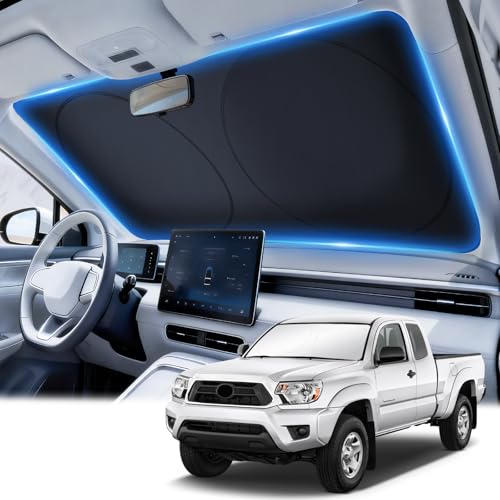

How UVA and UVB reach trim and seats through glass
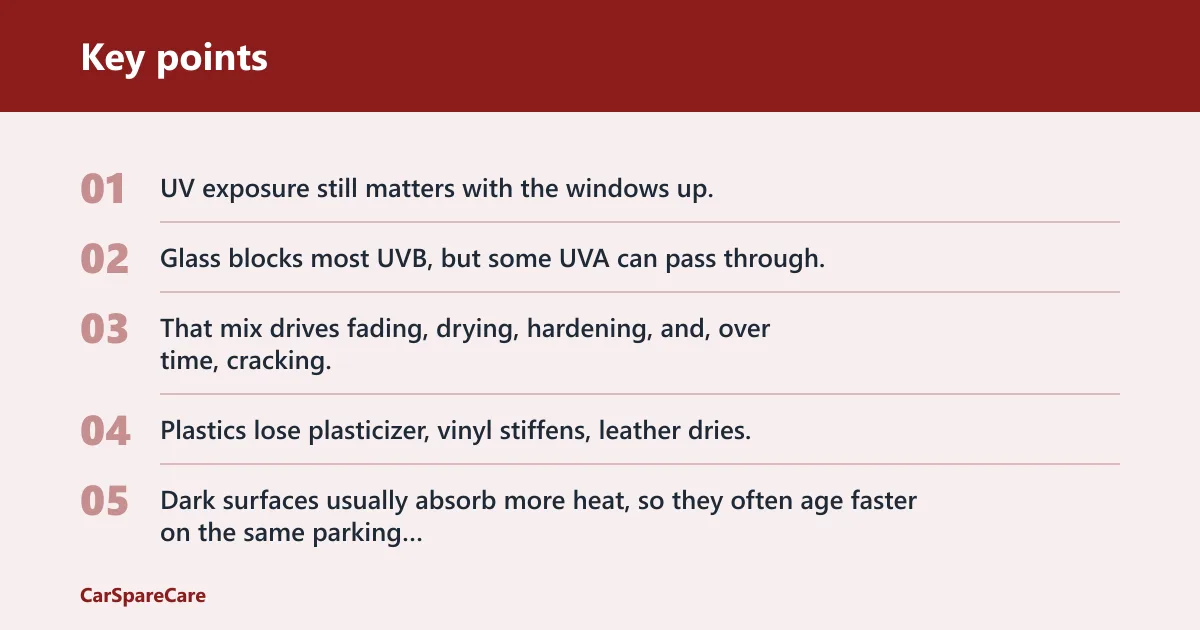
UV exposure still matters with the windows up. Glass blocks most UVB, but some UVA can pass through, and both sunlight and trapped heat can raise cabin temperature in a parked vehicle. That mix drives fading, drying, hardening, and, over time, cracking.
Heat makes the material problem worse. Plastics lose plasticizer, vinyl stiffens, leather dries, and adhesives can soften or fail. Dark surfaces usually absorb more heat, so they often age faster on the same parking schedule.
What fading, cracking, warping, and hardening look like
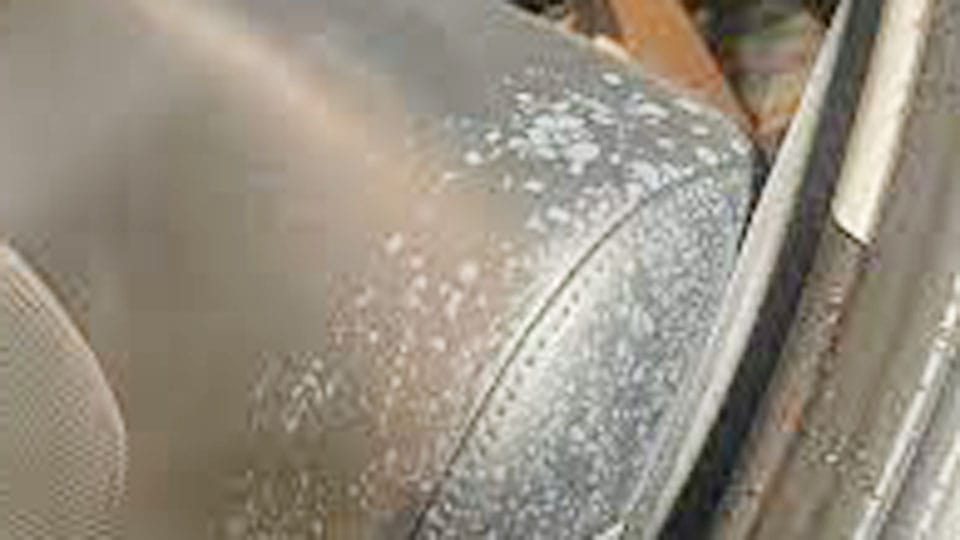
Fading usually shows first as a lighter patch on the dash top, steering wheel rim, upper seat bolsters, or rear parcel shelf. Warping can appear as waviness, lifted edges, or a panel that no longer sits flush. Cracking often starts at seams, corners, and high-touch areas.
Sticky residue can mean a coating, soft-touch layer, or adhesive has broken down. Hardening feels like a surface that has lost its give and sounds sharper when tapped. Color transfer can appear on lighter clothing, especially when a leather dye or trim finish has begun to fail.
Which materials fail first?
Soft-touch plastic and vinyl usually show aging quickly on the dash top and upper door trims. Leather-wrapped parts can dry and crease, but they often tolerate sun better than a soft-coated plastic panel if they are cleaned and conditioned correctly. Cloth tends to fade before it cracks.
Synthetic leather and alcantara are mixed cases. Synthetic leather can dry, peel, or split at the edges. Alcantara is less likely to crack, but it can discolor, flatten, and hold heat, which makes spots on bolsters and armrests more noticeable.
What should you do first?
Start with the cheapest step that blocks the most sun on the surfaces that fail first. For many cars, that means a windshield sunshade and smarter parking, then tint if it is legal where you live, then protectant sprays and covers for the most exposed surfaces. Parking habits beat products because they cut UV exposure and heat buildup together.
The cheapest high-impact order of protection
- Park in shade or a garage whenever possible.
- Use a windshield sunshade every time the car sits in direct sun.
- Choose legal window tint for the side and rear glass if your area allows it.
- Apply a UV protectant to vinyl, plastic, and rubber trim.
- Add seat covers, a dash mat, or rear-shelf cover only where the car still takes a lot of sun.
Suppose a commuter leaves a car in open parking for eight hours a day in a hot climate. A sunshade and legal tint usually do more than a bottle of spray alone. If the car already has a cracked dash, the priority shifts from prevention to slowing further damage and hiding what can be hidden.
When tint or shades should come before protectants
If the dash is already fading, reduce the heat load first. A protectant helps with surface condition, but it does not stop cabin temperature from climbing. Sunshades and tint have the bigger effect on the interior environment, so they come first when the car lives in harsh sun.
Sun protection priority matrix
This table ranks common choices by scenario. Lower cost and lower effort are better when the benefit is similar. Legal risk matters because tint rules vary by location, and some products or installations can create compliance problems.
| Scenario | Best first step | Cost tier | Install effort | UV/heat benefit | Legal risk | Best-use surfaces |
|---|---|---|---|---|---|---|
| Parked outdoors daily | Reflective windshield sunshade | Low | Low | High on dash and steering wheel | Low | Dashboard, steering wheel, upper console |
| Garage-kept weekend car | Indoor car cover plus periodic UV protectant | Medium | Medium | Medium for dust and light exposure | Low | Dash, seats, trim, painted interior touches |
| Hot-climate commuter | Legal window tint, then windshield shade | Medium to high | Medium | High across cabin surfaces | Medium to high | Side glass, rear glass, dash, seats |
| Older car with already-faded trim | Shade plus targeted protectant and covers | Low to medium | Low | Medium; slows further loss | Low | Cracked vinyl, faded plastic, worn seats |
How do windshield shades and window tint compare?
A windshield shade and window tint do different jobs. A shade blocks direct sun when the car is parked, while tint works all the time by reducing visible light and, in many films, blocking UV. If you need the biggest parked-car payoff for the least money, the shade usually comes first.
Reflective vs accordion windshield shades
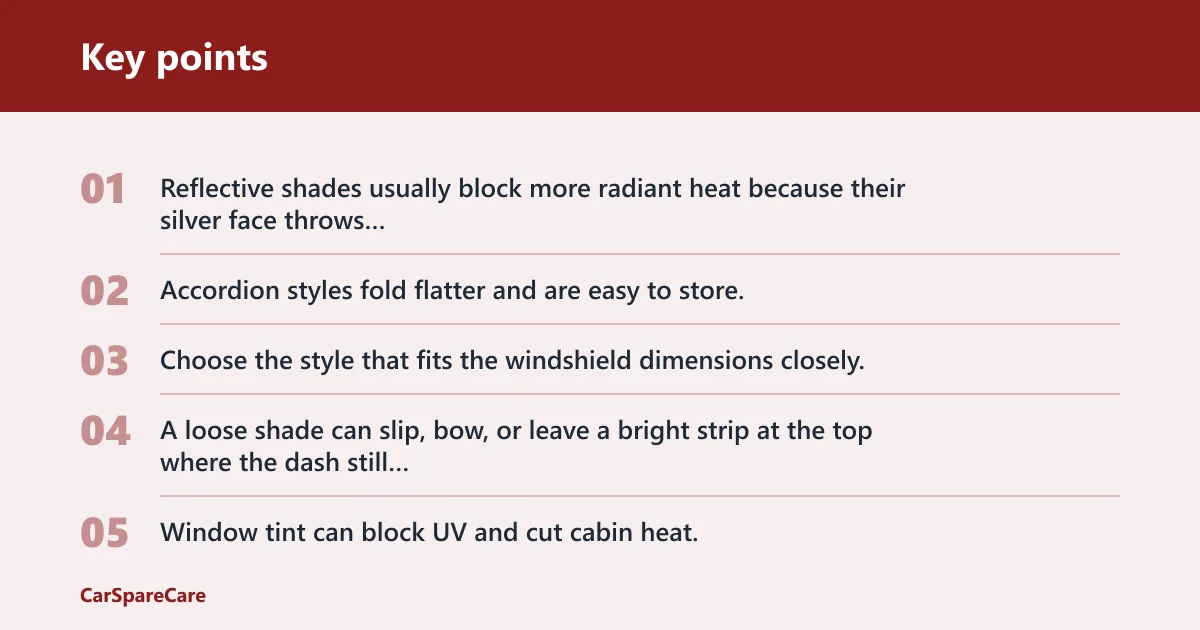
Reflective shades usually block more radiant heat because their silver face throws sunlight back out through the glass. Accordion styles fold flatter and are easy to store, but the key point is fit: a shade that covers the full windshield area works better than one that leaves gaps around the mirror or pillars.
Choose the style that fits the windshield dimensions closely. A loose shade can slip, bow, or leave a bright strip at the top where the dash still takes direct sun.
Tint, UV blocking, and cabin heat reduction
Window tint can block UV and cut cabin heat, but its performance depends on film type and darkness. The legal visible light transmission limit varies by location, and front-side and rear-window rules often differ. A darker film is not automatically the best option if it pushes the car out of compliance.
Tint is most useful when the car sits outside often, because it keeps working during every drive and every park. It still will not stop all heat transfer, and it will not fully protect a dash that sees direct sun through the windshield.
Legal limits and front versus rear glass rules
Check local visible light transmission rules before tinting front side windows or the windshield. In many places, rear glass rules are different from front glass rules, and some areas allow darker rear tint than front tint. A shop should be able to state the allowed range for your location before film goes on.
Which interior materials need the most protection?
The highest-risk surfaces are the ones that sit in direct sun, hold heat, and have a finish that can dry out. That usually means the dashboard, upper door trims, steering wheel, seat bolsters, and the top of the rear shelf. Protect the exposed surface first, not the whole cabin equally.
Dashboard materials and common failure points
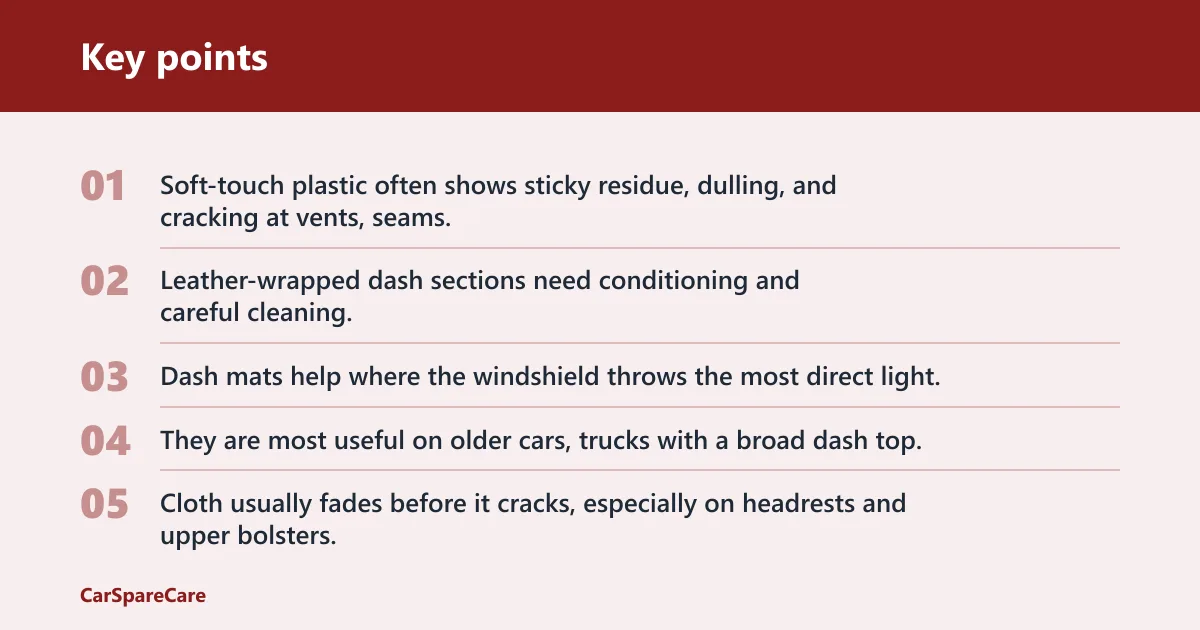
Soft-touch plastic often shows sticky residue, dulling, and cracking at vents, seams, and corners. Vinyl can dry and split on curved sections. Leather-wrapped dash sections need conditioning and careful cleaning, but they still benefit from shade because heat is the main stressor.
Dash mats help where the windshield throws the most direct light. They are most useful on older cars, trucks with a broad dash top, and vehicles that sit outside all day.
Seat material differences
Cloth usually fades before it cracks, especially on headrests and upper bolsters. Leather can dry, crease, and lose dye on high-contact zones. Synthetic leather tends to peel or split near seams if it gets hot repeatedly. Alcantara is sensitive to rubbing and discoloration, so bright sun and heat can make wear stand out faster.
Seat covers make sense when the seats take direct sun through side glass or the owner wants to slow visible fade on a daily driver. They are most useful on cloth and synthetic leather that already shows color shift.
Trim, touch surfaces, and color transfer
Touch surfaces need more than a shiny dressing. Glossy residue can attract dust, feel greasy, and transfer to clothing or hands. Matte finish protectants are usually the safer choice for dashboards, door panels, and steering wheel-adjacent trim, especially on modern soft-touch interiors.
A common first-timer mistake is coating everything with a heavy, silicone-rich product. That can leave an oily look on touch points and does not fix sun damage already in the plastic or vinyl.
Can car covers help the interior?
Car covers can help, but they are not the main answer for interior UV through glass. Outdoor covers reduce direct solar load on the whole vehicle, yet their benefit to the cabin depends on fit, fabric, and whether the cover stays put. Indoor covers are better for dust and light storage protection than for parked-in-sun cooling.
Indoor versus outdoor cover use
Use an indoor cover for garage storage if the goal is dust control and light abrasion protection. Use an outdoor cover only if it is designed for weather exposure and ventilation. Breathability matters because trapped moisture can leave damp smells or surface issues.
Breathability, fit, and abrasion risk
A cover that flaps in the wind can scuff paint and trim. A snug fit reduces movement, but the fabric still needs to be soft and clean to avoid abrasion. For interior protection, the bigger question is not whether the cover exists; it is whether the windows still let enough light and heat through to age the dash beneath it.
Picture a car parked under a tree with a loose outdoor cover on a windy street. The cover may keep pollen off the paint, yet the cabin still heats through the glass, and the moving fabric can rub the bodywork. That is a paint and cleanliness issue more than an interior sun fix.
Why window glass limits their interior benefit
Even with a cover on the body, sunlight still reaches the cabin through the glass unless the windows themselves are shaded or tinted. That is why a cover is best treated as a supplement, not a substitute for a sunshade, tint, or parking strategy.
Interior sun damage repair guide
Cosmetic repair can improve appearance, but not every sun-damaged part can be saved. Fading can sometimes be hidden or recolored. Cracking, deep warping, and brittle sticky surfaces often mean replacement is the better route. The decision depends on whether the material still has structure.
What can improve cosmetically?
Light fading on trim may improve with cleaning, a color-matched trim coating, or replacement of a removable part. Minor leather dryness can improve with proper cleaning and conditioner, then protection from more sun. Surface haze on plastics may also look better after a careful restoration product, though the original color rarely returns fully.
What usually needs replacement?
Deep cracks in the dash, warped panels, peeling soft-touch coatings, and brittle seat surfaces usually need new parts or professional repair. Once a plastic has split or a coating has turned sticky and lifted, cleaning alone will not fix it. Structural damage is different from surface discoloration.
When fading, cracking, or sticky residue is beyond cleanup
If the surface feels powdery, gummy, or has fine all-over cracking, treat it as advanced damage. Cleaning may remove dirt, but it will not restore lost material or reverse UV break-down. At that point, protection should focus on stopping further loss while you plan for replacement or reupholstery.
Frequently asked questions
Does sun damage car interior?
Yes. UVA and UVB exposure, plus heat buildup, fade color, dry vinyl and leather, harden plastics, and can lead to cracking and warping. Glass reduces some UV, but it does not stop the cabin from heating up in direct sun, especially on dashboards and upper trim.
What is the best sun shade for a car interior?
The best sun shade is the one that fits the windshield closely and blocks the full glass area. Reflective shades usually reduce heat well because they bounce sunlight back out. Accordion styles are easier to store, but fit and full coverage matter more than shape alone.
How often should I use UV protectant on car plastics?
Reapply based on exposure, not a fixed calendar alone. For cars parked outside often, a monthly cadence is a practical starting point. Garaged cars can usually go longer. Use a matte finish on touch surfaces and avoid silicone-heavy, greasy products where hands and clothing contact the trim.
Do car covers prevent sun damage?
They help with weather and dust, but they are limited for interior sun damage because glass still lets light and heat into the cabin. Indoor covers are best for storage. Outdoor covers need breathability and a secure fit, and even then they work better as a supplement than a primary interior shield.

Hi, I’m Melvin, an automobile engineer with extensive experience in automobile equipment. I currently work for a local automobile firm, where I specialize in the car parts industry. I’ve had the opportunity to collaborate with seasoned inspectors, gaining invaluable hands-on experience that goes beyond just theory.
My passion for automotive care started at a young age, which led me to create CarSpareCare. Through CarSpareCare, I share the knowledge and skills I’ve acquired over the years to help others navigate the world of car maintenance and repairs.
My goal is to provide practical tutorials, essential safety advice, and the latest industry insights so that anyone—whether a beginner or an expert—can confidently tackle their automotive projects.