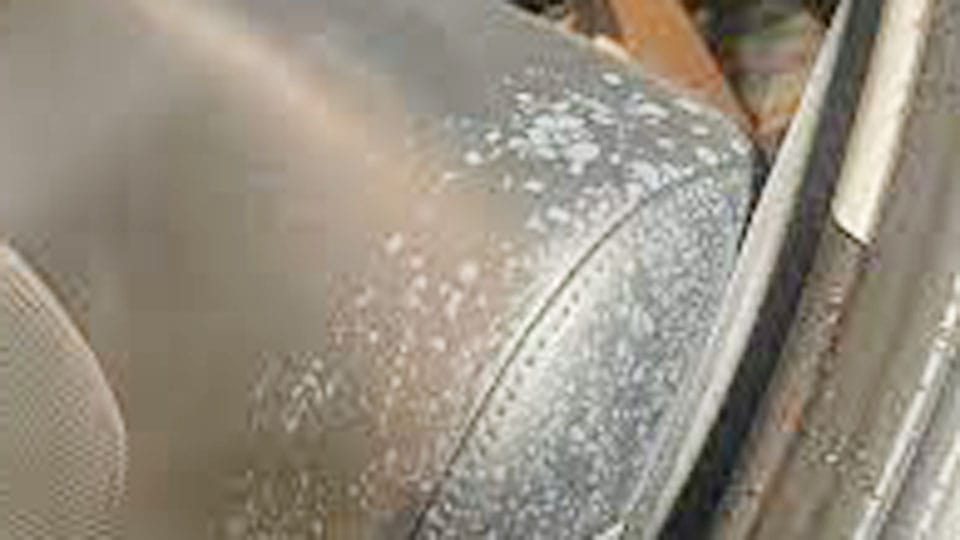
Blot sunscreen right away, then clean the surface with a material-safe cleaner; start with mild soap and water on cloth, and use a pH-balanced leather cleaner on leather or leatherette. Heat can set the oils and leave dark rings, sticky buildup, or pale residue that keeps transferring. This guide shows the right method for cloth, leather, vinyl, leatherette, stitching, seams, and perforated trim, plus what to do when the stain returns.
Before you clean sunscreen


Match the method to the surface first. Sunscreen residue can act differently on cloth, leather, vinyl, leatherette, and perforated leather, and heat may make the stain harder to remove and more likely to settle deeper into finishes.
Fresh sunscreen can be blotted off before it is absorbed. If the seat is warm, let it cool down first; hot surfaces help oils and minerals bind to fibers and pores. (Wikihow)
Dark fabric seats and dashboards often show mineral residue most severely. Zinc oxide and titanium dioxide can leave a white cast after the oily part is gone.
What you’ll need
- Microfiber towel, clean and dry before wiping
- Soft interior brush for stitching, seams, and perforations
- pH-balanced leather cleaner for leather seats
- Upholstery cleaner for cloth seats
- Conditioner for leather after cleaning
- Hot water extraction for cloth if residue stays below the surface
Sunscreen stain removal by surface and severity
| Surface type | Stain age | First-step cleaner | Agitation method | Drying step | Stop/seek-detail threshold |
|---|---|---|---|---|---|
| Cloth seat | Fresh | Upholstery cleaner | Light blotting, then soft brush only if needed | Blot with microfiber and air-dry | Stop if a white halo returns after drying |
| Cloth seat | Set-in or heat-baked | Upholstery cleaner, then hot water extraction | Gentle brush in one direction | Extract moisture and dry fully | Seek detailing if the mark stays greasy or dark after two passes |
| Leather seat | Fresh or light | pH-balanced leather cleaner | Apply to towel, then wipe with light pressure | Dry with a clean microfiber towel | Stop if the finish turns slick, dull, or tacky |
| Perforated leather | Any visible residue | pH-balanced leather cleaner | Low-pressure passes with a soft brush on seams only | Blot dry, then let the panel air-dry | Stop if liquid pools in holes or residue keeps reappearing |
| Vinyl or leatherette | Fresh or light | Material-safe interior cleaner | Wipe, then light brush on texture | Dry with microfiber | Stop if color lightens, clouds, or becomes slick |
| Textured trim or dash | Set-in | Interior cleaner matched to the surface | Short, low-pressure passes | Dry and inspect under strong light | Seek detail help if residue sits in grain or seams |
How do you remove sunscreen from car upholstery?
Start by blotting, then clean in small sections with a cleaner matched to the seat material. On cloth, use upholstery cleaner; on leather or leatherette, use a pH-balanced leather cleaner. Wipe residue away instead of rubbing it deeper, and inspect after drying because sunscreen can leave a pale film that returns.
- Vacuum loose grit first so sand does not scratch the surface.
- Press a clean, dry microfiber towel onto the spot to lift excess sunscreen.
- Apply cleaner to the towel or seat in a 10 cm area, then wipe.
- Use a soft interior brush on stitching, seams, and textured spots only.
- Dry with a fresh microfiber towel and check the area under bright light.
For example, a dark cloth seat may have about a 5 cm sunscreen mark after roughly a 20-minute drive. If the first wipe leaves a chalky ring, the problem is often residue trapped below the surface, not just what sits on top. Move to a deeper cloth-cleaning pass rather than scrubbing harder.
Should you use dish soap or interior cleaner?
Use a material-matched cleaner first when you can. Dish soap can help on some cloth stains, but it is not the safest default for leather, perforated leather, or textured trim. Harsh household chemicals are a poor choice because they can strip finish, leave a film, or push residue deeper.
- Check the surface type before choosing a cleaner.
- Apply the product to a hidden area, then wait for it to dry.
- For cloth, apply a cloth-safe cleaner or mild soap solution to the towel, not the whole panel.
- For leather, use a pH-balanced leather cleaner only.
- Recheck after drying; if the spot turns shiny or tacky, stop and switch methods.
A common first-timer mistake is using the same soap on leather bolsters and a cloth center panel. The cloth may tolerate more moisture, while leather can show a slick patch or dull patch fast.
What if the white residue keeps coming back?
White residue that returns after drying usually means sunscreen is still sitting in seams, perforations, or deeper in the finish. Oils can seep deeper into leather pores within hours, and mineral sunscreen ingredients such as zinc oxide and titanium dioxide can leave a stubborn cast on dark surfaces.
- Inspect stitching, seams, and perforations with strong light.
- Repeat the wipe with less liquid and shorter passes.
- Use the soft interior brush with low pressure only on seams and textured spots.
- If the seat is cloth and the stain remains below the surface, use hot water extraction.
- Stop if the panel looks slick, softened, or damaged, and move to professional detailing.
Suppose a perforated leather seat looks clean after wiping, then shows white dots again an hour later. That pattern points to residue trapped in the holes. Clean the panel again with minimal liquid, then let it dry fully before deciding whether the stain has cleared.
What should I do if sunscreen has baked into the seat in hot weather?
Cool the surface first, then use a slower approach. Heat makes sunscreen harder to remove, and it can settle deep into leather, vinyl, or fabric finishes. On older marks, work in shorter passes and expect more than one cleaning cycle.
- Park in shade and let the surface cool completely.
- Lift loose residue with a microfiber towel.
- Choose the cleaner for the material and apply it in a small section.
- Let cloth stains dwell briefly, then wipe and inspect.
- If the residue remains below the surface on cloth, move to extraction.
Heat-baked residue often looks lighter at first, then reappears as a greasy edge once the panel dries. That is the point to slow down, not scrub harder.
Common mistakes
Rough towels spread grit and can push sunscreen deeper into the grain. A microfiber towel is preferred because it lifts residue without adding new scratches.
- Rubbing with a rough towel instead of blotting first
- Over-wetting leather or perforated leather
- Using one cleaner on every surface
- Skipping a hidden-area test
- Ignoring mixed grime from sand, sweat, or body oil
Mixed stains need extra care. Sand adds abrasion, sweat adds salt, and body oil can keep the spot slick even after the sunscreen itself is gone. On dark interiors, that mix is easier to spread and harder to hide.
Frequently asked questions
How do I get sunscreen off car interior?
Blot the spot with a clean microfiber towel, then use a cleaner matched to the material. On cloth, use upholstery cleaner; on leather or leatherette, use a pH-balanced leather cleaner applied to the towel. Finish by drying fully and checking for a pale film before repeating.
What is the safest way to clean sunscreen off leather seats?
Use a pH-balanced leather cleaner on a microfiber towel, not directly on the seat. Work one small section at a time, then wipe dry and apply conditioner afterward so the surface keeps a natural matte finish rather than a slick one.
How do I clean sunscreen off fabric car seats?
Use upholstery cleaner with light agitation. Blot first, then work the stain with a soft brush only as needed. If the residue stays trapped below the surface, hot water extraction is the next step for cloth seats, not stronger soap or harder scrubbing.
Can sunscreen permanently stain car seats?
It can if heat bakes it in, if the residue sits in seams or perforations, or if the finish is already worn. A set-in mark that stays shiny, chalky, or greasy after repeated careful cleaning is a sign to stop and consider detailing.
How do I remove sunscreen from perforated leather without soaking it?
Use minimal liquid and low-pressure passes. Apply pH-balanced leather cleaner to a microfiber towel, then use a soft interior brush only on seams and perforation edges. Dry immediately. If the residue keeps returning, repeat with less product rather than more.
Why does sunscreen leave white marks on car upholstery?
Many sunscreens contain minerals that can leave a visible cast after the oily part moves or dries. Zinc oxide and titanium dioxide are common names to watch for, and dark fabric seats and dashboards show the residue most severely when it dries unevenly.

Hi, I’m Melvin, an automobile engineer with extensive experience in automobile equipment. I currently work for a local automobile firm, where I specialize in the car parts industry. I’ve had the opportunity to collaborate with seasoned inspectors, gaining invaluable hands-on experience that goes beyond just theory.
My passion for automotive care started at a young age, which led me to create CarSpareCare. Through CarSpareCare, I share the knowledge and skills I’ve acquired over the years to help others navigate the world of car maintenance and repairs.
My goal is to provide practical tutorials, essential safety advice, and the latest industry insights so that anyone—whether a beginner or an expert—can confidently tackle their automotive projects.