
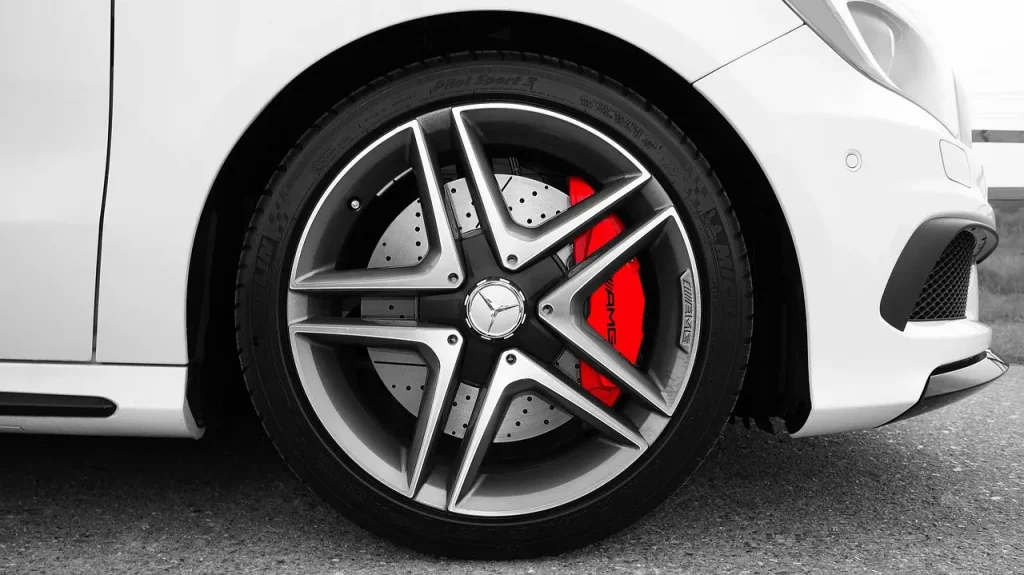
Before a road trip, I inspect steering and brake parts in the driveway, but I park it if the brake pedal sinks, steering feels loose, or pad lining looks too thin. Bad checks turn small faults into tow bills, missed trips, or worse, a crash. This guide splits fast visual and feel checks from shop-only measurements, and tells you exactly what to measure and when not to drive.
What you’ll need
- Flashlight
- Tire pressure gauge
- Tread depth gauge or a coin
- Gloves, rag, and paper towels
- Jack, stands, and wheel chocks if you already know how to use them safely
- Owner’s manual for pad and fluid specs
How do you inspect the brake side first?
Start with the wheel opening, then move outward
- Park on level ground, set the parking brake, and chock the wheels.
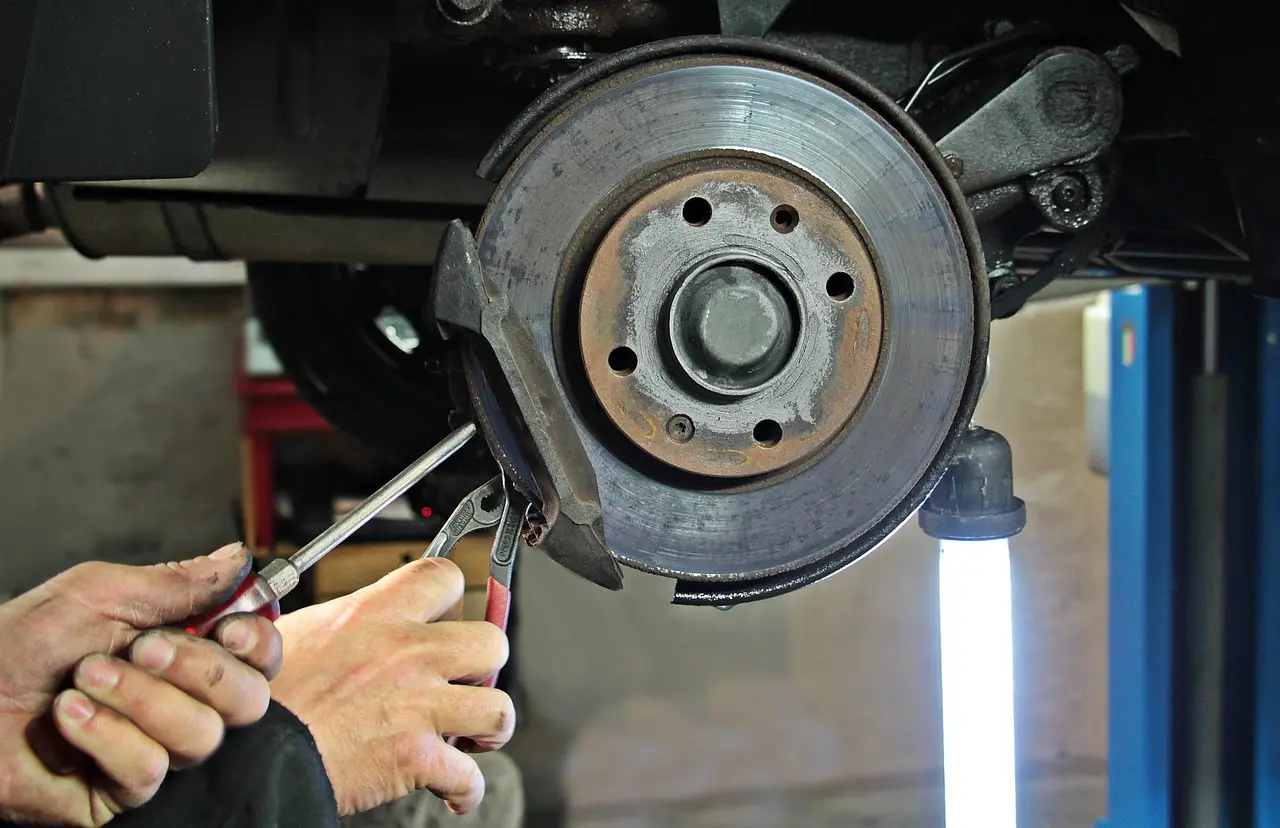
- Look through the wheel or caliper opening at the brake pads. Check visible wear on the inner and outer pads.
- Compare left and right sides. Uneven wear on one pad often points to a sticking caliper or slide pin.
- Check rotor surfaces for grooves, scoring, and a rust ridge at the outer edge.
- Open the brake fluid reservoir and verify the level and color. Dark fluid or visible contamination means the system needs attention.
- Look around the caliper boot, hose connection, and backing area for wetness or dust stuck to fluid.
- Press the pedal once, then release. It should feel firm and return cleanly, without sinking or sticking.
Brake pads are the first home check. If lining looks close to the backing plate, or if the inner pad is thinner than the outer pad, the car needs a shop look before highway use. Rotor grooves, heavy scoring, or a pronounced outer lip are also signs the braking surface has seen better days.
Road-test clues matter too. A pulsing pedal, steering wheel shake while braking, a soft pedal, or a car that pulls to one side can point to brake, tire, or suspension trouble. Steering and suspension systems work with brakes and tires to control the vehicle.

How do you inspect steering and front suspension?
Check the parts that move the front wheels
- With the engine off, turn the wheel a little left and right and listen for thumps, clicks, or looseness at the front end.
- Inspect tie rod end boots for tears and look for play at the joint. Any looseness is a sign to have it checked by a shop.
- Check ball joints for torn boots, visible movement, or wheel instability when the tire is lifted safely.
- Look at control arm bushings for cracking, separation, or excess movement.
- If the vehicle uses hydraulic steering, check the fluid level and look for leaks or pump noise during turns.
- Confirm every wheel lug nut is present and appears snug. Missing lugs or obvious looseness means do not leave.
Worn tie rod ends or ball joints often show up as clunking during steering, wander, or a steering wheel that sits off-center. A vehicle that pulls left or right is listed as a warning sign of steering or suspension trouble. Constant steering correction is another sign.
Control arm bushings do not always fail loudly. Cracks, separation, and excess movement can change alignment before the driver feels much else. Loud knocks, clunks, or squeaks over bumps can indicate steering or suspension issues, and a vehicle continuing to move up and down after a bump can signal worn components.
Can you spot brake problems without tools?
Use a short driveway test, not a road test gamble
Yes. A safe driveway brake check can reveal a lot before the car ever hits the highway. Roll forward slowly, brake gently, and then brake a second time a little harder. Listen for grinding, squeals, or a single clunk from one corner. Feel for pull, shake, or a pedal that changes height between stops.
Pulling can come from a sticking caliper, uneven pad wear, tire pressure mismatch, or alignment trouble. Steering wheel vibration or jerking is a warning sign. Poor braking efficiency can point to a steering or suspension-related problem. Possible vibration causes include worn suspension parts, damaged brake discs, loose wheels, or tire balance issues.
Uneven tire wear matters here. It is a warning sign of steering or suspension trouble, and it can also point to brake drag if one corner is running hotter than the others. Tire faults can imitate brake faults, so check all four tires before blaming the calipers.
Road-trip triage checklist: home check vs shop check
Use this as a split decision sheet
| Component | Home check | Shop check |
|---|---|---|
| Brake pads | Look through wheel opening for visible lining; compare inner and outer pad wear. | Measure lining thickness; replace if under 3 mm or if wear is uneven side-to-side. |
| Brake rotors/discs | Check for grooves, scoring, and an outer rust ridge. | Measure runout and inspect for warp if there is pulsation or shake. |
| Brake calipers | Look for wetness at the boot and uneven pad wear on one side. | Check slide-pin motion, piston release, and hydraulic leakage. |
| Brake fluid | Check reservoir level and color; look for leaks under the car. | Pressure-test the system if the pedal is soft or the level keeps dropping. |
| Tires | Check pressure, tread depth, uneven wear, bulges, or sidewall damage. | Measure tread depth and balance if vibration or wear is uneven. |
| Tie rod ends / ball joints | Look for torn boots, clunks, or obvious looseness. | Lift the car and check joint play with the correct method. |
| Control arm bushings | Spot cracks, separation, or shifted positions. | Check movement under load and verify alignment angle changes. |
| Power steering system | Check fluid level if hydraulic; listen for pump noise. | Inspect for leaks, pressure loss, or steering-effort changes under load. |
| Wheel lug nuts | Verify all lugs are present and obviously snug. | Torque-check them after recent tire or brake work. |
| Symptom | Urgency | What to do |
|---|---|---|
| Pulling | High | Do not start a highway trip until calipers, tires, and alignment are checked. |
| Pulsation | High | Stop and measure rotor runout or have a shop inspect discs and hubs. |
| Clunking | High | Do not drive far; inspect tie rods, ball joints, and control arm bushings. |
| Fluid leak | Critical | Park the car and get the system checked before moving it again. |
| Uneven pad wear | High | Check caliper slide pins, piston movement, and rotor condition before leaving. |
Stop-driving rule: if the brake pedal sinks, the steering wheel has more than 1 inch of free play, a fluid leak is visible, or a wheel feels loose, cancel the trip and get the car inspected. For highway driving, heat, load, and long-duration braking make small faults much less forgiving.
Common mistakes
What goes wrong on fast pre-trip checks
Only checking the outside pad and ignoring the inner pad misses a stuck caliper. Ignoring a small fluid leak or dark brake fluid can turn a minor repair into a bigger one. Treating vibration as a tire issue without checking brakes and steering hides the real fault.
Skipping lug nut checks after recent tire work is another bad habit. Leaving with clunks, wander, or a steering wheel that is off-center is asking for trouble. If the car needs a jack, stands, or torque measurement, that has moved beyond a driveway check.
When should you stop driving and get a mechanic to inspect your brakes?
Use the symptom, then decide
Stop driving when the brake pedal sinks, the car pulls hard under braking, or the steering wheel shakes badly while stopping. Those are not “watch it later” issues. A soft pedal, visible fluid leak, or pad wear that is clearly uneven calls for a shop inspection before more road use.
If the trip is still ahead, do not treat a warning light or a noise as normal. A brake system that changes feel from one stop to the next needs a proper inspection on a lift, with measurements and a torque check. That is the point where home checking ends.
Frequently asked questions
How do I inspect steering and brakes before a road trip?
Start with tires, then brakes, then steering. Check tire pressure and tread depth, inspect pads and rotors through the wheel opening, look for leaks, and test for clunks or pull in a short driveway roll. If the pedal sinks or the wheel feels loose, do not leave.
What brake parts should I check before driving long distance?
Check brake pads, rotors, calipers, brake fluid, and the visible hose and leak points around each corner. Look for uneven pad wear, grooves on the discs, dark fluid, and wet spots near the caliper boot. A pad that is getting thin needs shop attention.
How do I know if my steering is unsafe for a road trip?
Unsafe steering usually shows up as wandering, constant correction, clunks, or more than 1 inch of free play at the wheel. Torn tie rod boots, ball joint play, or loose wheel lug nuts make highway driving risky. Any obvious looseness is a no-go.
What are the signs of worn tie rod ends or ball joints?
Watch for clunking during steering, uneven tire wear, wander, and a wheel that does not return cleanly after a turn. Torn boots and visible play are bad signs. Ball joints can also show up as wheel instability or noise over bumps and while braking.
Should I check brake fluid before a road trip?
Yes. Check the reservoir level and the fluid color before leaving. Low fluid, dark fluid, or a soft pedal can point to a leak or worn pads. If the level drops again after topping up, the car needs a proper inspection.

Hi, I’m Melvin, an automobile engineer with extensive experience in automobile equipment. I currently work for a local automobile firm, where I specialize in the car parts industry. I’ve had the opportunity to collaborate with seasoned inspectors, gaining invaluable hands-on experience that goes beyond just theory.
My passion for automotive care started at a young age, which led me to create CarSpareCare. Through CarSpareCare, I share the knowledge and skills I’ve acquired over the years to help others navigate the world of car maintenance and repairs.
My goal is to provide practical tutorials, essential safety advice, and the latest industry insights so that anyone—whether a beginner or an expert—can confidently tackle their automotive projects.

