What you’ll need
- Vacuum cleaner with a narrow nozzle
- Soft brush
- Chamois leather
- Mild interior cleaner
- Carpet shampoo
- Vinyl cleaner
- Methylated spirit
- Microfibre cloths
- Clean water
- Gloves
Before you start: check for damp, mold, and damage
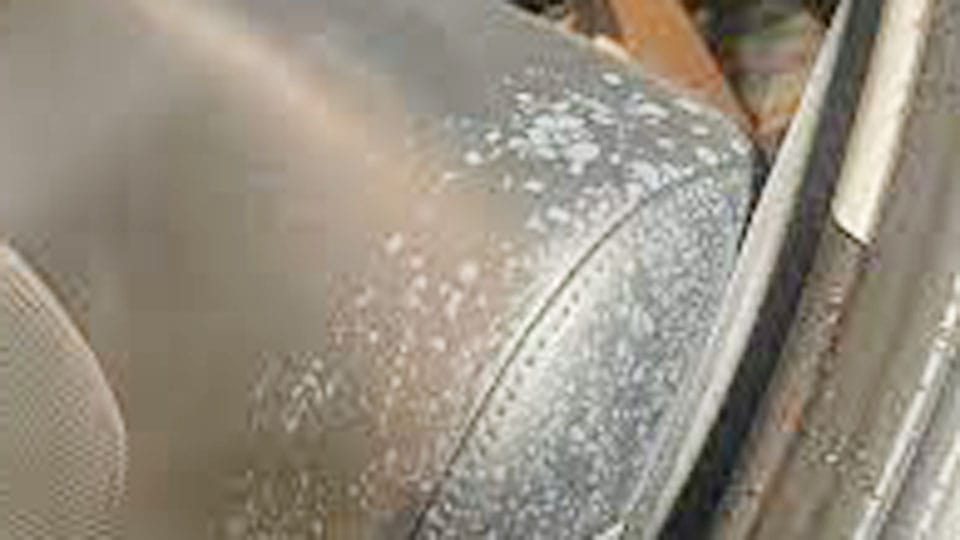
Open the cabin and check for damp first. Stop if you find visible mold, rust, soaked insulation, or electrical corrosion. Long storage can leave a condensation film, stale smells, and moisture under mats, so inspect before cleaning for appearance.
Lift the mats and press the carpet edges in the footwells. If the carpet feels cold, heavy, or wet, or if the underfelt is swollen, lift it and dry the floor before any wet cleaning.
Car interiors collect dust and grit, especially on the carpet. Dirt and grit trapped in floor pile can wear through the woven backing, and stains get harder to remove if they sit for a long time. A yearly spring clean is recommended for the car interior, so long storage is the point where that clean needs extra inspection.
Post-storage triage checklist
| Path | Triggers | Tools | Stop signs |
|---|---|---|---|
| Dry-only cleanup | Light dust, no odor, no visible damp | Vacuum with narrow nozzle, soft brush, microfibre cloth | Any musty smell, damp carpet, or mold spot |
| Spot-clean cleanup | Isolated stains, sticky residue, light smell | Vinyl cleaner, mild interior cleaner, carpet shampoo, chamois leather | Wicking, foam saturation, streaking, or stain spread |
| Remove-and-dry cleanup | Wet carpet, strong mildew smell, stained underfelt | Gloves, vacuum, towels, drying airflow, trim tools if needed | Rust, soaked insulation, electrical corrosion, mould that returns after drying |
How do you clean a car interior after long storage?
Start with dry work, move top to bottom, and use liquids only where they change the result. A stored cabin usually needs debris removal first, then moisture checks, then careful spot cleaning, because wet work can spread mold spores, bring stains back, and push moisture into foam or underfelt.
- Open all doors and let the cabin air out only if the weather is dry.
- Remove loose debris, insect matter, and grit from seats, pockets, vents, and the floor.
- Vacuum carpets and seat seams with a narrow nozzle before any liquid cleaner touches the trim.
- Clean from the roof down so dust does not fall onto finished areas.
- Use liquids sparingly and dry each area as you go.
- Check the floor again after cleaning, especially where mats and underfelt can hold moisture.
For example, you could say the hatchback sat for several months with the windows shut and a light condensation film on the glass. Dry vacuuming plus a careful wipe-down may be enough. If the footwell smells earthy after vacuuming, stop and inspect the carpet backing and underfelt.
Which cleaning path should you use after storage?
Choose the least wet method that fits the cabin. Dry-only cleanup suits dust and mild dryness; spot-cleaning suits isolated marks or sticky residue; remove-and-dry cleanup is for any wet carpet, strong mildew smell, or underfelt that feels soaked. If mold, rust, or electrical damage is visible, stop and escalate.
Dry-only cleanup
Use this when the cabin is dusty but dry. Vacuum with the narrow nozzle, brush loose lint from the headlining, and wipe hard surfaces with a barely damp cloth.
Spot-clean cleanup
Use this for small stains or residue. Put cleaner on the cloth, not on the foam, and dry the area fully before closing the car.
Remove-and-dry cleanup
Use this when the carpet feels damp or the smell is strong and musty. Lift mats, check for leaks, and remove the carpet if possible so the floor can be inspected for rust and leaks.
How do you clean seats, belts, and headlining safely?
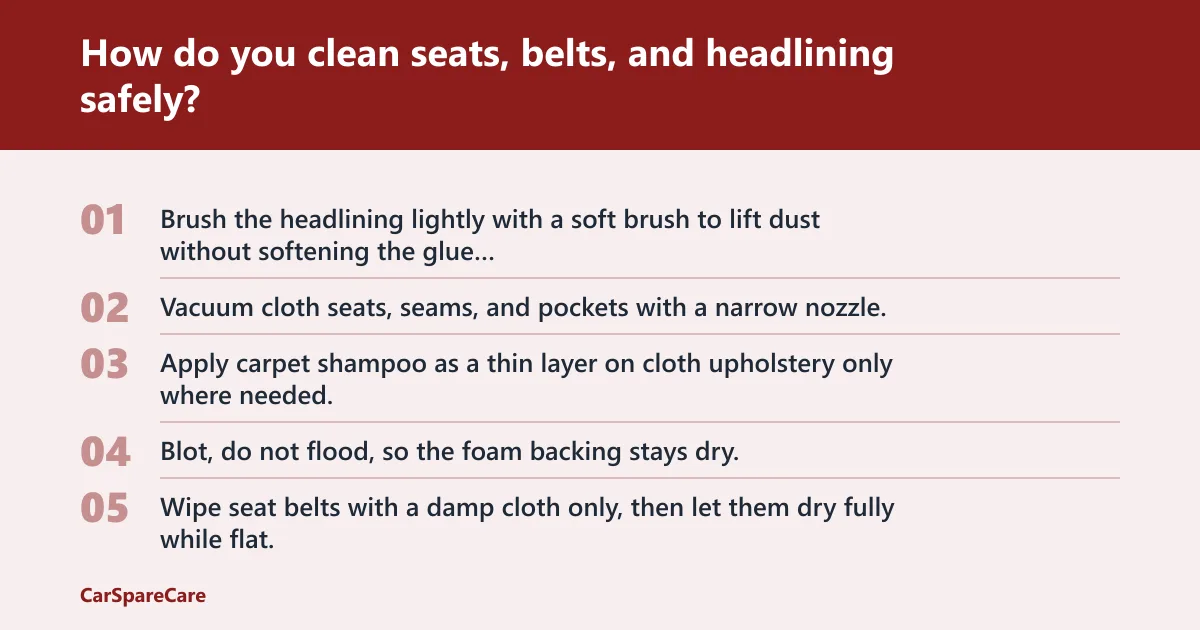
Use dry, gentle methods first, because cloth seats, belts, and headlining can hold contamination in different ways. Vacuum cloth seats with a narrow nozzle for deep joints, brush the headlining lightly, and avoid soaking the foam backing, which can take days to dry.
- Brush the headlining lightly with a soft brush to lift dust without softening the glue layer.
- Vacuum cloth seats, seams, and pockets with a narrow nozzle.
- Apply carpet shampoo as a thin layer on cloth upholstery only where needed.
- Blot, do not flood, so the foam backing stays dry.
- Wipe seat belts with a damp cloth only, then let them dry fully while flat.
- Check that belt webbing lies flat and is not twisted before refitting.
- Renew any belt that is frayed, torn, or unstitched.
Can you use a vacuum on moldy car seats and carpets? Yes, but only with caution and only as a first dry step. Vacuum loose contamination with a narrow nozzle, then stop if fibers look fuzzy, damp, or stained through the backing. Wet scrubbing can spread contamination and make odor harder to remove.
How do you clean glass, dashboards, and stubborn residue?
Use the lightest cleaner that removes the mark. A chamois leather wrung out in clean, warm water works well on glass and dashboards to mop up drops, while vinyl cleaner should be applied lightly on a damp cloth for stubborn stains on plastic, vinyl, and trim.
- Wipe glass with a wrung-out chamois leather.
- Use vinyl cleaner on a damp cloth for plastic, vinyl, and trim stains.
- Use methylated spirit on a damp cloth for sticker residue.
- For tobacco stains, use a half-spirit, half-water mix after testing a hidden spot.
- Clean the heated rear window carefully so you do not scratch the elements.
Heated rear windows must be handled carefully because a tiny scratch across one element can disable a heater element. Do not use abrasive pads, sharp blades, or aggressive scraping near the glass grid.
How do you get rid of stale smells after a car sits for months?
Stale smells usually come from trapped moisture, dirty fabric, or contamination in carpet and underfelt. Remove the source first, dry the cabin thoroughly, and only then clean hard surfaces and fabrics, because freshener alone will not remove odor that remains in padding or seams.
Start by checking carpets, underfelt, and the spare-wheel well if the boot smells as well. If the smell is strongest after rain or condensation, look for leaks around doors, tail lamps, or the sunroof drains before more cleaning.
If the odor remains after drying, treat the source area again rather than masking it. When the smell comes from damp underfelt or mold, removal and drying are better than repeated spraying.
Should you remove car mats and seats when cleaning a stored car?
Remove mats early, and remove seats only if moisture or contamination is trapped underneath. Mats can hide wet carpet edges, and car carpet and underfelt can absorb moisture and cause rusting, so lifting them is often the difference between a dry cleanup and a hidden corrosion problem.
Use the remove-and-dry path if the underfelt is damp, the carpet feels heavy, or the floor shows rust spots. If the carpet is removable, lift it and check the floor for rust and leaks. Stop if you find electrical corrosion or soaked insulation.
A common first-timer mistake is cleaning the mat surface and leaving the damp carpet edge underneath. The top layer may look fine, but the odor returns once the cabin closes up.
What should you clean first in a stored car interior?
Clean the dry debris first, then inspect for moisture, then move to spot cleaning. That order prevents grit from scratching trim, keeps wet cleaning from spreading contamination, and helps you spot leaks before they are hidden by fresh cleaner or dressing.
Vacuum carpets, seat seams, and vents before any liquid work. Then check mats, carpet edges, underfelt, and footwells. If the cabin is dry, you can move on to cloth seats, trim, and glass in that order.
Common mistakes after long storage
These are the failures that turn a simple cleanup into a bigger repair job. They are common because the cabin can look dry while moisture still sits below the visible surface.
- Soaking cloth seats or underfelt, which can keep foam wet for days.
- Scrubbing mold into upholstery instead of removing contaminated material.
- Ignoring hidden moisture under mats and carpets.
- Using harsh tools on headlining, trim, or rear-window heater elements.
- Trying to clean damaged seat belts instead of renewing them.
If you find visible mold on porous trim, soaked underfelt, rust, or electrical corrosion, stop the detail and dry or repair the vehicle first. Cleaning over that damage only hides the source.
Frequently asked questions
Can you use a vacuum on moldy car seats and carpets?
Yes, as a dry first step, but use a narrow nozzle and keep the vacuuming light. Stop if the material is damp through, because agitation can spread contamination. After vacuuming, decide whether the area needs removal and drying instead of more cleaning.
What cleaner is safe for plastic dashboard and trim after storage?
Use a vinyl cleaner applied lightly on a damp cloth. For light dust, a wrung-out chamois leather with clean, warm water is often enough. Avoid harsh pads and strong scrubbing, especially around switches, vents, and the rear-window heater area.
How do you clean cloth seats without soaking the foam?
Vacuum first, then apply carpet shampoo sparingly only where needed. Blot the area instead of flooding it, and stop once the mark lifts. Cloth upholstery should not be soaked because foam can take days to dry and may keep odor.
How do you clean seat belts and headlining in a car that sat unused?
Brush the headlining lightly with a soft brush and avoid heavy wetting. Wipe seat belts with a damp cloth only, keep the webbing flat, and let it dry fully before use. Replace any belt that is frayed, torn, or unstitched.

Hi, I’m Melvin, an automobile engineer with extensive experience in automobile equipment. I currently work for a local automobile firm, where I specialize in the car parts industry. I’ve had the opportunity to collaborate with seasoned inspectors, gaining invaluable hands-on experience that goes beyond just theory.
My passion for automotive care started at a young age, which led me to create CarSpareCare. Through CarSpareCare, I share the knowledge and skills I’ve acquired over the years to help others navigate the world of car maintenance and repairs.
My goal is to provide practical tutorials, essential safety advice, and the latest industry insights so that anyone—whether a beginner or an expert—can confidently tackle their automotive projects.