

Restart a car after months of storage by checking the battery, fluids, tires, brakes, and fuel before you move it. If tires are visibly cracked, a battery will not hold charge, or brakes stick, do not drive it. Skipping that check can strand you, damage parts, or turn a short drive into a tow. This guide gives a controlled recommissioning sequence, inspection points for garage and outdoor storage, and clear stop rules.
What changes when a car sits for months?
The main risks depend on storage length, climate, and whether the car was prepared. Medium-term storage is 1 to 6 months; long-term storage is more than 6 months. Over that time, batteries discharge, fuel changes, tires lose pressure, and moisture can lead to corrosion or mold.
How storage length changes your restart risk
A car parked for a few weeks is one thing. A car parked for several months in a damp driveway is another example. The longer the car sits, the more likely you are to face battery weakness, stale fuel, brake rust, flat spots, and pests.
If the car sat outside, add extra caution. Temperature swings pull moisture into and out of metal parts, and humidity can leave condensation under covers and inside the cabin. Dirt, bird droppings, tree sap, and road salt can also damage paint and trim during storage.
What humidity, temperature swings, and pests do while the car sits
Moisture speeds up surface rust on brake rotors and hardware. In humid storage, a breathable car cover is preferred over a plastic tarp that traps condensation. Desiccant packs or dehumidification help in closed garages where air stays damp.
Rodents are another common problem. Clothes, food debris, and trash can attract insects and rodents during storage, and they may chew wiring or build nests in the cabin, trunk, or engine bay.
Why the first mile is more important than the first start
A stored car can start and still be unsafe. Brakes may drag, tires may have flat spots, and a weak fuel system may stumble under load. The first mile tells you far more than the first crank.
That is why the restart process starts with inspection, not a key turn.
Check the car before you turn the key
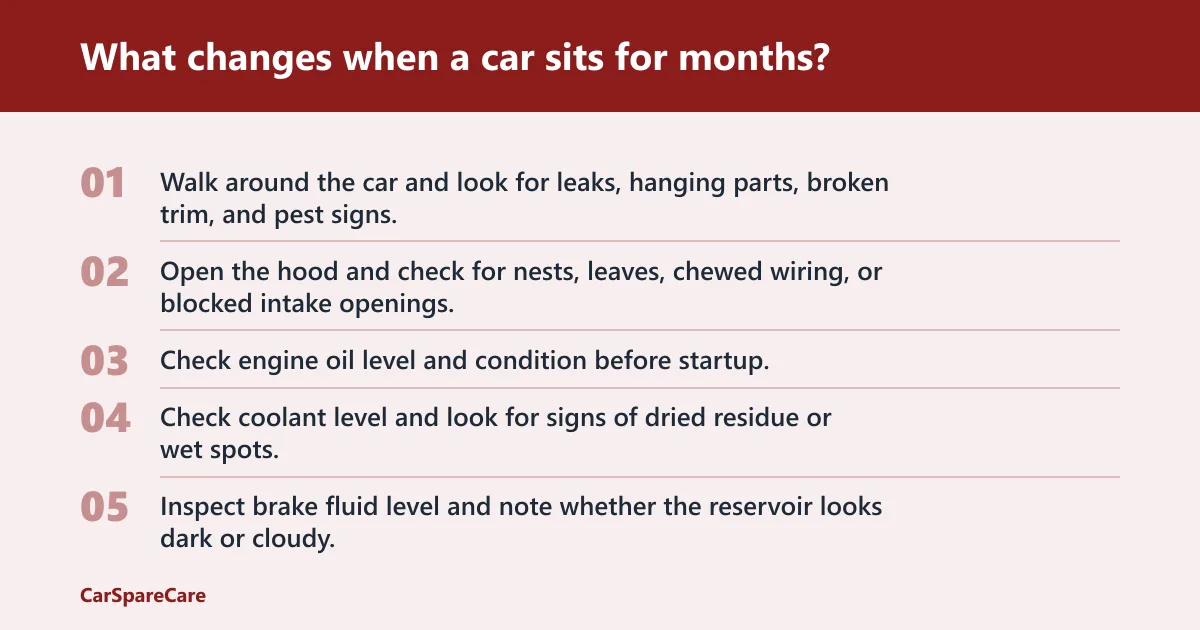
- Walk around the car and look for leaks, hanging parts, broken trim, and pest signs.
- Open the hood and check for nests, leaves, chewed wiring, or blocked intake openings.
- Check engine oil level and condition before startup.
- Check coolant level and look for signs of dried residue or wet spots.
- Inspect brake fluid level and note whether the reservoir looks dark or cloudy.
- Check tire pressure against the door-jamb label or owner’s manual, not the sidewall number.
Suppose a compact sedan sat in a garage for several months and the front tire is noticeably low. That tire may still hold air, but the underinflation means you should correct pressure and inspect the sidewalls before moving the car even a short distance.
📊 Long-term storage is more than 6 months. Source: How to Maintain a Car During Storage: A Practical 2026 Guide.
How should you restart the battery and electrical system?
A battery maintainer is often a good tool for garage storage and long-term parking because it helps keep the battery topped off without overcharging. For a car that sat for months, that is better than random charging sessions or simply disconnecting the battery and hoping for the best.
When a battery maintainer is the best storage tool
If the car is parked in a garage and will sit for months, a maintainer is the cleanest option. It helps preserve starting power and avoids repeated deep discharge. A maintained battery is also less likely to leave you with low-voltage warning lights after startup.
How to judge whether the battery is dead, weak, or recoverable
Signs of a dead or weak battery include slow cranking, clicking, dim lights, and warning lamps that appear as soon as you switch on the ignition. If the car starts only with a jump and then dies again soon after, the battery may be weak or the charging system may need attention.
If electronics flicker, the starter drags hard, or the battery case looks swollen or cracked, stop and test further before road use.
What warning lights or electrical symptoms mean you should stop
Battery, charging, or engine warnings that stay on after start-up matter. So do repeated fuse blows, burning smells, and visible rodent damage near wiring. Those signs can point to a charging fault or a shorted harness, and both can leave you stranded.
Is the fuel still usable after months of storage?
Old fuel can cause hard starts, rough running, and stalling. Gasoline oxidizes over time, so fuel stabilizer helps slow oxidation and keeps fuel usable for longer. It works best when the tank was filled close to full before storage and the engine was run long enough to circulate the treated fuel.
Gasoline, stabilizer, and the nearly full tank rule
Gasoline that sat for months may still ignite, but it may not burn cleanly. If the tank was left low, stale fuel and moisture have more room to build up. Topping off can help only if the fuel is still fresh enough to be worth keeping.
If the fuel smells sour or the engine coughs, surges, or stalls soon after start, the tank may need draining or dilution with fresh fuel depending on age and how badly it degraded.
Diesel storage risks: water and microbial growth
Diesel needs extra caution because water and microbial growth can become issues during storage. If the car sat long enough for water to condense in the tank or contamination to develop, fuel quality may be the cause of rough running, hard starts, or filter plugging.
What to do if the engine starts but idles rough or stalls
Do not assume the problem will disappear after a longer drive. A rough idle after storage can point to stale fuel, water in the fuel system, a clogged injector, or a sensor issue. If the engine stalls, keep the engine off and inspect before forcing a road test.
Should you inspect the brakes and tires before the first drive?
Yes. Brakes and tires are the two systems most likely to make a stored car unsafe the moment it moves. Rust can form on brake parts, parking brake components can stick, and tires can lose pressure naturally over time during storage. Flat spots can also form when a vehicle sits in one position for months.
Brake rust, sticky calipers, and parking brake seizure
Look for surface rust on rotors and signs that a caliper or parking brake is sticking. If the parking brake feels frozen or the car will not roll freely after release, stop before driving. Cars stored in humidity deserve extra attention here.
How to test braking at walking speed first
Move the car only after the area is clear. Roll forward slowly and test the brakes at walking speed in a safe, open space. The pedal should feel normal, the car should stop straight, and there should be no grinding, pulling, or dragging smell.
If braking feels uneven or the pedal sinks, stop and inspect before going farther.
Flat spots, underinflation, and when tire damage makes the car unsafe
Check tire pressure before moving the car and again before the first drive. Use the manufacturer-recommended PSI from the door jamb or owner’s manual. Sidewall numbers are not the target pressure for daily use.
Small flat spots may fade after a short drive, but visible cracking, bulges, exposed cords, or severe vibration are stop signs. If the tire looks damaged, do not treat it as a normal recommissioning issue.
What fluids and rubber parts need the closest check?
Focus on engine oil, coolant, and brake fluid. Fresh fluids help reduce corrosion and internal wear while the car is sitting, but old or contaminated fluid can still cause problems after storage. Rubber hoses and belts also deserve a close look because age and heat can make them brittle.
Engine oil condition and service interval
Check engine oil level and condition before startup. Replace it if it is near the service interval, contaminated, or smells strongly of fuel. Long storage can leave contaminants and sludge risk, especially if the car was already due for service.
Coolant mixture for local temperatures
Confirm coolant level and inspect for leaks before any long drive. The antifreeze mixture must suit local temperatures, or the system may not protect against freezing or overheating. A low reservoir, wet hose, or crusty deposit needs attention before regular use.
Brake fluid age, moisture contamination, and rubber hose leaks
Brake fluid can look fine in the reservoir and still be poor in quality after prolonged sitting. Moisture contamination matters because it can lower boiling resistance and affect pedal feel. Check the service interval and inspect rubber hoses and fittings for leaks or cracking.
How do you deal with moisture, corrosion, and pests after storage?
Check for rodents in the cabin, trunk, under the hood, and around the air intake before starting. Moisture, corrosion, and pest damage often travel together. A breathable cover, not a plastic tarp, and humidity control help prevent corrosion and mold during storage.
Where rodents hide and what they damage
Look in the cabin air box, under seats, in the trunk spare-tire area, under the hood near wiring looms, and at the engine air intake. Rodents can block airflow, chew wires, and leave debris that gets pulled into fans or filters.
Why a breathable cover beats a plastic tarp
A breathable car cover lets trapped moisture escape. A plastic tarp can hold condensation against paint and trim, which raises the chance of rust spots and trim damage. If the car sat outdoors, clean off dirt, bird droppings, tree sap, and road salt before uncovering it for a long run.
Desiccant and dehumidification for humid storage
For humid garages, use desiccant packs or a dehumidifier if power is available. The aim is dry, steady air, not a sealed wet shell around the car. That lowers the odds of mold, musty odors, and corroded connectors.
Post-storage recommissioning checklist
This table gives a quick symptom-to-cause map for the first start and first mile. If a symptom points to a tow trigger, stop the process before normal driving.
| Symptom | Likely cause | Immediate action | Safe-to-drive threshold | Mechanic/tow trigger |
|---|---|---|---|---|
| Slow crank or click-no-start | Weak battery, corroded terminals, or parasitic drain | Test battery, clean terminals, charge or jump carefully | Starts normally on its own and charging voltage looks normal | No-crank after charging, swollen battery, or repeat stall |
| Sour fuel smell or rough idle | Stale gasoline, water in fuel, or dirty injectors | Stop idling; consider fuel drain or dilution depending on age | Idle smooths out quickly and no misfire remains under light load | Persistent misfire, stalling, or diesel contamination concern |
| Grinding or dragging brakes | Rust on rotors, stuck caliper, seized parking brake | Roll slowly and test once; inspect if drag continues | Stops straight, pedal feel is normal, no pull or grind | Wheel will not turn, brake locks, or pedal sinks |
| Heavy vibration at low speed | Flat spots, separated tire, bent wheel, or debris on wheel | Stop and inspect tires and wheels | Minor flat-spot thump fades after a short distance | Bulge, cords, severe shake, or steering wheel wobble |
| Overheating smell or rising temp gauge | Low coolant, leak, blocked airflow, or belt issue | Shut down, inspect coolant level and leaks | Temperature stays in the normal range after warm-up | Coolant loss, steam, or repeated overheating |
What should I do before driving a car that has been sitting for months?
Start with inspection, not the ignition. Check battery condition, tire pressure, fluid levels, brake feel, fuel freshness, and signs of pests or leaks. If anything looks unsafe, fix that issue before a road test. The first drive should happen only after the car passes a basic recommissioning check.
How do I start a car after long storage safely?
Turn on the ignition only after checking for leaks, chewed wiring, and blocked intakes. Then start the car and watch for warning lights, odd noises, smoke, or severe rough running. If the engine will not stabilize within a short time, shut it down and inspect rather than forcing it to idle longer.
What fluids should I check after storing a car for a long time?
Check engine oil, coolant, brake fluid, and fuel condition first. Engine oil should be at the right level and not look contaminated. Coolant should be at the correct level and mixed for local temperatures. Brake fluid should not show obvious moisture-related problems, and fuel should not smell stale.
Do I need to change the oil after a car sits for months?
Often, yes if the oil is near the service interval, dirty, or smells like fuel. Long storage can leave contaminants in the crankcase, and old oil does a poorer job of protecting internal parts. If the oil looks clean and the service interval is not near, inspect carefully and decide from condition and age.
How can I tell if the battery is dead after storage?
A dead or weak battery usually causes slow cranking, clicking, or no response from accessories and lights. If a jump start works only briefly, the battery may not hold charge. A battery maintainer is the better storage tool for future parking because it keeps the battery topped off without overcharging.
Should I inflate tires before moving a car that has been parked for months?
Yes. Tires can lose pressure naturally over time during storage, and underinflation raises the risk of damage. Inflate to the manufacturer-recommended PSI from the door jamb or owner’s manual before moving the car. If you see cracks, bulges, or severe vibration, stop and inspect the tires before driving farther.
When should I call a mechanic before driving a stored car?
Call a mechanic or arrange a tow if the car will not start cleanly, the battery keeps failing, brakes drag or stick, tires are damaged, or the engine misfires badly after startup. Any sign of fuel contamination, brake seizure, or wiring damage deserves professional attention before road use.
Can old fuel cause a car not to start after storage?
Yes. Stale gasoline can oxidize and lose volatility, which leads to hard starts, rough idle, and stalling. Diesel adds water and microbial growth concerns. If the tank sat for months with little fuel and no stabilizer, old fuel may be the reason the engine will not start or run properly.

Hi, I’m Melvin, an automobile engineer with extensive experience in automobile equipment. I currently work for a local automobile firm, where I specialize in the car parts industry. I’ve had the opportunity to collaborate with seasoned inspectors, gaining invaluable hands-on experience that goes beyond just theory.
My passion for automotive care started at a young age, which led me to create CarSpareCare. Through CarSpareCare, I share the knowledge and skills I’ve acquired over the years to help others navigate the world of car maintenance and repairs.
My goal is to provide practical tutorials, essential safety advice, and the latest industry insights so that anyone—whether a beginner or an expert—can confidently tackle their automotive projects.

