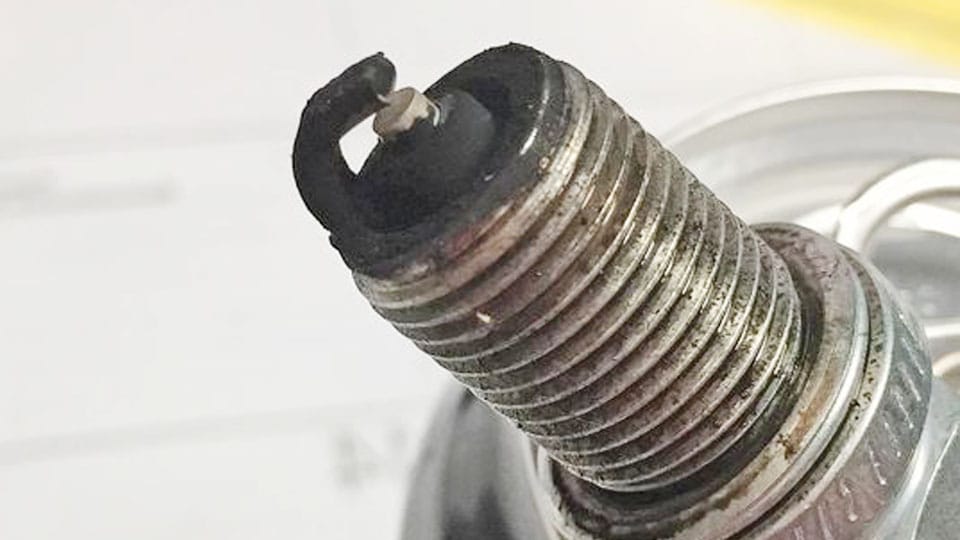
Expensive spark plugs are worth it when they match the engine’s OEM spec, cure misfire-prone worn plugs, or extend service intervals; otherwise, a basic copper plug often does the job. Pick the wrong plug and you can waste money, shorten service life, or leave a drivability fault in place. This guide compares copper, platinum, and iridium by fitment, interval, and real value.
Spark plug types compared
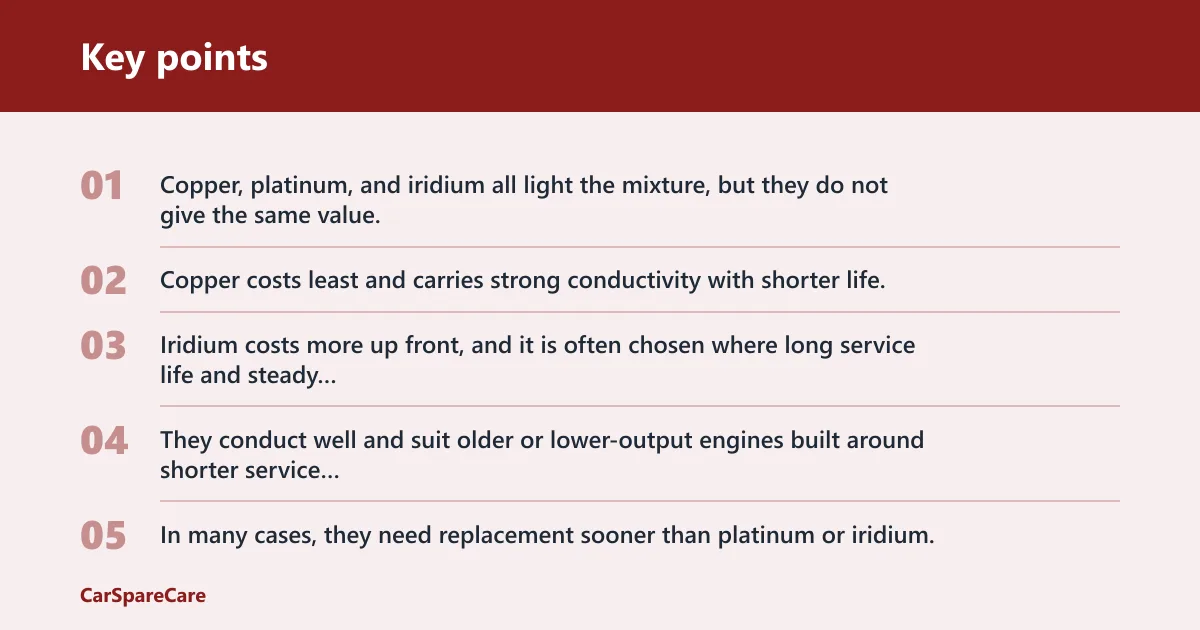
Copper, platinum, and iridium all light the mixture, but they do not give the same value. Copper costs least and carries strong conductivity with shorter life. Platinum sits in the middle. Iridium costs more up front, and it is often chosen where long service life and steady ignition matter most.
Copper spark plugs
Copper plugs are the lowest-cost option. They conduct well and suit older or lower-output engines built around shorter service intervals. Their trade-off is wear. In many cases, they need replacement sooner than platinum or iridium, so the cheap purchase price can stop being cheap if you keep the vehicle for a long time.
Platinum spark plugs
Platinum plugs are the middle ground. They usually cost more than copper but last longer, so they often make sense for steady daily driving where you want fewer replacements without paying for the longest-life plug. They suit engines that need durability, but not necessarily the highest-end material.
Iridium spark plugs
Iridium plugs have the highest upfront cost and the longest life. They are often used in modern OEM applications, and they can provide steady ignition under load. That matters most in engines built around them, including many modern turbo and high-output setups. In a compatible engine, they can be a smart buy; in the wrong engine, they are just expensive.
| Type | Upfront cost | Life | Best fit | Typical value case |
|---|---|---|---|---|
| Copper | Lowest | Shortest | Older or simple engines | Low purchase price and short ownership horizon |
| Platinum | Mid-price | Longer than copper | Steady daily driving | Better balance of cost and service interval |
| Iridium | Highest | Longest | Modern OEM fitment, turbo, performance, long intervals | Long ownership, fewer plug changes, spec-matched engines |
What makes spark plugs expensive?
The price comes from electrode material, manufacturing precision, and the service life the engine maker expects. Iridium and platinum cost more to build into a plug than copper. That extra cost often buys slower wear, tighter gap retention, and in some cases pre-gapped plugs that match OEM expectations more closely.
Electrode material and wear rate
Copper wears faster, so it is cheaper to buy but needs more frequent replacement. Platinum and iridium resist wear better. That is the main reason they cost more. If the engine only needs short intervals, the added material cost may not return much value.
Manufacturing precision and pre-gapping
Premium plugs are often made to tighter tolerances. That matters because the spark plug gap must match the engine specification. A plug that arrives closer to spec can save setup time and reduce the chance of a bad install. Still, pre-gapped does not mean universal. The engine spec still comes first.
OEM fitment and service interval expectations
Many modern engines are built around long-life iridium plugs. That changes the value equation. If the owner’s manual or repair manual calls for iridium, the plug price is part of the engine’s design, not an upgrade. Bosch is described as suitable for European cars and everyday reliability. NGK is presented as best for Japanese and performance engines. Denso is positioned for OEM precision and fuel efficiency.
Are expensive spark plugs worth it?
Yes, but only in the right situation. Premium plugs are worth the money when they restore lost performance from worn plugs, when they buy a much longer service interval, or when they match the engine’s OEM design. If the engine is healthy and the spec calls for copper, the extra cost often brings little or no real benefit.
When they restore lost performance
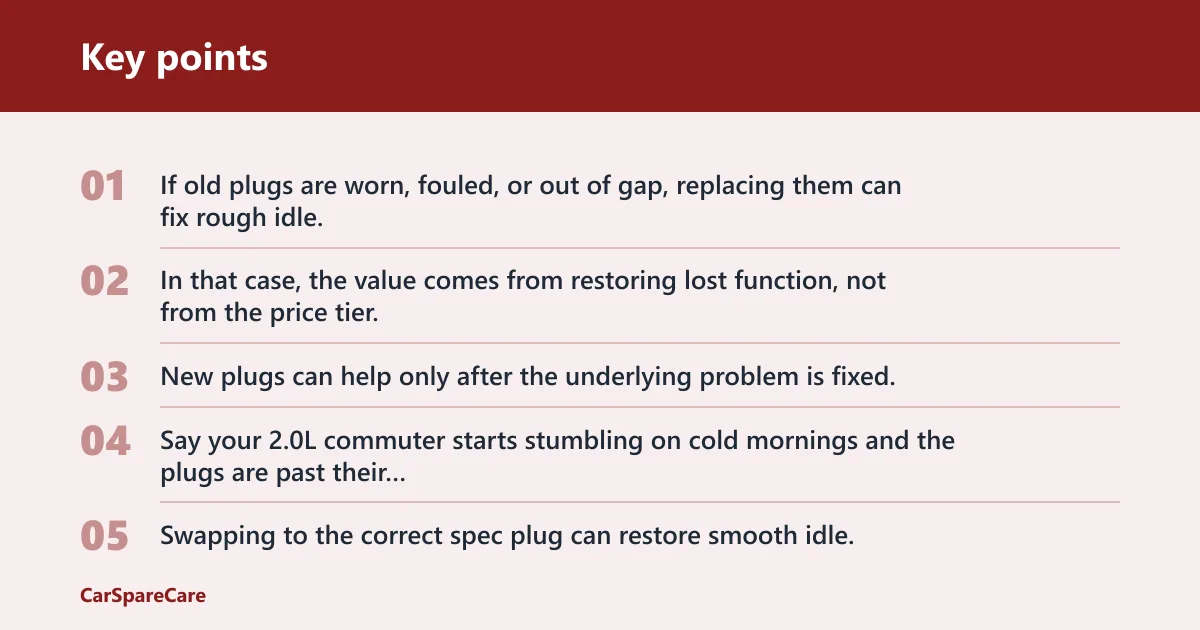
If old plugs are worn, fouled, or out of gap, replacing them can fix rough idle, hard starts, or a light misfire. In that case, the value comes from restoring lost function, not from the price tier. New plugs can help only after the underlying problem is fixed.
Say your 2.0L commuter starts stumbling on cold mornings and the plugs are past their service interval. Swapping to the correct spec plug can restore smooth idle. If the coils are worn, though, the new plugs may only hide the issue for a short time.
When they mainly buy longer life
Premium plugs make the most sense when you want fewer replacements over the vehicle’s remaining life. That is where iridium often wins. A cited comparison says iridium plugs can last up to 60,000+ miles, and another FAQ places modern iridium plugs at 60,000-100,000 miles. Copper plugs may need changing every 30,000 miles, and under harsh conditions they may require replacement around 20,000 miles.
When the gain is small or zero
On a stock daily driver with clean ignition components and the correct factory plug, expensive plugs usually do not create a large power jump. Drive Quip lists fuel economy gains as marginal in many modern vehicles. That is the right expectation for most healthy engines. You may get better service life, but not a dramatic transformation.
Spark plug value matrix
This decision matrix ranks value by vehicle type, mileage, engine condition, and ownership horizon. Use it as a practical filter, not a rulebook. The best plug is the one that matches the engine spec and the way you will keep the car.
| Vehicle type | Mileage / condition | Ownership horizon | Value rank | Buy recommendation | Cost-per-mile note |
|---|---|---|---|---|---|
| Older simple engine | Normal condition, shorter intervals acceptable | Short | High for copper | Buy copper | Lowest upfront cost can win if you replace plugs on a short schedule |
| High-mileage commuter | Healthy coils, no oil burning, steady use | Medium to long | High for platinum | Buy platinum | Moderate price spread is offset by longer life than copper |
| Modern OEM iridium application | Engine calls for long-life plug | Long | High for iridium | Buy iridium | Higher upfront cost is spread over a much longer interval |
| Turbo engine | Spec matches iridium | Long | High for iridium | Buy iridium | Stable ignition under load matters more than saving a few dollars |
| Engine with oil consumption | Fouling likely | Any | Low for premium until fault is fixed | Buy correct spec only after diagnosis | Premium plugs can be wasted if contamination keeps killing them early |
A simple cost-per-mile template helps. Divide plug price by the expected service interval, then compare the result across copper, platinum, and iridium. If an iridium set costs about $40 and is said to last around 80,000 miles, the plug cost alone comes out to about 0.05 cents per mile per dollar? No. Keep it simple: compare total set price over interval. The point is the same. A higher sticker can still cost less per mile if the interval is much longer.
When premium plugs waste money
Premium plugs are a poor buy when the real problem is elsewhere. Weak ignition coils, oil consumption, carbon fouling, or the wrong heat range can make a costly plug look ineffective. In those cases, the new plug may not fix the drivability issue, and it may fail early.
Weak ignition coils
Worn coils can hide or cancel the benefit of better plugs. If the spark energy is weak, a more expensive plug will not cure a coil fault. Diagnose the ignition system first when you have a misfire, especially if the problem follows load, heat, or wet weather.
Oil consumption or fouling
Oil fouling coats the plug tip and causes misfire. Carbon fouling can do the same. If the engine burns oil or runs too rich, even iridium can become a bad value because the plug is fighting contamination instead of doing normal work. Fix the engine condition first.
Suppose a turbo sedan shows misfire after extended idling and the plugs come out sooty. Replacing them with premium plugs may help for a while, but the real issue is still fuel wash, oil contamination, or another engine fault. A better plug cannot solve that by itself.
Wrong heat range or gap
Heat range controls heat dissipation from the tip. The wrong selection can cause pre-ignition or fouling. Gap matters too. If the spark plug gap does not match engine specification, ignition stability drops. You can pay more and still end up with worse running if the plug is wrong for the engine.
Choose copper, platinum, or iridium if…
Use the engine’s manual first. The owner’s manual or repair manual should list thread size, reach, heat range, and gap specification. Then match the plug to the engine’s actual need, not the marketing tier. That is the safest way to decide whether a premium plug is value or waste.
Choose copper if you want the lowest upfront cost and short intervals
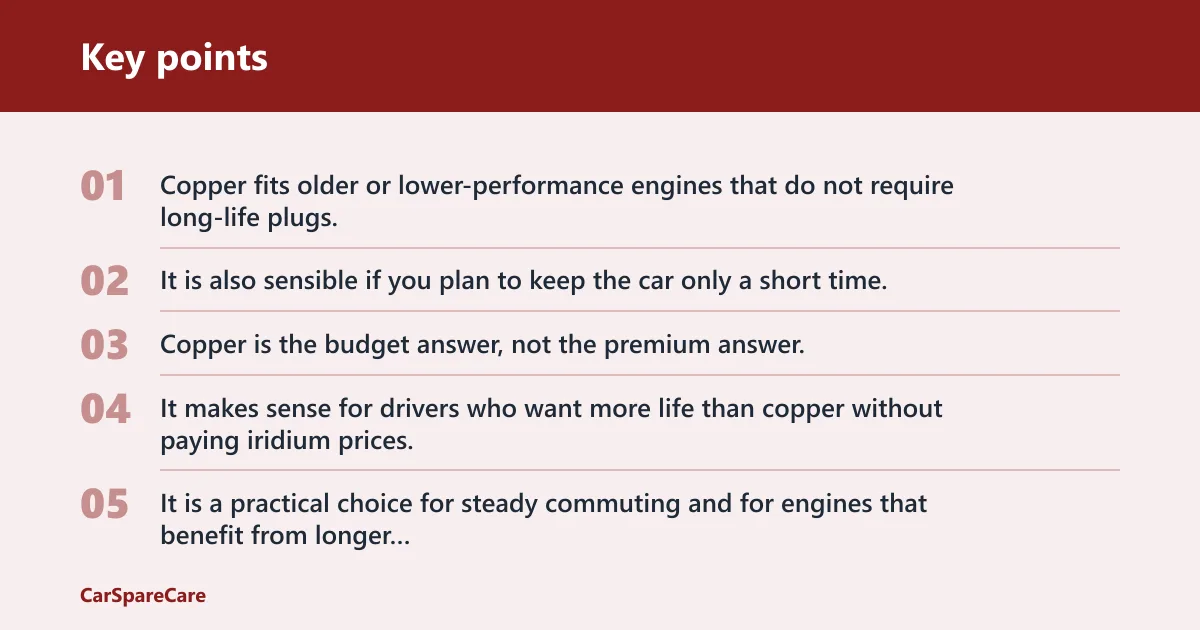
Copper fits older or lower-performance engines that do not require long-life plugs. It is also sensible if you plan to keep the car only a short time, or if the engine already uses short service intervals and easy access makes replacement simple. Copper is the budget answer, not the premium answer.
Choose platinum if you want balanced price and longevity
Platinum fits the middle ground. It makes sense for drivers who want more life than copper without paying iridium prices. It is a practical choice for steady commuting and for engines that benefit from longer replacement intervals but do not demand the longest-life OEM plug.
Choose iridium if the engine calls for long service life or OEM iridium fitment
Iridium is the right buy when the manufacturer specifies it, when the vehicle is modern and designed around long intervals, or when you want steady ignition under load in a turbo or performance engine. The same source says expensive plugs are often chosen for high-performance or turbocharged engines. If that is your engine, the premium can be justified.
Do not forget installation. Torque specs matter because overtightening can damage threads. Gap matters because the spark must jump cleanly. A correct plug installed badly can run worse than a cheaper plug installed correctly.
Frequently asked questions
Are more expensive spark plugs worth it?
More expensive plugs are worth it mainly if they reduce how often you replace them or match an OEM iridium design. If the car is an older simple engine and you do not keep it long, the added cost often does not pay back. Match the plug to the use case.
Do expensive spark plugs make a difference?
They can, but the difference is usually in service life and consistency, not a dramatic power jump. Premium plugs may improve cold starts and smoother idling, according to Drive Quip, but the effect is limited when the engine already runs well. Faulty coils or fouling can erase that difference.
Why do spark plugs cost so much?
The price comes from the metal used, the precision of the electrode design, and the durability target. Iridium and platinum cost more to make than copper plugs, and many modern plugs are built to last far longer. You are paying for wear resistance and OEM-style fitment, not just the spark itself.
Will expensive spark plugs improve fuel economy?
Usually only a little, and sometimes not at all. The same source says fuel economy gains are marginal in many modern vehicles. If your old plugs are worn or misfiring, fuel use may improve after replacement because the engine is running correctly again. Healthy engines rarely see a big mpg change.
Are expensive spark plug wires worth it?
Not automatically. Spark plug wires are separate from the plugs, and worn wires can cause misfire no matter how good the plug is. Replace wires only when they test bad, are physically damaged, or the vehicle design uses them as part of the ignition path. Do not buy premium wires as a default upgrade.

Hi, I’m Melvin, an automobile engineer with extensive experience in automobile equipment. I currently work for a local automobile firm, where I specialize in the car parts industry. I’ve had the opportunity to collaborate with seasoned inspectors, gaining invaluable hands-on experience that goes beyond just theory.
My passion for automotive care started at a young age, which led me to create CarSpareCare. Through CarSpareCare, I share the knowledge and skills I’ve acquired over the years to help others navigate the world of car maintenance and repairs.
My goal is to provide practical tutorials, essential safety advice, and the latest industry insights so that anyone—whether a beginner or an expert—can confidently tackle their automotive projects.