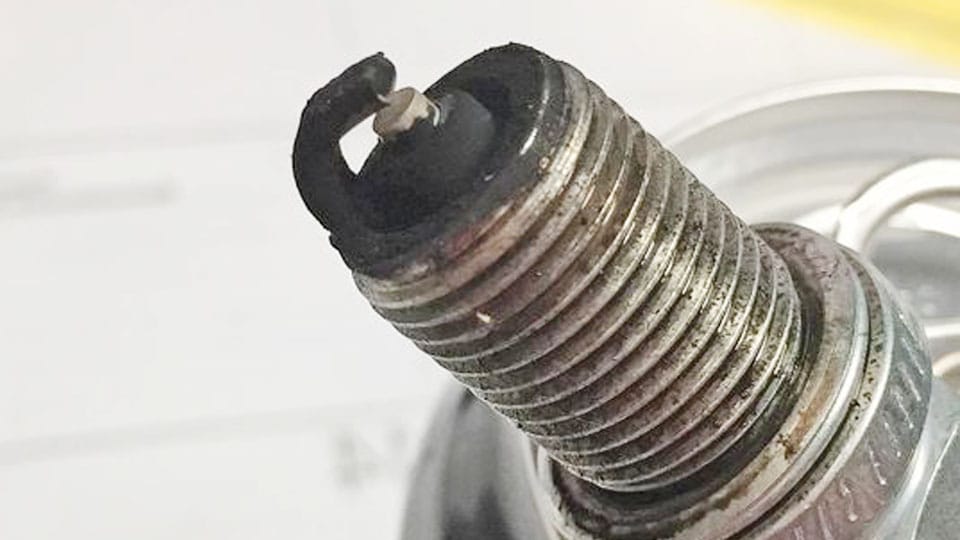
Yes. Wrong spark plugs can hurt engine performance by causing rough idle, misfires, harder starts, poor fuel economy, and, if the fit or heat range is far off, catalytic converter damage. This guide separates the three failure modes, fit, heat range, and gap, so you can tell a mild drivability issue from one that needs immediate correction.
Identifying the wrong spark plug
Yes. A wrong plug can change how the spark fires, how heat leaves the tip, or whether the plug fits the cylinder head correctly, and each failure mode affects the engine differently. Some mistakes mainly cause drivability loss. Others can lead to misfire, pre-ignition, or damage to the cylinder head, piston, valves, or catalytic converter.
The first step is to separate wrong type from worn plug. A worn plug can misfire from age or electrode wear. A wrong plug can misfire from the start because its heat range, size, reach, or gap does not match the engine’s specification. The owner’s manual is the reference for plug type, heat range, size, and gap.
Spark plug diagnosis matrix
| Wrong plug type | Likely symptoms | Severity / next step |
|---|---|---|
| Heat range too hot | Ping or knock, rough running under load, possible pre-ignition signs | High urgency. Stop heavy driving and inspect against the manual. Inspect first: confirm heat range number, then check for lean codes or cooling issues that may have been confused with plug trouble. |
| Heat range too cold | Fouling, rough idle, misfire, poor cold driving, sooty plug tip | Moderate to high urgency. Confirm the plug spec before replacing more parts. Inspect first: look for carbon on the firing tip, then rule out oil burning or excess fuel that can mimic the same symptom. |
| Thread or reach mismatch | May not seat correctly, compression leak, misfire, damaged threads, poor compression | High urgency. Do not keep cranking it in. Inspect first: check thread diameter, pitch, reach, and seat style against the cylinder head before installation. |
| Gap too wide or too tight | Rough idle, jerky acceleration, hard starts, weak spark under load, misfire | Moderate urgency. Verify the gap before installation. Inspect first: measure the new plug and compare it to the manual, then check for handling damage if the gap looks off. |
| Wrong material or application | Early wear, shortened service life, occasional misfire, poor cold response in the wrong engine | Usually moderate. It may run acceptably for a time, then wear faster or foul sooner. Inspect first: confirm copper, platinum, or iridium matches the engine’s intended service interval and ignition system. |
What does the wrong heat range do?
The heat range controls how quickly the plug tip sheds heat into the cylinder head. Hot plugs disperse heat more slowly. Cold plugs have a higher heat dispersal rate. That difference matters because a plug that runs too hot can trigger pre-ignition, while a plug that runs too cold can foul and misfire.
Hot plugs and pre-ignition risk
A plug that is too hot can retain too much heat in the chamber. That raises the chance of pre-ignition, where the air-fuel charge ignites before the spark event. The result can be knock or ping, plus stress on pistons and valves. This is more serious than a simple idle complaint.
Cold plugs and fouling risk
A plug that is too cold may not self-clean well at the engine’s normal operating temperature. That can leave deposits on the tip and cause misfire, rough idle, or poor acceleration. Cold spark plugs are used for high-performance motors and higher operating temperatures, so the “colder” choice is not automatically wrong; it depends on the engine.
Turbocharged engines can be less forgiving here. Higher cylinder pressures and hotter chambers can make a marginal heat range show its problem sooner, especially under load or sustained boost. A plug that seems fine in light driving may misfire once the engine is asked to work harder.
For example, if the manual calls for one heat range and the installed plug is about two steps hotter, it may idle acceptably but ping on a long hill climb. The car may idle acceptably for a while, then ping on a long hill climb. That is a heat-range problem, not a generic “old plug” issue, and the fix is to install the correct spec before more load is added.
Can wrong spark plugs cause misfires?
Yes. Wrong plugs can cause misfires because the spark may be too weak, too hot, or delivered with the wrong gap or fit. The common signs are rough idle, jerky acceleration, a check engine light, and poor fuel economy. Those symptoms are not specific to plugs, so you still need to confirm the failure mode.
Rough idle and jerky acceleration
If the engine shakes at idle or surges during light throttle, the plug may be firing inconsistently. Wrong plugs can cause rough idle and poor acceleration, but the same symptoms can also come from coils, vacuum leaks, fuel delivery faults, or carbon buildup. A single-cylinder misfire often points to a plug, coil, or wire issue on that cylinder.
Check engine light clues
A check engine light with misfire codes can help narrow the diagnosis. If the plug is the wrong type, the engine may show a repeat misfire on the same cylinder after plug replacement or after a recent service mistake. If the code moves with the coil, the coil is more suspect than the plug.
When a misfire points to plugs versus coils
Modern coil-on-plug systems can be sensitive to plug gap and plug condition. A plug that is correct on paper but gapped too wide can place extra demand on the coil. If the misfire appears under load or at higher rpm, check the plug gap and coil health together instead of replacing parts at random.
Suppose a four-cylinder engine starts idling unevenly after a tune-up, and cylinder 2 keeps setting a misfire code. If that plug is the wrong gap and the other cylinders are clean, the plug is a better suspect than the fuel pump. If the same code follows the coil to another cylinder, the coil deserves attention first.
Why fitment matters more than most owners think
Fitment is not optional. Spark plugs have threads to compensate for reach, diameter, and pitch, and the diameter should perfectly match the cylinder head threads. If any of those details are wrong, the engine may not seal properly, and the cylinder head threads themselves can be damaged.
Thread size and pitch
Thread size means the diameter and pitch of the plug threads. Those values must match the cylinder head threads exactly. A mismatch can cause cross-threading, stripped thread damage, or a plug that never seats as intended. That is a mechanical risk, not just a drivability concern.
Reach and seat style
Reach is the threaded length that extends into the chamber. If the reach is too long, the plug can project too far into the combustion space and interfere with normal combustion or contact internal parts. If it is too short, the plug may not sit where the engine expects it to, which can affect heat transfer and sealing.
Cylinder head thread damage and cross-threading
Always start the plug by hand. If it does not spin in easily for several turns, stop. Forcing it can cross-thread the cylinder head, and that repair is far more involved than replacing the plug. This is the reason the fit check comes before torque, not after.
- Remove the old plug and compare the new plug’s diameter, pitch, reach, and seat style.
- Confirm the manual’s specification before installation.
- Hand-start the plug only. Never use a wrench to begin threading.
- Stop immediately if resistance appears before the plug seats.
- Inspect the cylinder head threads if the plug will not thread smoothly.
Can the wrong spark plug gap cause rough idle?
Yes. A wrong gap can cause rough idle because it changes the voltage the ignition system must produce and the shape of the spark kernel in the chamber. A gap that is too wide can misfire under load. A gap that is too tight can weaken combustion quality and hurt smoothness.
Gap too wide
A gap that is too wide asks more of the ignition coil. If the coil cannot jump the gap consistently, the engine can misfire, hesitate, or run rough at idle and under acceleration. That is especially noticeable in coil-on-plug engines where plug gap and coil output are closely linked.
Gap too tight
A gap that is too tight may fire more easily, but the spark can be less effective at lighting the mixture cleanly. The result can be poor combustion quality, reduced power, and drivability complaints that look like a weak engine rather than an obvious ignition failure.
How handling or shipping can change gap
Even a new plug can arrive with a gap that is off spec from manufacturing variation or be bent during handling. Do not assume a boxed plug is ready to install. Check the gap before fitting it, and compare it to the manual rather than to the old plug if the old plug may already have drifted from spec.
A common first-timer mistake is dropping a plug onto the workbench, then installing it without rechecking the gap. The engine starts, but idle quality is worse than before. That problem is easy to miss because the plug is new, yet the gap is now the wrong one.
How spark plug material affects use
Plug material affects service life and how much the plug tolerates wear, but it does not override the engine’s specification. Spark plugs are differentiated by copper, platinum, or iridium tips. One material is not universally better. The right choice depends on the ignition system, service interval, and what the engine was designed to use.
Copper versus platinum versus iridium
Copper plugs are often used where the engine calls for them and may need shorter service intervals. Platinum and iridium are commonly used for longer life in many applications. That longer life is useful only when the engine is specified for it. A material swap does not fix the wrong heat range, reach, or gap.
Longevity and service interval
Material matters because the electrode wears at different rates. As wear builds, the gap can drift and misfires become more likely. That is why a service interval is part of the decision, not an afterthought. If the engine calls for a specific material, follow that call instead of choosing by price alone.
Why the manual still wins
The owner’s manual should be checked for plug type, heat range, size, and gap. That guidance beats assumptions about copper versus platinum versus iridium. In some engines, the original plug is the safest and most reliable choice even if another material looks “upgraded” on paper.
What should you check before replacing plugs?
Check the specification first, then decide whether the plug is wrong or simply worn. The manual should list the factory-recommended plug type, heat range, size, and gap. If the current plugs do not match those details, replacement with the correct OEM-equivalent part is the sensible move.
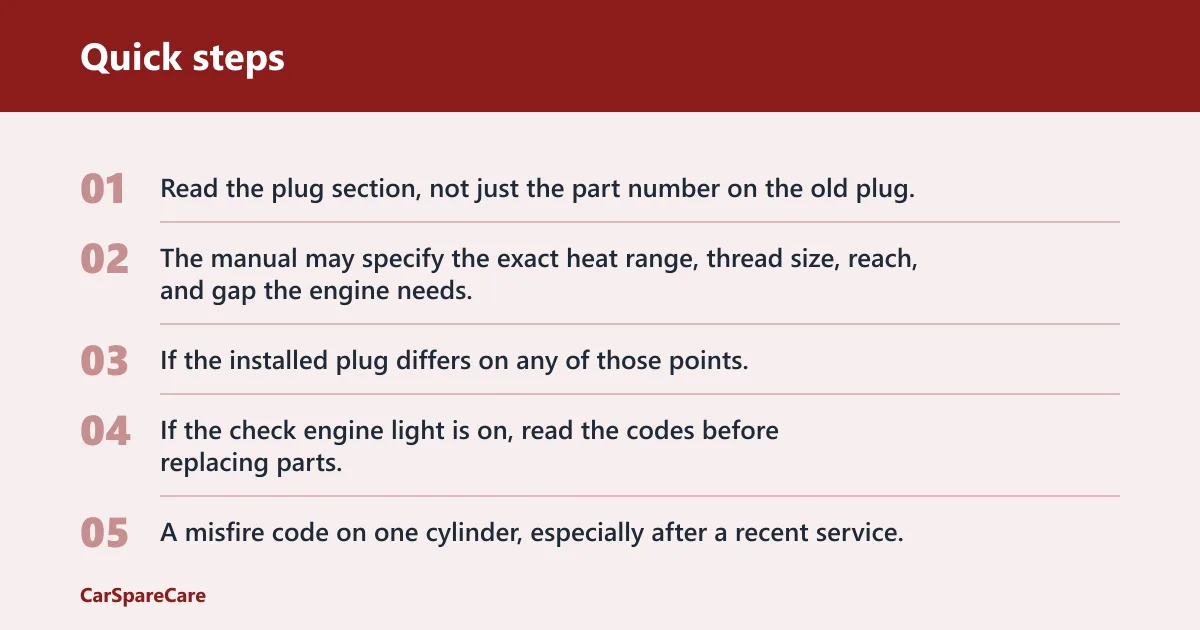
Owner’s manual specifications
Read the plug section, not just the part number on the old plug. The manual may specify the exact heat range, thread size, reach, and gap the engine needs. If the installed plug differs on any of those points, that mismatch can explain the symptom better than age alone.
Scan for misfire codes
If the check engine light is on, read the codes before replacing parts. A misfire code on one cylinder, especially after a recent service, can point to a plug issue, coil issue, or installation error. The code does not prove the plug is wrong, but it tells you where to inspect first.
Match the old plug only if it was correct
Do not copy an old plug blindly. If the old plug was already the wrong type, the new one will repeat the problem. Compare the removed plug to the manual, not just to the parts counter label. That matters when the engine has been modified or when a previous owner installed the wrong part.
When to stop and inspect coils or fuel delivery
If the correct plug is installed and the engine still misfires, look beyond the plugs. Coils, injectors, fuel pressure, vacuum leaks, and compression faults can create the same symptoms. Wrong plugs can cause those symptoms, but they are not the only cause, and replacing more plugs will not fix a fuel or coil problem.
Frequently asked questions
Can the wrong spark plugs hurt engine performance?
Yes. Wrong plugs can reduce power, cause rough idle, and make acceleration feel uneven. The effect depends on the mismatch. A gap error may create a mild drivability complaint, while a heat-range or fitment mistake can lead to misfire, knock, or other symptoms that need prompt correction.
What happens if you use the wrong spark plugs?
Using the wrong spark plugs may lead to poor idle quality, hard starts, misfires, lower fuel economy, and higher emissions. If the plug is the wrong heat range, the engine can also run too hot or foul more easily. If the plug does not fit correctly, the cylinder head threads can be damaged.
Can the wrong spark plug damage the engine?
Yes, in the wrong conditions. A plug that runs too hot can contribute to pre-ignition, knock, and added stress on pistons and valves. A thread or reach mismatch can damage the cylinder head or affect sealing. Those are more serious than a simple performance drop.
How do I know if my spark plugs are the wrong type?
Check the owner’s manual first. Compare the installed plug’s heat range, thread size, reach, gap, and material with the factory specification. If the engine started misfiring after a plug change, or if the plug does not match the manual, the part may be wrong even if it is new.
Can bad spark plugs damage the catalytic converter?
Yes. Prolonged misfires can send unburned fuel into the exhaust, which can overheat the catalytic converter. That risk is higher when the misfire is ignored for too long. A short-lived rough idle is one thing; a sustained misfire should be corrected before more damage follows.

Hi, I’m Melvin, an automobile engineer with extensive experience in automobile equipment. I currently work for a local automobile firm, where I specialize in the car parts industry. I’ve had the opportunity to collaborate with seasoned inspectors, gaining invaluable hands-on experience that goes beyond just theory.
My passion for automotive care started at a young age, which led me to create CarSpareCare. Through CarSpareCare, I share the knowledge and skills I’ve acquired over the years to help others navigate the world of car maintenance and repairs.
My goal is to provide practical tutorials, essential safety advice, and the latest industry insights so that anyone—whether a beginner or an expert—can confidently tackle their automotive projects.