Single platinum plugs usually last about 60,000-100,000 miles; double platinum and platinum-iridium often reach about 100,000 miles or more, though severe driving or the vehicle manual can shorten that interval. Waiting too long raises misfire risk, fuel use, and ignition coil stress. Below is a mileage matrix by plug type and ignition system, plus the warning signs that beat any generic rule.
Platinum spark plug lifespan and replacement guide
For many passenger vehicles, platinum plugs last longer than copper plugs, but the right answer depends on plug design, engine setup, and service conditions. A common range is 60,000 miles for platinum or iridium plugs, with double platinum designs often rated at 100,000 to 120,000 miles. Use the owner’s manual first; it sets the service interval for your exact engine and plug code.
Platinum plugs are often chosen for coil-on-plug ignition systems, where each coil fires a single plug directly. That layout suits long-life plug designs, especially when the engine calls for a fine-wire OE type. But a worn plug, oil fouling, or gap erosion can cut service life well before the mileage target.
Platinum spark plug interval matrix
The table below separates the common platinum types and shows how severe service changes the answer. Use it as a starting point only, then match the vehicle schedule and plug part number.
| Plug type | Typical mileage range | Kilometer range | Severe-service adjustment | Replacement triggers |
|---|---|---|---|---|
| Single platinum | 60,000-100,000 miles | 96,000-160,000 km | Often shorten by about 25%-50% for short trips, towing, idle-heavy use, or modified engines | Misfires, hard starting, reduced performance, unusual engine noise, fouling, gap erosion, or electrode damage |
| Double platinum | 100,000-120,000 miles | 160,000-193,000 km | May need earlier replacement in severe service or when the manual sets a shorter interval | Same as above, plus any wear that makes the plug outside spec |
| Platinum-iridium | 60,000-120,000 miles, depending on the exact OE design | 96,000-193,000 km | Shorten for repeated cold starts, heavy load, oil consumption, or ignition faults | Same as above, with manual interval taking priority over the generic claim |
Severe-service adjustment: Short trips, towing, long idle time, and modified engines are the usual reasons to shorten any of these ranges. If the manual lists a shorter interval than the table, follow the manual. If symptoms show up first, replace the plugs sooner.
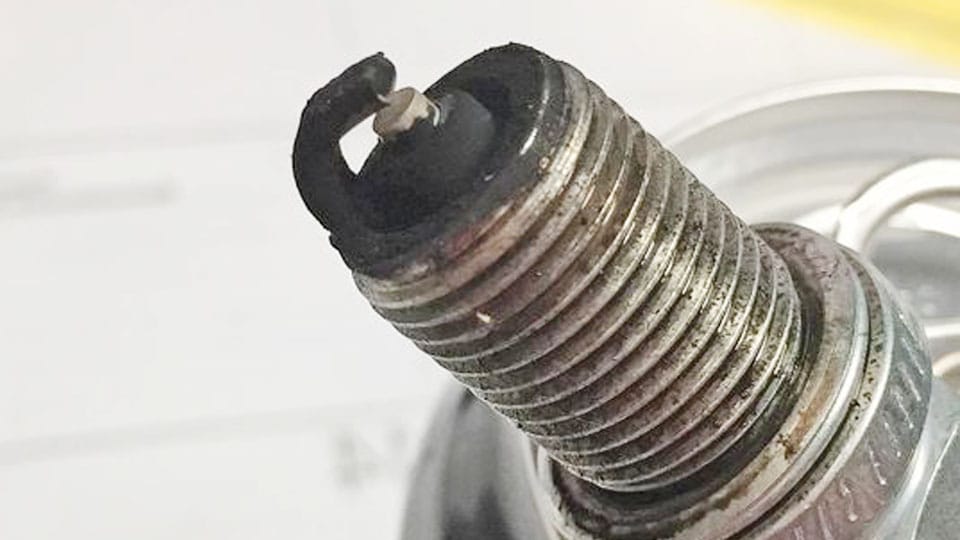
Replacement triggers: Replace a plug if inspection shows normal wear past the service limit, a gap that has drifted out of spec, fouling, or any electrode damage. Those are repair signs, not cleaning cues.
Single platinum vs double platinum
Single platinum plugs use a platinum disc welded to the center electrode tip. Some designs use platinum only on that center side, while others add a platinum inlay to the ground electrode as well. Double platinum plugs use platinum on both electrodes, which is why they usually last longer in many OE applications.
That second platinum surface matters in distributor-based systems and in some coil-on-plug applications where electrode wear is a bigger issue. A double platinum design can hold its gap and firing edges longer than a single platinum plug in the same engine, but the exact interval still depends on the part number and the vehicle’s ignition system.
Picture a V6 with coil-on-plug ignition and a manual interval of 100,000 miles. If the engine is otherwise healthy, a double platinum OE plug may fit that schedule well. If the same engine starts misfiring at 72,000 miles because of oil fouling, the schedule no longer matters.
Are platinum-iridium plugs worth a longer interval?
Yes, often, but not automatically. Platinum-iridium plugs are commonly grouped with platinum in service-life advice because both are long-life designs, and many applications expect them to outlast conventional platinum. Still, the exact interval depends on the engine, the ignition system, and the manufacturer’s replacement schedule.
Iridium plugs often last longer than conventional platinum in many applications because the center electrode can be made finer and more wear-resistant. That does not mean every iridium plug outlasts every platinum plug in every engine. The manual and the exact plug specification remain the final word.
Say your compact car specifies platinum-iridium plugs and the manual calls for replacement at 100,000 miles. That interval takes priority over a generic “long-life” claim, even if the plug looks clean at inspection. A clean appearance does not cancel wear at the firing tip or gap.
When the manual beats the mileage rule
The owner’s manual overrides any generic mileage estimate. If the manual says 60,000 miles, do not wait for a broader internet range just because the plug family is platinum or iridium. Vehicle-specific intervals exist because combustion chambers, coil output, and plug heat range differ from one engine to another.
Coil-on-plug ignition matters here because platinum plugs are often selected for that system. Direct coil control can reduce lead resistance issues, but it also makes correct plug type and heat range more important. A wrong plug choice can trigger symptoms that look like wear long before the normal interval.
Bosch’s OE Fine Wire lineup is a useful reference case because it includes platinum spark plugs and double platinum versions under its performance guarantee. Bosch says its double platinum guarantee lasts five years or the manufacturer’s recommended spark plug change interval, whichever comes first, and it also ties the guarantee to that recommended interval. That is a clear example of the manual cutting off a marketing claim.
Bosch double platinum plugs are described as using platinum on both electrodes, with platinum inlay in the ground electrode. Bosch also lists some pre-gapped versions, including 0.031 inch and 0.044 inch preset gaps. Even so, a preset gap does not remove the need to replace a plug that is worn, fouled, or damaged.
What shortens platinum spark plug life?
Short trips, towing, idle-heavy use, oil fouling, rich running, ignition faults, and gap erosion all shorten life. Those factors can turn a long-life plug into a repair item much sooner than the catalog interval suggests. The same plug can last very differently from one engine to another.
Driving severity
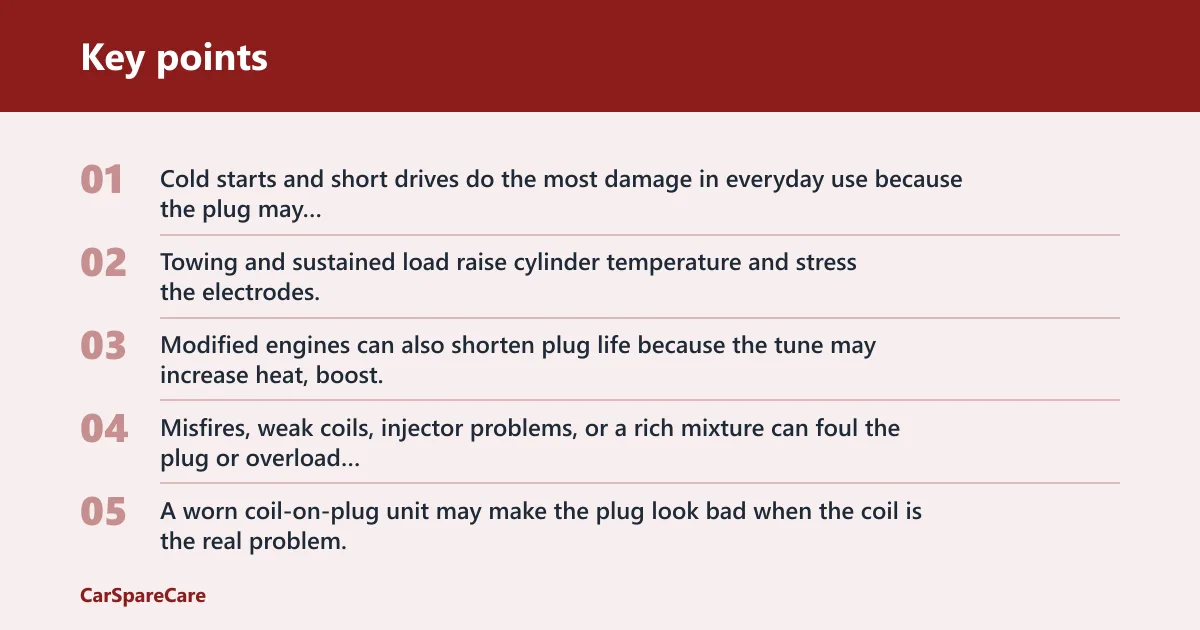
Cold starts and short drives do the most damage in everyday use because the plug may never reach a steady self-cleaning temperature. Towing and sustained load raise cylinder temperature and stress the electrodes. Modified engines can also shorten plug life because the tune may increase heat, boost, or combustion pressure.
Ignition and fuel faults
Misfires, weak coils, injector problems, or a rich mixture can foul the plug or overload the firing end. A worn coil-on-plug unit may make the plug look bad when the coil is the real problem. That is why symptoms should be checked before replacing parts one by one.
Gap erosion and wrong-gap symptoms
Gap erosion changes how the plug fires. As the gap grows, the ignition system must work harder, which can lead to misfires or hard starting. Pre-gapped plugs can still need replacement if the gap is no longer in spec, and a wrong gap can mimic a worn plug almost exactly.
A common first-timer mistake is to see a black, sooty plug and assume the answer is cleaning. If the plug also has a widened gap or rounded electrodes, replacement is the safer call. Cleaning may hide the symptom for a short time, but it does not restore the firing edge.
Single platinum vs double platinum
Single platinum and double platinum are not the same service part. Single platinum usually puts the platinum disc on the center electrode tip only, while double platinum uses platinum on both the center and ground electrodes. That second platinum surface is the main reason double platinum often lasts longer in OE service.
Single platinum is common in many long-life applications, especially where the engine design does not demand the longest possible electrode life. Double platinum is often used when the manufacturer wants better durability across the firing surfaces. Both can be good choices, but only if the exact part number matches the engine.
For example, a four-cylinder with coil-on-plug ignition may specify a single platinum plug from one brand and a double platinum from another. The brand name alone is not enough. You need the exact heat range, thread reach, seat type, and gap spec that the vehicle calls for.
Frequently asked questions
How long do platinum spark plugs last?
Most platinum spark plugs last longer than copper plugs, with many falling in the 60,000-100,000-mile range. Double platinum and platinum-iridium types can last longer, often around 100,000 miles or more. The owner’s manual can shorten that interval, and symptoms can shorten it further.
How long do platinum spark plugs last in km?
A practical kilometer range is about 96,000-160,000 km for many single platinum plugs, and about 160,000-193,000 km for many double platinum plugs. Platinum-iridium plugs may sit in either band depending on the exact design. Use the manual first if it lists a kilometer interval.
How long do double platinum spark plugs last?
They use platinum on both electrodes, which helps durability in many OE applications. Severe service or a shorter manufacturer interval can pull that number down.
How long do platinum iridium spark plugs last?
Platinum-iridium plugs are often grouped with other long-life plugs because many applications reach 60,000 miles or more, and some go past 100,000 miles. The exact number depends on the engine and part number. The owner’s manual still beats any generic lifespan claim.
How often to change platinum spark plugs?
Change them at the manufacturer’s interval, or sooner if inspection shows fouling, gap erosion, electrode damage, or symptoms such as misfires and hard starting. For a healthy engine, many platinum plugs last 60,000 miles or more. Severe service usually means earlier replacement.
How long do single platinum spark plugs last?
They use a platinum disc on the center electrode tip, and some designs also apply platinum to the ground electrode. If the plug is out of spec, replace it rather than clean it.

Hi, I’m Melvin, an automobile engineer with extensive experience in automobile equipment. I currently work for a local automobile firm, where I specialize in the car parts industry. I’ve had the opportunity to collaborate with seasoned inspectors, gaining invaluable hands-on experience that goes beyond just theory.
My passion for automotive care started at a young age, which led me to create CarSpareCare. Through CarSpareCare, I share the knowledge and skills I’ve acquired over the years to help others navigate the world of car maintenance and repairs.
My goal is to provide practical tutorials, essential safety advice, and the latest industry insights so that anyone—whether a beginner or an expert—can confidently tackle their automotive projects.