
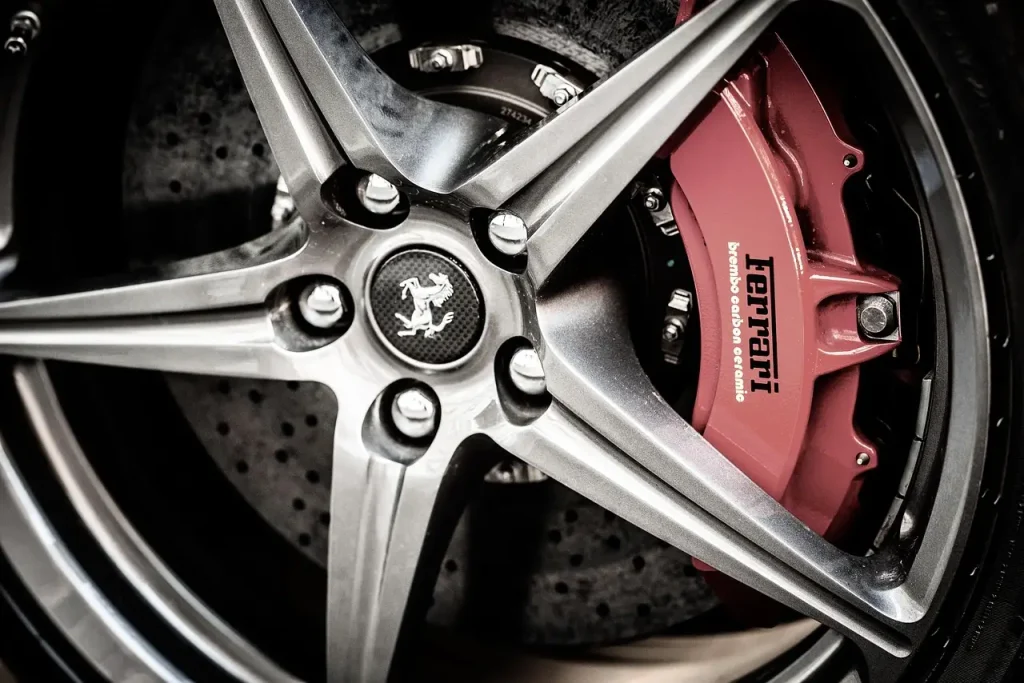
A brake caliper overheats when it cannot release fully, usually because of seized slide pins, a sticking piston, a collapsed brake hose, or jammed hardware. If one wheel is far hotter than the others after a short drive, treat it as a drag fault. Left alone, that heat can boil fluid, warp pads and rotors, smoke the brakes, and raise fire risk. This guide shows how to separate normal brake heat from a fault and decide when to cool, inspect, or tow.
Why brake calipers get hot
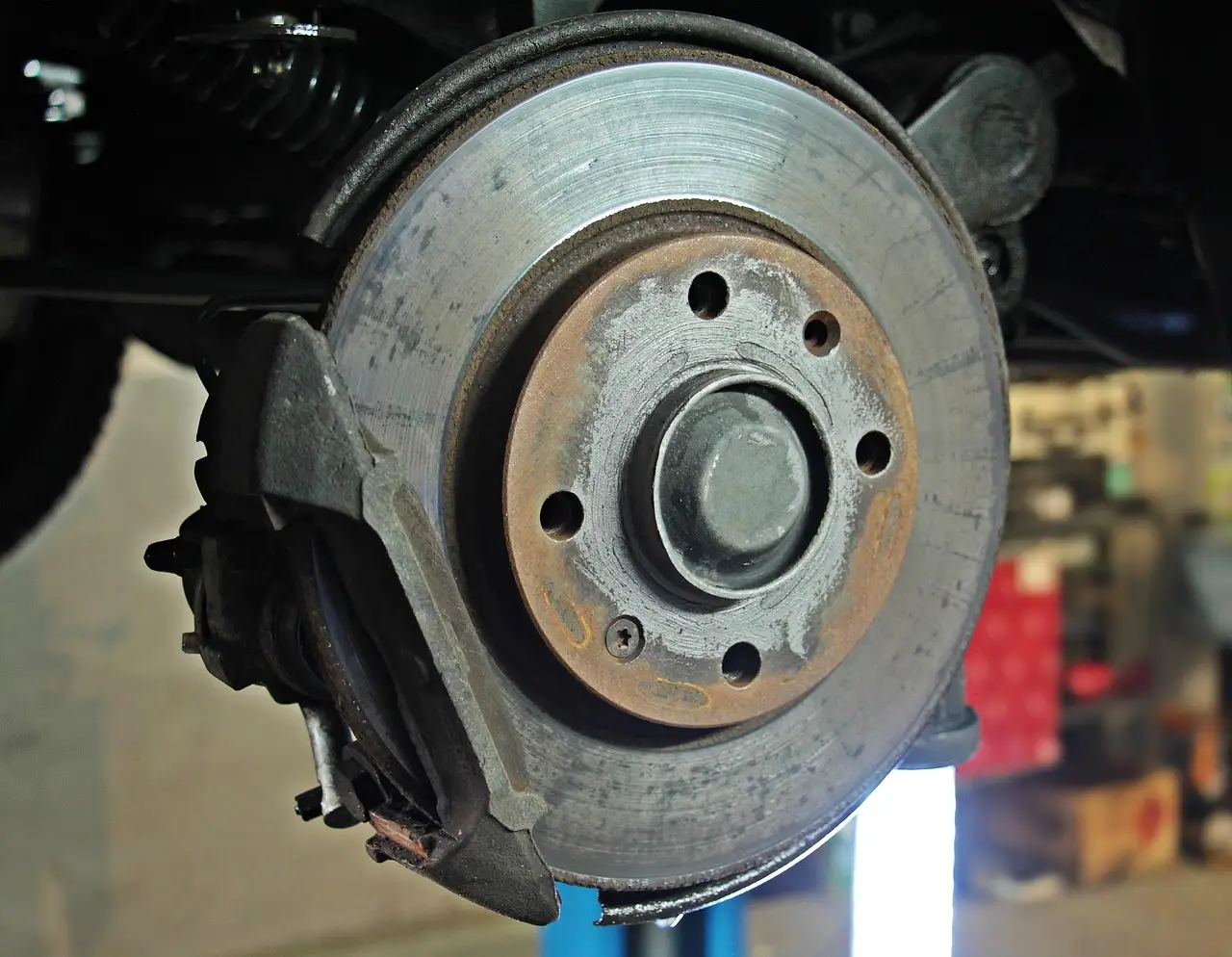
Brake calipers get hot because the pads clamp the rotor and turn vehicle motion into heat. That is normal during braking. Trouble starts when heat stays at one wheel, builds too quickly, or returns after cooling. Then the caliper may be holding the pad against the rotor instead of releasing cleanly.
Normal friction heat
Heat from friction is why brakes warm up. The rotor acts as the heat sink and friction surface, so it should absorb and shed much of that heat during ordinary stops. After a steep descent or a busy commute, warm rotors and calipers are expected.
Long downhill braking can push heat higher when airflow cannot remove it fast enough. Repeated hard stops can do the same. That heat usually reaches both front brakes more evenly, because both sides are working.
When heat becomes abnormal
Abnormal heat points to a release problem first. A dragging brake caliper or seized hardware can keep pressure on the rotor and create unnecessary heat. Corrosion, dry or stuck slide pins, a corroded piston, or a hose that traps hydraulic pressure can all cause it.
A caliper that sticks can cause the brakes to overheat and may be noticed by a burning smell. Checking temperatures after a test drive can reveal a caliper that is hotter than the others. That one-wheel pattern matters more than the smell alone.
What one hot wheel can mean
If one wheel is much hotter than the rest after a normal drive, suspect a single-wheel drag fault. A seized caliper can hold the pad against the rotor constantly and cause heat, pulling, and a burning smell. That differs from normal heat after mountain driving, where both front wheels may run hot.
For example, after about a 12-minute school run, one front wheel may be too hot to touch while the other is only warm. That pattern points away from driving load and toward a caliper, hose, or pad fitment problem on that corner.
What causes a brake caliper to overheat?
A brake caliper overheats when something keeps it applied or slows its release. The most common causes are sticking pistons, seized or dry slide pins, a collapsed brake hose, parking brake drag, or hardware that jams the pads in the bracket. Poor pad fitment can add drag too.
Sticking piston or seized caliper bore
A piston that does not retract properly can leave the pads in light contact with the rotor. Corrosion, damaged seals, or bore wear can do this. The result is constant friction, a hot wheel, and faster pad and rotor wear on that corner.
A seized caliper can hold the pad against the rotor constantly and cause heat, pulling, and a burning smell. That combination is a strong clue that the wheel is not releasing when you lift off the pedal.
Corroded or dry guide pins
Floating calipers depend on guide pins or slide pins that move freely. Corrosion on brake caliper slides can lead to seizing and reduced braking performance. If the pins are dry, rusty, or the boots are torn, the caliper can cock at an angle and keep one pad dragging.
That drag may be small at first. Then it grows. Pad wear becomes uneven, the rotor runs hotter on one side, and the car may pull slightly during braking.
Collapsed brake hose or trapped pressure
A restricted brake hose or hydraulic line can keep pressure trapped after you release the pedal. The caliper then stays applied even though the pedal is up. That can feel like a wheel that drags more after several stops and then cools unevenly.
This fault is easy to miss because the caliper itself may not look broken. The problem is upstream. Pressure enters the caliper, but it does not leave quickly enough.
Parking brake drag or hardware interference
Rear brakes can overheat if the parking brake does not fully release. Bent clips, swollen pad edges, wrong pad shape, or damaged abutment hardware can also keep the pads from sliding back. In that case, the caliper may be fine, but the assembly still drags.
Poor pad fitment matters. If the friction material is too tight in the bracket, the pad can bind as heat builds. That creates extra drag and more heat, especially in stop-and-go traffic.
How do you tell normal heat from a fault?
Normal heat follows hard use and fades as the brakes cool. A fault shows up as one wheel staying much hotter than the others, a burning smell from one corner, or heat that returns quickly after cooling. If the pedal also changes feel, the problem may be fluid related too.
Hot after mountain driving or repeated stops
Both front brakes can run hot after a long downhill drive or repeated hard stops. That can be normal if the heat is even side to side and braking still feels normal. Brake fade may appear here, meaning reduced braking effectiveness after the brakes have been worked hard.
Pad fade and fluid fade are different. Pad fade comes from the friction material overheating. Fluid fade happens when brake fluid boils, and that can lead to a spongy pedal. Both can follow sustained downhill braking.
Hot after a normal drive
If a wheel is hot after a short, ordinary trip, suspect a drag fault rather than driving load. One wheel hotter than the others is a useful clue. The problem is often a sticking caliper, seized slide pins, or a trapped hydraulic line.
Picture a compact hatchback driven 5 miles on flat roads. If the left front wheel smells burned and the others are only mildly warm, the issue is unlikely to be normal brake heat alone.
Heat that returns right after cooling
If the brakes cool down and then heat up again within a short drive, the release fault is still present. That points to a part that binds under light use or as temperature rises. Hose restriction, slide-pin corrosion, and piston sticking are common suspects.
A quick cool-down does not fix the root cause. It only lowers the symptom for a while.
Brake caliper diagnosis matrix
This matrix helps narrow the fault by pattern, not guesswork. Start with the hottest wheel, then match the symptom to the safest next check. If the brake pedal changes feel, or smoke appears, move to the tow column.
| Symptom pattern | Fastest safe check | Likely failed part | Action |
|---|---|---|---|
| One hot wheel after a normal drive | Carefully compare wheel temperature side to side after cooling | Sticking caliper, seized slide pins, trapped hose pressure | Inspect |
| Both front wheels hot after mountain driving | Check whether both sides heated evenly and whether braking still feels normal | Normal load heat, pad fade, fluid fade if pedal changed | Cool, then inspect |
| Heat plus pulling | Look for a hot corner with uneven pad wear or a dragging wheel by hand after cooling | Seized caliper, guide pin corrosion, pad binding | Inspect |
| Heat plus soft pedal | Check brake fluid level and pedal feel before driving farther | Boiling brake fluid, fluid fade, possible leak or air | Tow if the pedal is unsafe |
| Heat that returns immediately after cooling | Repeat a short drive and recheck the same wheel | Collapsed hose, sticking piston, binding hardware | Inspect; tow if severe |
What brake pad and rotor damage looks like
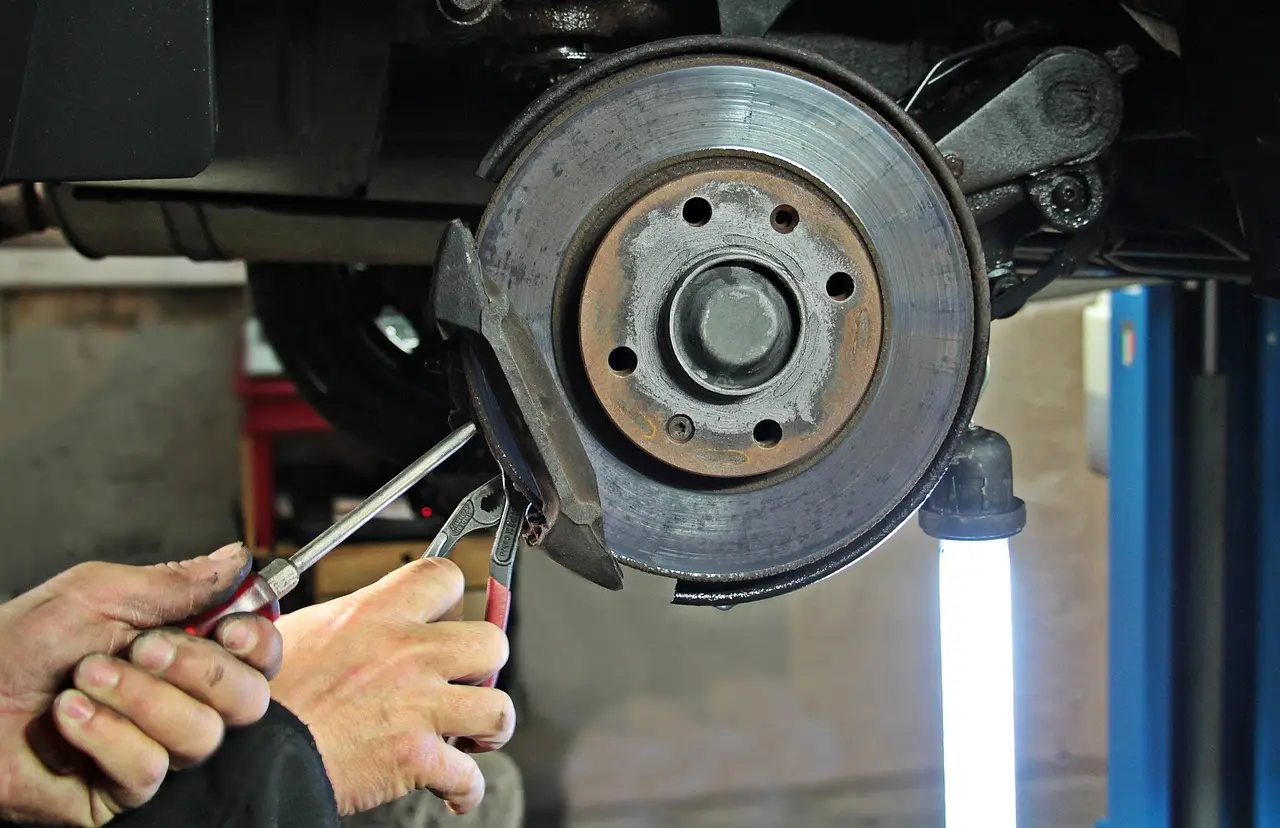
Hot calipers often damage the pad and rotor together. The caliper may be the release problem, while the pad and rotor show the heat damage. That is why a hot wheel should not be treated as a pad-only issue.
Glazed or contaminated pads
Brake pad friction material can glaze under heat. A glazed pad feels harder and grips poorly. Contamination from grease, fluid, or road debris can make braking noisier and less effective, and poor-quality pads can worsen heat buildup by not moving heat away well.
Green fade can happen with new brake pads that have not been fully bedded in yet. That is different from a seized caliper. In green fade, the pads are the issue; in a drag fault, the caliper or hardware is holding the pad too close to the rotor.
Blue rotor discoloration and scoring
The rotor can warp or score from excess heat. Blue discoloration on the rotor often points to overheating. Deep grooves or heat spots show that the pad and rotor have been running too hot or too long.
When the rotor is overheated, it may also vibrate or make noise during braking. That does not mean the rotor is the root cause. It may be the surface that absorbed the damage from a bad release condition upstream.
Wear indicators and uneven pad wear
Wear indicators can squeal when pads are low, but heat can also make them noisy sooner than expected. Uneven pad wear on one wheel suggests a caliper that is not moving evenly or a pad that is sticking in the bracket.
Uneven wear on the inner and outer pads is a strong clue. If the inner pad is far thinner, the piston may be staying out too long. If one pad is tapered, the slide pins or pad hardware may be binding.
Warping and noise after overheating
After overheating, the rotor may pulse, squeal, or shake during braking. That follows heat damage, not necessarily a separate fault. Fix the release problem first, or the new parts can overheat again.
Can brake fluid cause overheating symptoms?
Yes. Brake fluid can boil when the brakes are overheated, and boiling brake fluid can cause a spongy brake pedal and reduced braking effectiveness. Brake fluid also absorbs moisture over time, which lowers its boiling point and makes fluid fade more likely under heat.
Moisture lowers boiling point
As brake fluid absorbs moisture, its boiling point drops. That matters during long downhill braking or repeated hard stops. The fluid can then vaporize sooner, especially in a hot caliper or line that is already under load. (Wikipedia)
This is one reason older fluid can make a heat problem feel worse. The hardware may be dragging, but the pedal change can come from the fluid reacting to the extra temperature.
Brake fade versus fluid fade
Brake fade means the brakes stop working as well after heat builds. Pad fade comes from the pad material, while fluid fade comes from vapor in the hydraulic system. Both reduce stopping performance, but fluid fade is the one that can make the pedal feel soft or spongy.
Why a soft pedal matters
A soft pedal after overheating is a warning sign, not a minor complaint. It can mean vapor in the lines, overheated fluid, or another hydraulic issue. If the pedal sinks, feels spongy, or needs pumping, do not keep driving as if the brakes are normal.
What should you do right away?
Pull over safely and let the brakes cool if you smell burning, see smoke, or notice one wheel much hotter than the others. Do not keep driving hard. The heat can destroy pads and rotors quickly, and a fluid problem can reduce braking effectiveness without much warning.
Pull over safely and let the brakes cool
Stop in a safe place, shift into park, and let air move around the brakes. If possible, wait until the wheel temperature drops enough to inspect safely. Do not rush a hot wheel with bare hands.
Avoid spraying water on hot brakes
Do not spray water on hot brakes. Sudden cooling can shock hot rotors and may worsen damage. Let the parts cool naturally.
Check for smoke, smell, and wheel temperature
Look for smoke, sniff for a burning odor, and compare wheel temperatures side to side. If one wheel is clearly hotter, the release fault is still likely present. If the pedal is soft or the car pulls hard, the problem is more urgent.
Decide whether to drive, inspect, or tow
If the brakes only got hot from a long descent and the pedal feels normal after cooling, a careful drive to inspection may be reasonable. If a wheel heats up again fast, the car pulls, or the pedal feels soft, tow it. A dragging brake should not be ignored.
- Stop driving hard and cool the brakes.
- Compare wheel temperature side to side.
- Check for smell, smoke, and pedal feel.
- Inspect the hot corner for pad wear, rotor color, and hardware movement.
- Tow the car if the pedal is soft, the wheel reheats fast, or braking is uneven.
How can you prevent repeat overheating?
Prevent repeat overheating by fixing the release problem, not only the hot parts. Lubricate slide pins with high-temperature brake grease, replace weak hoses or worn hardware, use pads that fit correctly, and service brake fluid on schedule. Good parts placement matters as much as part quality.
Lubricate slide pins with high-temperature brake grease
Slide pins need to move freely in floating calipers. If they are dry or corroded, clean and lubricate them with the correct high-temperature brake grease. If the boots are torn or the pins are pitted, replacement is often the better repair.
Replace weak hoses and worn hardware
A collapsed hose can trap pressure and mimic a bad caliper. Old anti-rattle clips, bent abutment hardware, and rusted pad seats can also cause drag. Replace worn hardware rather than forcing a pad to fit poorly.
Use correct pads and bedding procedure
Use pads that match the caliper and bracket design. Incorrect pad fitment can create heat and noise. New pads also need the correct bedding procedure so the friction material transfers evenly to the rotor and avoids early glazing or green fade.
Inspect brake fluid and service intervals
Brake fluid should not be ignored just because the pads and rotors are new. Moisture lowers boiling point over time. If the fluid is old or the pedal felt soft after heat, inspect the hydraulic system and service the fluid as needed.
Frequently asked questions
What causes a brake caliper to heat up?
A brake caliper heats up from normal pad-to-rotor friction during braking, but abnormal heat usually means it is not releasing fully. Seized slide pins, a sticking piston, trapped hose pressure, or parking brake drag can all leave one wheel hotter than the others after a short drive.
Why is my brake caliper getting hot?
If one caliper is hotter than the others, the most likely issue is drag at that corner. Start with the guide pins, piston movement, pad fitment, and hose condition. If the pedal feels soft or the wheel heats up again quickly after cooling, inspect the hydraulic side too.
What causes brakes to overheat?
Brakes overheat from too much friction heat or from a part that will not release. Hard mountain braking and repeated stops can overwork the system, while a sticking caliper, poor hardware, or old fluid can make the heat build faster and reduce stopping power sooner.
Do brake calipers get hot?
Yes. Brake calipers normally get hot because they sit near the pads and rotor during braking. That heat should be similar from side to side after similar use. A single wheel that is far hotter usually points to a fault, not normal brake operation.
Can boiling brake fluid make the brake pedal feel soft?
Yes. Boiling brake fluid can cause a spongy brake pedal and reduced braking effectiveness. Moisture in the fluid lowers its boiling point, so older fluid is more likely to fade under heat. If the pedal feels soft after hard braking, stop and inspect before driving farther.

Hi, I’m Melvin, an automobile engineer with extensive experience in automobile equipment. I currently work for a local automobile firm, where I specialize in the car parts industry. I’ve had the opportunity to collaborate with seasoned inspectors, gaining invaluable hands-on experience that goes beyond just theory.
My passion for automotive care started at a young age, which led me to create CarSpareCare. Through CarSpareCare, I share the knowledge and skills I’ve acquired over the years to help others navigate the world of car maintenance and repairs.
My goal is to provide practical tutorials, essential safety advice, and the latest industry insights so that anyone—whether a beginner or an expert—can confidently tackle their automotive projects.

