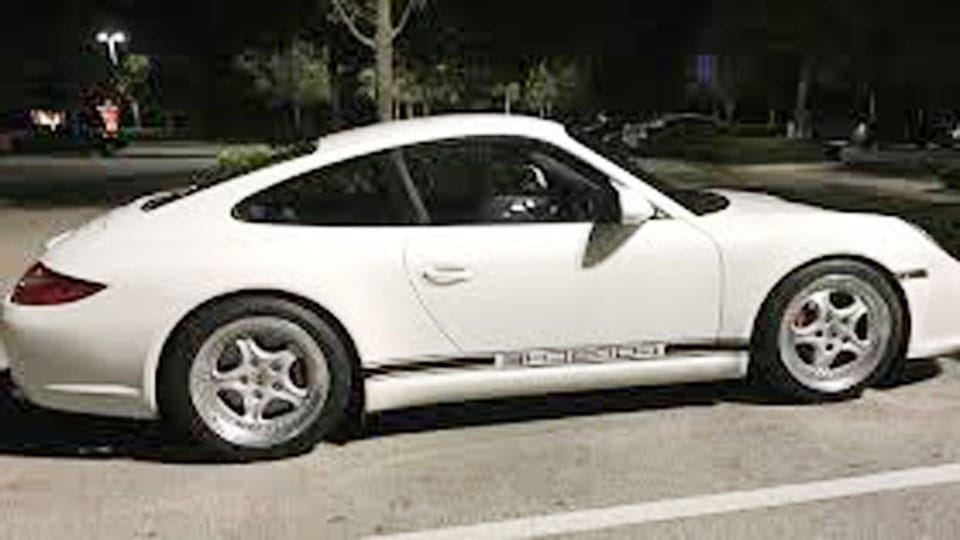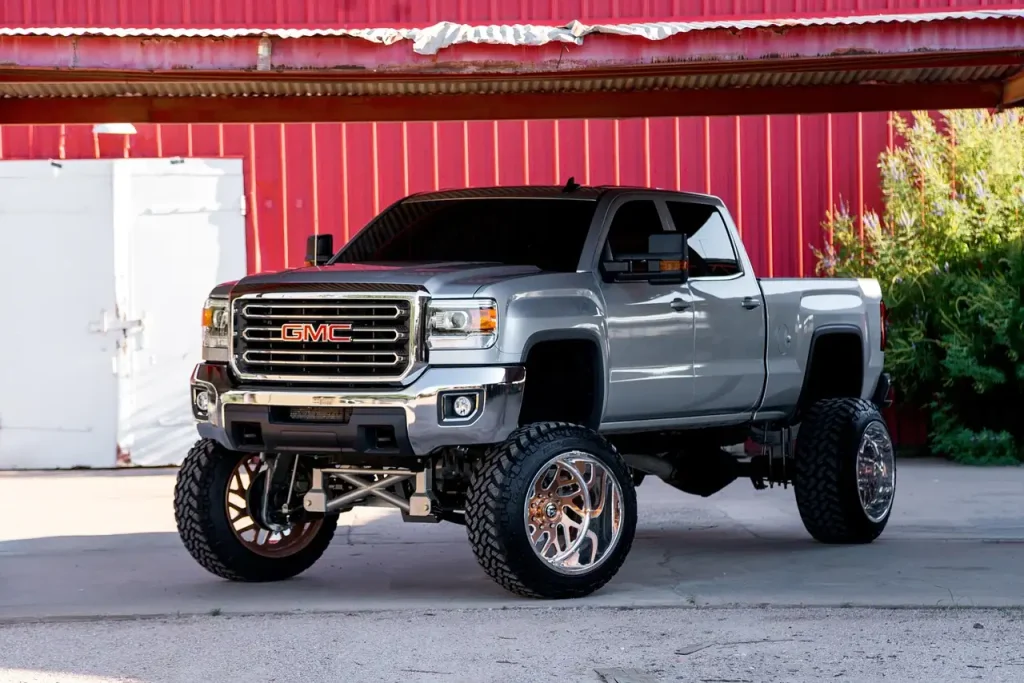
Yes, the wrong wheel offset can speed up wear on bearings, ball joints, tie rods, and bushings. Small changes are often tolerated, but large offset shifts or wide spacers are the risk point. Left alone, the wrong offset can cause rubbing, vague steering, uneven tire wear, and higher suspension repair costs. This guide shows which components are most at risk, when offset mainly changes fitment, and how to judge your own setup.
Wheel offset basics
Offset in millimeters
Wheel offset is measured in millimeters from the wheel centerline to the hub mounting face. Positive offset puts the mounting face toward the outer side of the wheel, so the wheel sits farther inward. Negative offset moves the wheel outward. Zero offset places the mounting face on the centerline.
That millimeter figure matters because it changes the wheel load path. A lower offset adds more mechanical force between the tire contact patch and the hub face. A higher offset pulls the wheel inboard, which can improve outer clearance but increase the chance of inner contact near struts, springs, and control arms.
Positive, negative, and zero offset
On many front-wheel-drive and modern rear-wheel-drive cars, positive offset is common because it keeps the wheel tucked inside the arch and keeps steering geometry near the design target. Negative offset is more common on some trucks, older vehicles, and certain off-road fitments where outward stance and brake or hub clearance matter more than factory steering feel.
Zero offset is a midpoint, not a safe default. It may fit one vehicle well and sit far outside the accepted range on another. The same offset number can also behave differently once tire width, suspension travel, and wheel width change.
How offset changes wheel position and clearance
Offset changes both inner and outer clearance at the same time. Lower offset moves the wheel outward, so it may clear the strut better but sit closer to the fender lip. Higher offset moves the wheel inward, so it may clear the arch better but rub the spring perch, control arm, or inner liner.
That shift also changes scrub radius, the steering geometry effect that helps determine steering effort, kickback, and how sharply the wheel reacts to bumps. More offset change usually means more change in feel. How much the driver notices depends on the vehicle’s original geometry.
Can the wrong wheel offset damage suspension parts?
Yes, but the damage risk is not automatic and it is not equal across all vehicles. Small offset changes often cause only fitment changes or minor steering feel changes. Larger changes, especially when paired with wider tires or spacers, can raise load on bearings, ball joints, tie rods, and hub studs over time.
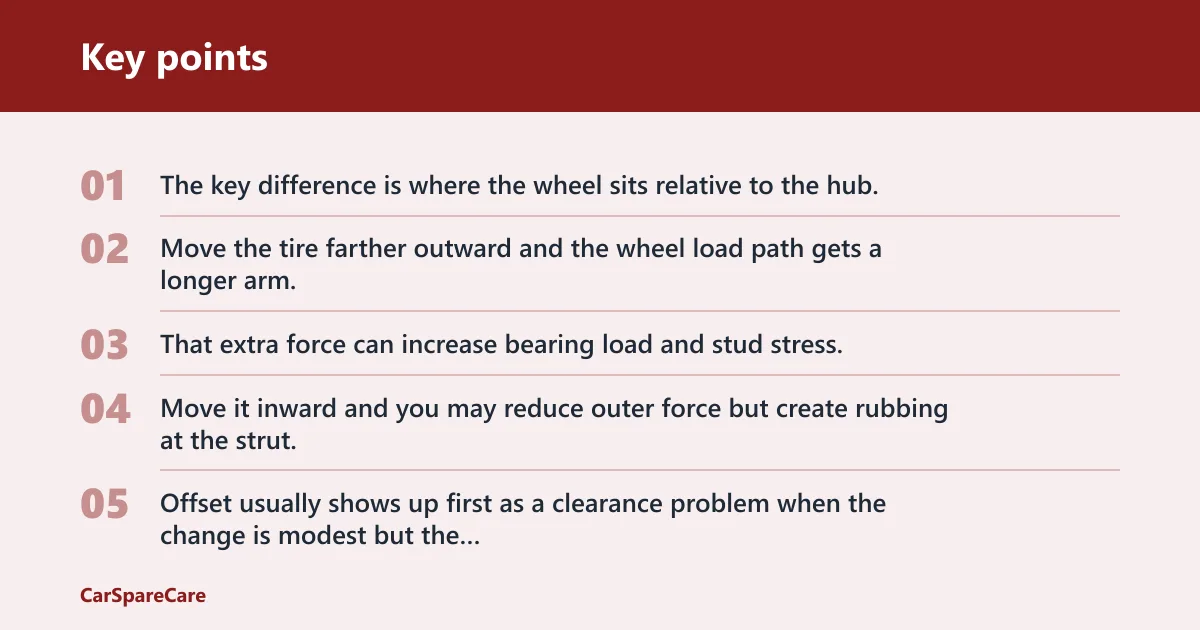
The key difference is where the wheel sits relative to the hub. Move the tire farther outward and the wheel load path gets a longer arm. That extra force can increase bearing load and stud stress. Move it inward and you may reduce outer force but create rubbing at the strut, spring perch, or inner bodywork.
When offset mainly causes rubbing
Offset usually shows up first as a clearance problem when the change is modest but the vehicle has limited space inside the wheel well. The tire may touch the inner fender, liner, or strut spring perch at full-lock turning or under suspension compression. In that case, the main issue is contact, not immediate part wear.
A common first-timer mistake is choosing a wheel that fits at ride height but forgets full compression. Suppose a car gains 12 mm of lower offset and a 10 mm wider tire. The wheel can clear on flat ground and still rub the liner when the suspension compresses over a driveway ramp or a speed hump.
When offset starts to raise wear risk
Wear risk rises when offset moves far enough to shift the wheel load path meaningfully. Outward movement increases the moment arm acting on the hub and bearing. That can also change how the tire feeds steering kickback through the tie rods and ball joints. The parts may not fail quickly, but they can wear faster than expected.
That risk is higher on vehicles with soft bushings, tall sidewalls, heavy wheels, or large brake packages that already work parts harder. It is also higher when the wheel change is paired with aggressive camber settings, because the suspension may carry load at an angle the original geometry did not expect.
Why the answer depends on the size of the change
A change of about 3 to 5 mm may be barely noticeable on many vehicles. A change of about 15 to 20 mm is more likely to alter steering feel and clearance. Beyond that, especially with a wider tire, the risk of rubbing and faster wear is generally higher. Vehicle design still matters, so one car may tolerate more than another.
Which parts wear first?
Wheel bearings and the load path
Wheel bearings are often the first suspension-related part exposed to extra load from lower offset. The reason is simple: moving the wheel outward increases the arm between the tire contact patch and the bearing. That raises bending load on the hub assembly, especially on rough roads and during cornering.
Studs and hub faces can also see more stress when the wheel sits farther out. The wheel no longer loads the hub as directly. That does not mean every lower-offset wheel will damage bearings, but it does mean the margin shrinks as offset moves away from factory spec.
Ball joints, tie rods, and control arms
Ball joints and tie rods feel the geometry change through steering effort, alignment angle, and kickback. Lower offset can make the steering feel heavier or more nervous, especially on uneven pavement. Control arms may not be the first part to fail, but bushings can take more side load when the contact patch moves outward.
Front suspension parts are usually more exposed than rear parts because they steer and absorb road input directly. On independent rear suspensions, rear bearings and links can still see added load, but the symptoms may show up as tire wear or bearing noise rather than steering feel.
Struts and spring perch clearance
Struts are usually not “worn out” by offset in the same way as bearings, but they are often where clearance problems appear first. An inward shift can put the tire closer to the spring perch or strut tube. That is a fitment issue until contact begins, then it becomes a wear and damage concern.
Where the tire touches matters. A light brush against a liner is different from repeated contact with a strut spring perch or suspension hard stop. The latter can damage tire shoulders, liners, and nearby components much faster.
Offset risk matrix
| Offset change size | Tire width change | Drivetrain layout | Likely symptom | Most vulnerable parts | Risk |
|---|---|---|---|---|---|
| 0 to 5 mm | No change or +5 mm | Any | Usually none, or minor steering feel change | None usually; check liner and steering lock | Low |
| 6 to 12 mm | +5 to +10 mm | FWD or AWD front axle | Occasional inner rub at full lock or compression | Strut perch, inner liner, tie rods | Medium |
| 6 to 12 mm | +5 to +10 mm | RWD | Steering feel changes, possible outer arch rub on rear | Bearings, rear fender lip, bushings | Medium |
| 13 to 20 mm | +10 to +20 mm | Any | Clear steering change, kickback, rubbing under load | Wheel bearings, ball joints, tie rods, struts | High |
| 20 mm+ or wide spacers | Any meaningful increase | Any | Persistent rub, heavy steering, alignment sensitivity | Wheel bearings, hub studs, ball joints, control arm bushings | High |
How to read the matrix
Use offset change, tire width, and drivetrain together. A front axle on a front-drive or all-wheel-drive car is usually the most sensitive because it steers and carries more wear from turning. A rear axle on a rear-drive car may tolerate more offset change, but wheel bearings and fender clearance still matter.
Daily drivers should stay near OEM offset unless there is a clear reason to move away from it. Lifted vehicles often have more room for tire size, but more height does not automatically mean more offset tolerance. Track cars can tolerate tighter fitment decisions if the suspension is set up for them, but they also see higher cornering load.
Wrong wheel offset damage checklist
- Stay close to OEM offset if you want the lowest wear risk.
- Check full-lock turning in both directions.
- Check compression clearance, not just static fitment.
- Plan a post-install alignment check.
Wrong wheel offset damage checklist
- Do not assume lift height fixes offset issues.
- Check upper and lower travel for liner and control-arm contact.
- Watch for steering feel changes after larger tire swaps.
- Inspect wheel bearing noise after the first few hundred miles.
Wrong wheel offset damage checklist
- Prioritize brake, strut, and tire clearance under hard compression.
- Check scrub radius changes if steering feedback has changed.
- Use hardware that matches the intended load.
- Recheck alignment after any wheel or spacer change.
What symptoms should you watch for?
The main symptoms split into two groups: fitment problems and wear symptoms. Rubbing, contact marks, and tire scuffing point to clearance issues. Steering pull, kickback, bearing noise, or rapid tire wear point more toward geometry or load changes. The same offset can create one group without causing the other.
Rubbing at full lock or compression
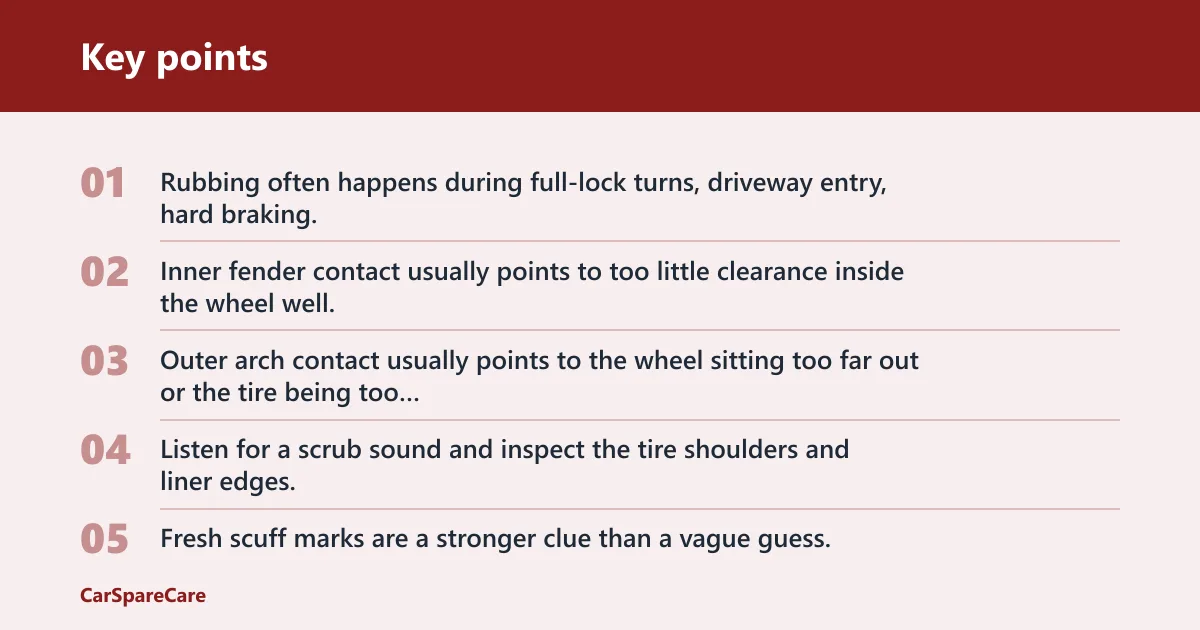
Rubbing often happens during full-lock turns, driveway entry, hard braking, or suspension compression over bumps. Inner fender contact usually points to too little clearance inside the wheel well. Outer arch contact usually points to the wheel sitting too far out or the tire being too wide for the arch.
Listen for a scrub sound and inspect the tire shoulders and liner edges. Fresh scuff marks are a stronger clue than a vague guess. If the tire touches the strut spring perch, stop and inspect before driving more miles.
Steering pull, kickback, or heavier effort
Offset changes can alter scrub radius, which changes how the steering reacts to road force. More kickback through potholes, heavier low-speed steering, or a steering wheel that no longer centers cleanly can all point to a geometry change that deserves a closer look.
Picture a sedan that moves from OEM offset to 18 mm lower offset with no tire change. The car may still drive, but the steering can feel more reactive over broken pavement because the contact patch sits farther from the original steering axis relationship.
Uneven tire wear and alignment changes
Offset does not automatically change alignment angles, but it can expose or magnify issues that were already close to the edge. Toe changes after fitment are common enough that a post-install alignment check is recommended. Camber interaction and steering wheel centering should be checked at the same time.
Even when static alignment stays within spec, the way the tire loads the road can change. That can show up as edge wear, feathering, or a wheel that sits slightly off-center after the swap.
Noise from bearings or suspension joints
A new humming, growling, or clicking noise after a wheel change deserves attention. Wheel bearing noise often grows with speed and load. Ball joint or tie-rod issues are more likely to show up as clunks, wandering, or a loose steering feel. Do not assume the wheel is the only cause, but do not ignore the timing either.
Do spacers cause the same risk?
Yes. Spacers create an effective lower offset because they move the wheel outward from the hub. The same force and bearing-load logic applies, especially when the spacer is thick. A spacer is not automatically bad, but it can create the same fitment and wear concerns as choosing a lower-offset wheel.
Hub-centric versus non-hub-centric spacers
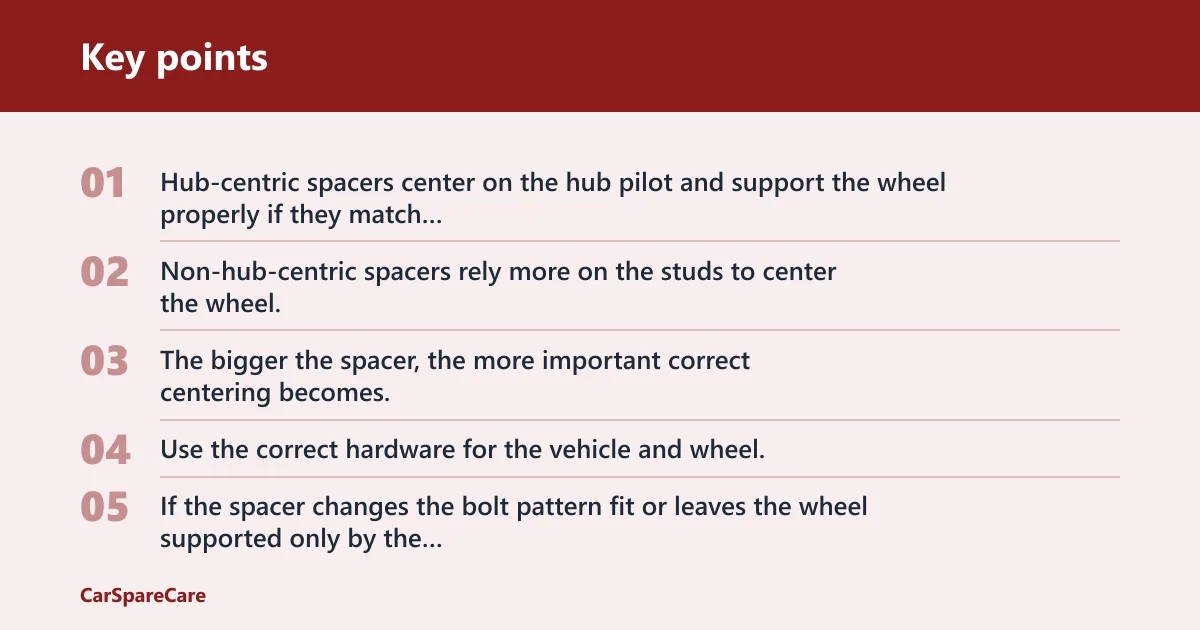
Hub-centric spacers center on the hub pilot and support the wheel properly if they match the vehicle and wheel. Non-hub-centric spacers rely more on the studs to center the wheel, which can increase vibration risk and place more unwanted load on the studs and hub. The bigger the spacer, the more important correct centering becomes.
Use the correct hardware for the vehicle and wheel. If the spacer changes the bolt pattern fit or leaves the wheel supported only by the fasteners, the risk is higher than the offset number alone suggests.
Why studs and hubs can take more load
Moving the wheel outward increases the bending force on studs and hub flanges. That is separate from bearing load, but it comes from the same arm effect. If a spacer also pushes the wheel into a position with more kickback or rough-road shock, the hub assembly sees more abuse from several directions at once.
How do you check fitment before buying?
Start with the OEM wheel width and offset, then compare the new wheel against that baseline. A small change may be fine, but you need to account for tire width, brake clearance, and the amount of suspension travel the vehicle actually uses. A fitment calculator can help, but it cannot replace a physical check.
Use OEM offset and wheel specs first
Find the factory wheel width, offset, and tire size. Then calculate the difference from the wheel you want to buy. A 1-inch wider wheel with the same offset does not sit in the same place as the stock wheel. Width and offset together decide where the inner and outer lips land.
Check tire width and suspension travel
Tire width changes the effective footprint more than many buyers expect. A tire about 10 mm wider can be enough to turn a safe fit into rubbing at lock or compression. If the vehicle has limited travel, lowered springs, or a lifted suspension with big articulation, clearance has to be checked at both ends of travel.
Plan a post-install alignment and clearance check
After installation, check steering wheel centering, toe, and clearance at full lock. Then inspect inner liners, strut area, fender lips, and tire shoulders after a short drive. If the wheel or tire setup changed enough to alter steering feel, a proper alignment check is the safest next step.
Frequently asked questions
How much wrong offset is too much for a car?
There is no universal cutoff, because vehicle geometry varies. As a rough guide, a 3 to 5 mm change is often mild, 6 to 12 mm is a check-it-carefully zone, and 13 mm or more is where wear and clearance risk climb fast. Tire width and travel can move those numbers up or down.
What symptoms can bad wheel offset cause?
Common symptoms include rubbing at full lock or compression, steering kickback, heavier steering, a steering wheel that does not center cleanly, and uneven tire wear. Noise can also appear if bearings or joints are being loaded differently. The symptom pattern depends on whether the wheel sits too far in, too far out, or both.
Does wheel offset affect wheel bearings and ball joints?
Yes. Lower offset increases the force acting on wheel bearings, and that can also add load to ball joints and tie rods through the steering geometry. The effect is usually gradual, not instant. Mild changes may be tolerated, but larger shifts can shorten part life, especially on heavy wheels or rough roads.
Can the wrong offset cause rubbing or alignment issues?
Yes, but they are separate problems. Rubbing is a clearance issue between the tire and nearby parts such as the liner, fender, or strut perch. Alignment changes are not guaranteed, but toe, camber interaction, and steering wheel centering can shift enough after fitment that a post-install check is smart.
What happens if I run wheels with lower offset?
Lower offset moves the wheel outward. That usually improves inner clearance but reduces outer clearance and increases load on bearings and studs because the wheel acts through a longer arm. The steering can also feel different because scrub radius changes. Wide tires, spacers, and limited travel make the risk higher.
Will spacers damage suspension the same way as wrong offset?
They can create the same effect because they move the wheel outward and reduce effective offset. That can add force to bearings and studs and can trigger the same rubbing issues a lower-offset wheel would. Hub-centric spacers fit better and center more accurately than non-hub-centric spacers, which is why they are preferred when spacers are needed.
How do I know my wheel offset is correct?
Compare the new wheel to factory wheel width and offset, then check the tire size, brake clearance, and suspension travel. If the wheel clears at full lock and full compression, the steering feels normal, and the car aligns within spec, the fit is usually in range. If any of those fail, the offset likely needs revision.

Hi, I’m Melvin, an automobile engineer with extensive experience in automobile equipment. I currently work for a local automobile firm, where I specialize in the car parts industry. I’ve had the opportunity to collaborate with seasoned inspectors, gaining invaluable hands-on experience that goes beyond just theory.
My passion for automotive care started at a young age, which led me to create CarSpareCare. Through CarSpareCare, I share the knowledge and skills I’ve acquired over the years to help others navigate the world of car maintenance and repairs.
My goal is to provide practical tutorials, essential safety advice, and the latest industry insights so that anyone—whether a beginner or an expert—can confidently tackle their automotive projects.