
Expert diagnostic review: brake, chassis, and hub-assembly fault isolation principles informed by OEM service-manual procedures, NHTSA safety guidance, and industry references on wheel-end diagnostics.
A bad wheel bearing can change steering feel, cause pull or wobble, and may trigger ABS warnings if the hub sensor signal is disrupted, so it should not be ignored. Left unchecked, it can damage the hub, rotor, and tire, and it can affect safe braking. OEM service manuals and NHTSA safety guidance treat wheel-end looseness, heat, and noise as inspection priorities because they can rapidly become a control and braking concern.
What a wheel bearing does
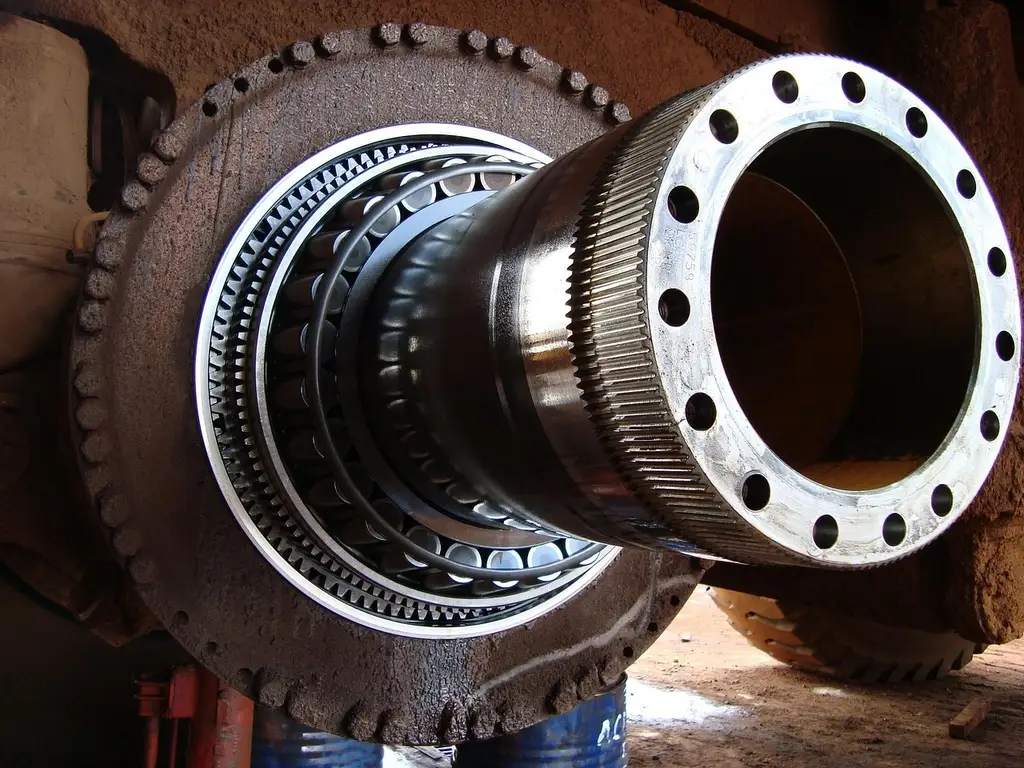
A wheel bearing supports the wheel so it turns with low friction while carrying vehicle weight and cornering load. It sits at the wheel end, inside the hub or hub assembly, and it works alongside the rotor, hub flange, axle or spindle, and brake hardware.
On many modern vehicles, the bearing is part of a hub assembly. That unit may include the bearing, the hub flange, and on some cars an ABS encoder or sensor. On others, the bearing is serviceable and pressed into the knuckle or hub separately. OEM procedures commonly separate these designs because diagnosis, torque specs, and reuse rules differ by platform.
When wear starts, the bearing no longer holds the wheel as tightly centered. That extra movement can change alignment at the wheel end, add heat, and create noise, vibration, or sensor problems. The exact symptom depends on which axle is affected and how far the wear has progressed. Service-manual style diagnosis typically starts with wheel play, roughness by hand, and a road test before parts are replaced.
Hub assemblies and serviceable bearings
A hub assembly is common on many newer vehicles because replacement is faster and cleaner. If the bearing, flange, and ABS encoder are built together, technicians usually replace the full unit rather than pressing in a new bearing.
Serviceable bearings still appear on some vehicles, especially older designs or certain rear axles. Those need separate inspection of the bearing, seal, hub surface, and related hardware. A damaged hub flange or rough spindle can make a new bearing fail early. OEM service manuals also caution that improper pressing force can load the bearing through the wrong race and shorten its life.
Can bad wheel bearings affect steering?
Yes. A worn wheel bearing can change steering feel by letting the wheel move at the hub, which creates a vague on-center feel or wander that looks like alignment trouble. It can also send vibration into the steering wheel, especially if the front bearing is loose enough to shift wheel position under load.
Front-wheel bearing wear is more likely to be felt through the steering wheel than rear-wheel bearing wear, because the front axle also handles steering input. A rear bearing can still cause instability, but the steering wheel may feel normal while the car tracks poorly or drifts. Technicians often separate wheel-end looseness from steering-link wear by watching which component actually moves during a lift inspection.
How bearing wear changes steering feel
Steering symptoms usually come from looseness, not from the bearing steering the car on its own. If the wheel can move at the hub, the tire’s contact patch shifts slightly during braking, cornering, and road bumps. That can feel like play in the rack, tie rods, or control arms.
A bad bearing can also produce a low-speed shimmy or a steering wheel vibration that rises with road speed. That does not prove the bearing is the only fault, because tire cupping, bent wheels, and suspension wear can create similar feedback. In practice, technicians first eliminate tire defects and wheel balance issues, then verify bearing roughness and axial/radial play.
Does a bad wheel bearing make the car pull to one side?
It can, but not always. Bearing wear can mimic pull if one wheel develops more drag, more play, or a changed angle under load, yet alignment, tire pressure, brake drag, and tire conicity are more common causes of a steady pull. A bearing is one possibility, not the default answer.
If the pull changes when you brake, suspect caliper drag, rotor issues, or hydraulic imbalance first. If the pull changes with road crown or after a turn, alignment or tire wear may be involved. If the pull comes with noise and heat at one wheel, the bearing moves higher on the list. Technicians also look for a misdiagnosis pattern where a pull is blamed on alignment when one hub is actually dragging.
Can bad wheel bearings affect braking?
A bad wheel bearing can change braking feel by letting the hub or rotor run out of true, which can mimic brake pulsation or uneven braking. On vehicles with wheel speed sensing at the hub, bearing or encoder faults can also trigger ABS or traction control warnings. OEM and service-manual guidance commonly treats hub runout and wheel speed signal quality as separate but interacting checks.
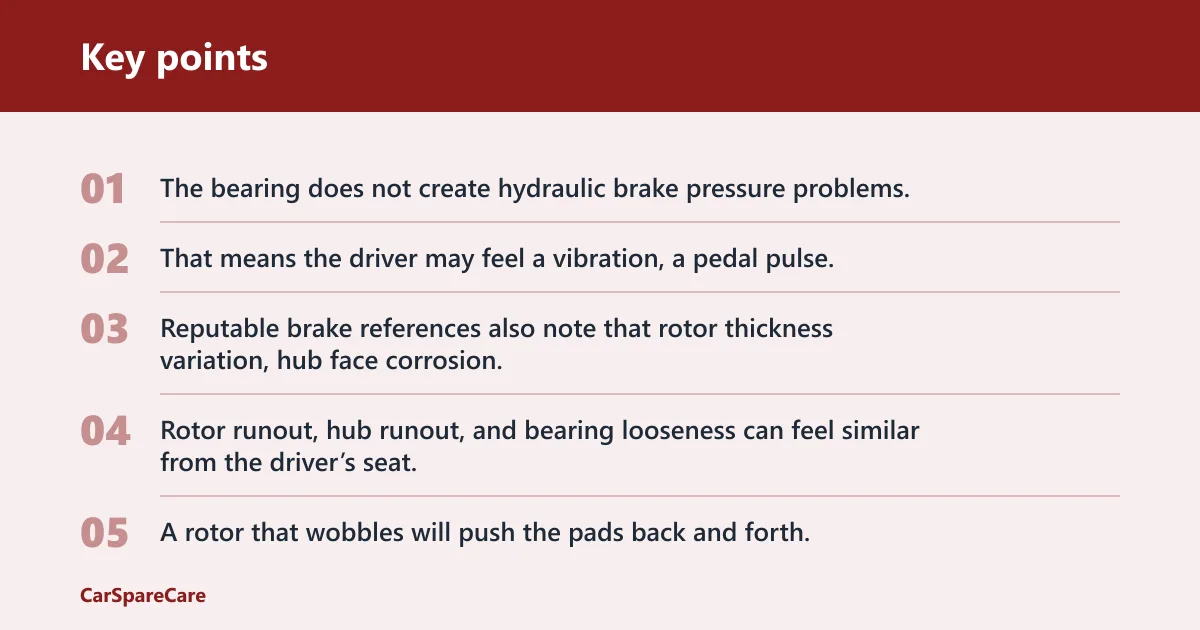
The bearing does not create hydraulic brake pressure problems, but it can distort how the brake assembly sits and rotates. That means the driver may feel a vibration, a pedal pulse, or a scrubby sensation that seems like warped rotors when the real problem starts at the wheel end. Reputable brake references also note that rotor thickness variation, hub face corrosion, and lug nut torque errors can be mistaken for bearing problems if the diagnostic order is wrong.
Brake pulsation, drag, and ABS confusion
Rotor runout, hub runout, and bearing looseness can feel similar from the driver’s seat. A rotor that wobbles will push the pads back and forth, and a loose bearing can let the rotor wobble. Caliper drag can add heat and a pull, which further muddies the diagnosis.
On some vehicles, the ABS wheel speed sensor reads from an encoder ring or integrated sensor in the hub. If that ring is damaged, dirty, or built into a failing hub assembly, the module may see erratic wheel speed and set an ABS light or traction control warning even if the brake pads are fine. NHTSA safety information emphasizes repairing warning-light faults promptly because ABS and stability systems may be reduced or disabled until the issue is corrected.
Can a bad wheel bearing cause brake pulsation or uneven braking?
A worn bearing can cause brake pulsation if hub runout changes the rotor’s path through the caliper. It can also create uneven braking feel if the wheel does not stay centered, because the pads and rotor no longer meet in a stable plane. That said, warped rotors and caliper faults are still common causes.
If the pedal pulses mainly during light braking at speed, rotor runout is often high on the list. If the pulse comes with wheel play, growling, or a hot hub, the bearing deserves close inspection. If the pedal pulse is paired with ABS activity on dry pavement, a wheel speed sensor issue is possible. OEM procedures typically call for confirming hub flange runout and bearing end play before condemning the rotor.
Wheel bearing symptom table
| Symptom | Likely wheel bearing cause | Likely non-bearing cause | Urgency |
|---|---|---|---|
| Humming while turning | Load changes noise when you steer left or right and shift weight onto the worn side. | Tire cupping, road surface noise, or a noisy differential on some vehicles. | Book inspection soon; if the noise grows fast, act faster. |
| Steering wander | Excess play at the hub can make the car feel loose or vague on center. | Loose tie rods, worn control arm bushings, poor alignment, or underinflated tires. | Inspect quickly, especially if the steering wheel no longer feels centered. |
| Brake pulsation | Hub or bearing runout can mimic warped rotors and create a pedal pulse. | Rotor thickness variation, caliper drag, pad deposits, or brake hose issues. | Schedule diagnosis soon; do not keep guessing at rotors only. |
| ABS light | Damaged encoder ring, dirty sensor signal, or integrated hub sensor fault. | Wheel speed sensor wiring, tone ring damage, or another ABS module fault. | Check promptly, because ABS may be reduced or disabled. |
| Wheel play | Bearing wear lets the wheel move at the hub, often felt at 12 and 6 o’clock. | Ball joint wear at 12 and 6, or tie-rod wear at 3 and 9. | Urgent if the play is clear or the wheel clunks. |
Next steps for any row above are similar: confirm which wheel is noisy, check for heat after a short drive, inspect tire wear, and separate bearing looseness from brake or suspension play before replacing parts. Short checklist: verify tire pressure and tread condition, compare hub temperature side to side, and look for ABS or traction warnings that point to a sensor-equipped hub.
How to tell a bearing from brakes or suspension
The fastest way to separate the fault is to treat the wheel end as a system. Tire condition, rotor shape, caliper movement, tie rods, ball joints, control arms, and wheel alignment can all copy part of a bad bearing’s behavior.
Say your front-right wheel hums at 40 mph and gets louder in a left turn. If the same wheel also has slight play at 12 and 6 o’clock, the bearing rises to the top of the list. If the noise stays but the play is gone and the tires are cupped, the tire may be the louder clue. A common misdiagnosis pattern is replacing rotors first because the driver feels vibration, when the real issue is hub looseness or a worn tire.
Wheel play checks and what they mean
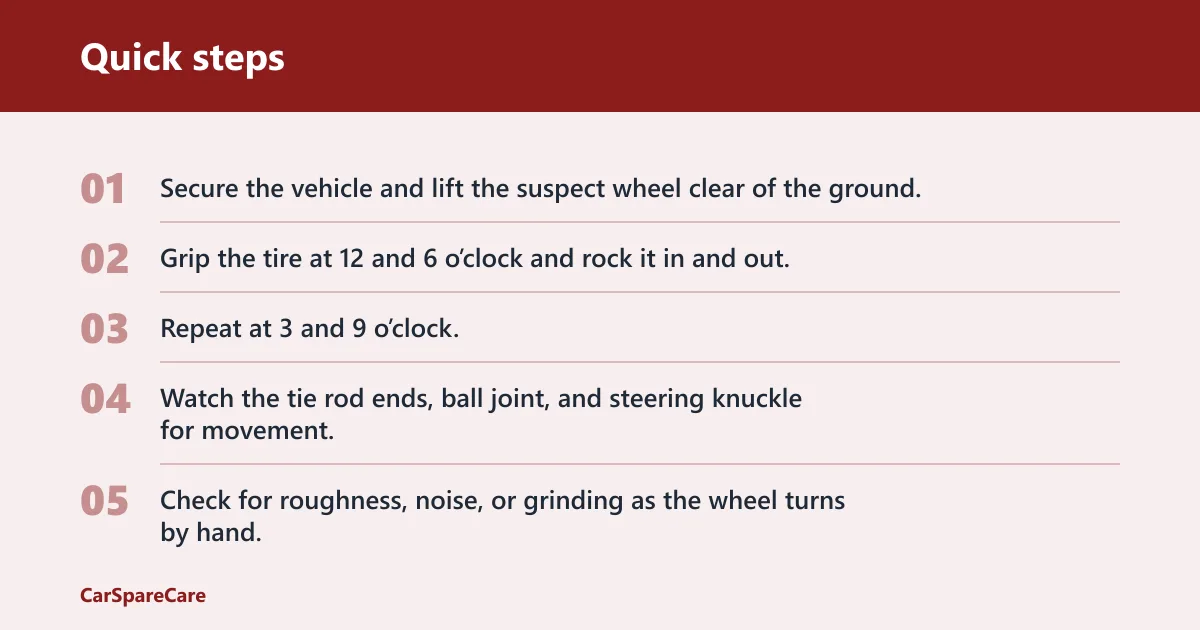
Lift the vehicle safely and check the wheel at 12 and 6 o’clock, then at 3 and 9 o’clock. A bearing can show looseness in either position, but the result must be read with ball joint and tie-rod checks. A bad lower ball joint often shows up at 12 and 6, while a tie-rod issue often shows at 3 and 9.
- Secure the vehicle and lift the suspect wheel clear of the ground.
- Grip the tire at 12 and 6 o’clock and rock it in and out.
- Repeat at 3 and 9 o’clock.
- Watch the tie rod ends, ball joint, and steering knuckle for movement.
- Check for roughness, noise, or grinding as the wheel turns by hand.
- Compare the suspect side with the same axle’s other side.
Technicians usually feel for two different patterns: a dull clunk or visible shift can suggest looseness, while a gritty or notchy rotation points more toward internal bearing damage. If the wheel moves with the brake caliper bracket, knuckle, or steering linkage, the problem may not be the bearing alone.
Tires, rotors, and steering parts
Tire cupping creates a rhythmic hum that can sound like a bearing, but it usually follows the tire pattern rather than steering load. Rotor runout and pad deposits can cause pulsation without wheel play. Tie-rod wear and steering rack play can make the wheel feel loose even when the bearing is fine.
Wheel alignment matters too. Camber, caster, and toe can change how bearing wear feels on the road, and a poor alignment can be mistaken for bearing-induced pull or wander. After wheel-end repairs, alignment should be checked again if the vehicle was out of spec before or if any suspension part was replaced. A vehicle that is aligned incorrectly after a bearing repair may still pull even though the hub problem is fixed.
What a road test can tell you
A diagnostic road test is useful because bearing noise often changes with steering load and speed. A left turn may load the right-side bearing, while a right turn may load the left-side bearing, so the louder side often changes as the car is steered gently from lane to lane.
Front-wheel and rear-wheel faults can feel different. A front bearing is more likely to show up as steering-wheel vibration, shimmy, or wander. A rear bearing may make the car feel noisy or unstable without much steering-wheel feedback. Service manuals often recommend a straight-line coast test and gentle weave test before lifting the vehicle.
Left turns versus right turns
Listen for a steady hum or growl at one speed, then steer gently left and right in a safe area. If the sound gets louder in one direction and quieter in the other, that pattern points toward a loaded bearing on the opposite side. It does not prove the diagnosis, but it is a strong clue.
Picture a compact car that hums at 50 mph. The noise rises when the driver moves slightly left, then fades when moving slightly right. If the front-left hub also feels warm after the drive, the evidence lines up better than a brake-only fault would. A technician would then compare both front hubs, the tires, and the brake drag before replacing parts.
Speed, heat, and sensor clues
Bad bearings usually get noisier with speed, and severe wear can create heat at the hub. If one wheel is much hotter than the others after a short drive, that points to drag, binding, or internal bearing damage. A wheel speed sensor fault can add an ABS light even when the brake pads are still serviceable.
Some vehicles use an integrated ABS sensor in the hub assembly, so sensor and bearing faults can appear together. In that case, the warning light may be the first clue, even before the wheel feels obviously loose. Reputable references on ABS wheel speed sensing note that signal dropout, contamination, and encoder damage can create false system faults that resemble bearing issues.
When is it unsafe to keep driving?
It is unsafe to keep driving if the bearing has heavy play, grinding, or a hot hub, or if steering feel has become unstable. A bearing close to failure can damage the hub, rotor, and tire quickly, and in extreme cases the wheel can shift enough to threaten control.
Book service fast if the car wanders, the noise is getting worse, or the ABS light comes on with other wheel-end symptoms. If the wheel clunks, the hub feels hot enough to avoid touching, or the steering feels suddenly loose, stop driving soon and arrange inspection. Safety guidance from OEM and government sources is clear: do not continue normal driving when a wheel-end fault is actively changing vehicle control or brake performance.
Frequently asked questions
What are the symptoms of a bad wheel bearing while driving?
The common signs are humming or growling that changes with speed, noise that changes in a turn, wheel play, heat at one hub, and vibration. On sensor-equipped hubs, warning lights can appear too. None of these alone proves a bearing fault, so the wheel end still needs inspection.
Can a wheel bearing cause steering wheel vibration?
Yes. Front wheel bearing play can let the wheel move enough to send vibration through the steering wheel, especially at speed or during cornering. Tire cupping, bent wheels, and suspension wear can do the same, so the vibration should be checked with wheel play and road testing.
How urgent is wheel bearing replacement?
Urgency depends on the amount of play, heat, noise, and control feel. A humming bearing with no play is usually a fast inspection item. A loose, grinding, or hot bearing is urgent and should be repaired soon, because failure can spread damage and reduce safe braking or steering control.

Hi, I’m Melvin, an automobile engineer with extensive experience in automobile equipment. I currently work for a local automobile firm, where I specialize in the car parts industry. I’ve had the opportunity to collaborate with seasoned inspectors, gaining invaluable hands-on experience that goes beyond just theory.
My passion for automotive care started at a young age, which led me to create CarSpareCare. Through CarSpareCare, I share the knowledge and skills I’ve acquired over the years to help others navigate the world of car maintenance and repairs.
My goal is to provide practical tutorials, essential safety advice, and the latest industry insights so that anyone—whether a beginner or an expert—can confidently tackle their automotive projects.

