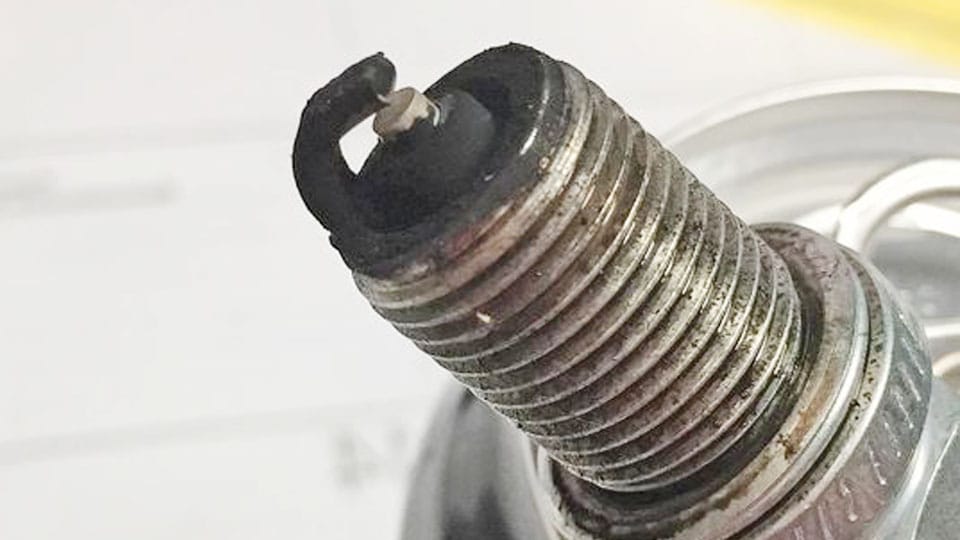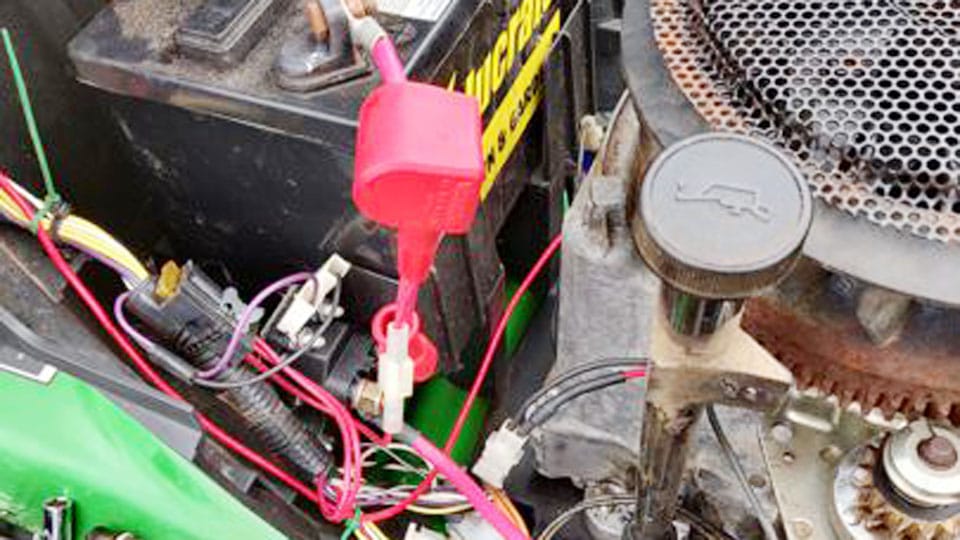
On hybrids, follow the maker’s spark-plug interval. Also check calendar age. Many iridium plugs are commonly reported as due around 60,000 to 100,000 miles or about 5 to 10 years, whichever comes first. If you ignore time, worn plugs can still cause hard starts, misfires, higher fuel use, and coil stress even when the odometer is low. This guide explains hybrid wear patterns, gap checks, coil symptoms, torque, and when time matters more than mileage.
Do hybrids have spark plugs?
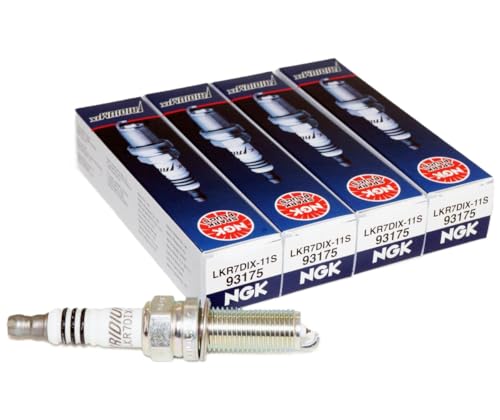


Yes, if the hybrid has a gasoline engine, it has spark plugs. The electric motor can move the car at low speed or for short trips, but the engine still needs plugs whenever it starts and runs. That applies to standard hybrids, plug-in hybrids, and many mild hybrids.
A hybrid powertrain uses both an internal combustion engine and an electric motor. In a standard hybrid, the engine may start and stop frequently. In a plug-in hybrid, the battery is larger and can power short trips on electricity alone, but the gasoline engine still uses spark plugs. In a mild hybrid, the electric system assists the engine, but the engine remains the main source of propulsion.
What the gasoline engine still does in a hybrid powertrain
Spark plugs ignite the air-fuel mixture in each cylinder. They must match the engine’s heat range and gap specification, because the engine control system expects a certain spark quality under light load, cold starts, and higher-load operation. If the gap is off, or the plug is worn, misfires can start long before the plug looks obviously damaged.
Why spark plugs still matter when electric assist does most of the work
Less runtime does cut wear from combustion cycles, but it does not stop aging. Moisture, deposit buildup, and repeated cold starts can all affect plug performance. On a hybrid that spends much of its time in electric mode, the plugs may age by calendar time before they age out by mileage.
Do hybrid cars have spark plugs?
Yes. If the car has a gasoline engine, it has spark plugs, even if the engine runs less often than in a conventional car. The maintenance question is not whether plugs exist; it is when low engine runtime and calendar age make inspection or replacement due.
Standard hybrid driving patterns
Standard hybrids often cycle the engine on and off in city traffic. That can reduce total miles on the engine, but it also creates many start events. Start-stop use can leave plugs exposed to more cold starts, richer mixtures during warm-up, and more chance for deposits to build if the engine rarely stays hot for long.
Plug-in hybrid electric-only commutes
A plug-in hybrid vehicle, or PHEV, has a larger battery than a standard hybrid and can be driven on electricity only for short trips. That means the odometer can rise while the engine barely runs. In that pattern, plug age can become the main issue, not mileage alone.
Where mild hybrids fit
Mild hybrids usually do not drive on electric power alone for long. Their spark-plug wear pattern is closer to a regular gasoline car, though start-stop events still matter. For maintenance, mild hybrids usually follow the engine maker’s schedule more closely than a PHEV that spends much of its life in EV mode.
What is the difference between a hybrid and a plug-in hybrid vehicle?
A standard hybrid uses battery assist and engine shutoff to improve efficiency, while a plug-in hybrid has a larger battery that can cover short drives on electricity alone before the gasoline engine starts. Both still need spark plugs if they have a gasoline engine, but the PHEV often has lower engine runtime and older spark plugs by time, not by miles.
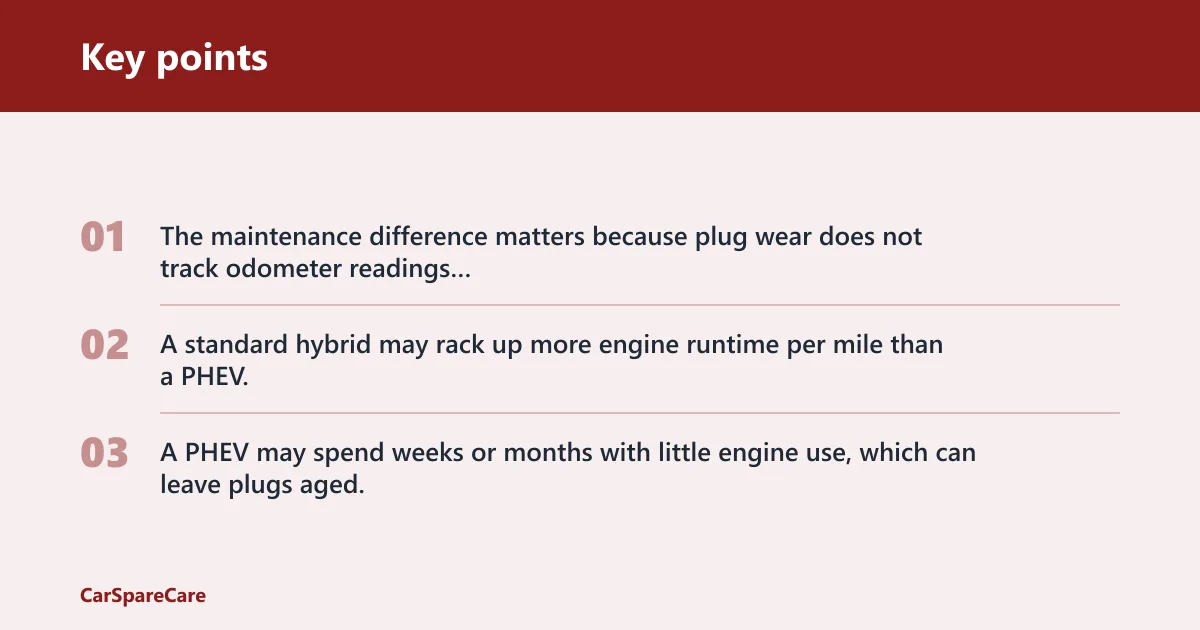
The maintenance difference matters because plug wear does not track odometer readings the same way in both vehicles. A standard hybrid may rack up more engine runtime per mile than a PHEV. A PHEV may spend weeks or months with little engine use, which can leave plugs aged, fouled, or slow to light off on the first engine start.
How hybrid use changes wear
Hybrid driving patterns change how plugs age. Frequent engine starts can increase moisture exposure and deposit formation. Short runtime can keep the plugs from self-cleaning fully. Low mileage can hide both issues, so a plug set that looks “young” on the dash can still be old enough to replace.
Start-stop cycling and short run times
Every cold start asks the ignition system to do more work than a fully warmed engine. If the engine then shuts off again after a short run, the plug may not reach a long, steady hot period that helps burn off deposits. That is why short, repeated engine runs can create service needs that do not line up neatly with annual mileage.
Low mileage, older age, and moisture or deposit buildup
Calendar age matters because plugs sit in the cylinder head whether the car is driven or not. Moisture intrusion, humidity, and repeated partial warm-ups can leave deposits on the firing tip and threads. A plug can be low-mileage and still be due if the car is several years past the original interval.
Say your PHEV has only 18,000 miles after seven years because most trips are electric. If the engine has not run much, the plugs may still need replacement on time. The odometer is low, but the calendar is not.
Why less runtime can still mean service is due
Service intervals are set for both wear and age. Iridium or platinum plugs often last longer than conventional copper plugs, and they are common OEM fitment on modern hybrids. Even so, the engine maker’s interval still governs, and many schedules include a time limit because plug materials, seals, and deposits age even with fewer engine miles.
Spark plug decision table
This table gives a practical rule of thumb for hybrid-specific decisions. Use the owner’s manual first, then compare engine runtime, miles, and age. If the vehicle falls near a replacement window, do not wait for a misfire to start the job.
| Vehicle type | Engine runtime pattern | Mileage | Calendar age | Recommended action |
|---|---|---|---|---|
| Standard hybrid | Frequent starts, moderate engine use | Under 30,000 miles | Under 5 years | Inspect plugs and coils if symptoms appear; otherwise follow the manual |
| Standard hybrid | Frequent starts, moderate engine use | 60,000 to 100,000 miles | 5 to 10 years | Replace plugs at the manual interval; inspect coils and boots at the same time |
| Plug-in hybrid | Mostly electric driving, rare engine use | Under 30,000 miles | 5 to 8 years | Inspect plugs and consider time-based replacement if the manual lists an age limit |
| Plug-in hybrid | Mostly electric driving, rare engine use | Under 20,000 miles | 8 years or more | Replace plugs if the manual allows age-based service, even if mileage is low |
| Mild hybrid | Engine runs often, electric assist only | Near the scheduled interval | Near the scheduled interval | Replace on mileage and age per the manual; treat like a conventional engine with start-stop |
| Any hybrid | Misfire symptoms present | Any mileage | Any age | Diagnose coils, boots, gap, and plugs before replacing parts blindly |
- Check the owner’s manual for the plug interval, gap, and torque specification.
- Compare the odometer to the manual’s mileage limit.
- Compare the vehicle age to any time limit listed by the maker.
- If the vehicle is mostly electric-driven and near the age limit, plan replacement.
- If there are misfire symptoms, inspect coils, boots, and plug condition before guessing.
What worn plugs feel like
Worn plugs often show up as rough idle, hesitation, poor fuel economy, hard starts, or a check engine light. On hybrids, the first clue can appear only when the engine turns on after a long EV-only stretch. Misfires may be intermittent, which makes diagnosis harder than on a car that runs the engine constantly.
Rough idle and hesitation
A rough idle can mean the engine is misfiring at low speed or during warm-up. Hesitation during acceleration can also come from weak spark delivery, but ignition coils, fuel delivery, and vacuum leaks can produce similar symptoms. A symptom alone is not enough to blame the plugs.
Poor fuel economy and hard starts
Bad plugs can make the engine work harder to burn fuel cleanly. That can hurt fuel economy and cause longer cranking or rough starts, especially after the car has sat. On a hybrid, a long EV commute can hide the issue until the first cold engine start of the day.
Suppose a hybrid with 72,000 miles and an eight-year-old plug set starts to shake only after sitting overnight. If the same engine smooths out after a few seconds, the plugs may be weak, but a failing coil or damaged boot can create the same pattern. That is why parts should be checked together.
Check engine light and P0300-series codes
Misfire diagnosis often starts with the check engine light and OBD-II codes in the P0300 series. A P0300 code points to random or multiple-cylinder misfire, while specific P0301 to P0304 codes point to a cylinder. Those codes can come from plug wear, coil failure, or boot damage, so they should not be read as plug proof by themselves.
How to check gap and torque
Do you need to follow the same torque and gap specs on a hybrid as on a regular car? Yes. The engine maker’s spec still applies. The hybrid system does not change the plug thread pitch, heat range, or required gap. Incorrect gap or torque can create misfires, thread damage, or heat-transfer problems.
Why OEM gap spec matters
Spark plug gap is measured in millimeters or thousandths of an inch, and it must match the OEM specification. Too wide a gap can make spark harder to jump. Too narrow a gap can weaken the spark kernel or alter combustion. Even plugs sold as pre-gapped should be verified before installation.
Why torque spec matters on hybrid engines
Torque specification matters because the plug must seal and transfer heat correctly. Overtightening can damage the threads or the plug shell. Under-tightening can allow poor heat transfer or cause the plug to loosen. Both problems matter more in modern aluminum heads, where thread repair is not a simple job.
Iridium and platinum plug checks
Iridium or platinum spark plugs are common in modern hybrids because they last longer than conventional copper plugs. Long life does not mean no inspection. Check the center and ground electrodes for wear, deposits, and damage, and confirm the gap against the manual rather than assuming a fresh box means a correct setting.
When to inspect coils first
Inspect the ignition coil, boot, and plug together when a hybrid misfires. Coil-on-plug faults can look very similar to worn plugs. If the coil boot is cracked, oil-soaked, or tracking spark to ground, a new plug may not cure the misfire.
Boot condition and arcing
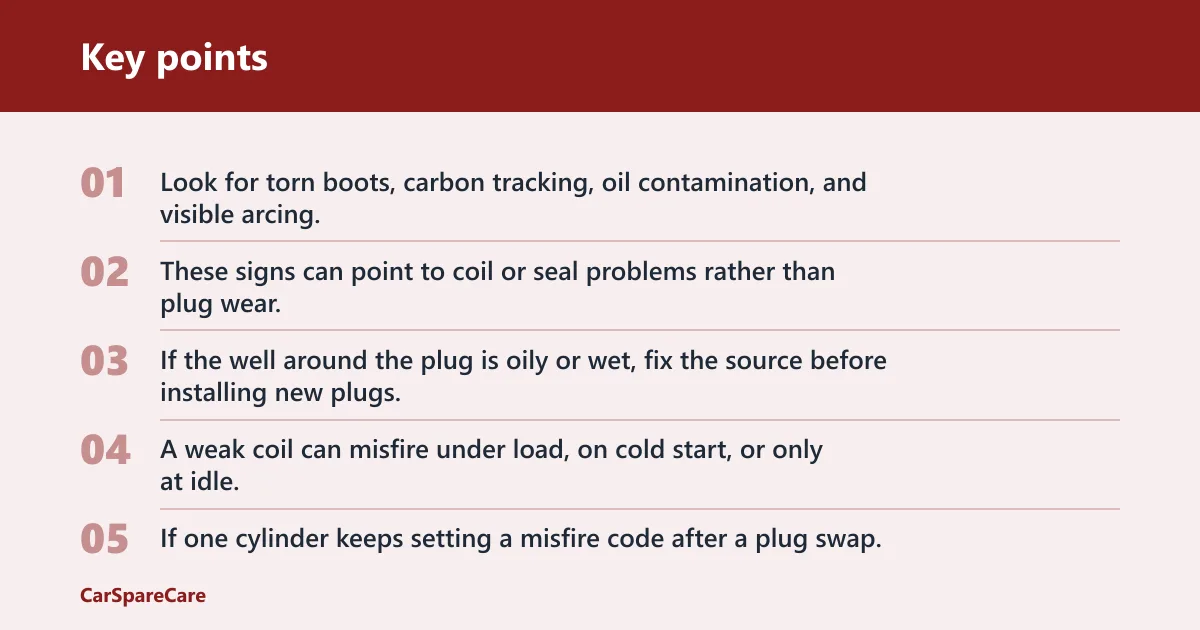
Look for torn boots, carbon tracking, oil contamination, and visible arcing. These signs can point to coil or seal problems rather than plug wear. If the well around the plug is oily or wet, fix the source before installing new plugs, or the misfire may return.
Coil-on-plug failures that mimic spark plug wear
A weak coil can misfire under load, on cold start, or only at idle. That overlap makes diagnosis tricky. If one cylinder keeps setting a misfire code after a plug swap, move the coil to another cylinder if the service procedure allows it, then see whether the code follows the coil.
When deeper diagnosis beats a parts swap
A parts swap is not the best first step when the vehicle has a high-voltage hybrid battery system, delicate coil access, or threaded plugs in an awkward cylinder head. In those cases, a scan tool, live misfire data, and careful inspection can save time and prevent broken parts.
Frequently asked questions
Do plug-in hybrids need spark plug maintenance?
Yes. A plug-in hybrid still has spark plugs if it has a gasoline engine. Because the engine may run less often, the plugs can age by time even when the odometer stays low. Follow the manual, and pay attention to calendar age on PHEVs used for mostly electric commuting.
How often should spark plugs be replaced in a hybrid?
Follow the owner’s manual first. On hybrids that rarely run the engine, the age limit can matter more than miles.
Are spark plug intervals different on hybrid cars because the engine runs less?
Sometimes yes, but not always in the way owners expect. Less engine runtime can cut wear, yet it can also increase the role of age, moisture, and deposits. That is why some hybrids still need plug replacement on time even when the odometer suggests there should be plenty of life left.

Hi, I’m Melvin, an automobile engineer with extensive experience in automobile equipment. I currently work for a local automobile firm, where I specialize in the car parts industry. I’ve had the opportunity to collaborate with seasoned inspectors, gaining invaluable hands-on experience that goes beyond just theory.
My passion for automotive care started at a young age, which led me to create CarSpareCare. Through CarSpareCare, I share the knowledge and skills I’ve acquired over the years to help others navigate the world of car maintenance and repairs.
My goal is to provide practical tutorials, essential safety advice, and the latest industry insights so that anyone—whether a beginner or an expert—can confidently tackle their automotive projects.