
Decontaminate car paint by washing, using an iron remover or clay lubricant, then inspecting the surface. If the paint feels rough, clay it before waxing. Skip it and wax traps bonded grime, so the finish looks dull, feels gritty, and can wear unevenly. This guide covers wash prep, chemical decontamination, clay use, and the final inspection step.
This guide is part of our Automotive paint care guide series.
What bonded contamination does to wax

Car paint contamination is bonded residue that stays after washing. It includes tar, iron fallout, tree sap, bug residue, salt, bird droppings, road film, pollutants, and overspray. Surface dirt rinses away. Bonded contamination sticks to the finish and can interfere with wax bonding and gloss.
Wax works best on clean, dry paint because wax is designed to protect vehicle body parts and improve paint shine. If bonded residue stays behind, the wax can streak, the finish can look patchy, and the paint may feel rough even after a careful wash.
Signs that paint still needs decontamination include a gritty feel on a clean hand in a thin plastic bag, visible specks after washing, or a dull patch that does not clear with drying. If the panel still feels rough, washing alone has not finished the job.
How do you decontaminate paint?
Start with a full wash, then remove bonded residue with a chemical cleaner, then clay the surface with lubricant if the paint still feels rough. After that, inspect for residue, haze, or roughness before waxing. That sequence keeps wax on clean paint instead of on trapped contamination.
Wash the car first
Wash off loose soil before you reach for a chemical product. Dirt, dust, and road film can scratch paint during later steps if they are still on the panel. Dry the car fully, because wax should not go on a wet surface.
Use a chemical cleaner for bonded residue
An iron remover or similar chemical cleaner helps break down bonded fallout, brake dust, and some road contamination. Use it on the areas that tend to collect grit, then rinse or wipe exactly as the product label directs. Chemical cleaning comes before claying when the paint still shows bonded specks.
Clay the surface with lubricant
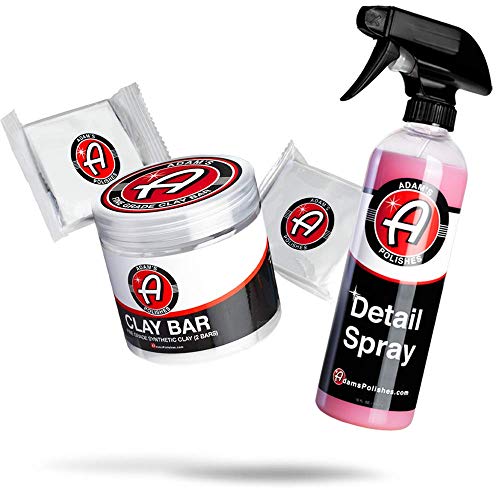
A clay bar is used as part of the cleaning process before waxing. It needs lubricant so the clay can pull particles out of the finish without dragging. Choose a mild clay for paint that only needs light cleanup; choose a more aggressive clay only when the finish has heavier bonded contamination and the panel can handle it.
Work in small sections. That makes it easier to feel when contamination has cleared. Light pressure is enough in most cases. If the clay starts grabbing, stop and add more lubricant rather than forcing it across the panel.
Inspect before you wax
After washing, chemical cleaning, and claying, inspect the paint under bright, direct light or a strong LED. Look for residue lines, remaining specks, haze, and rough spots. Run a clean hand lightly across the panel. If it still feels gritty, the panel needs more decontamination or, for stubborn defects, polishing.
Clay bar and paint cleaner steps
Claying is not a small extra step. It is the mechanical part of decontamination. Use it after washing and after any chemical cleaner that the paint needs. The goal is a smooth surface that lets wax sit evenly on bare paint.
Choose clay aggressiveness for the panel condition
Mild clay suits paint that only has light fallout or road film. More aggressive clay can help on neglected panels, but it also raises the chance of marring. Match the clay to the finish, and be more conservative on soft paint or on a black car where marring shows easily.
Work in small sections
Small sections make it easier to feel when contamination has cleared. A common first-timer mistake is trying to clay an entire hood before checking the result. If the clay turns quiet and the surface feels smooth, move on. If the panel still feels rough, repeat the decontamination step.
When to stop and move to polishing
Stop claying if the panel remains rough after repeated passes, or if you see haze, drag marks, or wash marring that does not wipe away. At that point, polishing is the better next step. Polishing is optional, not required for every car, but it is the right choice when contamination has left visible defects.
Can you wax a dirty or coated car?
You can wax only after the paint is clean and dry. Waxing over dirt, bonded grime, or residue can weaken the result because the product may sit on contamination instead of on paint. Freshly painted panels, matte paint, and ceramic-coated surfaces each need separate handling before any wax goes on.
Newly painted panels
Newly painted or new-car finish can benefit from protection for years, but timing matters. Follow the paint shop or dealer guidance before applying anything. Some finishes may need a curing period before wax, sealant, or other protection. Do not guess on a fresh repaint.
Matte paint
Matte paint needs special care because polishing and some waxes can change the appearance of the finish. Use only products approved for matte surfaces, and avoid aggressive claying or polishing unless the finish maker says it is safe. The goal is cleaning without altering the texture.
Ceramic-coated surfaces
A ceramic-coated car does not automatically need wax, and some owners prefer to leave the coating alone. If you do add wax, check the coating maker’s guidance first. Wax can change how the coating behaves, so do not assume any car wax is compatible.
Say your sedan has tar dots behind the rear wheels and feels rough after washing. A mild clay bar with lubricant may clear the bonded film in that zone, while the rest of the car only needs inspection. That targeted approach avoids extra work on panels that are already clean.
Picture a black coupe parked outdoors under trees. After a wash, the hood looks clean but still shows faint specks in strong light. That is the kind of panel that needs a careful decontamination pass before waxing, because black paint makes leftover residue easier to spot.
Paint decontamination decision table
Use this checklist as a quick decision guide. Wash first, clean bonded residue, clay if the surface still feels rough, then inspect. If the panel is smooth and free of haze, it is ready for wax.
| Contamination type | Best removal method | Stop or continue sign |
|---|---|---|
| Bonded tar | Chemical cleaner, then clay if needed | Continue if specks or roughness remain after cleaning |
| Iron fallout | Chemical cleaner | Stop when the panel no longer feels gritty or shows rust-colored dots |
| Tree sap | Chemical cleaner, then gentle clay | Continue if the spot still feels raised or tacky |
| Bug residue | Wash first, then chemical cleaner | Stop when the stain no longer leaves a trace on a clean towel |
| Water spots | Wash, then polish if the spots are etched | Continue to polishing if the mark stays after washing |
| Overspray | Clay bar; polish if the edge is still visible | Stop when the surface feels smooth and looks even in light |
- Wash the car and dry it fully.
- Treat bonded residue with a chemical cleaner where needed.
- Clay the panel with lubricant if it still feels rough.
- Inspect under bright light for haze, residue, and specks.
- Wax only when the paint feels smooth and looks clean.
Five-point readiness check before waxing
- The panel is clean and fully dry.
- No bonded specks remain under bright light.
- The paint feels smooth to a clean hand in a thin bag or soft glove.
- No haze, streaking, or clay residue is visible.
- The surface is cool enough to touch comfortably.
How should you apply wax?
Apply wax to clean, dry paint in shade or under cover so it does not dry too fast on hot panels. Work in small sections, then buff with microfiber towels. Liquid, paste, and spray wax are all common formats, and the right one depends on the finish and the time you want to spend.
Work in shade or under cover
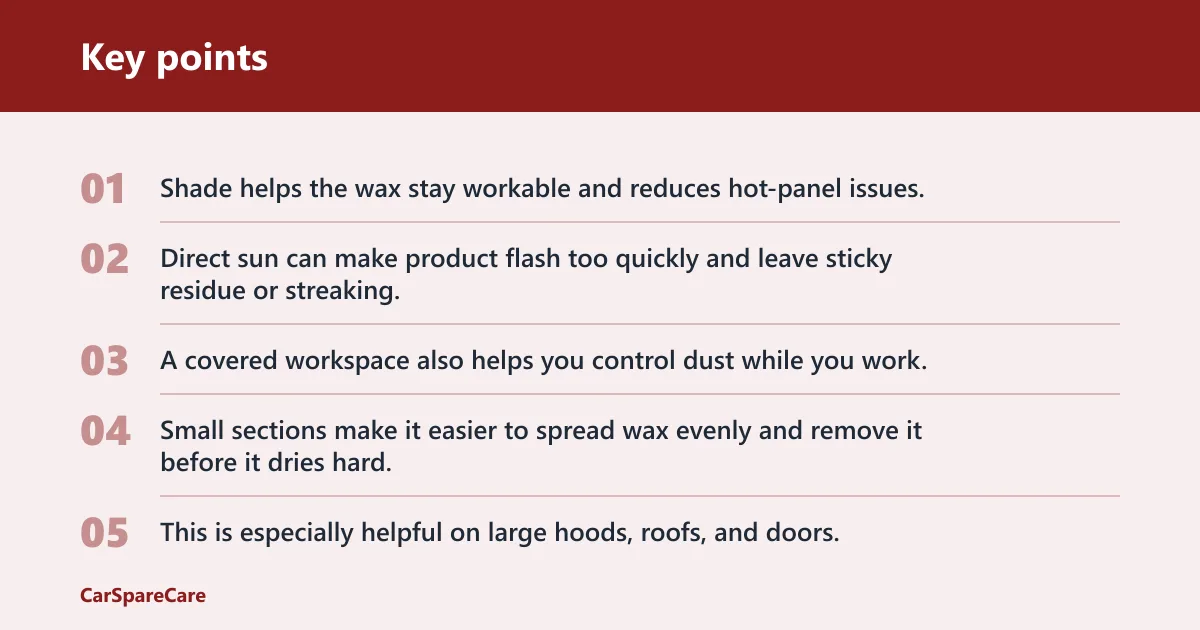
Shade helps the wax stay workable and reduces hot-panel issues. Direct sun can make product flash too quickly and leave sticky residue or streaking. A covered workspace also helps you control dust while you work.
Apply in small sections
Small sections make it easier to spread wax evenly and remove it before it dries hard. This is especially helpful on large hoods, roofs, and doors. Apply only enough product to leave a thin, even film.
Buff with microfiber towels
Microfiber towels are the preferred choice for buffing and removal because they reduce marring compared with rough cloths. Use a clean towel, turn it often, and stop if the towel starts loading up with residue. If the wax smears, the panel may still be too warm or not fully clean.
Use a buffer only when the product fits the tool
A mechanical buffer or electric polisher can speed application or removal, but product and pad compatibility matter. Follow the device instructions and the wax label. A machine helps on large panels or stubborn residue, but it is not required for every car.
How to remove wax from car paint starts with softening the residue, then wiping with clean microfiber and a product that the wax maker approves. If wax is hazed or streaked, rework the area in smaller passes instead of scrubbing hard. Hard rubbing can mark the finish.
Wax durability can vary with driving conditions, parking location, and wax type. Beading and sheeting are common signals that the wax is wearing off. Waxing about once a month, while some newer synthetic waxes claim protection for up to a year. Treat those claims as product-specific, not universal.
Frequently asked questions
Does waxing a car protect the paint?
Yes. Wax is designed to protect vehicle body parts and improve paint shine, and it helps protect paint from airborne contaminants and the elements. It can also make minor scratches less noticeable. The protection only works well when the surface is clean and dry before application.
Should you wax a ceramic coated car?
Only if the coating maker says it is acceptable. Some ceramic-coated cars do not need wax, and adding it can change the way the coating performs. If you do wax over a coating, confirm product compatibility first and use a mild approach on a clean, cool panel.
How long before waxing new auto paint
That depends on the paint system and the shop or dealer instructions. Fresh paint can need time to cure before any wax or sealant goes on. Do not apply wax to a newly painted panel until the coating provider says it is ready.

Hi, I’m Melvin, an automobile engineer with extensive experience in automobile equipment. I currently work for a local automobile firm, where I specialize in the car parts industry. I’ve had the opportunity to collaborate with seasoned inspectors, gaining invaluable hands-on experience that goes beyond just theory.
My passion for automotive care started at a young age, which led me to create CarSpareCare. Through CarSpareCare, I share the knowledge and skills I’ve acquired over the years to help others navigate the world of car maintenance and repairs.
My goal is to provide practical tutorials, essential safety advice, and the latest industry insights so that anyone—whether a beginner or an expert—can confidently tackle their automotive projects.

