
Remove old wax from car paint with a wash first, then use a paint-safe wax remover or an IPA wipe-down for thin residue. Use clay only if bonded buildup remains, and keep solvents off trim. If you skip removal, fresh wax can streak, bond poorly, and trap grime. This guide shows how to choose the right method by residue type, panel condition, and trim sensitivity.
This guide is part of our Automotive paint care guide series.
What you’ll need
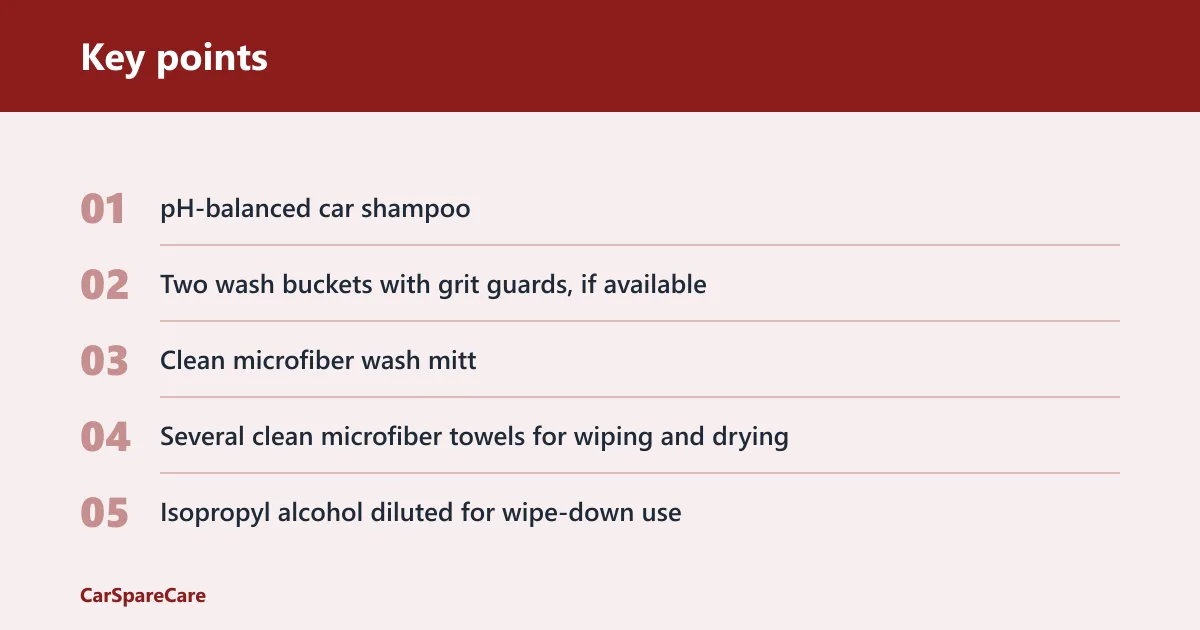


- pH-balanced car shampoo
- Two wash buckets with grit guards, if available
- Clean microfiber wash mitt
- Several clean microfiber towels for wiping and drying
- Isopropyl alcohol diluted for wipe-down use
- Paint-safe wax remover
- Clay bar or clay mitt
- Clay lubricant or a dedicated clay spray
- Soft detailing brush for seams and emblems
- Cool, shaded working area or garage
Wash supplies clear away loose dirt before any solvent work. That matters, because rubbing trapped grit across clear coat can leave marring. Work on a cool panel rather than hot paint, and keep microfiber towels clean so grit is not dragged back across the finish while removing residue.
📊 wikiHow advises waxing between 55 and 85 °F. Source: How to Wax Your Car (with Pictures).
When is isopropyl alcohol enough?
IPA is often enough for fresh, thin residue on a clean, dry panel, especially after a proper wash. It works best as a wipe-down step before new wax, and it is an effective degreaser. It will not always clear tougher polymer residue or thick buildup at edges.
Best use after a proper wash
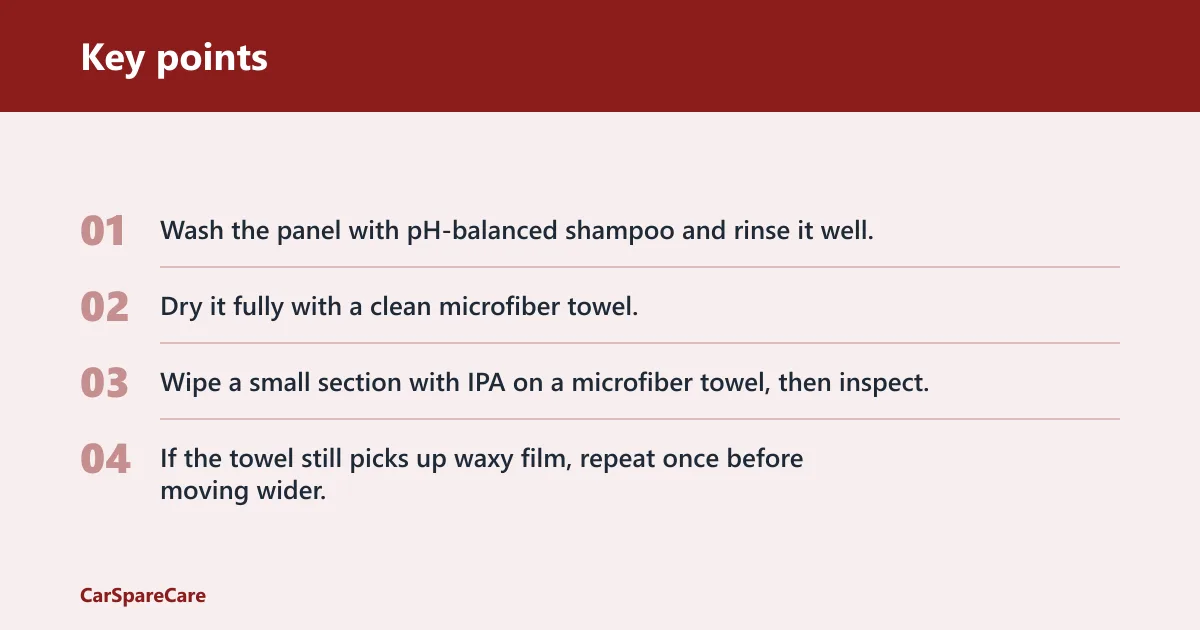
- Wash the panel with pH-balanced shampoo and rinse it well.
- Dry it fully with a clean microfiber towel.
- Wipe a small section with IPA on a microfiber towel, then inspect.
- If the towel still picks up waxy film, repeat once before moving wider.
A common first-timer mistake is trying to strip old wax from a car that still has loose road grit on the panels. That turns loose grit into a scratch risk. Start with a spot test on an inconspicuous area, then expand only if the finish still looks even and the towel comes away clean.
When synthetic residue needs more than IPA
Traditional car waxes are made with leaves from the carnauba palm, while polymer-based waxes use synthetic materials for durability. Polymer residue often clings longer, especially in seams and around badges. If IPA leaves streaking or a faint oily film, move to a dedicated remover rather than scrubbing harder.
How should you strip the paint?
Use the least aggressive method that fully clears the residue. Start with a wash, then IPA, then a wax remover if needed. Clay is a separate step for bonded contamination, not the automatic first answer for every panel. The goal is clean paint, not polished-through paint.
Step 1: Wash and dry first
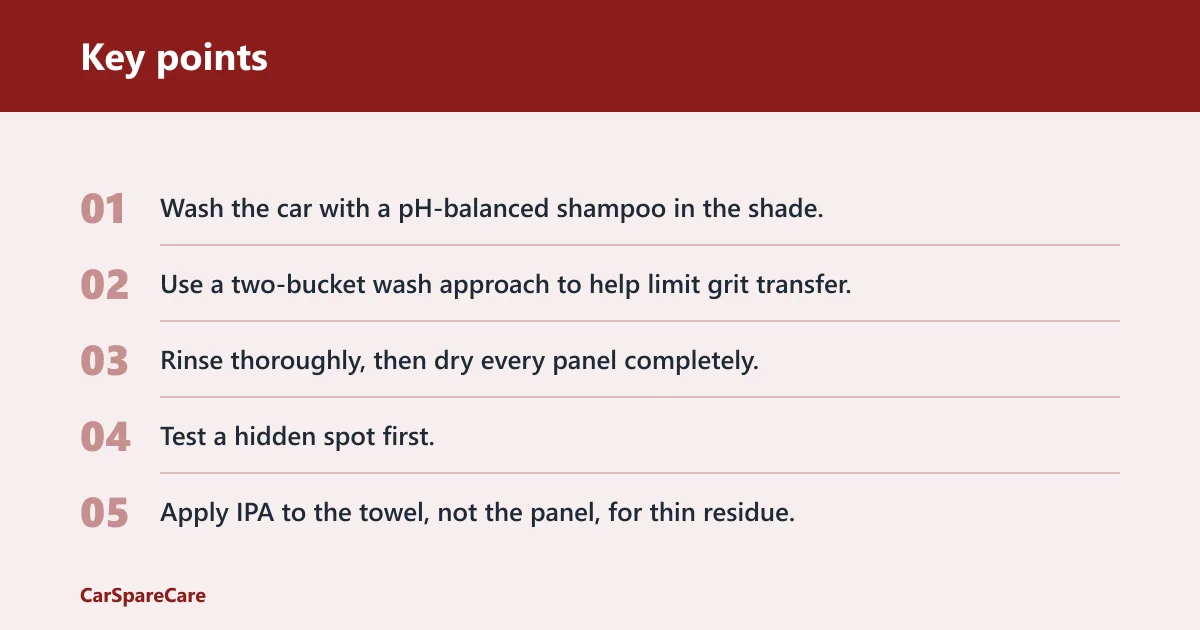
- Wash the car with a pH-balanced shampoo in the shade.
- Use a two-bucket wash approach to help limit grit transfer.
- Rinse thoroughly, then dry every panel completely.
Dry paint matters because water can dilute IPA and wax remover, which cuts contact with the residue. It also makes it easier to spot hazing, dullness, and streaking from old wax. Those signs often show up near edges, crevices, and trim lines first.
Step 2: Wipe with IPA or wax remover
- Test a hidden spot first.
- Apply IPA to the towel, not the panel, for thin residue.
- For heavier residue, apply a dedicated wax remover sparingly and follow the label dwell time.
- Wipe straight off with a clean microfiber towel.
Car wax remover can be applied by hand or with a buffing machine. Keep the application to about five minutes per vehicle before wiping and rechecking, and stay out of direct sun. Cardetailingguru advises avoiding direct sunlight for wax remover application, and heat shortens working time on clear coat.
Step 3: Use clay only when residue or contamination remains
- Lubricate the panel generously with clay lubricant.
- Glide the clay bar or mitt lightly across the surface.
- Stop if the clay picks up debris or feels gritty.
- Fold to a clean face before continuing.
A clay bar can quickly lift surface residue before rewaxing. It is optional for simple wax removal, and it can mar paint if debris gets trapped in the clay. Autoglym describes clay detailing as producing a silky finish, but that result depends on keeping the clay clean and the panel well lubricated.
Step 4: Recheck the surface before rewaxing
- Wipe the panel again with a clean microfiber towel.
- Check for streaks, hazing, or slick patches.
- Touch the paint lightly; it should feel smooth, not grabby.
Say your hood has a faint white film after IPA, but the roof clears cleanly. That points to stronger residue on the hood, often near edge buildup or an old synthetic layer. Treat the hood with a dedicated remover next, then recheck before moving on to the next panel.
Wax residue decision table
| Residue type | Safest first method | Escalation method | Stop/avoid warning |
|---|---|---|---|
| Fresh smeared wax | Wash, dry, then IPA wipe-down | Dedicated wax remover on a microfiber towel | Stop if the panel is hot or the towel starts dragging |
| Dried edge buildup | Wash, then spot-clean with remover | Clay with lubricant after remover if the ridge stays | Avoid hard rubbing on clear coat edges and body lines |
| Wax in emblems and seams | Soft brush, then damp microfiber wipe | Small amount of remover on a towel, followed by a dry wipe | Do not flood textured trim or force product into gaps |
| Hazy full-panel residue | Wash and IPA spot-test | Wax remover, then clay only if the haze includes bonded contamination | Stop if haze remains with dullness or scratches; polish may be needed |
Hazy full-panel residue can mean old wax, but it can also hide oxidation, marring, or a failed older sealant. If the paint still looks dull after residue removal, a polishing compound may be the next step before any new wax. wikiHow recommends polishing compound for dull or scratched paint before waxing.
How do you remove wax from seams and trim?
Use a gentler route around emblems, seams, and textured plastic. Painted clear coat can tolerate a careful wipe-down, but textured trim can hold white residue and can stain if soaked with strong solvent. Avoid soaking, scrubbing, or heavy machine work on plastic and badge edges.
Working around emblems and textured plastics
- Use a soft detailing brush to loosen residue from seams.
- Wipe with a lightly damp microfiber towel wrapped around a finger.
- Use a tiny amount of remover on the towel if residue remains.
- Dry the area immediately with a second clean towel.
For textured trim, less liquid is better. Wax can sit in the grain and leave a white cast if product dries there. A common first-timer mistake is spraying remover directly into a badge recess; that can push residue deeper and make cleanup slower.
What to avoid on clear coat and trim
Do not use aggressive pressure, hot panels, or rough rags. Do not clay trim unless the material is paint-safe and the residue truly needs it. The same source says its decontamination products are safe on paintwork, but trim and textured plastic still deserve a conservative approach because the finish can stain or dull if overworked.
Common mistakes
- Skipping the wash step: grit stays on the panel and can scratch during wiping.
- Using too much pressure: pressure does not remove polymer residue faster, but it can mark clear coat edges.
- Working in heat or direct sun: solvents flash too fast and leave streaks behind.
- Using dirty microfiber towels: a contaminated towel can re-spread wax and grit.
- Ignoring haze or dullness: residue may be gone, but oxidation or marring may still need polishing.
Suppose a 10-year-old sedan has white residue packed around the trunk badge after a wash. Start with a soft brush and a damp towel, then step up to a small amount of remover on the towel only if the residue stays. That keeps liquid off the surrounding trim while still clearing the seam.
Frequently asked questions
Can isopropyl alcohol remove car wax?
Yes, IPA can remove light wax residue, especially after washing. It works best as a wipe-down step before new wax and as a check for leftover film. If the surface still streaks or feels oily after one or two passes, move to a dedicated wax remover.
Do I need a clay bar after removing old wax?
Not always. Use clay only if you still feel bonded contamination or see residue that does not wipe away cleanly. A clay bar can quickly lift surface residue before rewaxing, but it also needs lubricant and careful handling to avoid marring the paint.
Will wax remover damage clear coat or trim?
Paint-safe wax remover should not damage clear coat when used sparingly and wiped off within the label time. Trim is a different case. Avoid soaking textured plastic, emblems, and rubber seals, and keep solvent off those areas unless the product label specifically allows it.
How do you know if old wax is fully removed?
The panel should wipe clean with no streaking, feel smooth to a light touch, and show even water behavior instead of patchy beading. If a microfiber towel still picks up waxy film after the final wipe, the surface needs another pass before you apply new protection.
What should I use before rewaxing a car?
Use a clean wash, a dry panel, then an IPA wipe-down before new wax. Add a dedicated remover if residue remains, and use clay only for embedded contamination. That sequence gives the new wax a cleaner surface to bond to and reduces streaking on application.

Hi, I’m Melvin, an automobile engineer with extensive experience in automobile equipment. I currently work for a local automobile firm, where I specialize in the car parts industry. I’ve had the opportunity to collaborate with seasoned inspectors, gaining invaluable hands-on experience that goes beyond just theory.
My passion for automotive care started at a young age, which led me to create CarSpareCare. Through CarSpareCare, I share the knowledge and skills I’ve acquired over the years to help others navigate the world of car maintenance and repairs.
My goal is to provide practical tutorials, essential safety advice, and the latest industry insights so that anyone—whether a beginner or an expert—can confidently tackle their automotive projects.

