Yes, use dielectric grease on the spark plug boot or wire interface when you want moisture protection or easier future removal, but keep it off the firing end and never use it to fix a loose fit. Put it in the wrong place and you can trigger misfires, hard starts, or boot damage. This guide explains where grease belongs, where it does not, and when modern coil-on-plug setups need it.
When grease helps and when it doesn’t


Usually, no. Dielectric grease is generally optional rather than required, and its usefulness can depend on the ignition setup and the conditions around it. It works best as a silicone-based, non-conductive moisture barrier on the boot side of the connection, not on the spark-producing end.
When the answer is yes
Use a thin film when the ignition connection sees moisture, road splash, humidity, or repeated heat cycles that make boots stick to the ceramic insulator. It also helps when you want easier removal at the next service. On older plug-wire systems, that benefit is often more noticeable.
When the answer is no
Skip it when the boot already seals tightly, the connector is dry and clean, and the real issue is a worn boot, cracked wire, or weak coil. Grease cannot correct a bad fit. It can hide symptoms for a while, which makes the underlying fault harder to spot.
What dielectric grease does
Dielectric grease is a silicone-based insulator, not a conductor. Its job is to create a waterproof barrier around electrical connections and to help rubber or plastic parts release more cleanly later. It belongs on the boot or housing side of the connection, not between metal contact surfaces.
Silicone-based and non-conductive
Because it does not conduct electricity, dielectric grease should never be treated as part of the current path. Metal-to-metal contact still has to do the electrical work. A small amount is fine, but packed grease can block a connection and interfere with proper contact.
Moisture and corrosion barrier
The grease helps keep moisture out of the boot cavity and away from metal surfaces that should stay dry. That matters in exterior connectors and other exposed electrical locations. It can also reduce corrosion on the rubber or plastic side of the joint when the connection lives in wet or salty conditions.
Why it helps boots come off cleanly
On spark plug boots, a light coat inside the boot can stop the rubber from sticking to the ceramic insulator. That makes future removal easier and lowers the chance of tearing the boot. It also reduces the grab that can happen after long heat cycling.
Where to apply it on spark plugs
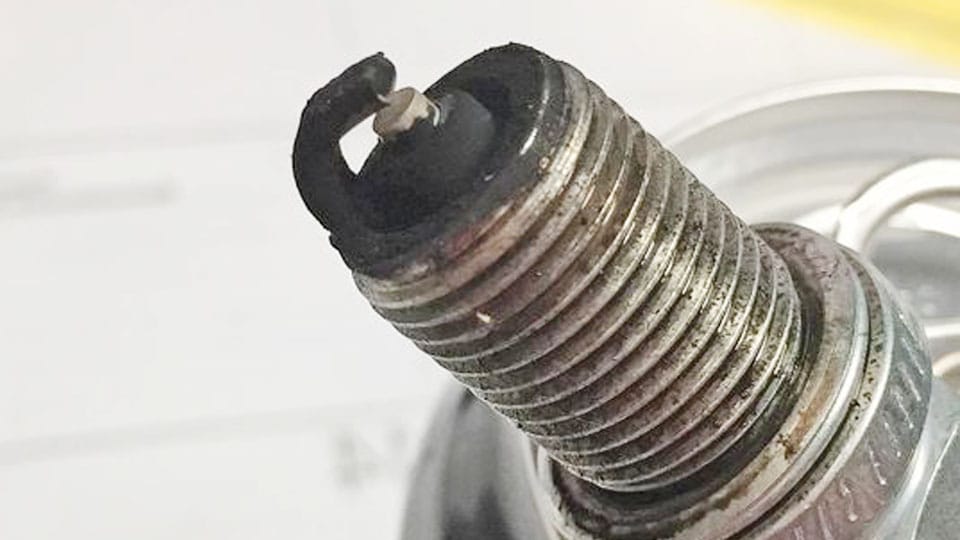
Apply grease to the boot interface, not the spark plug tip. The goal is to seal the cavity and protect the rubber contact area while leaving the firing end and the thread area clean. A thin layer is enough.
Clean the parts first. Remove dirt, oil, and old residue from the boot cavity and the plug area before adding grease. A clean surface helps the boot seat fully and makes it easier to see damage or carbon tracking.
Apply a thin film. Spread a small amount inside the rubber boot or on the connector housing. The layer should be light enough that the connection still seats normally and metal-to-metal contact can happen where it belongs.
Seat the boot fully. Push the boot onto the plug until it snaps or bottoms out as designed. That ensures the seal, contact, and retention all work together instead of relying on grease to make up for poor fit.
Spark plug boot cavity
For a spark plug boot, the inside of the boot or terminal cavity is the main place to use dielectric grease. This is the spot that seals out moisture and keeps the boot from sticking to the porcelain body of the plug. It should not be used on the spark plug tip.
Spark plug wire end
On a spark plug wire end, a light coat on the boot end that mates with the plug can help with moisture protection and later removal. That is useful on older distributor-style systems and other wire-and-cap setups where the boot is more exposed and can grip the plug tightly after heat cycles.
Coil-on-plug interface
On a coil-on-plug ignition system, the common place is the boot-to-plug interface. Grease can help prevent moisture intrusion and boot sticking, especially if the connector sees splash or humid weather. If the boot already seals well and the cavity is clean, the benefit may be small.
Spark plug grease decision table
This table gives a quick yes-or-no rule for common ignition setups and symptoms. It focuses on where to apply grease, and when to leave it out.
| Ignition setup and symptom | Action |
|---|---|
| Old plug wires with hard boot removal | Use grease. Apply a thin film inside the boot end that slides over the plug. Skip it if the boot is cracked, swollen, or loose. |
| Coil-on-plug system in a humid climate | Usually use grease. Put a light coat inside the coil boot cavity and on the rubber sealing surface. Skip it if the boot already seals tightly and stays dry. |
| Coil-on-plug system with clean, tight-fitting boots | Often skip it. A good mechanical fit matters more than grease. Use it only if moisture intrusion or sticking has been a repeat issue. |
| Contaminated boot cavity | Clean first, then decide. Remove oil, dust, and carbon debris before applying a thin film. Skip grease until the source of contamination is fixed if the cavity keeps filling up. |
| Misfire after service | Do not use grease as a cure. Recheck boot seating, plug gap, connector lock, and part condition. Skip grease until the true fault is found. |
| Humid climate or high-splash use | Use grease on the boot interface. Apply it to the rubber or plastic sealing area, not the firing tip. Skip it if the system is already sealed and dry. |
When should you skip it?
Skip dielectric grease when the ignition system already seals tightly, the parts are clean, and there is no history of moisture intrusion or boot sticking. Modern coil-on-plug systems often fall into that group. If the part still misfires or feels loose after service, grease is not the fix.
Modern coil-on-plug systems
Many coil-on-plug designs use a well-sealed boot and a direct, snug fit. In those cases, grease is often unnecessary unless the environment is wet or the boot has started to stick. A good fit and clean contact surfaces matter more than adding product.
Dry, clean, tight-fitting boots
If the boot is dry, the cavity is clean, and the connector seats firmly, adding grease may do little. The safest approach is to leave it out unless the service manual or the vehicle’s exposure conditions justify it. More grease is not better.
When the real problem is worn parts
A misfire after service often points to a loose boot, a damaged coil tower, a cracked wire, or carbon tracking. Grease can mask the symptoms for a while, but it cannot restore a poor electrical path. Replace or repair the worn part instead.
Picture a coil-on-plug engine that lives in a dry garage and has tight new boots. In that case, grease is usually optional. Now change just one variable: the same engine spends winter on salted roads, and the boots become stubborn to remove. A thin coat inside the boot becomes more useful.
What happens if you put it in the wrong place?
Wrong placement creates more trouble than it solves. Grease belongs on rubber or plastic boot surfaces, not on the spark plug electrode, firing tip, or thread area. Too much of it can block contact, trap contamination, or hide a fit problem that needs attention.
Electrode and firing tip contamination
The spark plug electrode and firing tip must stay clean and dry. Grease on the firing end can block spark or interfere with normal ignition behavior. Keep it off the plug tip entirely.
Threads and grounding surfaces
Spark plug threads should not be coated with dielectric grease. Those threads need proper metal-to-metal contact and grounding. If a plug maker specifies anti-seize, that is a separate product and a separate instruction; do not swap it with dielectric grease.
Too much grease in the cavity
A thin film is fine, but packed grease can block a connection. Excess grease can also interrupt electrical flow if over-applied. It can trap dust or make a bad boot fit seem acceptable when it is not.
A common first-timer mistake is filling the boot cavity until grease squeezes out everywhere. The boot may still go on, but the extra material can collect grit and hide a connector that never seated fully. Use just enough to coat the rubber surface.
Do you need it for spark plug wire or boot service?
It is often helpful during spark plug wire or boot service, but it is not universal. Older wire-and-cap systems, high-humidity conditions, and stubborn boots benefit the most. If the system is modern, sealed, and dry, the case for grease is weaker.
Old plug wire setups
Older plug-wire systems often expose the boot to more heat, more movement, and more service removal. A light coat inside the boot end can help the boot release cleanly and keep moisture out. It is one of the common automotive uses for dielectric grease.
Humid or high-splash use
Use a small amount when the vehicle sees humidity, wash water, rain, or splash from the road. The grease forms a moisture barrier at the boot surface and helps reduce corrosion around the connector. It is especially useful where water can sit in the boot cavity.
Boot removal after service
If a boot has been difficult to remove during past service, grease can reduce sticking on the next install. Apply it before reconnecting the boot, not after a problem starts. That keeps the surface slippery in the right place and preserves the seal.
Inspect the boot and plug. Look for cracks, carbon tracking, corrosion, and loose fit before adding anything. If a part is damaged, replace it first.
Use a small amount only. Coat the rubber boot or terminal cavity with a thin layer. Do not fill the cavity or smear it across the electrode or threads.
Reconnect and verify fit. Push the boot into place until it seats fully. If it still feels loose, the issue is mechanical, not chemical.
Frequently asked questions
Do you need dielectric grease on spark plugs?
Usually, no. You need it on the boot or connector side only when moisture protection, corrosion resistance, or easier future removal matters. Keep it off the firing tip, electrode, and thread area. If the ignition fit is tight and dry, it is often optional.
Do you use dielectric grease on spark plug boots?
Yes, that is the normal place for it. Apply a thin film inside the boot so it seals out moisture and does not stick to the ceramic insulator. Do not pack the cavity, and do not use it as a fix for a worn boot or weak connector.
Can you use dielectric grease on spark plug wires?
Yes, on the wire end or boot end that mates with the plug. A light coating can help the boot slide on and off more cleanly while resisting moisture. It should not be smeared on the metal contact points or used to compensate for a loose wire end.
Do you need dielectric grease for spark plug change?
Not every time. A spark plug change may call for it if the boot is stubborn, the vehicle sees moisture, or the design uses a boot that benefits from extra sealing. If the parts fit tightly and stay dry, many jobs do not need it.
Do you need dielectric grease for NGK spark plugs?
Not because of the brand name itself. The decision depends on the boot, the ignition system, and the service conditions. Follow the plug maker’s instructions for the threads, and use dielectric grease only on the boot interface when the application calls for it.
Is dielectric grease necessary for spark plugs?
No, it is not necessary in every case. It is a useful aid for moisture protection and easier boot removal, but it is not a substitute for proper fit or clean contact surfaces. On a modern, tight-sealing ignition system, it may be unnecessary.

Hi, I’m Melvin, an automobile engineer with extensive experience in automobile equipment. I currently work for a local automobile firm, where I specialize in the car parts industry. I’ve had the opportunity to collaborate with seasoned inspectors, gaining invaluable hands-on experience that goes beyond just theory.
My passion for automotive care started at a young age, which led me to create CarSpareCare. Through CarSpareCare, I share the knowledge and skills I’ve acquired over the years to help others navigate the world of car maintenance and repairs.
My goal is to provide practical tutorials, essential safety advice, and the latest industry insights so that anyone—whether a beginner or an expert—can confidently tackle their automotive projects.