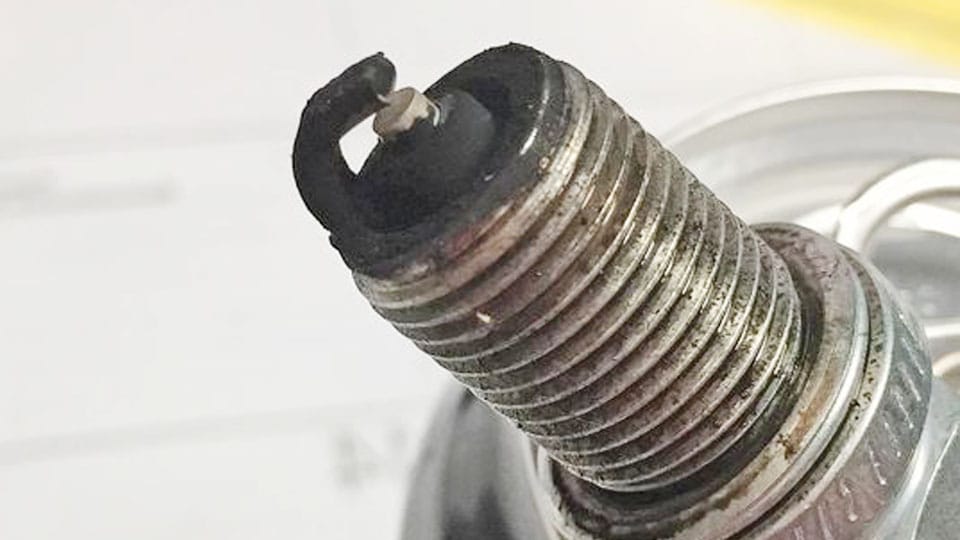
A commonly recommended choice for spark plug boots is a silicone dielectric grease rated for ignition use, applied as a thin film inside the boot and around the boot seal, rather than packed onto the metal terminal; use about a pea-sized amount per boot. Wrong placement can cause poor contact, misfires, and harder plug removal later. This guide explains where to apply grease, about how much to use, and when the boot or coil should be replaced instead.
Best all-around pick for boots and connections
Permatex 22058 Dielectric Tune-Up Grease is the best all-around pick for spark plug boots because it is sold in a 3 oz tube, is aimed at spark plug boots and electrical connections, and is positioned for moisture and corrosion protection without needing a large buy-in.
Quick picks
- Best overall: Permatex 22058 Dielectric Tune-Up Grease. Good all-purpose tube size for ignition boots and other electrical connections.
- Best small tube: BTAS Dielectric Grease for Electrical Connectors. Compact 1 oz format, useful if you only service one vehicle or an occasional set of boots.
- Best for multiple jobs: AGS Dielectric Grease for Electrical Connectors. The 4 oz size and brush-top applicator fit frequent use on boots, terminals, and wiring runs.
- Best for boot-specific use: Versachem 15309 Dielectric Spark Plug Boot Grease. It is described as a 100% silicone dielectric compound and is positioned for spark plugs and distributor caps.
Spark plug boot grease map
This is the part most buyers get wrong. Dielectric grease belongs on sealing and sliding surfaces, not as a heavy coating on the electrical contact path. The goal is to help the boot seal, resist moisture, and release later without forcing the boot to fight the plug or coil tower.
| Component | Apply? | Amount | Why | Warning signs of failure | Common mistake |
|---|---|---|---|---|---|
| Inside boot wall near the mouth | Yes | Thin film, about a pea-sized amount per boot spread over the contact zone | Helps the boot slide on and off and supports the seal against moisture | Boot sticks hard to the plug, tears on removal, or shows moisture intrusion | Packing the whole boot cavity with grease |
| Rubber boot seal at the top | Yes | Light smear | Supports sealing on rubber-to-ceramic and rubber-to-plastic interfaces | Cracked seal, hardened rubber, oil or water at the tower | Skipping the seal and only greasing the wire end |
| Metal terminal contact path | No, not heavily | At most a trace film on adjacent sealing surfaces | Dielectric grease does not conduct current; the metal contact must make clean contact on its own | Misfire right after install, weak connection, intermittent spark | Smearing grease onto the conductor path to “help conductivity” |
| Spark plug porcelain around the terminal area | Yes, lightly | Very thin film on the area the boot seals against | Helps keep out moisture and corrosion while easing removal | Carbon tracking, oily residue, cracked porcelain, black arc marks | Coating the plug tip or filling the terminal well |
| Coil tower interface | Yes | Thin film | Useful on coil-on-plug setups to help boot removal and keep out moisture | Loose tower fit, burn marks, repeated boot sticking | Using grease to mask a loose or burned tower |
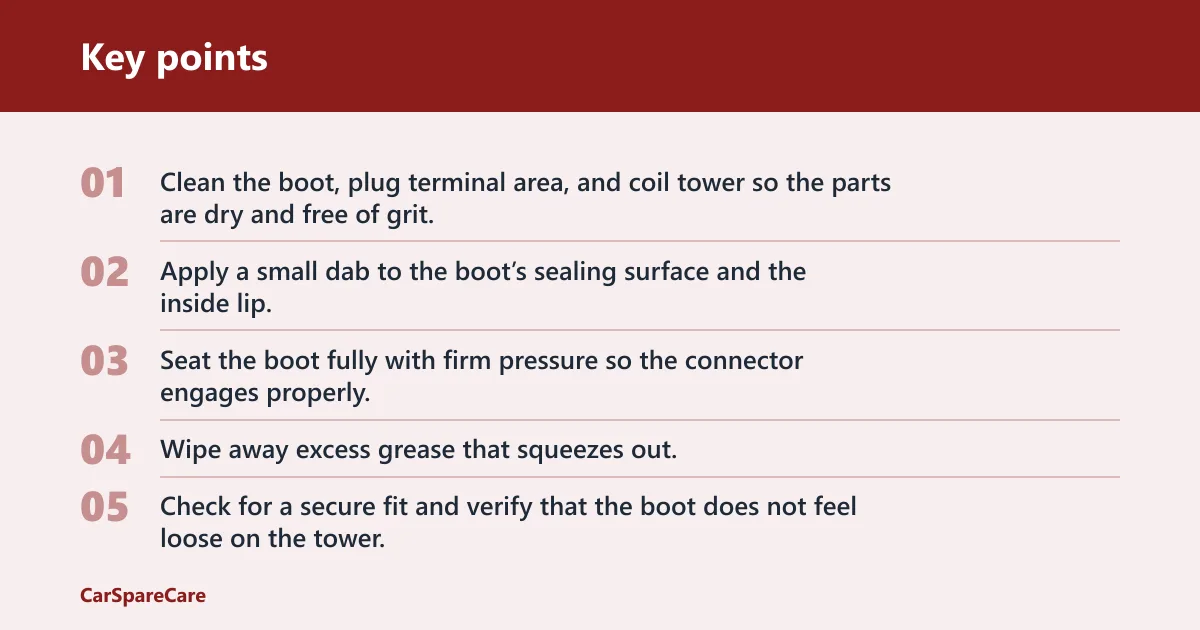
- Clean the boot, plug terminal area, and coil tower so the parts are dry and free of grit.
- Apply a small dab to the boot’s sealing surface and the inside lip, then spread it into a thin film.
- Seat the boot fully with firm pressure so the connector engages properly.
- Wipe away excess grease that squeezes out.
- Check for a secure fit and verify that the boot does not feel loose on the tower.
Is dielectric grease good for spark plug boots?
Yes, dielectric grease is good for spark plug boots when it is used as a thin silicone film in the right place. It seals out moisture, helps reduce corrosion on rubber, plastic, and ceramic surfaces, and makes later removal easier. It will not fix damaged parts.
What it does on rubber and ceramic
Spark plug boots are rubber ignition lead covers that should fit tightly over the plug and coil tower. A light coat of dielectric grease can help the rubber slide into place and maintain a better seal against ceramic and plastic surfaces. That matters in wet, humid, and hot engine bays.
What it does not do
It does not improve conductivity. The current path still depends on the metal contact surfaces meeting correctly. If the boot or terminal is worn, bent, cracked, or heat-damaged, grease will not restore a proper electrical connection.
When it helps removal and sealing
A thin application helps the boot release later without tearing the rubber or pulling hard on the wire. That is useful on coil-on-plug engines, distributor-style boots, and motorcycle ignition boots that sit close to heat and grime.
Which dielectric grease is best?
The best choice depends on how often you service ignition parts, how much product you need, and whether the boot will live near high heat, humidity, or splash exposure. Permatex 22058 is the best overall pick for most DIY owners because the 3 oz tube fits repeated ignition work without being oversized.
Permatex 22058 dielectric tune-Up grease
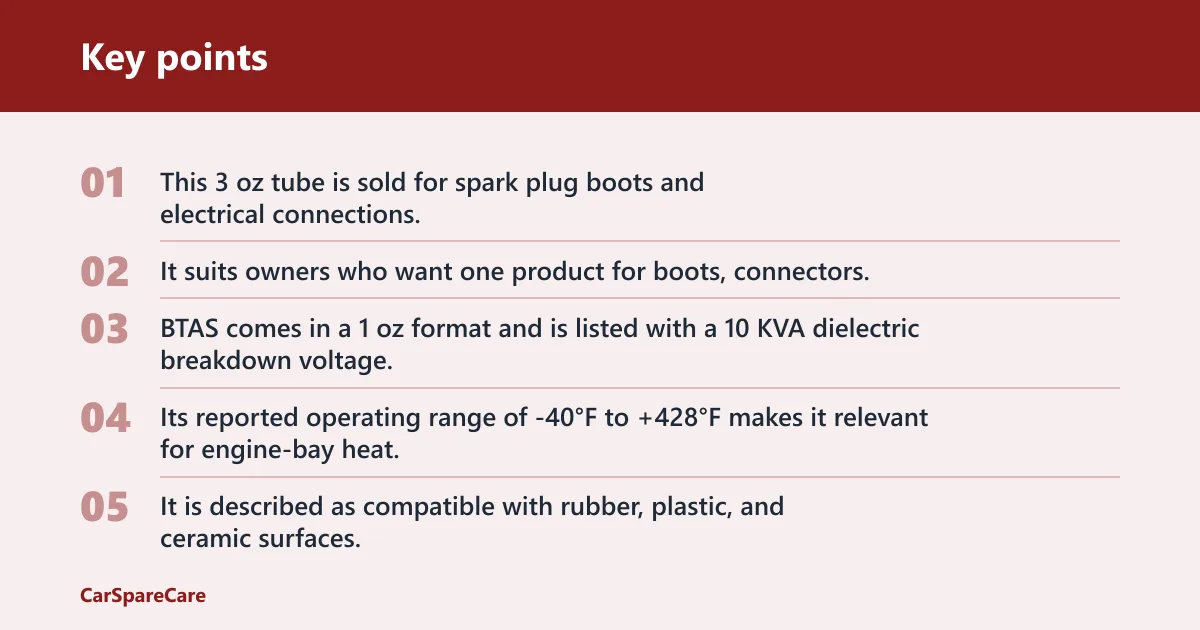
This 3 oz tube is sold for spark plug boots and electrical connections, with moisture and corrosion protection as the main use case. It suits owners who want one product for boots, connectors, and other electrical service points.
BTAS dielectric grease for electrical connectors
BTAS comes in a 1 oz format and is listed with a 10 KVA dielectric breakdown voltage. Its reported operating range of -40°F to +428°F makes it relevant for engine-bay heat, marine use, and humid conditions. It is described as compatible with rubber, plastic, and ceramic surfaces.
Versachem 15309 dielectric spark plug boot grease
Versachem 15309 is described as a 100% silicone dielectric compound and is positioned for spark plugs and distributor caps. It fits buyers who want a boot-focused product rather than a general electrical grease.
AGS dielectric grease for electrical connectors
AGS is offered in a 4 oz size and uses a brush-top applicator. It is suitable for spark plugs, battery terminals, wiring runs, and ignition coils, so it suits larger maintenance jobs or users who want easier control over the amount applied.
How to choose the right grease
Choose by fit, surface material, and how the vehicle is used. A rubber boot on a coil-on-plug engine needs a thin, controlled film. A distributor-style lead may need the same, but older parts often show wear that grease cannot mask. If the engine sees heat and moisture, temperature range matters more.
Boot fit and connector material
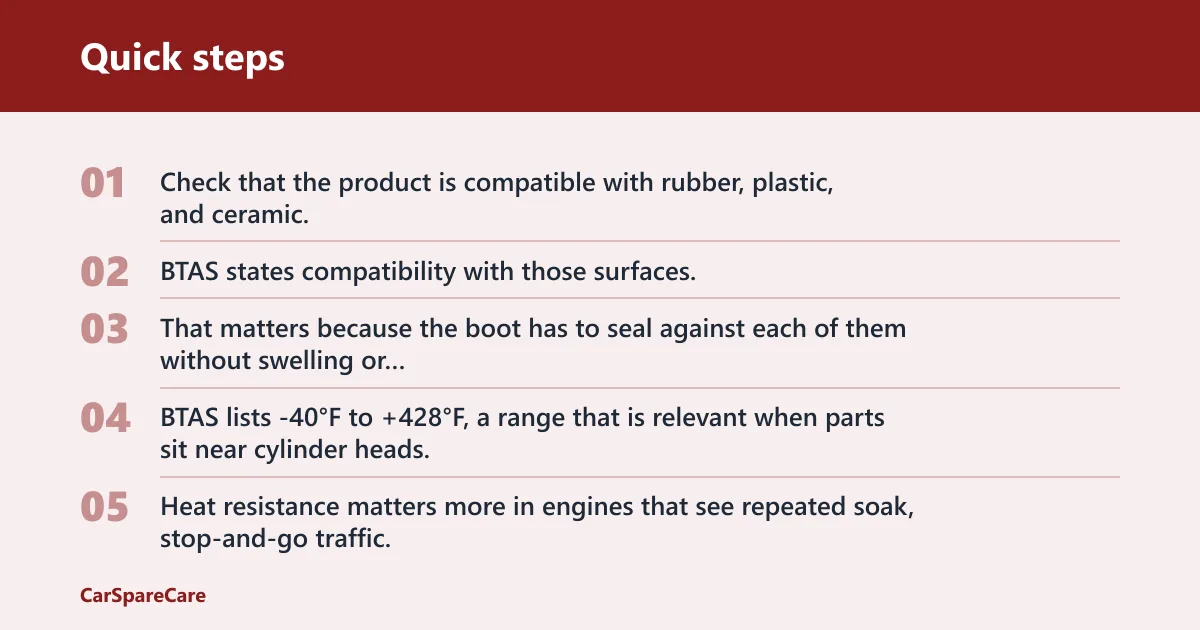
Check that the product is compatible with rubber, plastic, and ceramic. BTAS states compatibility with those surfaces. That matters because the boot has to seal against each of them without swelling or softening.
Temperature range and engine-bay heat
The same source lists -40°F to +428°F, a range that is relevant when parts sit near cylinder heads, valve covers, or hot coil packs. Heat resistance matters more in engines that see repeated soak, stop-and-go traffic, or marine humidity.
Tube size and applicator style
Permatex 22058 at 3 oz suits most DIY users. BTAS at 1 oz works for occasional service. AGS at 4 oz with a brush-top applicator makes sense if you are doing several boots, terminals, or connector points and want controlled spreading.
Picture a coil-on-plug V6 where one boot sits under a deep cover near a hot valve cover. A pea-sized dab on the boot lip helps the boot seat cleanly. If the same boot still feels loose after installation, the problem is fit, not grease.
Suppose a motorcycle distributor cap boot has dry rubber and light white corrosion on the seal area. A thin film can help with moisture control and later removal. If the boot is cracked or the cap tower is burned, the correct fix is replacement, not more grease.
When grease will not fix the problem
Grease helps only when the boot and coil or plug are otherwise serviceable. If you see cracking, hardening, carbon tracking, burn marks, or a loose tower fit, the part is already failing. In those cases, replacing the boot, coil, or wire is the correct move.
Cracked or hardened boots
Rubber that has gone stiff or split will not seal well, even with grease. That kind of damage often appears after long heat exposure and usually gets worse during removal.
Carbon tracking and arc marks
Black lines, burned paths, or tiny pits point to electrical leakage. Grease does not stop that kind of damage. Once carbon tracking starts, the ignition path may need a new boot, coil, or plug wire.
Loose terminals or weak coil towers
If the terminal does not hold firmly, adding grease can make the fit feel better without solving the connection. A weak tower or loose terminal can cause repeat misfires after installation.
Repeated misfires after installation
When a misfire returns after a careful install, stop adding grease and inspect the part. The fault may be a worn boot, a failing coil, a contaminated plug well, or a damaged terminal.
Boot grease decision table
| Situation | Apply or replace? | What to do | Common mistake | Warning sign |
|---|---|---|---|---|
| Clean boot, tight fit, dry plug well | Apply | Use a thin film on the sealing surface and inside lip | Using far too much grease | Grease squeezes out of the boot |
| Boot sticks during removal but looks intact | Apply | Use a light coat to ease future removal | Coating the metal contact heavily | Hard pull on the boot or torn rubber |
| Boot is cracked or hardened | Replace | Install a new boot or wire set | Trying to save a failed boot with grease | Visible splits, stiffness, or burn marks |
| Coil tower shows carbon tracking | Replace | Replace the damaged coil or affected part | Putting grease over the arc path | Black track marks or misfires under load |
| Moisture in a humid or marine environment, parts otherwise sound | Apply | Use a small amount on the seal area | Filling the boot cavity to “block” water | Repeated dampness, corrosion, or rough idle |
Frequently asked questions
Can you use dielectric grease on spark plug boots?
Yes. Use it on the boot’s sealing surface and inside lip, not as a heavy coating on the metal contact path. The right amount is small, usually a pea-sized amount per boot spread into a thin film. Too much grease can interfere with fit and create service problems.
Is dielectric grease necessary for spark plugs?
No, it is not necessary on every installation. Many engines will run fine without it. It becomes more useful when you want moisture control, easier future removal, or extra protection in humid, marine, or hot engine-bay conditions.
What is dielectric grease used for spark plugs?
It is used to seal and protect the boot area around spark plugs and coil towers. The grease helps keep out moisture and reduce corrosion on rubber, plastic, and ceramic surfaces. It is also common on battery terminals, bulb sockets, connectors, and other ignition parts.
How much dielectric grease should I apply to spark plug boots?
Use a small amount, usually about a pea-sized dab per boot. Spread it into a thin film on the boot’s inner lip and sealing surface. Do not pack the boot cavity. Excess grease can make the boot feel wrong on install and can complicate diagnosis later.
Will dielectric grease help prevent spark plug boot corrosion?
Yes, when applied correctly. It helps seal out moisture and can slow corrosion at exposed electrical connection points. It will not repair a corroded terminal or a damaged tower, though. If corrosion is already severe, clean or replace the affected part first.
Is dielectric grease safe on rubber spark plug boots?
Yes, if the product is rated for rubber and related connector materials. The grease should remain a thin film on the sealing surfaces. If a boot swells, softens, or no longer fits tightly after exposure, stop using that part and inspect for material damage.

Hi, I’m Melvin, an automobile engineer with extensive experience in automobile equipment. I currently work for a local automobile firm, where I specialize in the car parts industry. I’ve had the opportunity to collaborate with seasoned inspectors, gaining invaluable hands-on experience that goes beyond just theory.
My passion for automotive care started at a young age, which led me to create CarSpareCare. Through CarSpareCare, I share the knowledge and skills I’ve acquired over the years to help others navigate the world of car maintenance and repairs.
My goal is to provide practical tutorials, essential safety advice, and the latest industry insights so that anyone—whether a beginner or an expert—can confidently tackle their automotive projects.