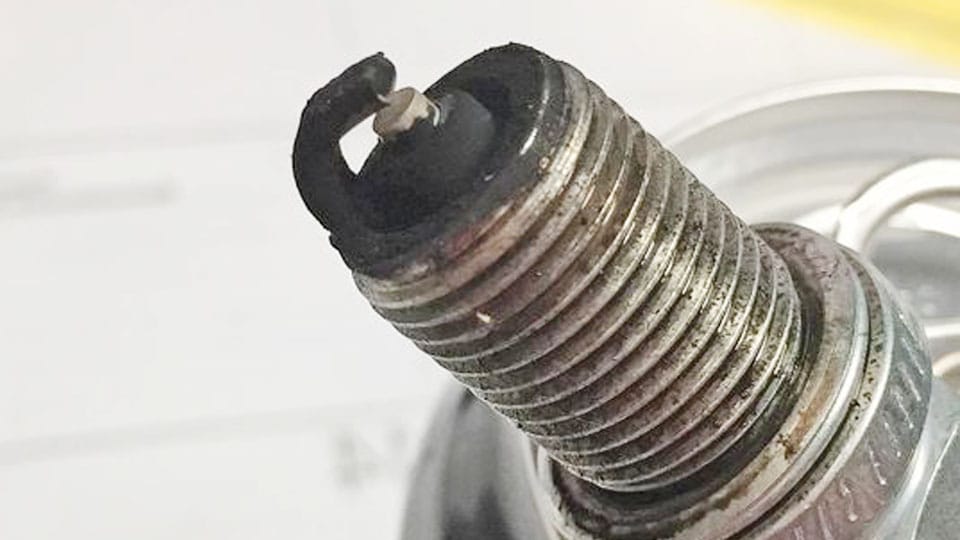
Replace spark plug boots when you see cracking, swelling, oil saturation, carbon tracking, or a boot that no longer grips the plug or coil firmly. A bad boot can keep a misfire alive, damage the catalytic converter, and push you toward replacing good coils or plugs. This guide shows how to tell boot faults from plug, wire, and coil-on-plug problems before you buy parts.
How spark plug boots work

Spark plug boots are the rubber connectors that bridge the ignition wire or coil to the spark plug. Their job is to keep voltage on the right path and prevent arcing to the engine block. When the rubber cracks, hardens, dries out, or tears, the spark can leak away before it reaches the plug.
On many engines, the boot is the weak point in the ignition path. That matters because a worn boot can mimic a bad plug or coil. White tracking lines, carbon trails, and a boot that feels brittle are all strong clues that the rubber has stopped sealing and insulating properly.
What you’ll need
- Flashlight
- Gloves
- Spark plug boot puller
- Dielectric grease
- Compressed air or a clean brush
- Basic hand tools for coil bolts or engine covers
- Replacement boot, boot-and-wire set, or coil assembly as needed
How do you check for boot failure?
Start with a cold engine, if possible. That lowers burn risk and makes the rubber less brittle, so you are less likely to tear a boot during removal. Then inspect the boot, the plug well, and the wire or coil end for cracking, hardening, tears, oil, or visible arcing marks.
-
Let the engine cool.
Check only after the metal is cool to the touch. A cold engine lowers the chance of burning the boot or tearing hardened rubber. -
Remove the cover carefully.
Lift any engine cover and note the layout. Deep spark plug wells need clean handling so dirt does not fall into the hole. -
Inspect the rubber closely.
Look for cracks, drying, swelling, tears, oil soak, white tracking lines, and carbon trails. White lines show electricity has been arcing across the boot. -
Check the grip.
Refit the boot by hand and feel for a firm seat. A boot that fits loosely on the plug or coil can sometimes leak spark under load.
Picture a 4-cylinder with a deep plug well. If the boot comes out with gray dust and white streaks on the side, the issue is often boot leakage, not the spark plug gap itself.
Boot diagnosis table
| Symptom | Likely cause | Quick test | Replacement decision |
|---|---|---|---|
| Rough idle or hesitation | Cracked or damaged boot | Inspect the boot for splits and a loose fit | Replace the boot if the plug and coil test normal |
| Misfire under load | Boot arcing at higher voltage demand | Look for white tracking lines or carbon trails | Replace the boot first; inspect coil and plug next if it returns |
| Constant clicking from one area | Electricity arcing to the engine block | Listen at idle near the suspected cylinder | Replace the damaged boot and clean the well |
| Boot sticks to plug or tears on removal | Heat aging and hardened rubber | Flex the boot; brittle rubber cracks easily | Replace the boot, and consider the set if others feel the same |
| Oil inside the plug well | Valve cover seal leak plus boot contamination | Wipe the well and recheck after a short drive | Fix the leak and replace any swollen or softened boot |
Can spark plug boots cause a misfire?
Yes. A damaged boot can leak spark, which may cause a misfire, rough idle, poor acceleration, and a check engine light. The key is to confirm the boot is the fault before replacing parts. A bad plug, weak coil, or old wire set can create the same symptom pattern.
Suppose the engine misfires only under hard throttle and the boot shows white tracking lines. That points toward insulation failure. If the misfire stays on the same cylinder after a fresh plug, the next suspect is often the coil or wire path, not the plug itself.
If that didn’t work, try this next
-
Swap the plug.
Replace the plug with a known-good unit in the same cylinder or move it to a different cylinder if the design allows it. If the misfire follows the plug, the boot is not the only problem. -
Inspect the coil or wire.
On coil-on-plug systems, check the coil body and the boot interface. On wire systems, look for hardened insulation and cracked terminals. -
Check the plug well.
Clean out debris and oil before reinstalling parts. A dirty well can hold moisture and make a good boot arc.
How do you replace a spark plug boot?
Remove the boot without pulling on the wire itself, then inspect the plug well and the end of the coil or wire. On many traditional systems, the boot can be replaced alone. On some coil-on-plug designs, the boot may be integrated with the coil assembly and come off as one piece.
-
Disconnect the ignition path.
Unplug the coil connector or trace the wire to the boot. Use a spark plug boot puller when access is tight or the boot is stuck. -
Pull from the boot only.
Never pull on the wire itself. That can separate the conductor or damage the terminal end. -
Clean the well.
Blow out dust or wipe away oil before the new boot goes in. Keep debris from falling into the spark plug well. -
Install the new boot.
Apply a pea-sized amount of dielectric grease inside the boot opening, then push it straight on until it seats firmly.
Dielectric grease is non-conductive. Use it only inside the boot opening and only in a small amount. It helps seal out moisture and makes later removal easier, but it does not fix a worn terminal or a cracked boot.
Should you replace boots, wires, or coils?
Choose the smallest part that solves the fault. Replace just the boot when the boot is damaged but the wire or coil tests sound. Replace the boot and wire on an old spark plug wire set when the insulation is brittle or the ends are aged. Replace the whole coil-on-plug assembly when the boot is built into the coil or the coil itself tests weak.
-
Use the layout as the clue.
Traditional wire systems often may let you replace a boot alone. COP systems may require removing a retaining bolt before lift-out, and the boot may come attached to the coil. -
Judge the age of the set.
If several boots feel hard or show matching cracks, replace the set instead of one boot at a time. -
Match the fault to the part.
A single damaged boot with a healthy plug and coil usually calls for a boot-only fix. A repeated misfire after that points to the next component in the chain.
For traditional wire systems, old wires often justify replacing the whole set because one weak boot usually means the others are close behind. For COP systems, a boot may be serviceable separately only if the design allows it.
COP vs wire-system decision tree
- If the boot is separate and the wire tests good: replace the boot only.
- If the boot is separate but the wire is brittle, cracked, or aged: replace the boot and wire, or the full wire set.
- If the boot is integrated with the coil-on-plug unit: replace the boot and coil assembly together if the boot is not sold separately.
- If the misfire stays on the same cylinder after boot replacement: test the plug and coil next before buying more parts.
Common mistakes
People often replace the spark plug first and skip the boot. That can leave the real leak point untouched. Another mistake is overusing dielectric grease; too much can make the boot feel sloppy and may attract dirt in a deep well.
Do not ignore white tracking lines. They are visible evidence of arcing, not cosmetic wear. Do not leave debris in the spark plug well, either. Grit in the hole can cause a poor seal or contaminate the new boot.
One common first-timer mistake is yanking the wire from the top because the boot feels stuck. A boot puller is the safer choice when space is tight or the rubber has bonded to the plug.
Frequently asked questions
How do I know if my spark plug boots need replacing?
Replace them if the rubber is cracked, hardened, dry, torn, swollen, oil-soaked, or loose on the plug or coil. White tracking lines and carbon trails are strong signs of arcing. If the same cylinder misfires again after a new plug, inspect the boot before buying another part.
What are the symptoms of a bad spark plug boot?
The usual signs are rough idle, hesitation, poor acceleration, and a misfire that may worsen under load. A constant clicking sound can point to arcing from the boot to the engine block. A check engine light may come on if the misfire is severe enough.
Should I replace boots or the whole plug wire set?
Replace the whole wire set when the wires are old, brittle, or cracked in more than one place. On a tired set, a single bad boot often means the rest are close behind. If only one boot is damaged and the rest are sound, a single-part replacement is reasonable.
Do I need dielectric grease on spark plug boots?
Use a small amount inside the boot opening only. Dielectric grease is non-conductive, so it helps seal out moisture and reduce sticking, but it does not carry current. Do not coat the spark plug tip or pack the boot full of grease.

Hi, I’m Melvin, an automobile engineer with extensive experience in automobile equipment. I currently work for a local automobile firm, where I specialize in the car parts industry. I’ve had the opportunity to collaborate with seasoned inspectors, gaining invaluable hands-on experience that goes beyond just theory.
My passion for automotive care started at a young age, which led me to create CarSpareCare. Through CarSpareCare, I share the knowledge and skills I’ve acquired over the years to help others navigate the world of car maintenance and repairs.
My goal is to provide practical tutorials, essential safety advice, and the latest industry insights so that anyone—whether a beginner or an expert—can confidently tackle their automotive projects.