

For a garage-kept car, wash about every 2 to 4 weeks, dust it only after the surface is already clean or lightly damp, and keep a layer of wax, sealant, or coating on the paint. Leave care too long, and garage dust, humidity, and wash residue can leave haze, bonded grime, and fine marring. This guide covers a low-effort routine for storage, dust control, safe washing, and light protection.
How garage storage changes paint care
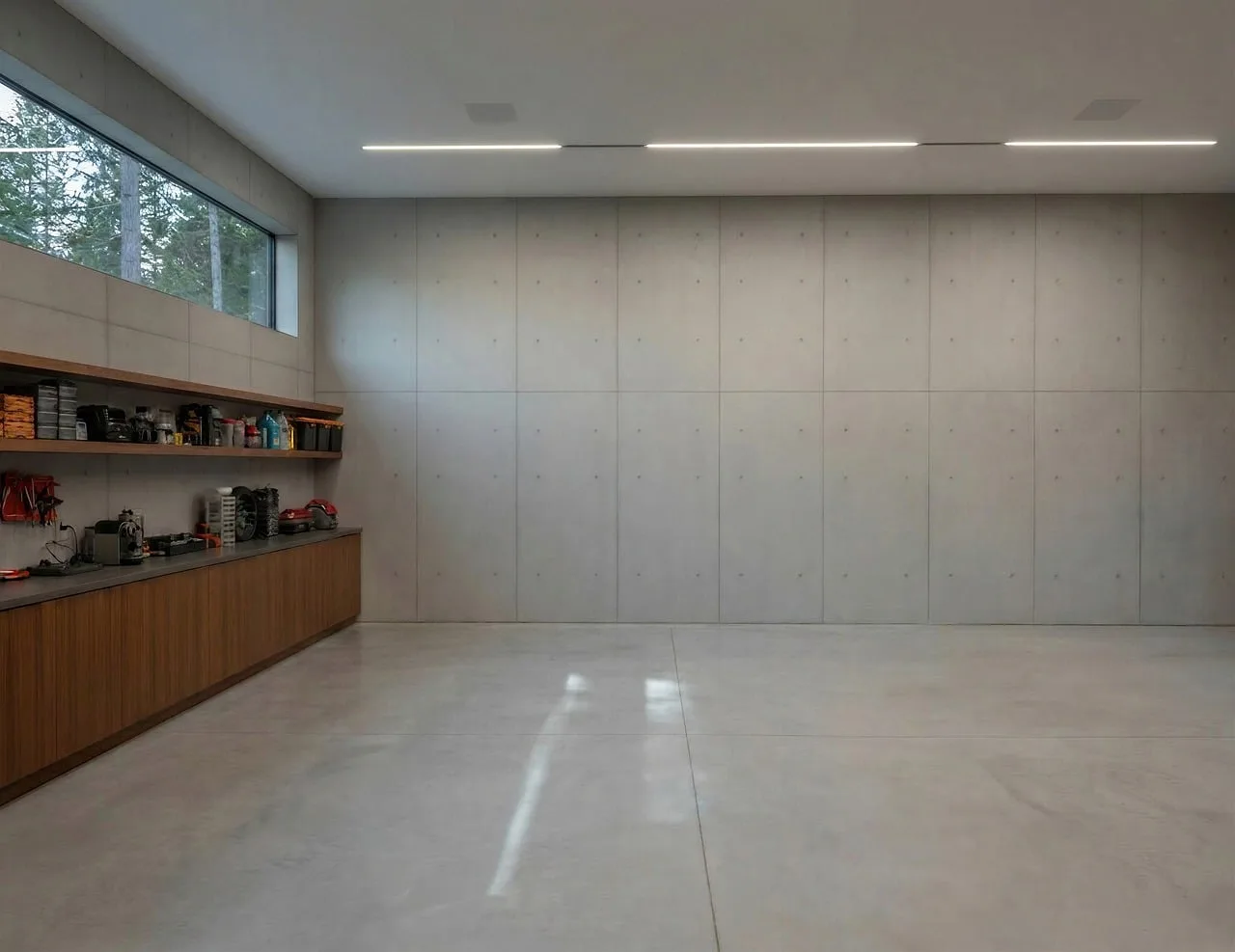


Garage parking lowers UV exposure, but it does not remove dust, humidity, condensation, fluid drips, or accidental contact from stored items. Your routine can be lighter than for an outdoor car, yet it still needs regular washing, gentle drying, and quick inspection for new marks or chips.
Dust is the main difference indoors. It settles on horizontal panels, then turns abrasive the moment you drag a dry towel across it. If the garage is damp, condensation can leave water spots or feed mildew on covers and trim, and battery acid or brake fluid drips can etch paint fast.
Why dust still matters indoors
Garage dust often includes grit from concrete, road debris carried in on tires, pollen, and fibers from storage items. That matters because dry wiping can pull those particles across the clear coat and leave fine swirl marks. Consumer guidance from car-care manufacturers consistently warns against dry dusting for that reason.
What garage parking reduces and what it does not
Indoor parking reduces sun fade, bird droppings, tree sap, and rain exposure. It does not protect against fingerprints, shopping bags brushing the door, shelf contact, or a cover rubbing the same edge every week. Treat the garage as a shield against weather, not a substitute for paint care.
How often to inspect paint on a stored car
Check the paint about every 2 weeks on a daily driver and before each drive on a weekend car that sits more often. For seasonal storage, inspect about monthly. Look for fresh dust buildup, water marks, chips, sticky residue, and any edge wear where a cover, tool, or storage bin may touch the body.
Garage-kept paint care matrix
This matrix turns garage storage into a simple routine. The less the car moves, the less aggressive the washing needs to be, but the more important inspection becomes. For low-mileage cars, the main goal is to stop dust from becoming abrasion and to catch damage before it spreads.
| Owner type | Wash frequency | Protection choice | Inspection frequency | Best protection if low effort | Warning sign to act now | Main failure risk |
|---|---|---|---|---|---|---|
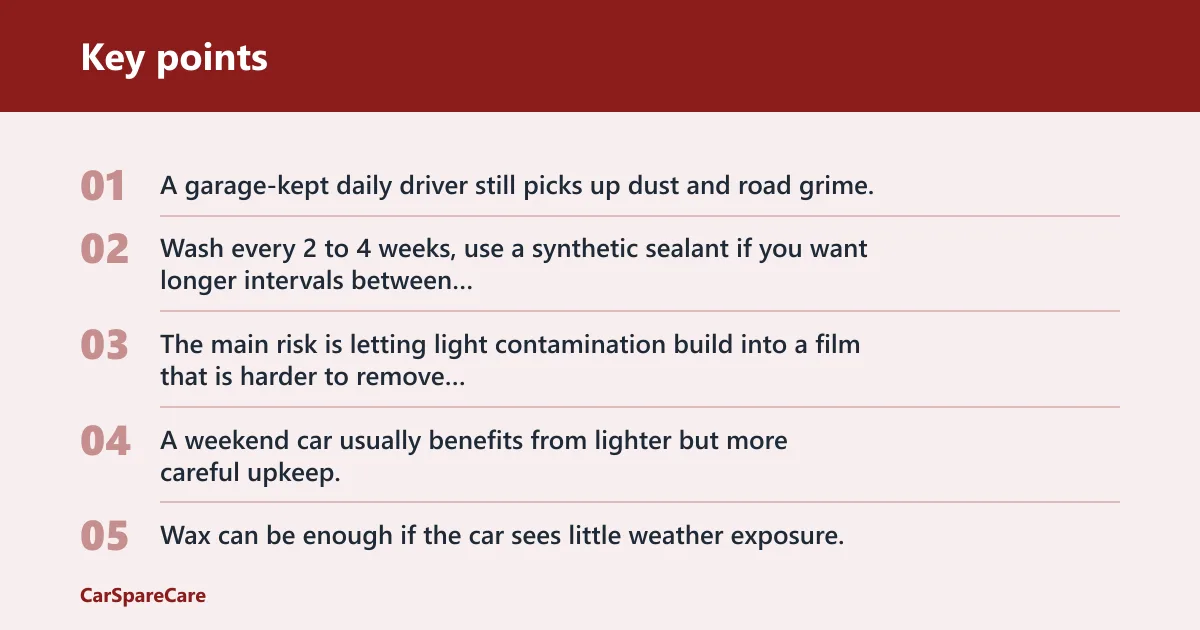
| Daily driver | Every 2 to 4 weeks | Paint sealant, or ceramic coating if already installed | Every 2 weeks | Paint sealant | Dust film feels gritty or the water no longer beads well | Dust abrasion from frequent handling and road film |
| Weekend car | Every 3 to 6 weeks, plus after wet or dusty drives | Wax for simple upkeep, or sealant for longer intervals | Before each drive and monthly | Sealant | Bonded dust, dull patches, or fresh scuffs near touch points | Bonded dust, water spots, and contact scuffs from storage |
| Seasonal storage | Before storage and at wake-up, then as needed during storage | Sealant or ceramic coating for the storage period; breathable cover if indoor parking is not possible | Monthly | Breathable cover plus sealant | Moisture marks, cover rub, or a chip that has started to discolor | Condensation marks, cover rub, and missed chips that can corrode |
Daily driver: wash frequency, protection, and risk
A garage-kept daily driver still picks up dust and road grime. Wash every 2 to 4 weeks, use a synthetic sealant if you want longer intervals between reapplications, and dry with microfiber towels to reduce wash-induced marring. The main risk is letting light contamination build into a film that is harder to remove cleanly.
Weekend car: low-mileage routine and protection choice
A weekend car usually benefits from lighter but more careful upkeep. Wax can be enough if the car sees little weather exposure, while sealant is better if you want longer intervals between applications. The main risk is dust sitting on the paint long enough to stick and mark the surface during the next wipe.
Seasonal storage: inspection timing and main failure risk
For a car that sits for months, inspection matters more than frequent washing. Check monthly, keep the garage dry, and make sure the cover or nearby items are not touching painted edges. The main risk is hidden damage: a chip, drip, or humidity spot that goes unnoticed until it spreads.
What is the safest wash routine?
The safest routine for a garage-kept car is a gentle hand wash, not a dry wipe. Start by loosening dust with water or a rinse, then wash with car shampoo and microfiber wash tools, and dry with clean microfiber towels. A brush-based automatic wash can leave small scratches, so it is a poor fit for a car you are trying to keep clean.
Wash cadence for garage-kept cars
If the car only sits indoors and sees mild dust, a 2- to 4-week cadence is usually enough. If it moves often, or if the garage is dusty, shorten that interval. After rain, road salt, or a long drive, clean sooner rather than letting residue harden on the paint.
Microfiber towels and two-bucket washing
Use soft microfiber towels for washing and drying. They are less likely to scratch than rough cloth or paper products. A two-bucket method helps keep grit out of the wash mitt: one bucket for soap, one for rinse water. That small step matters more indoors, where dust is often fine enough to miss at first glance.
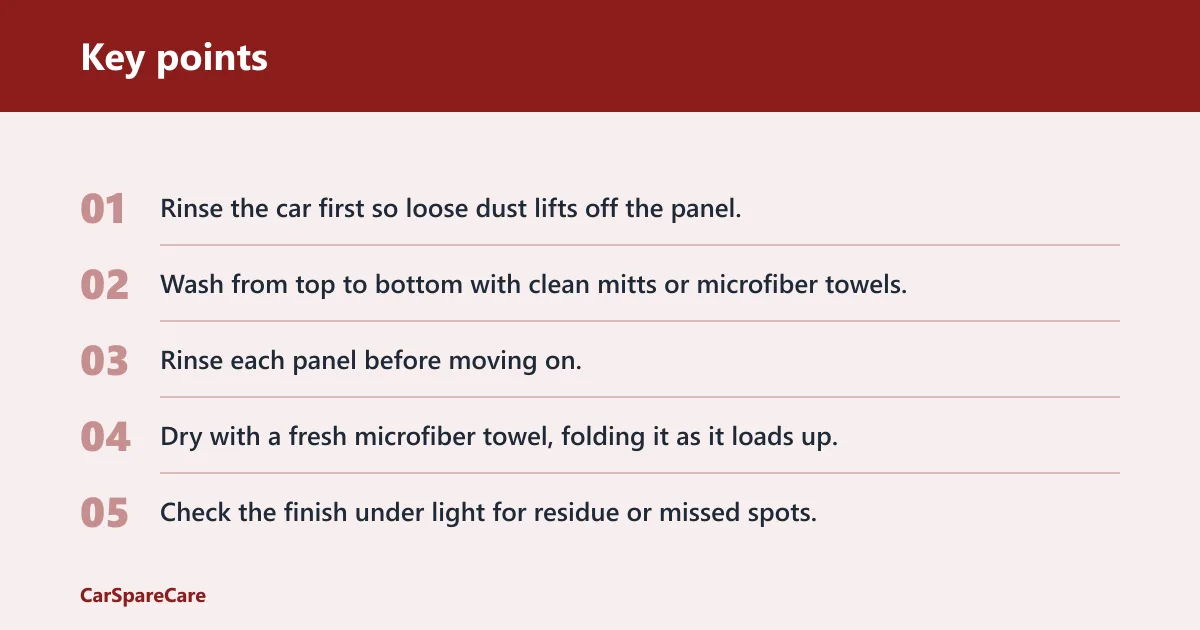
- Rinse the car first so loose dust lifts off the panel.
- Wash from top to bottom with clean mitts or microfiber towels.
- Rinse each panel before moving on.
- Dry with a fresh microfiber towel, folding it as it loads up.
- Check the finish under light for residue or missed spots.
Drying without adding swirl marks
Drying is where many garage-kept cars pick up marks. Do not drag a towel across dusty paint. If the panel still has grit, rinse it again first. Use blotting or straight-line passes with a plush microfiber towel, and change towels once they feel damp or dirty.
Suppose a silver sedan sits in a concrete garage for three weeks. The roof looks only dusty, but the dust includes fine grit from the floor. If you wipe it dry without rinsing first, those particles can leave tiny arcs that show up under LED light.
Which protection works best for your car?
For a garage-kept car, the best protection depends on how often it moves and how much effort you want to spend. Wax is the simplest short-term choice. Sealant lasts longer. Ceramic coating can improve chemical resistance and make cleaning easier, but it does not make paint scratch-proof and it still needs proper washing. PPF is for impact zones, not the whole car in most cases.
Wax for short-term upkeep
Wax gives a quick boost in gloss and a modest protective layer. A common reapplication cadence is about every three months, depending on weather exposure and wash frequency. Use wax when you want easy upkeep and do not mind reapplying often.
Paint sealant for longer intervals
Paint sealant is a synthetic protection layer commonly described as lasting about six months, though real-world durability depends on washing, climate, and storage conditions. It also creates a slick, water-repelling surface and typically outlasts wax. For a garage-kept car that is washed a few times a month, sealant often fits better than wax because it needs less maintenance.
Ceramic coating for long-lasting protection
Ceramic coating is a liquid polymer that bonds to paint. It can improve chemical resistance, increase hydrophobic behavior, and make routine washing easier by helping water and grime release more readily. It is not scratch-proof, and it works best when the paint is already corrected or carefully prepped first.
Should you use ceramic coating on a garage-kept car? Usually only if you want long service life and easier washing, or if the car still sees regular driving. If the vehicle sits most of the time and you are comfortable reapplying sealant or wax, ceramic coating may be more protection than you need.
Paint protection film for impact zones
Paint protection film is a clear protective layer for high-impact zones such as bumpers, hoods, and side mirrors. It is aimed at those areas because they take the most abuse from road debris and minor abrasion. On a garage-kept car, PPF is useful when the front end still sees highway use.
How do you stop dust scratches indoors?
Stop dust scratches by changing the habit, not by wiping harder. Keep the paint as clean as possible, avoid dry wiping, and remove contamination with a rinse or wash before you touch the surface. If the garage is dusty, a breathable cover or more frequent light washing is safer than rubbing the paint dry.
Safe dust removal habits
If the car has a light film of dust, a dry towel is the wrong tool. Use a rinse, a proper wash, or a damp microfiber towel only after the surface has been cleaned enough to remove loose grit. The goal is to lift debris, not grind it into the clear coat.
When a vehicle cover helps
A breathable vehicle cover helps when indoor parking is not possible or when you need extra dust control for long-term storage. It should fit well and allow airflow, because a non-breathable cover can trap moisture. A luxury car cover should be breathable to help prevent mold and mildew, especially in a damp garage.
Garage habits that keep grime off the paint
Keep shelves away from the doors and fenders, store dirty tools away from the car, and avoid hanging items where they can swing against the paint. Sweep the garage floor before a wash if dust is heavy. If you park under trees outside before entering the garage, remember that sap and bird droppings can stick to the finish before you even close the door.
A common first-timer mistake is parking a freshly washed black coupe beside cardboard boxes and an old battery charger. One bump from a box corner can mark the door, and one slow leak from a battery can etch the paint if nobody notices it for days.
What should you check while the car sits?
While the car sits, look for moisture, residue, and anything touching the paint. Condensation and humidity can leave spots or feed mildew on a cover. Battery drips and other fluid leaks can stain paint fast. Chips need attention early, because exposed metal can start corrosion.
Condensation and humidity checks
If the garage feels damp, inspect the hood, roof, and trunk lid for spotting or a faint haze. Open the garage if possible and improve airflow. A dry car stored in a damp space can still pick up moisture on cool panels, especially overnight.
Battery drips and fluid leaks
Look under the battery area and around service points for signs of seepage. Even a small drip can mark paint or trim. Clean any spill promptly with a safe cleaner and rinse it away, then inspect the area again after it dries.
Chips that need touch-up paint
Keep a touch-up paint kit on hand for small chips and scratches. It helps fix minor defects and can prevent corrosion from exposed metal. Touch-up work is not a full repair, but on a garage-kept car it is one of the easiest ways to stop a small chip from becoming a bigger issue.
Should you use a cover or film?
Use a breathable cover when the car cannot stay under cover indoors or when long-term storage needs extra dust control. Use paint protection film where the paint takes repeated hits. The choice comes down to storage conditions and exposure, not to the car’s value alone.
When a breathable vehicle cover makes sense
A breathable cover makes sense for a car that sits for weeks in a garage with dust, foot traffic, or seasonal storage. It helps block dust and minor contact, but it should not be treated like a replacement for washing. Put the cover on a clean car only, or it can trap grit against the finish.
Where paint protection film pays off
PPF pays off on high-impact areas such as the hood, front bumper edges, and side mirrors. Those zones get hit by debris and small abrasions more than the rest of the body. If you drive the car often, film on those panels can save time later.
How to choose based on use case
If the car is a daily driver, favor sealant or ceramic coating plus frequent washing. If it is a weekend car, wax or sealant may be enough. If it is seasonal storage, focus on inspection, a clean cover if needed, and touch-up paint for chips. Use PPF where the car still takes road abuse.
Quick checklist for garage-kept paint care
Use this checklist to keep the routine simple. It covers the habits that matter most for garage storage: clean before touching the surface, keep dust under control, and inspect the areas that are most likely to trap moisture or get rubbed by stored items.
- Wash on a 2- to 4-week cadence, or sooner if the car is driven in wet or dusty conditions.
- Rinse before wiping any dusty panel.
- Use microfiber wash tools and drying towels only.
- Sweep the garage floor if dust is visible or gritty.
- Check the paint for moisture, chips, residue, and edge wear.
- Keep shelves, tools, and bins away from doors and fenders.
- Use a breathable cover only on a clean car when extra dust control is needed.
How should you handle the separate topics?
If you mean how to paint a vehicle at home, that is a bodywork and refinishing project, not routine paint care. If you mean how to store paint in a garage, that is a materials-storage question about cans, lids, temperature, and safety. For factory paint on a car, the main task is cleaning, protection, and inspection.
Frequently asked questions
How to keep car paint looking new
Keep the surface clean, do not dry-wipe dusty panels, and inspect the paint often enough to catch chips and residue early. A garage helps, but it does not stop dust or humidity. A simple wash-and-dry routine usually matters more than any single product.
How often should I wax a garage-kept car?
Waxing about every three months is a common cadence for protection. If the car sits in a clean garage and gets little use, that interval may be enough. If you wash often or notice the surface losing slickness sooner, move to sealant or reapply wax on schedule.
Do garage-kept cars still need paint sealant?
Yes, many do, especially if you want longer intervals between applications. Paint sealant is commonly described as lasting about six months and giving better water-beading than wax. It is a practical choice for garage-kept cars that still get regular washing.
What is the best wash routine for a car parked in a garage?
Rinse first, wash by hand with car shampoo and microfiber tools, then dry with clean microfiber towels. Avoid brush-based automatic washes, which can leave small scratches. If the paint is dusty, do not wipe it dry until loose grit has been removed.
How do I prevent dust scratches on a garage-kept vehicle?
Do not dry dust the paint. Rinse or wash away loose grit first, then dry with a clean microfiber towel. If dust builds up quickly, clean the garage floor, reduce stored-item contact near the car, and use a breathable cover only when needed.

Hi, I’m Melvin, an automobile engineer with extensive experience in automobile equipment. I currently work for a local automobile firm, where I specialize in the car parts industry. I’ve had the opportunity to collaborate with seasoned inspectors, gaining invaluable hands-on experience that goes beyond just theory.
My passion for automotive care started at a young age, which led me to create CarSpareCare. Through CarSpareCare, I share the knowledge and skills I’ve acquired over the years to help others navigate the world of car maintenance and repairs.
My goal is to provide practical tutorials, essential safety advice, and the latest industry insights so that anyone—whether a beginner or an expert—can confidently tackle their automotive projects.

