
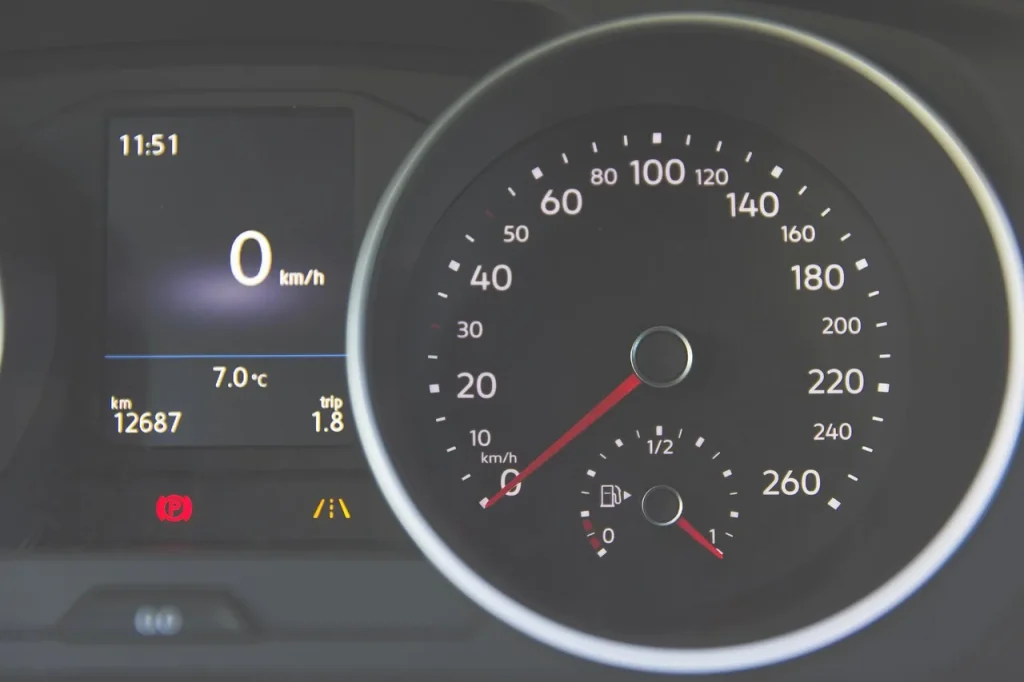
A brake warning light usually means the parking brake is on, brake fluid is low, brake pads are worn, or a hydraulic or ABS fault needs attention; if the pedal feels soft, the light stays red, or braking feels reduced, stop driving. Ignoring it can lead to longer stopping distances or complete brake loss. This guide helps you narrow the cause by symptom and decide when to pull over or get a tow.
Brake warning light matrix


The meaning depends on color, flash pattern, and the vehicle’s own symbol logic. A red warning is usually more urgent than an amber or yellow one, but the exact message can vary by make and model, so check the owner’s manual for your car.
| Warning behavior | Likely cause | Immediate check | Drive/not drive guidance |
|---|---|---|---|
| Solid red | Parking brake engaged, low brake fluid, or a serious hydraulic fault | Check whether the parking brake is fully released. Then check fluid level at the reservoir. | Do not drive if the pedal feels soft, the fluid is low, or the light stays on after release. |
| Flashing red | Urgent system fault or warning logic that needs immediate attention | Stop in a safe place and check the owner’s manual for the exact symbol meaning. | Do not drive until the cause is identified. |
| Amber or yellow | Often a warning that is less urgent than red, including pad wear on some vehicles | Check the dash symbol and fluid level. Look for a brake pad warning message if fitted. | Drive only if pedal feel is normal and there is no fluid loss, then inspect soon. |
| Brake + ABS | Brake system fault with ABS involvement | Check for fluid loss, pedal changes, or other warnings. ABS may be disabled. | Do not drive if braking feels abnormal or if the brake light stays red. If the pedal feels normal, drive only with caution to a repair shop. |
What does a brake warning light mean?
A brake warning light points to a fault or condition that can affect stopping distance, but the exact meaning depends on the symbol, color, and whether it flashes. Some vehicles use a red circle, others use text, and some add a separate parking-brake or brake-pad indicator.
Why the same symbol can mean different faults
One dashboard light can cover several systems. A light that stays on all the time could mean the parking brake was not released, while low master-cylinder fluid can also trigger the brake warning light. A pressure differential switch can trip if one brake circuit loses fluid.
The brake system is usually split so one circuit still works if the other fails. That means the car may still stop, but with less reserve, a lower pedal, or uneven braking. The dash light warns you before the problem gets worse.
Why the owner’s manual matters
Do not assume every brake symbol means the same thing across all vehicles. Some vehicles use a separate parking-brake warning light with a P in the circle, while others combine messages or add text. The owner’s manual is the only place that confirms your vehicle’s warning logic.
Suppose the dashboard shows a red circle with an exclamation mark after you release the lever. On one model, that may still point to the parking-brake switch; on another, it may mean fluid loss. The dash alone cannot tell you which one without the manual’s symbol guide.
Is the parking brake still on?
If the light is on all the time, start with the parking brake. A lever or pedal that is partly applied can keep the light on, and a misadjusted parking-brake switch can also leave the warning on after release.
Lever and pedal parking brake checks
Look for a fully lowered hand lever or a pedal that has returned all the way. On some cars, a pedal-style parking brake can feel released but still hold the switch in the warning position if it is not seated correctly. That is common enough to check first.
- Release the parking brake fully.
- Move the lever or pedal again to confirm full return.
- Restart the vehicle if needed and see whether the light clears.
- If the light stays on, do not assume the brake system is fine.
Misadjusted parking-brake switch
A misadjusted parking-brake switch can keep the light on after release. That fault is annoying, but you should still confirm the brake fluid level and pedal feel. A stuck switch can hide a real brake problem if you dismiss the warning too quickly.
Electronic parking brake messages
Electronic parking brakes can display a warning message instead of the classic lever symbol. The same rule still applies: confirm that the system released fully, then check whether the warning is a parking-brake reminder or a broader brake system fault. The manual matters here as well.
Why is the brake fluid low?
Low brake fluid is a common cause of a brake warning light, especially if the reservoir is below its normal range. Low master-cylinder fluid can trigger the warning, but topping up is only a temporary step if a leak exists. You still need the cause.
Reservoir and master cylinder level checks
Check the fluid reservoir only after the vehicle is parked on level ground and the engine bay is cool enough to inspect safely. Do not open the reservoir unless you need to, and keep dirt and moisture out of the fluid. Compare the level to the reservoir’s MIN and MAX marks; if it is at or below MIN, the warning may be accurate. If the level is above MIN but below MAX, the system may still be acceptable on some vehicles, but a sudden drop still needs attention. Do not assume normal pad wear alone explains a large drop.
The master cylinder and reservoir are part of the same warning path on many vehicles. A low level can happen as pads wear, but a sudden drop points more strongly to a leak or hydraulic fault.
What a leak can mean
Brake-fluid leaks may occur in hoses, lines, calipers, wheel cylinders, or the master cylinder. Any of those can reduce fluid in the reservoir and can trigger the brake warning light. That is a serious safety risk because fluid loss can reduce braking force quickly.
Fluid on a tire, wheel, or inside of a wheel can point toward a caliper, wheel cylinder, or line issue. Dampness near the master cylinder or booster area can point more toward the master cylinder itself. Either way, the leak source needs repair before the car is driven normally again.
Picture a sedan that shows a red brake light and the reservoir is half a mark below the minimum line. If the pedal also sinks farther than usual, that is not a pad-wear-only problem. Stop driving and arrange a tow or repair immediately.
Why topping up is only a temporary step
Adding fluid may restore the level long enough to move the car, but it does not fix the cause. If a leak is present, the reservoir can drop again. That is why topping up is only a temporary step, not the repair.
Use the correct brake fluid specified by the vehicle maker. If you are not sure which fluid type the car requires, do not guess. The wrong fluid can damage seals and create a new problem.
Brake fluid leak warning signs
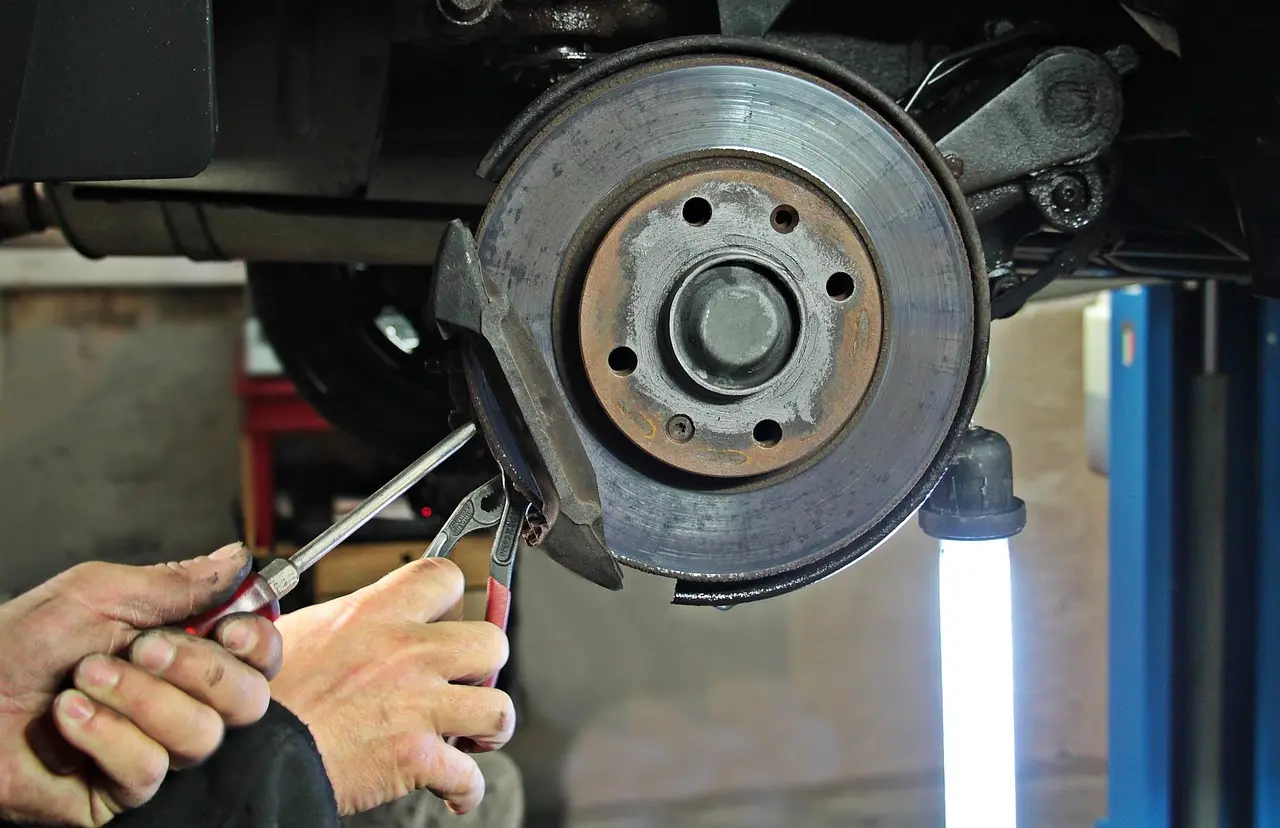
A leak often changes more than the reservoir level. Look for a soft pedal, a longer pedal travel, uneven stopping, or fluid at a wheel or under the car. Those signs point toward a hydraulic issue, not a parking-brake reminder.
Likely leak points
Common leak sources include the hose, line, caliper, wheel cylinder, and master cylinder. A line or hose failure may leave visible fluid under the car. A caliper or wheel cylinder leak may show up near one wheel and can also cause dragging or uneven braking.
| Common symptom | Likely fault area | Urgency |
|---|---|---|
| Low pedal | Hydraulic leak, air in the brake system, or master-cylinder issue | Do not drive if the pedal is soft or sinks |
| Fluid loss | Hose, line, caliper, wheel cylinder, or master cylinder | Do not drive |
| Pulling | One wheel braking unevenly, possibly from a leaking or sticking caliper | Inspect soon; stop if braking feels unstable |
| Pedal feels normal | Parking brake switch, pad wear, or a less urgent warning logic issue | Drive carefully only after confirming the fluid level and symbol |
| Brake + ABS | Brake system fault with ABS involvement | Do not drive if the brake light is red or braking feels abnormal |
Pedal feel and vehicle pull clues
A soft pedal often points toward a hydraulic problem until proven otherwise. If the pedal travels noticeably farther than normal before the brakes engage, or feels spongy or sinks while held down, that is abnormal. If the car pulls to one side when braking, the fault may be affecting one front or rear wheel more than the other. That can happen with a leak, a sticking caliper, or contamination at one corner.
Suppose the light comes on after a hard stop and the car pulls right when braking from 30 mph. That combination is more consistent with a wheel-end hydraulic problem than with a simple parking-brake reminder. Stop driving and inspect the system before moving again.
When to stop driving
Stop driving immediately if the pedal is soft, the light is red and stays on, or you can see brake fluid loss. Do not try to see if it settles after a red hydraulic warning. Loss of pressure can worsen very fast. If the brake warning light appears together with clear loss of braking, do not drive even if the fluid level looks normal.
The pressure differential switch is there to detect that one brake circuit has lost fluid. That warning means the system has already changed, not that it is about to fail sometime later. Treat it as urgent.
What does a brake pad warning light mean?
On many vehicles, a brake pad warning light is separate from the main brake system warning. It usually means the pads are worn and need replacement soon, not that the hydraulic system has failed. Some vehicles use a separate pad-wear indicator rather than the main brake light.
How a brake pad wear sensor works
Some vehicles use electronic wear sensors embedded into the brake pad lining. When the pad gets thin enough, the sensor circuit changes and the dash warning comes on. That is why the light can appear before you hear metal-to-metal braking noise.
Some vehicles may use a yellow or orange brake pad warning to mean plan to replace soon, while a red brake pad warning means stop driving and replace immediately. That color split is useful, but do not assume every brand uses the same timing or colors.
How to tell pad wear from a brake system fault
A pad warning is usually about wear, not fluid loss. Pedal feel often stays normal. A brake system warning, by contrast, is more likely to involve fluid level, a leak, or pressure loss. Do not mix the two just because both mention brakes.
Some drivers confuse a pad wear light with a brake system light on non-BMW vehicles because the symbols look similar. The safest check is to read the message text, if present, and confirm whether the warning is for pads, fluid, or the whole system.
Replacement and reset notes
Pad wear sensors often need replacement with the pads, and some vehicles require a reset after service. If the warning remains after new pads are installed, the sensor or reset procedure may be the issue. The repair order should match the vehicle’s system, not guesswork.
Can you drive with the brake light on?
Sometimes, but only if the warning points to a minor condition such as a parking-brake reminder or a pad-wear warning and the pedal feels normal. If the light is red, flashing, paired with ABS, or the pedal feels soft, do not drive. Brake safety comes first.
Drive carefully cases
If the light is amber or yellow, the brake pedal feels normal, and the fluid level is correct, you may be able to drive carefully to a repair shop. Keep speeds low, avoid hard braking, and do not leave the problem for long. Inspect it as soon as possible.
That also applies if the warning turns out to be a parking-brake switch issue after you confirm the brake is fully released. You still need to verify the light is not hiding a second fault.
Do not drive cases
Do not drive if the brake light is red and stays on, the pedal is soft or sinking, fluid is visibly low, or the car pulls noticeably under braking. Do not drive if the brake and ABS warnings appear together and braking feels different. Those are stop-now signs.
What to do before moving the car again
Check the parking brake first, then the fluid reservoir, then the pedal feel. If any of those checks points to a hydraulic problem, arrange a tow or repair instead of driving. If the warning is unclear, follow the owner’s manual before taking the car farther.
- Release the parking brake fully.
- Check the brake fluid level.
- Look for fluid under the car or at a wheel.
- Confirm whether the ABS light is also on.
- Stop driving if the pedal feels soft or the light remains red.
Frequently asked questions
What does a red brake warning light mean?
A red brake warning light is usually the more urgent brake alert. It can mean the parking brake is still on, the fluid level is low, or the hydraulic system has lost pressure. If the light stays red after release, or the pedal feels soft, stop driving.
What does a yellow brake warning light mean?
A yellow or amber brake warning often means a less urgent issue than red, but it still needs attention. On some vehicles it points to pad wear or a message-related warning. If the pedal feels normal and fluid is correct, drive carefully and inspect soon.
What does a flashing brake warning light mean?
A flashing brake warning light can signal a more urgent fault than a steady amber warning, but flash behavior varies by model. Because the meaning varies by model, check the owner’s manual right away. If the light flashes red, or if brake feel changes, stop driving and get the car checked.
Can I keep driving if the brake warning light is on?
Only in limited cases. If the warning points to the parking brake or pad wear and the pedal feels normal, you may drive carefully to service. If the light is red, the pedal is soft, the fluid is low, or ABS is also on, do not keep driving.

Hi, I’m Melvin, an automobile engineer with extensive experience in automobile equipment. I currently work for a local automobile firm, where I specialize in the car parts industry. I’ve had the opportunity to collaborate with seasoned inspectors, gaining invaluable hands-on experience that goes beyond just theory.
My passion for automotive care started at a young age, which led me to create CarSpareCare. Through CarSpareCare, I share the knowledge and skills I’ve acquired over the years to help others navigate the world of car maintenance and repairs.
My goal is to provide practical tutorials, essential safety advice, and the latest industry insights so that anyone—whether a beginner or an expert—can confidently tackle their automotive projects.

