

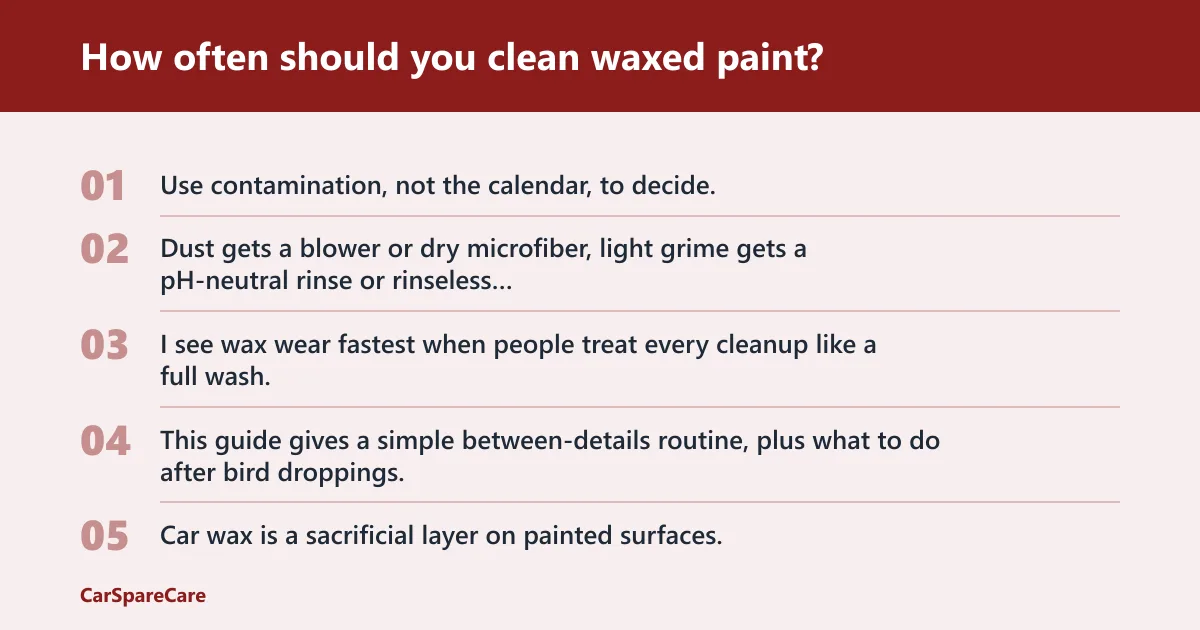
Use contamination, not the calendar, to decide. Dust gets a blower or dry microfiber, light grime gets a pH-neutral rinse or rinseless wash, and anything gritty or sticky gets a full two-bucket wash. I see wax wear fastest when people treat every cleanup like a full wash, because that strips protection and adds swirl marks. This guide gives a simple between-details routine, plus what to do after bird droppings, bugs, road film, rain spots, and light dust.
This guide is part of our Automotive paint care guide series.
How often should you clean waxed paint?
What a wax layer actually does between details
Car wax is a sacrificial layer on painted surfaces. It takes UV, moisture, and contamination before the clear coat does, but that layer is thin and wears with contact. Every wash, wipe, and drying pass adds friction. More friction means less protection left on the panel.
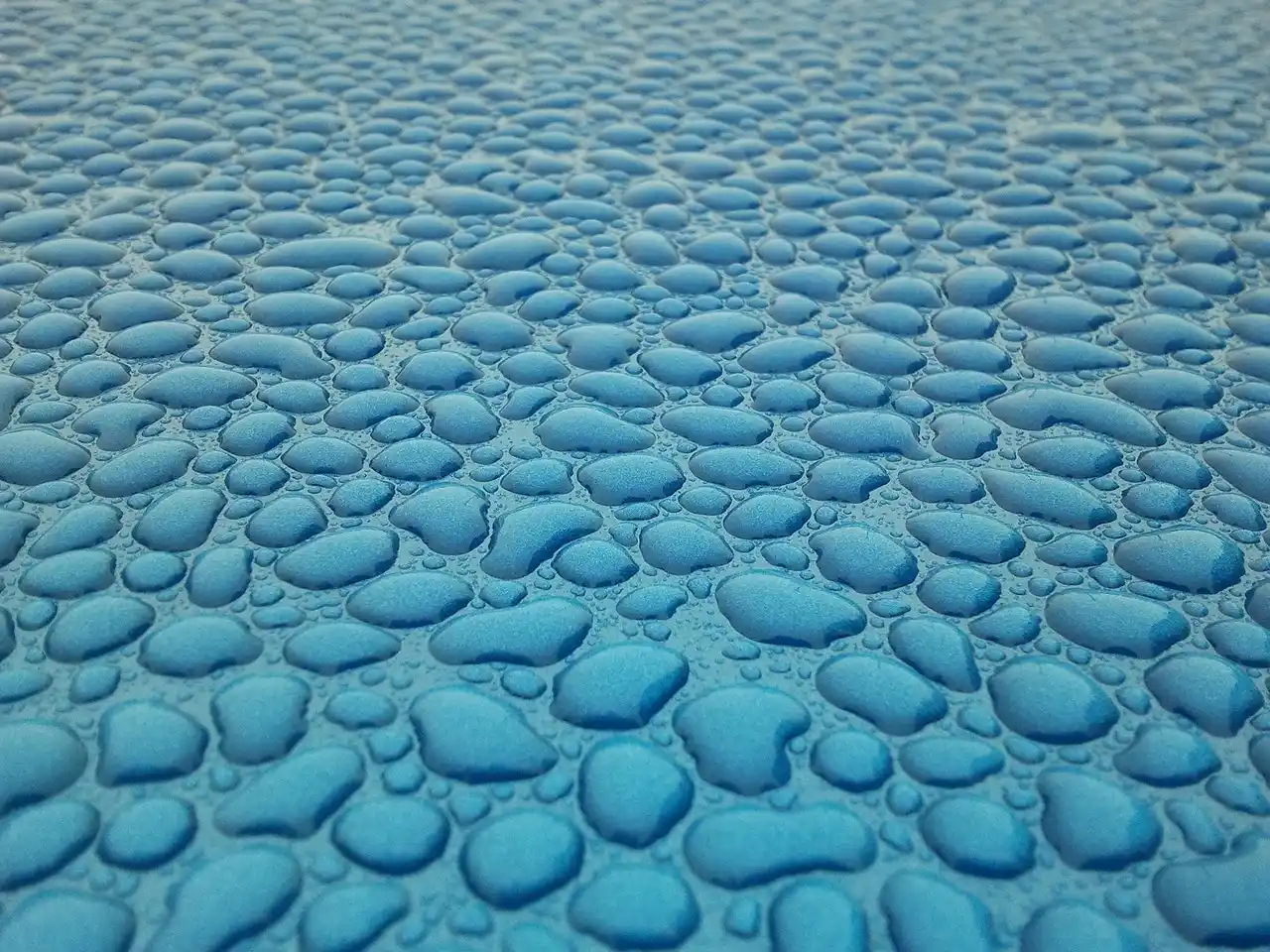
Wax life depends on the chemistry used to clean it and how much the paint gets touched. Strong cleaners, dirty mitts, and dry wiping remove protection faster than a gentle wash with good lubrication. If the car looks dirty but still beads and feels slick after a wash, the wax is often still doing its job.
How daily use, parking, and weather change cleaning frequency
A garage-kept weekend car can usually stay on a lighter routine longer than a daily driver parked outdoors. Outdoor parking loads the paint with pollen, dust, rain residue, and road film more often, so contamination reaches the point where it can no longer be ignored.
Weekly attention is often enough for a lightly used waxed car, especially one that is garaged and driven in relatively clean conditions. A daily driver may need spot cleaning and a full wash more often, especially after rain, road spray, or a long commute. The rule is simple: clean when contamination starts to be more than cosmetic.
When dirt is cosmetic and when it starts risking the finish
Dust sitting loosely on top of wax is low risk if it is removed without dragging grit. Once that dust mixes with moisture, pollen, or road film, it becomes abrasive. If a panel feels gritty or leaves a smear when touched, do not wipe it dry.
At that point, choose a rinse, rinseless wash, or full wash based on how bonded the contamination is. The goal is not to clean every speck immediately. The goal is to avoid rubbing hard debris into the clear coat.
📊 Chemical Guys publishes a wax guide dated February 11, 2026. Source: How to Wax Your Car: A Step-by-Step Guide.
What To Do After Every Paint Contamination Event
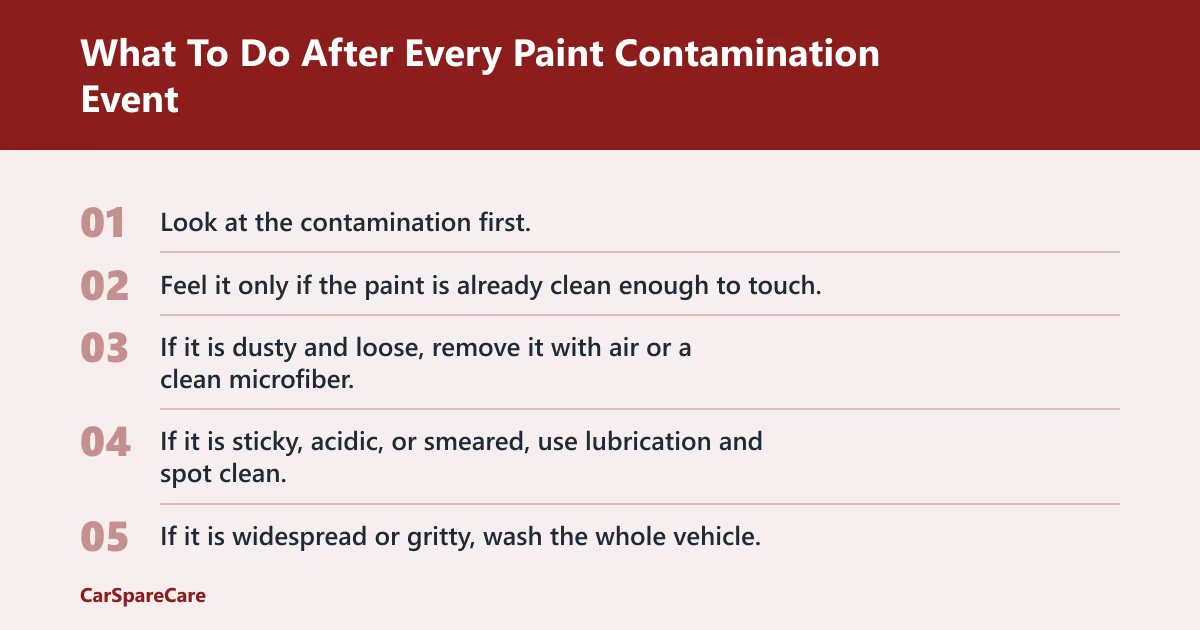
Use this one-page decision checklist after any new contamination lands on the paint. The safest choice depends on whether the contamination is loose, sticky, acidic, or dried. If in doubt, do less contact and more lubrication.
| Contamination | Safest tool | Action | Timing |
|---|---|---|---|
| Dust | Clean microfiber duster or air blower | Spot clean only if loose | Wait if dry and untouched |
| Fingerprints | Quick detailer and clean microfiber | Spot clean | As soon as practical |
| Light pollen | Rinse or rinseless wash towel | Wash if it coats the panel | Wait if it is only a light dusting |
| Bird droppings | Quick detailer, damp microfiber, or rinse | Spot clean | Remove promptly |
| Bug splatter | Soaked microfiber and pre-spray | Spot clean, then wash if heavy | Same day if possible |
| Tree sap | Dedicated sap-safe remover on microfiber | Spot clean gently | Do not wait for it to harden more |
| Rainwater spots | Drying towel or quick detailer | Spot clean only if fresh | Wipe before they bake on |
| Road film | Two-bucket wash or rinseless wash | Wash | Do not dry wipe |
Dust and light pollen
Loose dust and light pollen can often wait. Use an air blower or a plush, clean microfiber only when the panel is truly light with contamination. If the towel picks up visible grit, stop and switch to a rinse-based method.
Dust becomes a problem when it is mixed with dew, road film, or a previous wash residue. Then it drags. That is when a quick dry wipe turns into micro-marring.
Fingerprints, road film, and light rainwater spots
Fingerprints and light smudges are good quick detailer jobs, provided the towel is clean and the panel is not loaded with grit. Road film is different. Once film coats the paint, use a wash instead of chasing it around with a spray bottle.
Fresh rainwater spots can often be handled before they dry completely. If they are already dried mineral marks, a quick wipe may not remove them cleanly. At that point, move to a proper wash and drying step rather than scrubbing harder.
Bird droppings, bug splatter, and tree sap
Bird droppings are acidic contamination and can etch unprotected clear coat within hours in heat. Bug splatter hardens for the same reason: protein and acid residue bake onto the surface. Tree sap bonds and hardens with dwell time, so waiting usually makes removal harder.
These three get priority over everything else. Flush or soften them first, then lift them with lubrication and light pressure. Never scrape them dry. That is how fresh wax gets marred.
Decision rules for wash, spot clean, or wait
If the contamination is loose, dry, and non-sticky, wait or use a blower. If it is fresh but localized, spot clean. If it is gritty, oily, or spread across multiple panels, wash the car. That simple split keeps unnecessary friction off the wax.
- Look at the contamination first.
- Feel it only if the paint is already clean enough to touch.
- If it is dusty and loose, remove it with air or a clean microfiber.
- If it is sticky, acidic, or smeared, use lubrication and spot clean.
- If it is widespread or gritty, wash the whole vehicle.
What is the safest way to wash a waxed car between details?
The safest wash method is the least abrasive one that can still remove the dirt. For light contamination, a rinseless wash fits. For heavier grime, use the two-bucket wash method. Foam helps loosen dirt first, but it does not replace hand washing when the paint is actually dirty.
When a rinseless wash fits
A rinseless wash works best when the car has light dust, fresh light pollen, or a thin layer of road film and the paint is not gritty. It suits owners who want to clean a waxed car without dragging a hose out for every touch-up.
The limit is simple. If the panel feels sandy or carries bug guts, sap, or heavy road film, skip rinseless and use a full wash. Rinseless is a tool for light to moderate contamination, not a cure for baked-on debris.
When to use the two-bucket wash method
The two-bucket wash method uses one bucket for shampoo solution and one bucket for rinse water. That separation keeps grit out of the clean wash bucket and reduces the chance of reintroducing debris to the paint. It remains the standard hand-wash method for paint safety.
Wash top to bottom. Roof, hood, and trunk should get the cleanest mitt passes. Lower rocker panels and wheel wells are washed last because they carry the most grit. That order matters more than speed.
How foam guns and foam cannons help before mitt contact
A foam cannon or foam gun is a pre-soak tool. It loosens surface contamination before mitt contact, which reduces the amount of rubbing needed during the wash. It is useful, but it is not a substitute for hand washing.
Let the spray dwell briefly, then rinse or follow with a mitt wash. If the foam dries on the panel, do not let it sit there and bake. Foam is there to soften dirt, not to finish the job by itself.
How do you dry waxed paint without adding marks?
Dry with a plush microfiber drying towel and gentle contact, or reduce contact drying with a leaf blower or dedicated car dryer. The drying step can remove more wax than many owners expect because towel friction and trapped grit both mark the finish if the panel is not clean enough.
Why towel choice matters more than speed
A plush microfiber drying towel is preferred because it pulls water with less pressure than rough towels or old bath cloths. Chamois-style tools and dirty towels raise swirl risk. Using more than one towel also helps, because a saturated towel starts dragging instead of gliding.
How to use microfiber drying towels with light pressure
Lay the towel on the panel, then lift and blot or drag lightly. Do not press hard. If the towel starts feeling grabby, switch it out. Contact drying should be calm and slow, especially on horizontal panels where water sits longer.
How to prevent hard water spots after washing
Hard water spots are dried mineral deposits, and the risk rises when the car air-dries in heat. Dry the car fully. If water is left behind on mirrors, glass edges, emblems, and trim, those areas spot first and can make the wax look weaker than it is.
If the car lives outdoors in hot weather, dry earlier in the day or work panel by panel so standing water does not bake on. A blower or dedicated car dryer helps because it reduces contact drying before the towel ever touches the surface.
What tools actually help wax last longer?
The best helpers are the ones that remove contamination with the least friction. A quick detailer is useful for fresh, light contamination. A wax topper or spray wax can restore slickness and beading between full wax jobs if it is compatible with the existing wax. The minimum kit is small.
Quick detailer for fresh, light contamination
Quick detailer is a spray used for fresh contaminants and light wipe-downs. It works because it adds lubrication, which helps a clean microfiber glide instead of grinding grit across the finish. Used well, it is one of the safest tools for waxed paint.
Used badly, it can trap grit and create micro-marring. That failure case matters. If the panel is dusty enough to leave visible debris on the towel, quick detailer is not the right first move.
Wax topper or spray wax between full wax jobs
A wax topper or spray wax can help maintain beading and slickness between full wax jobs. Use one that is compatible with the current wax so you do not fight the existing layer. The aim is maintenance, not building a thick film over dirt.
Apply it to a clean surface after washing and drying. If the paint is still contaminated, a topper only seals the contamination in place.
The minimum kit for owners who want the basics only
- Two clean microfiber drying towels
- One clean wash mitt
- One bucket for shampoo solution
- One bucket for rinse water
- Quick detailer
- Plush microfiber towels for spot cleaning
- Blower or dedicated car dryer if available
How do you know wax is fading instead of just dirty?
Wax is fading when the paint stays slow to bead, feels less slick after a proper wash, and loses water behavior even after contamination is removed. If the car only looks dull because of dust or spots, clean it first. Do not confuse dirt with worn protection.
Beading and sheeting changes that matter
Beading by itself is not the whole story. Tight beads can still happen on a dirty surface. What matters is whether the water behavior improves after a proper wash and drying. If the surface still sheets poorly after cleaning, protection may be thinning.
Loss of slickness after washing and drying
After a full wash, the paint should feel smooth enough that a microfiber towel moves easily. If the panel feels sticky or grabs after cleaning, that is a stronger sign of fading wax than a few spots on the surface. Dirt can hide slickness, so always clean first.
Signs that say clean first, then re-wax
If the paint has visible road film, mineral spotting, bug residue, or sap, remove that first. Re-waxing over contamination wastes product and hides the real condition of the finish. Once the car is clean and dry, then judge whether the protection is still active.
How often should I wash a waxed car without stripping the wax?
Wash as often as the contamination requires, not on a fixed schedule alone. A waxed car can handle regular washing if the method is gentle, the mitts are clean, and the drying step is controlled. Overwashing with bad technique strips wax faster than a thoughtful wash done when needed.
What quick detailer is safe to use on waxed paint?
A safe quick detailer for waxed paint is one made for light cleaning and lubrication, used with a clean microfiber towel on fresh contamination. The product matters less than the technique: if the surface is gritty, a quick detailer can drag debris. Clean first, then wipe.
Can I use a rinseless wash on a waxed car?
Yes, if the paint only has light dust, light pollen, or a thin layer of road film. A rinseless wash is not the right move for heavy bug splatter, sap, or gritty panels. When the contamination is more than light, use the two-bucket wash method instead.
How do I remove bird droppings without damaging fresh wax?
Soften the spot first with quick detailer or a damp microfiber, then lift it without scrubbing. Bird droppings are acidic and can etch quickly in heat, so prompt removal matters. If the spot has hardened, repeat the soak-and-lift approach rather than forcing it off dry.
Does drying with a towel remove wax from paint?
Yes, drying can wear wax down over time because contact and friction always remove a little protection. A plush microfiber drying towel reduces that risk better than rough towels or chamois-style tools. Use light pressure, keep towels clean, and switch to a fresh towel when one becomes loaded.
What can I do to maintain car wax between details in hot weather?
In hot weather, shorten the time contamination stays on the paint and avoid air-drying water on the surface. Remove bird droppings, bug splatter, and sap quickly, dry the car fully after washing, and use a blower or dedicated car dryer when possible. Heat makes everything bond faster.
When should I re-wax if water no longer beads?
Re-wax after you have cleaned the paint and the water still does not bead or sheet normally. A dirty surface can fool you into thinking the wax is dead. If the finish is clean, dry, and still feels rough or looks weak under water, it is time to renew protection.
What is the safest way to remove bug splatter from waxed paint?
Soak bug splatter first, then lift it with lubrication and a clean microfiber. Do not rub hard at baked-on residue. Bug splatter gets harder to remove as it dries, especially on front ends exposed to heat, so same-day spot treatment is the safest path for waxed paint.

Hi, I’m Melvin, an automobile engineer with extensive experience in automobile equipment. I currently work for a local automobile firm, where I specialize in the car parts industry. I’ve had the opportunity to collaborate with seasoned inspectors, gaining invaluable hands-on experience that goes beyond just theory.
My passion for automotive care started at a young age, which led me to create CarSpareCare. Through CarSpareCare, I share the knowledge and skills I’ve acquired over the years to help others navigate the world of car maintenance and repairs.
My goal is to provide practical tutorials, essential safety advice, and the latest industry insights so that anyone—whether a beginner or an expert—can confidently tackle their automotive projects.

