Start by identifying the stain, then use a dry microfiber cloth, a foam cleaner on the cloth, or a barely damp cloth; stop if the fabric darkens or feels loose. Wetting the liner too much can soak the foam backing, weaken the adhesive, and turn a small mark into a sagging roof liner. This guide shows how to diagnose common ceiling marks, choose the least-wet safe method, and know when to call a detailer.
This guide is part of our Car interior maintenance guide series.
What you’ll need
- Microfiber cloths
- Soft brush or clean towel
- Car upholstery cleaner used in very small amounts
- Vacuum with soft brush attachment
- Optional low-moisture steam tool
- Dry towel for blotting
📊 The article says headliner cleaning usually takes 15 to 30 minutes. Source: How to Remove Water Stains From a Car Headliner (Without Damage).
How to identify the stain before you clean it
Match the mark before you touch it. Headliner stains often appear as a dark ring or yellowish spot, and the source matters because water stains, coffee, smoke film, and mold do not respond to the same method. If the fabric feels soft, loose, or rippled, treat it as a damage risk first.
Water ring, mineral residue, or active leak
Water stains are commonly caused by water entering the vehicle. A dark ring or yellowish spot usually means moisture evaporated and left residue behind. A cracked window, clogged sunroof drain, or door seal leak can keep adding moisture to the mark, so it helps to find the source before cleaning.
Coffee, smoke film, or light grime
Dry soil, smoke film, and small drink spots usually respond to the least-wet cleaning route. Use blotting and a cloth-applied cleaner first. Stop as soon as the fabric begins to darken, because that means liquid is moving into the foam layer.
Signs of mold spotting or adhesive failure
Mold can leave persistent spotting and a musty odor. If the stain keeps returning after drying, or if the fabric is already lifting, the adhesive layer may be failing. At that point, cleaning can make the damage worse, especially on older headliners with brittle foam backing.
How to remove headliner stains safely
The safest order is dry first, wet last, and only in very small amounts. A car headliner is a fabric ceiling liner attached to foam and a backing board, so it can be vulnerable to adhesive failure if it gets too wet. Keep every pass light.
- Vacuum loose dust first with a soft brush attachment.
- Blot the stain with a dry microfiber cloth; do not rub.
- Test the cleaner on a hidden corner.
- Apply cleaner to the cloth, not the ceiling.
- Work in small sections and stop before the fabric gets damp.
- Dry the area with air movement and a clean towel.
If the stain is still visible after one light pass, pause and let it dry fully. Several light passes are safer than one heavy treatment. Professional removal often uses controlled low-moisture steam, which rehydrates mineral deposits without flooding the backing board.
Which method fits which stain?
Use the least-wet method that matches the stain type. Towel-only cleaning is safest for dust and fresh residue. Diluted interior cleaner is a second step for small spots. Steam is a professional option for mineral marks. Stop early if the liner darkens, bubbles, or smells damp.
| Stain type | Likely cause | Safest home method | Risk level | When to stop and call a detailer |
|---|---|---|---|---|
| Dark ring or yellowish spot | Water entering the vehicle, then drying | Dry blot first, then a barely damp microfiber | Medium | If the mark returns after drying or the fabric softens |
| Light brown spot | Coffee, soda, or drink splash | Cloth-applied upholstery cleaner in very small amounts | Medium | If the spot is larger than a hand or spreads on contact |
| Gray film | Smoke or airborne grime | Dry vacuum, then light foam cleaner | Low to medium | If the liner is old, thin, or already sagging |
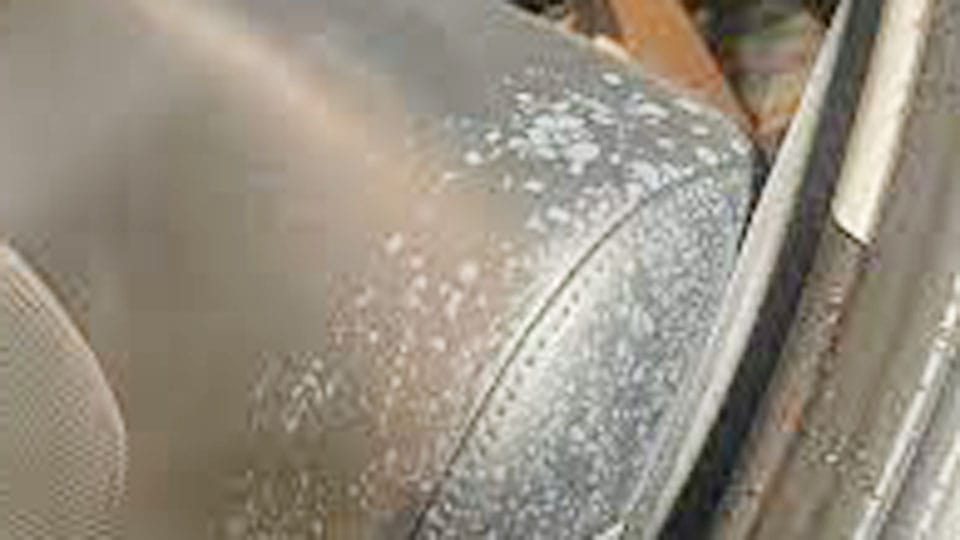
| Speckled spots | Mold after a leak | Dry the interior and fix the leak before any cleaning | High | Immediately, if odor, spreading spots, or wet backing is present |
| Set-in mineral residue | Evaporated water leaving deposits | Low-moisture steam only, in light passes | Medium to high | If the fabric puckers, loosens, or the board is visible |
Say your 8-inch water ring sits above the rear seat after a heavy rain. Dry blotting and a leak check come first; if the mark remains after the panel dries, a detailer may be the better call because repeated wetting can turn a spot into a sagging section.
Can you use upholstery cleaner on a car headliner?
Yes, but only in very small amounts and never by spraying directly onto the ceiling. Car upholstery cleaner should go on a microfiber cloth first, then onto the stain with light dabbing. Some headliners react badly to excess moisture or strong chemicals, especially if the foam backing is old.
Spraying cleaner directly onto the ceiling pushes liquid into the adhesive layer. That layer holds the fabric to the board, and too much product can weaken it. If the stain is on a tinted or suede-style liner, stay with dry methods unless a detailer says otherwise.
Why does a headliner sag after cleaning?
A headliner sags after cleaning when liquid reaches the foam backing and weakens the adhesive layer. Old glue fails faster, and the fabric can bubble or wrinkle once the board absorbs moisture. That risk rises sharply when a strong cleaner or repeated passes are used.
- Stop cleaning at the first sign of darkening.
- Blot the area with a dry towel.
- Point cabin air or a fan at the spot.
- Leave the panel alone until it dries fully.
- If bubbling starts, stop and book detailing before the panel drops farther.
Picture a 12-inch patch near the dome light that feels loose after one heavy wipe. That usually means the backing board has taken on moisture. More cleaning will not fix it; drying and repair planning will.
How do you stop headliner stains from coming back?
Fix the water source first, or the stain will return. Check sunroof drains yearly, inspect door seals and cracked windows, and dry wet items quickly before they sit against the roof liner. A persistent stain often points to an unresolved leak, not just a dirty ceiling.
- Clear sunroof drains once a year.
- Inspect door seals after storms or car washes.
- Look for cracked windows and chipped trim that admit rain.
- Dry umbrellas, child seats, and wet cargo before parking.
- Recheck the stain after the cabin has dried fully.
Low-moisture steam can help with mineral residue, but it still needs restraint. Professional low-moisture steam works because it rehydrates deposits quickly, then evaporates without soaking the liner. One heavy wet treatment can do more harm than a visible stain ever did.
Common mistakes
The biggest mistake is treating every mark the same. Water rings, coffee, smoke film, and mold spotting need different response levels, and the headliner can be damaged by excess liquid even when the stain is small. If the liner is old, fragile, or already sagging, keep your hands off aggressive methods.
- Do not soak the headliner.
- Do not spray cleaner directly onto the ceiling.
- Do not scrub hard with a brush.
- Do not clean mold before fixing the leak and drying the cabin.
- Do not keep wiping once the fabric feels loose.
A common first-timer mistake is trying to erase a coffee spot with repeated wet passes. The stain may shrink, but the panel can wrinkle around a larger, softer patch. That is a bad trade for a ceiling liner.
If that didn’t work, stop here and call a detailer
If a stain remains after one light home attempt, or the fabric darkens, bubbles, wrinkles, or smells damp, stop and get help. Permanent staining can occur from coffee, soda, muddy rainwater, or mold, and a detailer can use controlled low-moisture steam or recommend repair before the liner fails further.
- Let the panel dry fully.
- Confirm the leak source is fixed.
- Check whether the stain is spreading or the fabric is lifting.
- Book professional interior cleaning if the mark is still visible or the board feels soft.
Frequently asked questions
how to remove stains from car headliner
Start with a dry vacuum and blotting, then move to a cloth-dabbed cleaner only if the stain is light. Keep moisture minimal, because the adhesive layer can fail if liquid reaches the foam backing. If the liner darkens, stop and let it dry before doing anything else.
how to clean headliner stains in car
Use a microfiber cloth with a small amount of foam cleaner, then dab the mark in short passes. Avoid direct spraying and never scrub hard. If the fabric feels loose, the safer move is to stop, dry the panel, and check for a leak source first.
how to remove water stains from headliner
Dry the area, then inspect for a cracked window, door seal leak, or clogged sunroof drain. Once the leak is fixed, use very light blotting on the ring. If the mark is mineral residue, controlled low-moisture steam is usually the safer pro-level method.

Hi, I’m Melvin, an automobile engineer with extensive experience in automobile equipment. I currently work for a local automobile firm, where I specialize in the car parts industry. I’ve had the opportunity to collaborate with seasoned inspectors, gaining invaluable hands-on experience that goes beyond just theory.
My passion for automotive care started at a young age, which led me to create CarSpareCare. Through CarSpareCare, I share the knowledge and skills I’ve acquired over the years to help others navigate the world of car maintenance and repairs.
My goal is to provide practical tutorials, essential safety advice, and the latest industry insights so that anyone—whether a beginner or an expert—can confidently tackle their automotive projects.