A cabin air filter can usually be cleaned only if it is a washable foam or mesh type; standard pleated paper filters should be replaced, not rinsed, and a dirty filter should go when cleaning no longer restores airflow. Ignoring a clogged or damaged filter keeps dust circulating, strains the blower, and can leave musty HVAC odors in the cabin. This guide shows which filters can be cleaned, when vacuuming or rinsing is safe, and how to slow dust coming back through the HVAC system.
This guide is part of our Car interior maintenance guide series.
What causes cabin dust?
Dust keeps returning because outside air enters through the HVAC intake, passes through the cabin air filter, and can carry pollen, dust, smog, and smoke into the passenger compartment. When the filter is dirty, the HVAC system can recirculate odors and loose debris instead of stopping them.
Low airflow from the vents, fogged windows on defrost, and a stale smell are common warning signs. A blocked cabin air filter can narrow the air path enough that dust is easier to spot on the dash, vents, and glass, especially in traffic or during pollen peaks.
What you’ll need
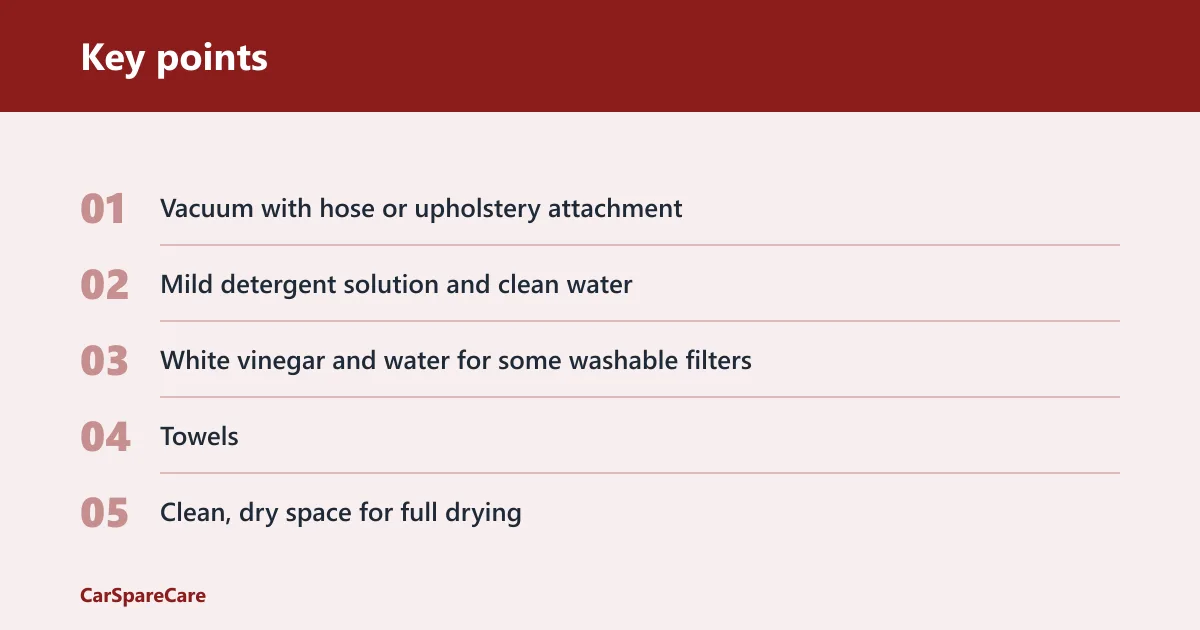
- Vacuum with hose or upholstery attachment
- Mild detergent solution and clean water
- White vinegar and water for some washable filters
- Towels
- Clean, dry space for full drying
- Glove box release or access-panel tool if needed
Remove and inspect the filter
- Open the glove box or access panel and remove the filter housing cover.
- Slide the filter out carefully so you do not crease the pleats.
- Check for dust buildup, warped media, torn edges, moisture, and odor.
- Compare the filter type to the owner’s manual for the service interval before any cleaning step.
Picture a filter that is gray but flat, dry, and intact. That is often a cleaning candidate if the media is washable. If the pleats are folded over, damp, or coated with embedded grime, cleaning is usually only a short delay before replacement.
Clean, vacuum, or Replace?
Use the filter type first, then the condition. Disposable paper cabin filters are not meant to be washed unless the maker explicitly says they are washable. Reusable media can sometimes be cleaned, but odor carryover, warped pleats, and heavy debris usually mean replacement is the better choice.
| Filter type | Visible condition | Odor present | Airflow symptom | Recommended action | Risk if reused |
|---|---|---|---|---|---|
| Reusable foam or mesh | Loose dust, intact shape | None or faint | Light reduction only | Vacuum, then rinse if the media is confirmed washable | Low if fully dried and fit is unchanged |
| Reusable foam or mesh | Dust packed in pleats or odor remains after cleaning | Yes | Weak airflow or fogging | Replace | Odor and restriction usually return fast |
| Paper pleated cabin filter | Light dust only, no tears | None | Normal to slightly reduced | Light vacuum only, from the dirty side | Higher if scrubbed or soaked |
| Paper pleated cabin filter | Gray, warped, damp, or torn | Yes | Reduced airflow, odor, or fogging | Replace | Damaged fibers and poor filtration |
How do you clean a reusable filter?
Start with a gentle vacuum pass, then rinse only if the media is confirmed washable. Some reusable car air filters can be cleaned by vacuuming and then washing with soapy water. If grease, smoke, or pet hair is embedded, a mild detergent solution or a vinegar soak may help, but only for media that is designed for it.
Safe cleaning steps for washable filters
| Safe cleaning steps for washable filters | Do-not-do actions for paper filters |
|---|---|
| Vacuum loose dust gently with a hose or upholstery attachment. | Do not scrub pleated paper media. |
| Rinse with clean water after confirming the filter is washable. | Do not wash paper cabin media unless the maker says it is washable. |
| Use mild detergent solution if plain rinsing does not remove grime. | Do not use harsh compressed air that can damage pleats. |
| For some filters, soak in equal parts hot water and white vinegar for about one hour. | Do not soak or wring paper media. |
| Rinse fully and dry completely before reinstalling. | Do not reinstall a damp filter. |
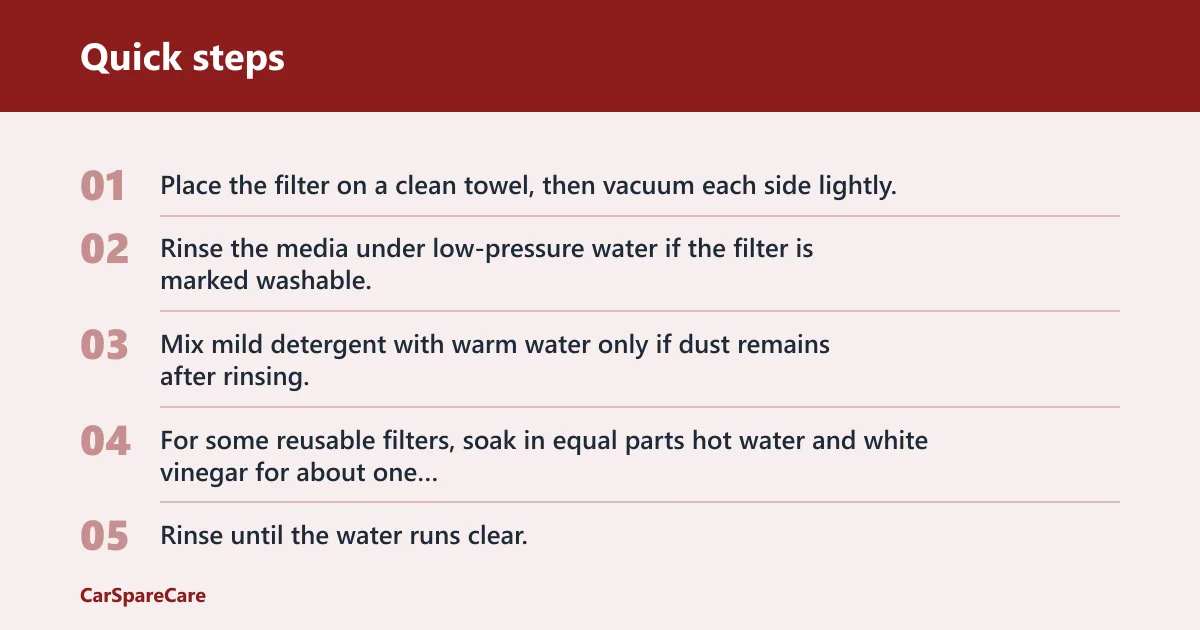
- Place the filter on a clean towel, then vacuum each side lightly.
- Rinse the media under low-pressure water if the filter is marked washable.
- Mix mild detergent with warm water only if dust remains after rinsing.
- For some reusable filters, soak in equal parts hot water and white vinegar for about one hour. (Wikihow)
- Rinse until the water runs clear.
- Dry the filter in open air until every layer feels dry to the touch.
- Reinstall only if the frame, pleats, and seal still sit flat.
A common first-timer mistake is putting the filter back while the core still feels cool and slightly damp. That can carry moisture into the HVAC box, where odor and mildew can return even after the visible dust is gone.
Can you wash a cabin air filter with water?
Water is acceptable only for reusable media that the maker says is washable. Paper cabin filter media should not be washed because water can damage the fibers and reduce efficiency. Aggressive compressed air can sometimes tear pleats or open gaps that let dust pass through.
If a filter is labeled disposable, treat water as the wrong tool. A light vacuum from the dirty side is safer than scrubbing, but it is still only a temporary measure when the pleats are heavily loaded or the media is warped.
How often should you service it?
The owner’s manual is the primary service standard for cabin air filter replacement. One common reference is 12,000–15,000 miles or once a year, but dust, pollen, traffic-heavy routes, pet hair, and smoke exposure can justify a shorter interval.
- Check the owner’s manual first for the vehicle-specific interval.
- Inspect the filter at each oil change if the cabin gets dusty quickly.
- Shorten the interval in high dust, heavy traffic, or pollen peaks.
- Replace sooner if odor, fogging, or weak airflow returns after cleaning.
Suppose a driver in a dusty area notices fresh dust on the dash every week and a musty smell on defrost. That pattern usually means the interval is too long for the conditions, even if the mileage is still below a general reference point.
Common mistakes
Reinstalling a damp filter can spread odor and slow drying inside the HVAC box. Scrubbing paper media, blasting it with strong compressed air, or forcing it back into a warped frame can make the problem worse rather than better.
- Do not wash paper cabin filters unless the manufacturer says they are washable.
- Do not use harsh pressure that could damage pleats.
- Do not ignore persistent odors after cleaning.
- Do not stop at the filter if dust keeps returning from the cowl intake or recirculation path.
How do I get rid of dust in my car cabin?
Cleaning the filter can help, but dust may return through the cowl intake, HVAC box, and recirculation cycle if those paths keep feeding debris back into the cabin. If the filter is clean and dust still returns quickly, the intake area and vent path deserve a check.
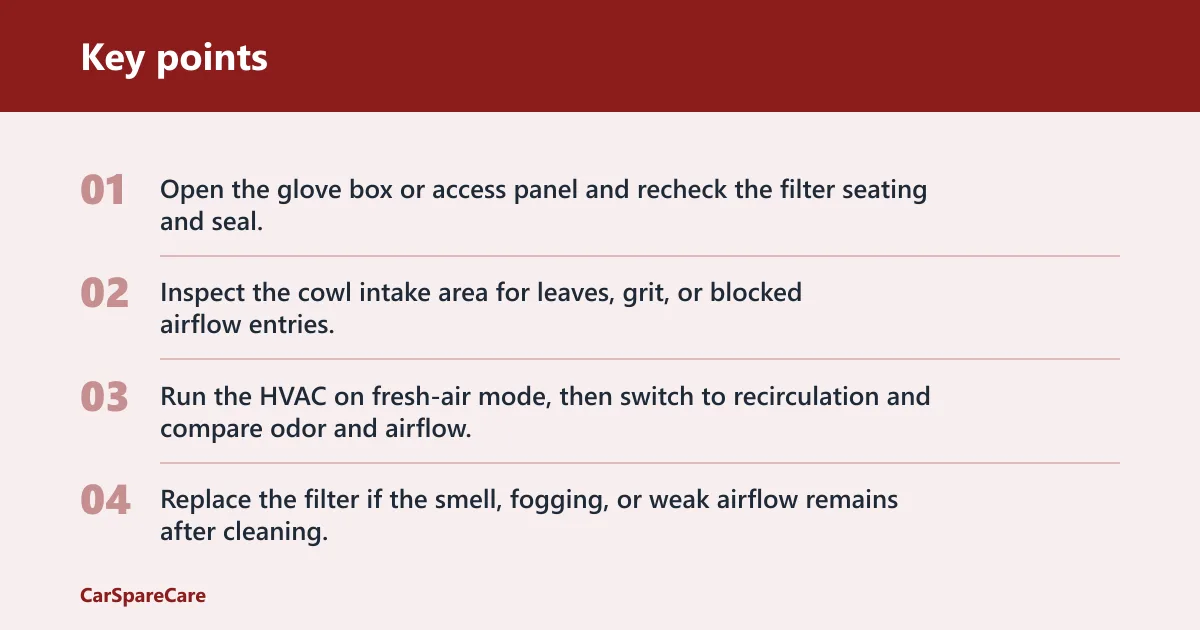
Start with the cabin air filter, then inspect the cowl intake for leaf litter or loose dirt. If the vents still smell stale or the glass fogs easily, the issue may be contamination elsewhere in the HVAC path rather than the filter alone.
If that didn’t work, try this next
- Open the glove box or access panel and recheck the filter seating and seal.
- Inspect the cowl intake area for leaves, grit, or blocked airflow entries.
- Run the HVAC on fresh-air mode, then switch to recirculation and compare odor and airflow.
- Replace the filter if the smell, fogging, or weak airflow remains after cleaning.
Say your sedan uses a washable mesh filter and the air still smells dusty after rinsing and drying. That points to either remaining contamination in the HVAC path or a filter that is no longer holding dust effectively, not a reason to keep washing it again and again.
What is the difference between a cabin air filter and an engine air filter?
The cabin air filter cleans outside air before it enters the passenger compartment. The engine air filter helps protect the engine’s intake system. They are separate parts, so service advice for one should not be copied to the other.
Use the owner’s manual to identify which filter you are removing. A cabin filter issue may show up as dust in the cabin, odor, reduced airflow, or fogging. An engine air filter problem affects engine breathing, not passenger comfort.
Frequently asked questions
How do I clean a car cabin air filter?
Remove it from the glove box or access panel, inspect the media, and vacuum loose dust first with a hose or upholstery attachment. Only rinse if the filter is confirmed washable. Dry it fully before reinstalling, and replace it if odor, warping, or heavy debris remains.
Can I clean my car air filter instead of replacing it?
You can clean a reusable cabin filter if the media is designed for reuse. Standard pleated paper cabin filters should be replaced, not washed. If airflow stays weak or the filter still smells after cleaning, replacement is the safer option.
How do I clean a reusable air filter in my car?
Vacuum both sides gently, then rinse with clean water. If grime remains, use a mild detergent solution, or for some filters an equal mix of hot water and white vinegar for about one hour. Rinse well and let it dry completely before fitting it back.
How often should a cabin air filter be cleaned or replaced?
Follow the owner’s manual first. A common reference is 12,000–15,000 miles or once a year, but dusty roads, heavy traffic, pollen, pets, and smoke can shorten that interval. Clean or replace sooner if airflow drops or fogging returns.
Will vacuuming a cabin air filter damage it?
Not if you use a gentle hose pass and keep the nozzle slightly away from the pleats. Low-power vacuuming from the dirty side is safer than scrubbing or blasting air. If the media tears easily or the pleats collapse, replacement is the better fix.

Hi, I’m Melvin, an automobile engineer with extensive experience in automobile equipment. I currently work for a local automobile firm, where I specialize in the car parts industry. I’ve had the opportunity to collaborate with seasoned inspectors, gaining invaluable hands-on experience that goes beyond just theory.
My passion for automotive care started at a young age, which led me to create CarSpareCare. Through CarSpareCare, I share the knowledge and skills I’ve acquired over the years to help others navigate the world of car maintenance and repairs.
My goal is to provide practical tutorials, essential safety advice, and the latest industry insights so that anyone—whether a beginner or an expert—can confidently tackle their automotive projects.