
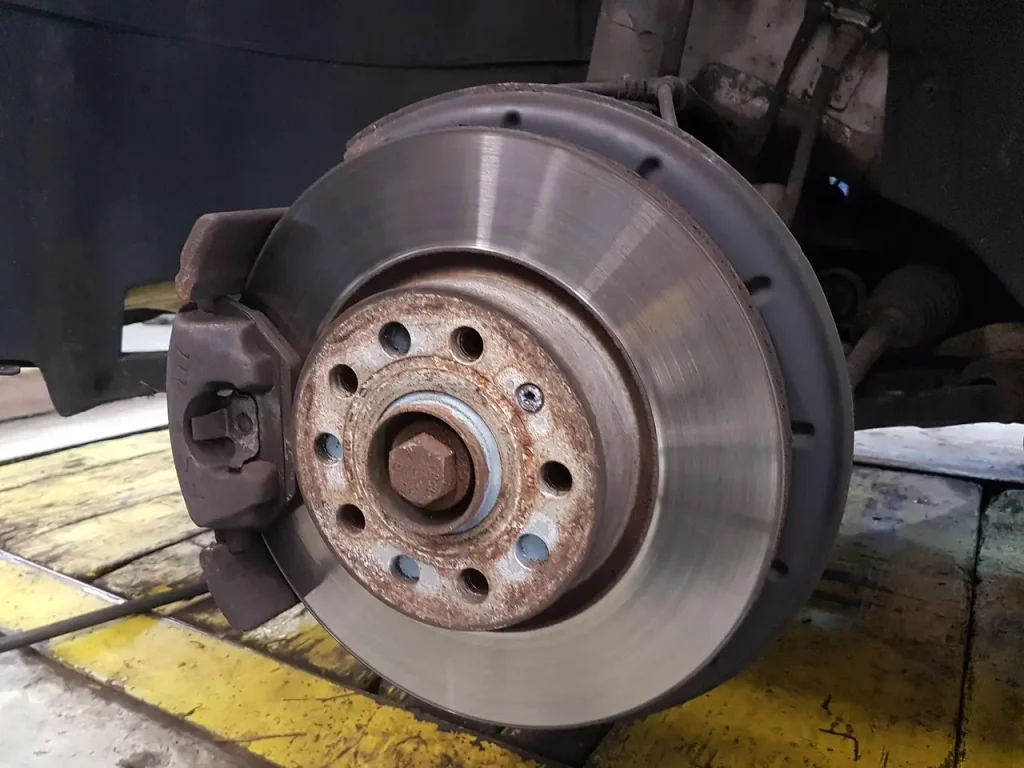
If your car pulls after new brakes, check the tyres first, then see if the pull happens only during braking or also while cruising. If it stays after about 50–100 miles, suspect a dragging caliper, sticking slide pins, trapped hose pressure, uneven pad contact, or a tyre or alignment fault. A strong pull, metallic noise, knocking, scraping, or steering vibration warrants prompt inspection.
What changed first
A pull after a brake job is not always a brake fault. Tyres, brakes, chassis parts, and wheel alignment can all cause it, so the first clue is whether the car pulls while driving, accelerating, or mainly under braking. That split changes the diagnosis fast.
If the problem started after tyre change or wheel replacement, tyre checks come first. If it started after brake work, the brakes deserve attention. If it appeared after an impact, pothole hit, or suspension repair, wheel alignment and chassis faults move higher on the list.
What should I check when my car pulls after new brakes?
Check tyre pressure, tyre size, tyre wear, and whether the pull happens only when braking. Then compare the left and right brake drag, look for uneven pad wear, and confirm the wheel nuts or bolts were tightened evenly. If the pull continues when you are not braking, look beyond the brakes.
That order matters. A tyre with low pressure, mismatched size, or visible wear can mimic a brake complaint. A brake that drags on one side usually shows up more clearly during deceleration. A chassis or alignment fault usually affects straight-line tracking even with your foot off the pedal.
When is it urgent enough to stop driving?
Stop driving sooner if the pull is strong, if the steering wheel shakes, or if you hear metallic noise, knocking, or scraping. Those signs point to a fault that can overheat a wheel, damage pads and rotors, or make braking unstable. Tell the workshop exactly when the issue started and what changed recently.
Say your front brakes were replaced yesterday and the car now drifts right only when you press the pedal. That points more toward a brake-side imbalance than a general alignment issue. If the car also pulls on a flat road with no braking at all, the tyre or alignment check comes first.
What to check first
Start with the simplest items. Tyre pressure is one of the first checks when a car pulls to one side, and visible tyre condition can be a clue as well. If the pull began after tyre service, tyre rotation, or wheel replacement, do not skip this step.
Tyre pressure and matching tyre sizes
Set both tyres on the axle to the same pressure and confirm both tyres are the correct size. A size mismatch can change rolling radius and may make the car drift. If one tyre is visibly underinflated, that alone can create a pull that feels like a brake problem.
Look for uneven wear, bulges, or a tyre that shows a different tread pattern from the other side. Uneven tyre wear may point to a chassis problem rather than a brake fault. If the pull started after a tyre change or wheel replacement, tyre checks should come first.
Tyre wear, rotation direction, and recent tyre service
Check whether a directional tyre was mounted the wrong way around. Also confirm that a recent tyre rotation did not move a worn tyre to the front and change the way the car tracks. A pull that started after tyre service is often unrelated to the brake job.
That does not rule out the brakes. It just changes the order of diagnosis. If the pull only appears when braking, the brake side deserves attention next. If it appears while cruising as well, tyre or alignment faults move higher on the list.
Wheel nuts or bolts tightened evenly after the job
Uneven wheel bolt torque can distort how a wheel seats and may create a shake or pull complaint. It is a simple thing to check, but it is also easy to miss after recent brake work or tyre service. The wheel should be seated evenly and tightened to the maker’s specification.
If a wheel was removed during the brake job, uneven tightening is one of the first installation details to question. It does not explain every pull complaint, but it can confuse the diagnosis and should be checked before deeper brake parts are blamed.
What to check when it pulls only while braking
If the car tracks straight until you brake, the problem is usually on the brake side. That can mean a dragging caliper, a sticking slide pin, uneven pad wear, rotor contact problems, or a hydraulic issue that leaves one side with more force than the other.
Brake caliper drag or a sticking slide pin
A brake caliper can drag or stick when the piston does not retract properly or the slide pins bind. That left-right imbalance can create a pull under braking. Look for one wheel that feels or looks more loaded than the other side, or for pad wear that is not matched.
Uneven pad wear is a common clue. If one pad is thin on one edge or the outer and inner pads do not match, the caliper hardware may not be moving freely. A seized piston, corroded guide pin, or dry hardware can all keep the pad in light contact with the rotor.
Pad binding, uneven pad wear, or uneven pad material transfer
New brake pads can bed in, but they should not create a strong or persistent pull. Mixed pad compounds, poor pad fit, or pad binding in the carrier can leave one side applying different friction. Friction material transfer on the rotor can also change pedal feel and braking balance.
Check whether the pads sit squarely in the bracket and move freely by hand with the wheel off. Uneven pad contact on the rotor face suggests a hardware or installation fault. New pads on old rotors may also need re-bedding if the rotor surface is not matched well to the new friction material.
Rotor surface condition and pad contact pattern
Rotors matter as much as pads. Surface condition and matching pad imprint affect how evenly the brakes bite. If one rotor has patchy contact, heat spotting, or a poor pad imprint, that side can brake differently and create a pull during deceleration.
Do not assume every fresh install needs the same bedding routine. Different pad and rotor makers specify different procedures. If the rotor surface looks uneven, heavily glazed, or overheated, that is not a normal bedding result and should be checked rather than ignored.
Brake fluid level, leaks, air, or contamination
Hydraulic pressure must be equal side to side. Low or neglected fluid, air in the system, a leak, or contamination can alter brake force and cause a pull. Check the reservoir level, inspect for wet lines or caliper leaks, and note whether the pedal feels unusually soft or long.
If the problem appeared after brake service, a trapped air pocket or a disturbed hose can be part of the fault. A contaminated fluid condition can also make brake response uneven. These are not driveway fixes if the pedal feel is abnormal; they deserve prompt workshop inspection.
Can new pads and rotors cause a pull while bedding in?
Yes, a light change in feel can happen while pads and rotors bed in, but a strong pull is not something to dismiss. Normal bedding should settle without severe side-to-side braking imbalance. If the pull is persistent, one side is likely dragging or contacting differently.
Normal bedding-in feel versus fault symptoms
A mild change in brake bite, a short noise period, or slightly different pedal feel can happen with fresh pads. What is not normal is a clear pull that persists, gets worse, or comes with vibration, scraping, or one-sided heat. Those signs point away from normal bedding.
A common first-timer mistake is to assume every new pad set needs time to sort itself out. Bedding can be part of the answer, but it does not explain a caliper that sticks, a pad that binds, or a rotor that has uneven contact.
Why old rotors with new pads can pull
New pads on old rotors may not contact evenly. If the rotor face has grooves, heat spots, or a poor pad imprint, the new pad may bed unevenly and create a pull or a pulse. In that case, the rotor condition needs attention, not just the pad set.
That is why the pad and rotor pair matters. A fresh pad on a worn rotor can feel inconsistent from side to side, especially during the first miles after installation. If the pull does not improve as expected, the rotor surface should be inspected rather than assumed to be fine.
When noise or discoloration points to overheating
Do not treat blue tint, heavy discoloration, or a hot-brake smell as normal bedding. Those signs suggest overheating, not healthy run-in. If one wheel smells hot or the brakes make a metallic scrape, the car should be inspected before more driving.
Heat-related damage can distort the rotor face and change pad contact. That can leave one side braking harder than the other. Once that happens, the pull may keep returning even after the first bedding miles are finished.
Pull-after-new-brakes triage table
| Symptom | Likely cause | Quick check | Next action |
|---|---|---|---|
| Pull only when braking | Brake imbalance, sticking caliper, pad binding | Note whether straight-road driving is normal | Inspect caliper, slides, pads, and rotor contact |
| One front wheel hotter than the other | Dragging caliper, seized piston, trapped hydraulic pressure | Use a safe touch-free heat check or workshop inspection | Do not keep driving; have the brake corner checked |
| Steering wheel off-center after the job | Wheel alignment issue or uneven tyre wear | See if the car also drifts when not braking | Check alignment and tyre condition |
| Smell of hot brakes | Brake drag, caliper not releasing, pad rubbing | Compare both front sides after a short drive | Inspect caliper movement and pad clearance |
| No pull on the lift, pull on the road | Tyre pressure, tyre wear, alignment, or load-related issue | Check tyre pressure and tyre matching first | Move to alignment or tyre diagnosis |
| Pull started after tyre rotation | Tyre conicity, wear pattern, or rotation direction issue | Compare the tyres side to side | Recheck tyre placement and condition |
| Uneven pad wear between inner and outer pads | Seized slide pins or binding caliper hardware | Remove the wheel and inspect pad movement | Clean, service, or replace the sticking hardware |
| Pull with vibration at the pedal | Rotor surface fault, pad imprint issue, or runout | Inspect rotor face for uneven contact marks | Measure rotor condition and correct the defect |
| Soft pedal plus pull | Air in the system or fluid leak | Check fluid level and look for leaks | Bleed and repair the hydraulic fault |
| Knocking or loose steering with pull | Suspension or chassis play | Look for worn joints, bushings, or loose parts | Have the chassis inspected before more driving |
| Grinding or scraping on one side | Hardware damage, pad backing contact, or rotor fault | Stop and inspect for metal-to-metal contact | Repair immediately |
| Pull only after a recent impact | Alignment shift, bent component, or wheel bearing damage | Look for a changed steering wheel angle or noise | Check alignment and suspension damage |
Could alignment or suspension be the real cause?
Yes. If the car pulls when you are not braking, or if it started after a pothole hit or impact, alignment and chassis faults become likely. A chassis check is sensible if there is knocking, play, vibration, or unstable cornering behaviour.
Wheel alignment after pothole or impact damage
Wheel alignment can cause pulling during normal driving. If the issue began after an impact, curb strike, or suspension repair, alignment should be checked. A brake job may simply have made an existing tracking fault easier to notice.
That is why the pull pattern matters. A straight-road drift points away from brake drag alone and toward geometry, tyre wear, or chassis damage. If the steering wheel is off-centre at the same time, alignment climbs further up the list.
Suspension and chassis play that affects tracking
Worn bushings, loose joints, and other chassis faults can let the vehicle wander or pull under load. They often bring extra clues, such as knocking, loose steering, vibration, or unstable cornering. Those are not brake-only symptoms.
Uneven tyre wear can also point here. If the tyres show a different wear pattern side to side, the chassis or alignment deserves attention. A brake fault can coexist with this, but a worn suspension part will not be fixed by changing pads again.
Wheel bearing drag or roughness
A wheel bearing can create drag or noise that complicates diagnosis. If one side feels rough, sounds noisy, or seems to resist turning more than the other, that can mimic a brake issue. It is worth checking when side-to-side resistance differs.
Do not treat bearing drag as a caliper problem automatically. If there is heat, roughness, or humming from one corner, the bearing and hub assembly need inspection. That is especially important if the pull is combined with vibration or a low growl at speed.
What to tell the workshop
Give the workshop the direction of the pull, whether it happens only under braking or all the time, and what changed recently. Mention new pads, rotors, calipers, tyre service, wheel replacement, or any impact. That short history can save time and reduce guesswork.
Also say whether the steering wheel vibrates, whether there is a smell of hot brakes, and whether one wheel seems more loaded than the other. Those details help separate brake drag from tyre or chassis faults.
Frequently asked questions
Can new brakes cause a car to pull left or right?
Yes. New brakes can cause a pull if a caliper sticks, a slide pin binds, a pad sits unevenly, or rotor contact is poor. A brief bedding change is possible, but a persistent left or right pull needs a brake inspection, especially if it appears only while braking.
Is it normal for a car to pull after new brake pads?
A mild change in bite can happen while pads bed in, but a strong or lasting pull is not normal. If the car drifts only during braking, the brake side needs attention. If it also pulls when cruising, tyre pressure, alignment, or chassis faults move higher on the list.
How do I tell if a caliper is sticking after brake work?
Look for a wheel that seems hotter, a brake smell, uneven pad wear, or a pull that happens mostly under braking. A sticking caliper can come from a seized piston or slide pin. If one side drags more than the other, the caliper hardware should be checked promptly.
Should I check tire pressure first if the car pulls after new brakes?
Yes. Tyre pressure is one of the first checks when a car pulls to one side, and tyre condition can mimic a brake issue. If the problem started after tyre or wheel service, tyres come before brakes in the diagnosis. Mismatched size or wear can also change tracking.
Could wheel alignment cause pulling after new brakes?
Yes. Wheel alignment can cause pulling during normal driving, and it becomes more likely if the issue started after an impact, pothole strike, or suspension repair. If the car pulls even when you are not braking, the problem is probably not brake drag alone.
What brake parts can make a car pull only when braking?
Brake calipers, slide pins, pads, rotors, and hydraulic components can all create a brake-only pull. Common faults include a dragging caliper, uneven pad contact, rotor surface problems, air in the system, or a leak. Unequal braking force side to side is the basic fault pattern.

Hi, I’m Melvin, an automobile engineer with extensive experience in automobile equipment. I currently work for a local automobile firm, where I specialize in the car parts industry. I’ve had the opportunity to collaborate with seasoned inspectors, gaining invaluable hands-on experience that goes beyond just theory.
My passion for automotive care started at a young age, which led me to create CarSpareCare. Through CarSpareCare, I share the knowledge and skills I’ve acquired over the years to help others navigate the world of car maintenance and repairs.
My goal is to provide practical tutorials, essential safety advice, and the latest industry insights so that anyone—whether a beginner or an expert—can confidently tackle their automotive projects.

