
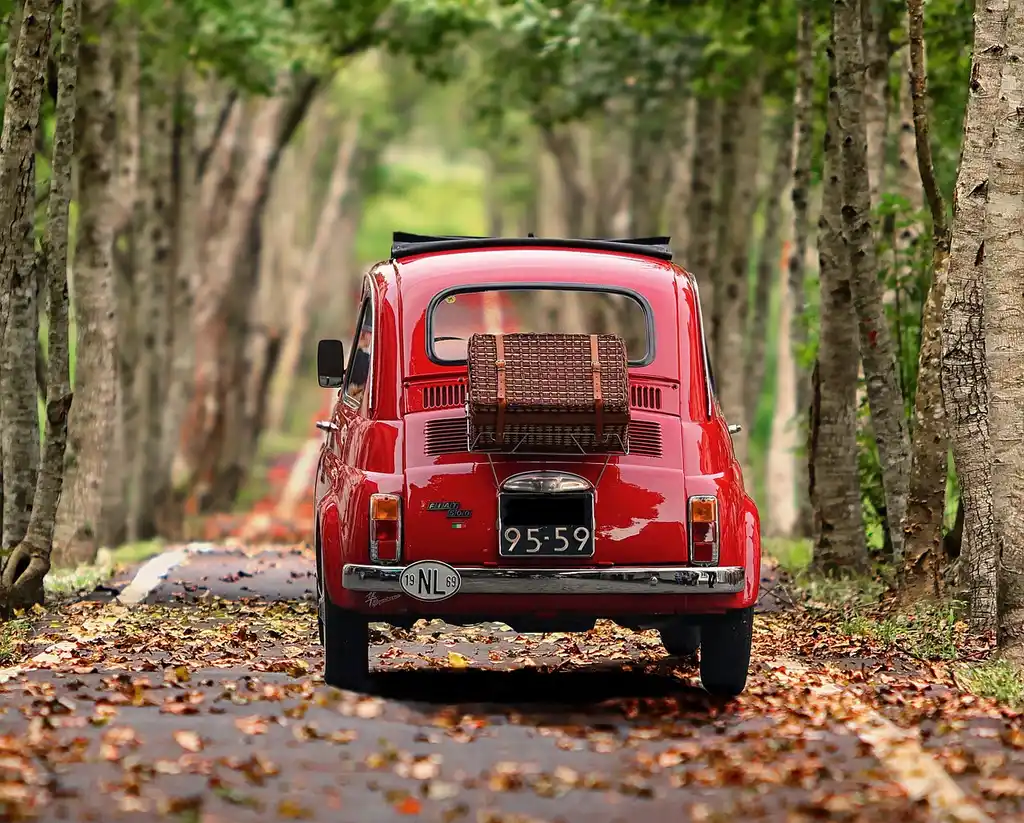
Stop paint fading by matching the fix to the finish: wash and decontaminate if it feels rough, use a light polish if the color is dull but the clear coat is intact, and repaint if you see peeling, chalking, or bare patches. Ignoring the stage wastes time and can let UV damage spread. This guide shows how to tell oxidized paint from contamination or clear-coat failure, then choose the least aggressive fix and prevention plan.
Why outside parking fades paint
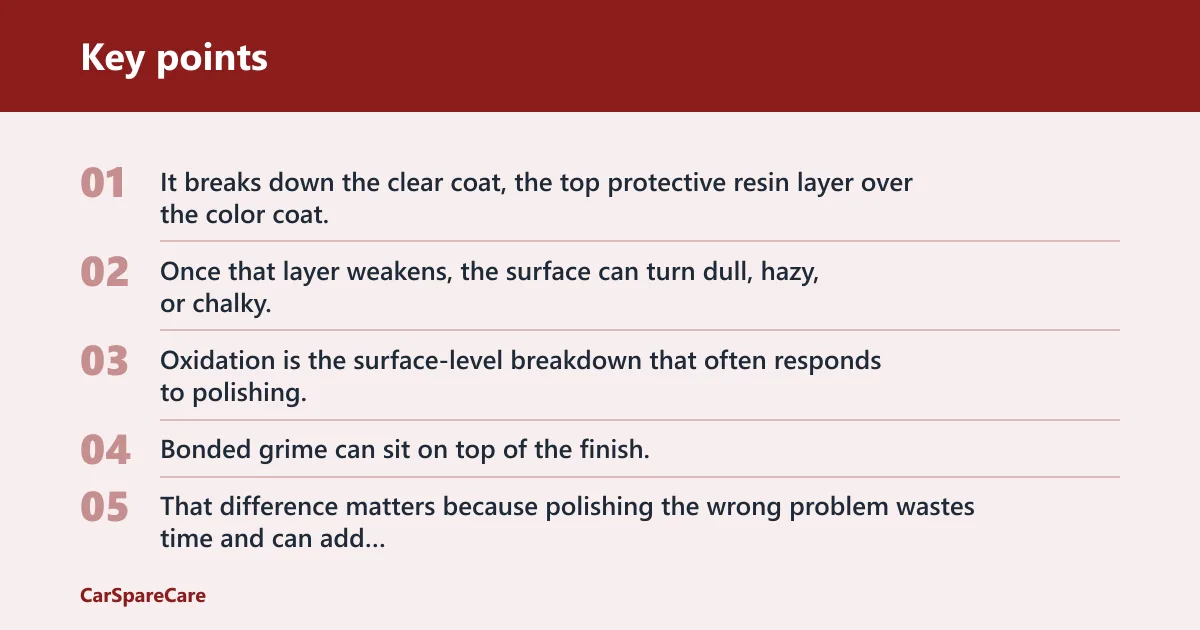
UV radiation drives most outdoor fading. It breaks down the clear coat, the top protective resin layer over the color coat. Once that layer weakens, the surface can turn dull, hazy, or chalky, and uncovered cars lose protection faster.
Oxidation is the surface-level breakdown that often responds to polishing. It is not the same as contamination. Bonded grime can sit on top of the finish, while oxidation is the paint film itself changing as the clear coat degrades. That difference matters because polishing the wrong problem wastes time and can add swirls.
Bird droppings, tree sap, bug splatter, and road grime speed up the process. They can etch weakened clear coat, especially after long sun exposure or heat. A cover helps only if the paint is clean first and the cover stays dry and free of grit.
How UV damage starts
Sun exposure can fade paint when a car is stored outside and uncovered frequently. The clear coat loses protection first, then the color coat starts to look thin or washed out. Red often shows that shift sooner, because the pigment loss is easier to notice on warm-toned finishes.
What contamination does
Contamination sits on the surface or bonds to it. That can make paint feel rough, look spotty, or seem dull even when the color beneath is still healthy. Clay can remove those deposits, but it cannot restore missing pigment or repair cracked clear coat.
Fading paint triage for outdoor cars
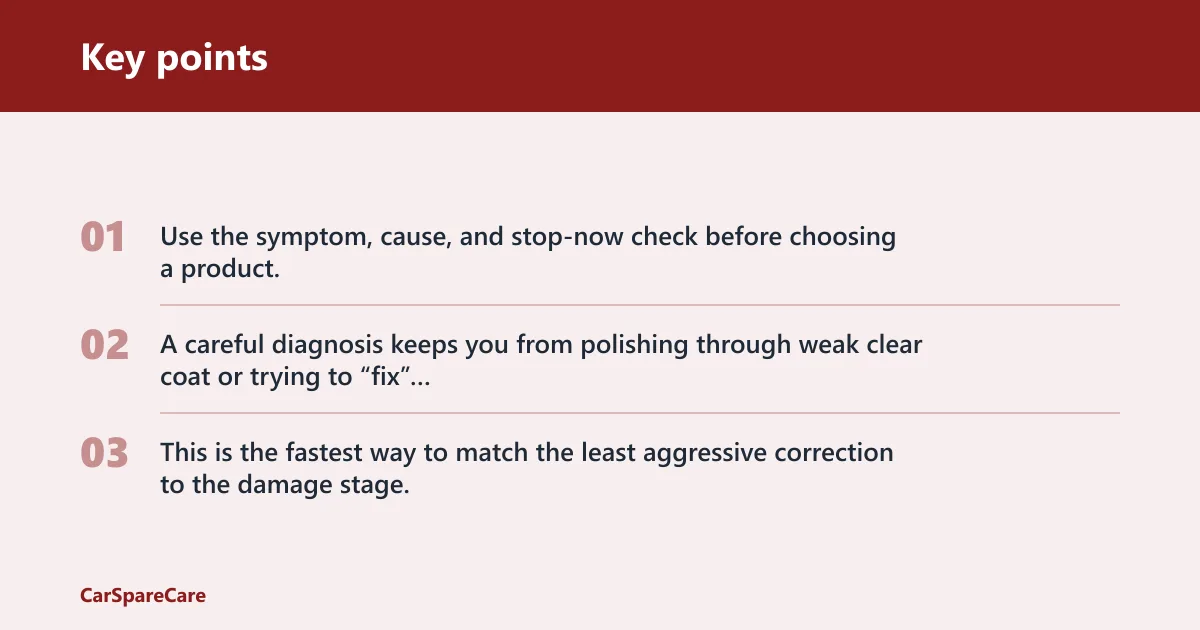
Use the symptom, cause, and stop-now check before choosing a product. A careful diagnosis keeps you from polishing through weak clear coat or trying to “fix” a problem that really needs repainting. This is the fastest way to match the least aggressive correction to the damage stage.
| Symptom | Likely cause | DIY-safe action | Products needed | Stop-now warning signs |
|---|---|---|---|---|
| Light chalkiness | Early oxidation on intact clear coat | Wash, clay if rough, then use a light car polish | Car wash soap, microfiber towels, detailing clay bar, clay lube, light polish, wax or UV sealant | Color transfers to towel, chalky dust keeps returning, or the surface shows hairline cracking |
| Dull but smooth paint | UV dulling with mild oxidation | Wash, then polish by hand or with an orbital or dual-action polisher using light pressure | Car wash soap, microfiber towels, car polish, correct pad, wax or UV sealant | Clear coat looks thin at edges or becomes patchy after a test spot |
| Rough contaminated paint | Bonded grime on top of the finish | Wash first, then clay with lubrication before polishing | Car wash soap, microfiber towels, detailing clay bar, automotive clay lube | Deep scratches, peeling, or a rough feel that remains after claying |
| Red paint | UV fade often shows sooner on red pigments | Use the same triage, then monitor for color loss after correction | Wash soap, clay lube, clay bar, polish, wax or UV sealant | Color stays washed out even when gloss improves, or the finish looks uneven panel to panel |
| Black paint | Swirl marks and buffer trails show quickly, which can hide or mimic fade | Use the least aggressive polish and a soft pad, then inspect in strong light | Car polish, orbital or dual-action polisher, soft pad, microfiber towels, sealant | Buffer haze, visible trails, or clear coat that looks cloudy after correction |
| Cracked or peeling clear coat | Clear-coat failure | Stop DIY correction and plan for professional paint correction or repainting | None for correction; document the damage for a body shop estimate | Peeling edges, cracking, bare spots, or exposed color coat |
Can you restore faded paint without repainting?
Sometimes, yes. If the clear coat is intact and the problem is oxidation or bonded contamination, polishing and decontamination can bring back gloss without repainting. If the clear coat is cracked, peeling, or missing, no amount of polish will rebuild the lost layer.
When polishing can bring back gloss
Car polish removes a thin layer of oxidized material and smooths the surface enough to reflect light better. That is why a dull panel can look noticeably better after polishing. Hand polishing can work on light damage, while machine polishing is better for larger panels or more severe oxidation.
When clay and polish are enough
If the paint is rough but still intact, start with a wash, then clay, then polish. The clay bar removes bonded micro-contaminants, and the polish handles the oxidation. Use the clay with automotive clay lube, and keep the motion straight, left-to-right or up-and-down, to reduce scratching.
When clear-coat failure means repainting
Cracked clear coat is a sign the damage may exceed DIY restoration. Peeling, bare spots, and deep chalking that returns after correction point to a coating that has failed structurally. At that stage, professional correction or repainting is the realistic fix.
What fixes faded paint at home
Use the least aggressive method that matches the damage. A full DIY restoration often follows wash, clay, buffing, and waxing, which is the structure used in many basic restoration guides. A complete job can be affordable, and some guides estimate under $20 in materials and 1 to 3 hours of work, depending on size and condition.
Wash first
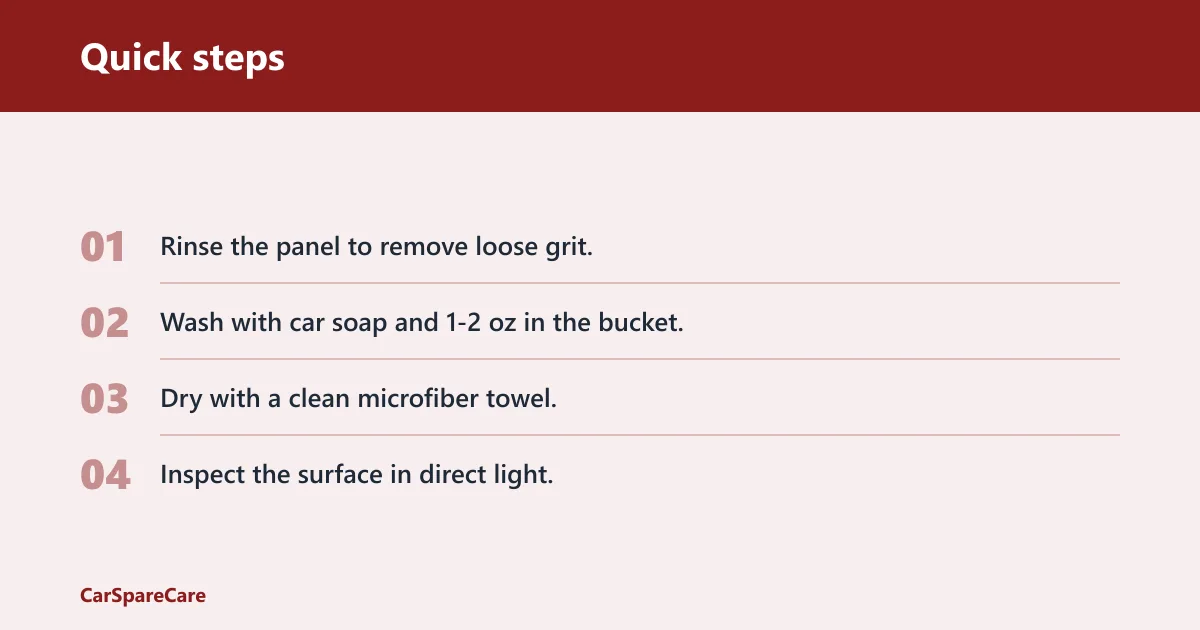
Wash with car soap and water before any correction. A common guidance point is 1-2 oz of car washing soap in the wash bucket. Use microfiber towels to reduce scratching, and rinse thoroughly so you do not drag loose grit across the finish. (Wikihow)
- Rinse the panel to remove loose grit.
- Wash with car soap and 1-2 oz in the bucket.
- Dry with a clean microfiber towel.
- Inspect the surface in direct light.
Use a detailing clay bar
Clay is for contamination, not fading. Use a detailing clay bar with automotive clay lube so the clay slides smoothly across the paint. If the finish feels rough after washing, clay can remove the bonded debris before polishing begins.
Polish by hand or machine
Car polish can be hand-applied for small spots or machine-applied for broader oxidation. An orbital or dual-action polisher is commonly used for correction if the proper pad and light pressure are used. Heavy pressure can cut too much clear coat or leave buffer marks, especially on black paint.
Seal the finish
Wax or UV sealant is a maintenance layer, not a permanent fix. It helps protect the corrected finish from sun and contamination, but it needs periodic reapplication. A common maintenance interval is every 2 to 3 months, especially on cars parked outside.
Red paint often shows fading sooner than other colors because loss of depth is easier to spot as the finish lightens. If the car sits in a hot, sun-heavy space, red panels can look washed out while other colors still seem acceptable. The fix is the same triage, but the inspection needs to be stricter.
Extra care for red paint
Focus on frequent washing, prompt removal of bird droppings and sap, and regular sealing. A cleaned red panel can still look tired if the clear coat has thinned, so test a small area before doing a full correction. If gloss returns but the color stays pale, the paint may need professional attention.
Picture a red sedan parked nose-out in full afternoon sun near a tree. If sap lands on the hood and sits for days, the clear coat can etch faster where the finish is already weak. A quick wash and spot correction are easier than recovering from a baked-on stain.
How often to re-seal red paint
Follow the same 2 to 3 month re-seal interval used for other outside cars, and shorten it if the vehicle sees heavy sun, salt, or frequent contamination. Black paint may show swirls first, while white paint can show yellowing and chalky oxidation first, so color should guide what you inspect, not what you assume.
Outdoor parking prevention plan
Prevention works best when it treats outside parking as ongoing exposure management. Wash often enough to remove bird droppings, tree sap, bug splatter, and road grime before they etch the clear coat. Re-seal on schedule, and use shade or a cover only when that cover will stay clean and dry.
Wash cadence and decontamination
Wash more often if the car sits under trees, near traffic, or through salty conditions. For many drivers, a weekly or biweekly wash is a practical starting point. Clay the paint only when it feels rough, or during a periodic detail when contamination has built up enough to dull the surface.
Cover use, shade, and parking tradeoffs
A cover can reduce UV exposure, but only if it does not trap dirt against the paint. If a cover is dirty or wet, it can scratch the finish and hold moisture against weak clear coat. Shade helps, but it is not a substitute for washing and re-sealing.
Effort, cost, and when to stop
Light oxidation usually means lower effort: wash, clay if needed, then polish and seal. Heavy oxidation, cracked clear coat, or bare spots are different and often belong with a pro. A DIY attempt that only improves gloss while leaving the color thin or patchy is a warning that the finish has moved beyond simple correction.
Frequently asked questions
How do you tell if car paint is faded or just dirty?
Wash and dry the panel, then inspect it in strong light and feel it with a clean plastic bag over your hand. Dirty paint often feels rough and looks better after cleaning. Faded paint stays dull, chalky, or washed out even when it is clean.
What products help protect car paint from sun fading
Use wax or a UV sealant after correction, then reapply it on a regular schedule. A clay bar and clay lube help with decontamination, and a quality car polish helps when oxidation is already present. No product replaces the clear coat once it has failed.
When is faded paint too far gone to fix at home?
If the clear coat is cracked, peeling, or missing, DIY correction is usually the wrong path. Heavy oxidation that returns after polishing is another warning sign. At that point, professional paint correction or repainting is the practical answer, not more aggressive rubbing.

Hi, I’m Melvin, an automobile engineer with extensive experience in automobile equipment. I currently work for a local automobile firm, where I specialize in the car parts industry. I’ve had the opportunity to collaborate with seasoned inspectors, gaining invaluable hands-on experience that goes beyond just theory.
My passion for automotive care started at a young age, which led me to create CarSpareCare. Through CarSpareCare, I share the knowledge and skills I’ve acquired over the years to help others navigate the world of car maintenance and repairs.
My goal is to provide practical tutorials, essential safety advice, and the latest industry insights so that anyone—whether a beginner or an expert—can confidently tackle their automotive projects.

