
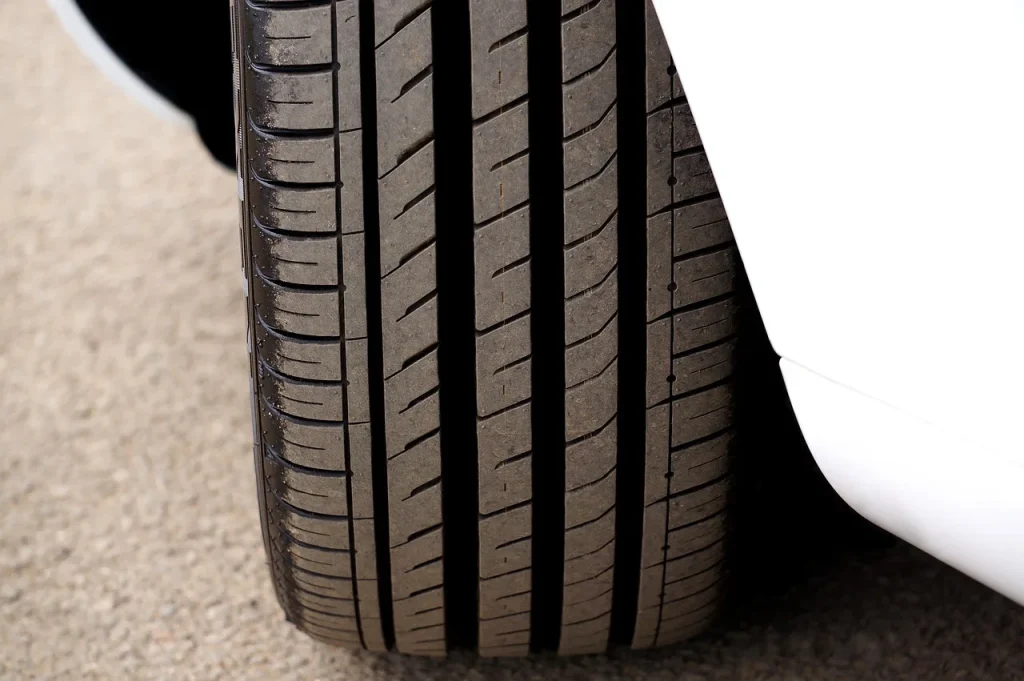
Steering wheel shake only when the front end hits bumps usually points to looseness or a damaged tire or wheel part, not simple wheel balance. Ignore it, and a small clunk can become faster tire wear, wandering steering, or a broken suspension joint. This guide shows the most likely causes, quick checks you can do safely, and when to stop driving.
Bump-triggered steering shake basics

Road-input shake and speed-only vibration are different faults. If the wheel shakes because a bump jostles the front end, the problem is often a loose joint, damaged tire, bent wheel, or another part that shifts under load. If the shake appears on smooth pavement at one speed, balance or a bent wheel moves higher on the list.
The steering wheel’s message matters. A brief twitch after one pothole points somewhere else than a steady shimmy that shows up on rough pavement or only at highway speed. The trigger pattern narrows the search before you touch anything.
When the symptom is mild and limited to rough roads, it may be an early warning. When it comes with pull, clunk, or visible tire damage, treat it as a safety issue until proven otherwise.
What your bump-triggered shake pattern usually means
| trigger | most likely subsystem | key secondary symptom | safest next check |
|---|---|---|---|
| single sharp bump | bent wheel, tire bruise, or loose steering part | new pull, clunk, or steering wheel off-center | stop and inspect the tire sidewall, wheel lip, and visible steering parts |
| repeated washboard road | control arm bushings, tie rod ends, ball joints, or tire cupping | shimmy that repeats with each ripple | look for play, cracked rubber, and uneven tread wear |
| only at highway speed on bumps | balance issue or bent wheel made more obvious by speed | shake fades at lower speed | check balance weights and wheel runout, then inspect for rim damage |
| shake plus clunk | tie rod ends, ball joints, control arm bushings, or a loose wheel | front-end knock when braking or turning | do not ignore; check for looseness before more driving |
| shake plus pull | alignment issue, sticking caliper, tire defect, or bent suspension part | vehicle drifts when you let go of the wheel | inspect tire wear, brake drag, and alignment clues |
| shake plus tire noise | cupping, feathering, flat spots, bearing noise, or tread separation | hum, growl, or rhythmic roar | inspect tire tread and listen for load-sensitive noise during a safe road test |
| shake after pothole impact | bent wheel, damaged tire, or bent axle/suspension part | new wobble that started right after the hit | check for sidewall bubbles, rim bends, and fresh steering play |
Say your compact SUV starts shaking only after one deep pothole on the right side. If the steering wheel now trembles at 30 mph and there is a new pull to the right, the first checks should be the tire sidewall, wheel lip, and visible tie rod or control arm damage, not just balance weights.
Suppose a pickup shimmies across a corrugated dirt road but feels fine on smooth pavement. That pattern fits load transfer through worn bushings or a tire with cupping better than a pure balance problem, because the bump input is exposing looseness instead of a steady rotating-mass fault.
📊 Wheel bearings may fail naturally around 85,000–100,000 miles. Source: Wikihow.
Could tires be causing it?
Yes. Tire problems are one of the first things to check, especially if the shake begins when the wheel is jolted over bumps. Underinflation and overinflation can both contribute to handling issues and uneven tire wear, while balance weights can fall off and create a shake that is felt in the steering wheel.
Uneven tire wear can also matter. Cupping, feathering, flat spots, and excessive edge wear can all create vibration, and a tire with tread separation or sidewall damage can shake badly after an impact. Front tire problems usually show up in the steering wheel more clearly than rear tire problems. (Firestonecompleteautocare)
Pressure and uneven wear clues
Start with tire pressure. A tire that is too low or too high can change how the tire meets the road and can accelerate wear patterns that later shake over bumps. Compare all four tires to the placard pressure, then inspect for wear that is not even across the tread.
Look for cupping, which feels like alternating high and low spots around the tread. Feathering shows as a sawtooth edge across the tread blocks. Flat spots often feel like a repeated thump or shake until the tire warms up or the car changes speed.
Cupping, feathering, flat spots, and balance weights
Balance weights can be the simplest explanation. If one falls off, the wheel may shake more at specific speeds, and the vibration often becomes clearer near highway speeds. That is one reason wheel balance and road-input shake get mixed up so often.
Check the inside and outside of each front wheel for missing clip-on or stick-on weights. A missing weight usually does not create a clunk, but it can make a wheel that was already sensitive to bumps feel much worse at speed.
Tread separation, sidewall damage, and front-versus-rear feel
Tread separation is more serious than ordinary wear. Look for a bulge, split, or area where the tread seems to lift from the carcass. Sidewall bubbles, cuts, or a fresh bruise after a pothole hit deserve immediate attention because they can fail without much warning.
Front tire faults usually shake the steering wheel more directly. Rear tire faults often feel like seat or body vibration first, though severe rear damage can still move through the whole car.
Is it a wheel, alignment, or brake issue?
A bent wheel, alignment fault, or brake problem can all sit behind a shake that appears on bumps, but the clues differ. A bent wheel often follows a pothole or curb strike. Alignment problems usually add pull or an off-center steering wheel. Brake issues matter most when the shake appears while slowing down.
Bent wheel or rim after impact
A bent wheel can become most noticeable at highway speeds, and a pothole hit is a common trigger. The wheel may still hold air and look normal from a distance, yet it can wobble enough to shake the steering wheel when the suspension is loaded by a bump.
Check the rim edge for flat spots, dents, or fresh scrapes. A bent wheel can mimic a balance issue, so a wheel that shakes after an impact should not be assumed to be only out of balance.
Wheel balance versus alignment
Wheel balance is about mass distribution. An unbalanced wheel creates a vibration that is felt in the steering wheel, and the symptom often shows up more at certain speeds. Alignment is about toe, camber, and caster. It affects how the tires point and how the car tracks.
Alignment problems often show up as a pull to one side on a straight road or an off-center steering wheel after driving straight. Uneven tire wear is another clue, especially if the wear pattern matches toe or camber error. Alignment does not usually create a sudden shake from one pothole alone unless another part is already loose or bent.
Brake rotors when the shake appears while braking
If the steering wheel shakes mainly while braking, move the brakes up the list. Warped or rusty front rotors can cause vibration, but a sticking caliper can also make the car pull to one side and create vibration. Heat and caliper drag can worsen the symptom.
That distinction matters. A shake that happens only during braking does not behave the same as one triggered by a bump. If the wheel is steady until the pedal is pressed, the brake system needs attention before alignment or balance work.
Suspension and steering parts that loosen over bumps
Loose suspension or steering parts can move under load transfer when the car hits a bump. That movement can steer the wheel slightly, then let it snap back, which feels like shake or clunking through the steering column. The most common parts in this path are control arm bushings, tie rod ends, ball joints, and wheel bearings.
Control arm bushings and load transfer
Cracked or worn rubber control arm bushings let the arm shift when the wheel is jolted. That extra movement can create a vibrating steering wheel, especially while braking and over rough roads. The symptom often gets worse when the suspension is loaded by a bump or a stop.
Look for torn rubber, cracked sleeves, or a control arm that moves more than the opposite side under load. The part does not need to be fully failed to cause a shake.
Tie rod ends and steering wander
Tie rod ends control toe at the wheel. If they have looseness or play, the front wheels can wander and clunk over bumps. You may feel a delay in steering response, then a small knock as the wheel settles back into place.
Fresh play here is not a cosmetic issue. It changes steering precision and can let the front wheels move enough to make the wheel shake after each bump.
Ball joints and front-end play
Ball joints help keep the steering and suspension linkage stable as the wheel moves up and down. Excess play can create vibration and clunks over bumps, especially when the front end is unloaded and then reloaded quickly by rough pavement.
Ball joint looseness often shows up with uneven steering feel on turns or when the vehicle is jacked up and the wheel can move where it should not.
Wheel bearings and load-sensitive noise
Wheel bearings can create humming or growling that changes with wheel load, and that noise is often mistaken for tire noise. Poor road conditions or frequent precipitation can make bearing failure more common, and some bearings may fail naturally around 85,000–100,000 miles, though service life varies widely.
Listen for a sound that changes when steering left or right on a safe, empty road. A bearing issue often changes with load, while a tire roar tends to stay more constant.
Road damage and load clues
Road impact matters because it can bend metal or bruise a tire internally even when the outside looks only lightly marked. A pothole can cause steering wheel shake by damaging a wheel, bending an axle, or bruising a tire carcass. A minor accident can do the same if the axle is bent.
What a pothole can bend or bruise
A pothole can bend a wheel rim, distort a suspension arm, damage a tie rod end, or cause an internal tire bruise. A steering vibration can start after hitting a bump, pothole, or minor accident if an axle is bent. That is why a fresh symptom after impact deserves a closer look. (Wikihow)
A common first-timer mistake is assuming the tire is fine because it still holds air. Internal damage can exist with no immediate loss of pressure.
Why trucks and SUVs can feel it differently
Trucks and SUVs can react differently because of larger unsprung mass and, often, more load on the front end. A small defect in a heavy wheel or tall tire can send a sharper jolt through the steering wheel, especially on rough roads or under braking.
Vehicles with bigger tires, lifted suspensions, or added front weight can also magnify a marginal issue that a lighter car barely notices.
Why lifted or modified steering geometry can matter
Lifted or modified vehicles can change toe, caster, and steering angle enough that a part with slight wear becomes noticeable sooner. If the steering geometry is altered, bump steer and wheel shake can feel worse even when the same part wear would be milder on a stock vehicle.
That does not mean the modification caused the fault, only that it can reveal it faster. If the symptom began after suspension work, the install and alignment deserve attention first.
A practical first-diagnosis path
- Check tire pressure on all four tires.
- Inspect the front tires for cupping, feathering, flat spots, sidewall bubbles, and tread separation.
- Look for missing balance weights and obvious rim damage.
- Note whether the shake happens on one bump, repeated rough pavement, or only at a certain speed.
- See whether the car pulls, the wheel sits off-center, or the noise changes while braking.
- Inspect visible tie rods, control arm bushings, and ball joint boots for torn rubber or looseness.
- If the shake is sudden, severe, or paired with clunking or tire damage, stop driving and arrange a tow.
Frequently asked questions
Why does my steering wheel shake over bumps?
That pattern usually points to something loose, bent, or damaged in the front end rather than a simple balance issue. The best clue is the trigger: one sharp bump suggests impact damage or looseness, while repeated rough pavement points more toward bushings, tires, tie rods, or ball joints.
Why does my steering wheel shake on bumpy roads?
Rough roads load the suspension repeatedly, so worn control arm bushings, tie rod ends, or ball joints can show up there before they feel bad on smooth pavement. Tire cupping can also add a repeated vibration that follows each ripple in the road.
Why does my steering wheel shake at high speeds?
If the shake is tied mainly to speed, balance and bent-wheel issues move higher on the list. An unbalanced wheel can create a vibration that is felt in the steering wheel, and a bent wheel can become most noticeable at highway speeds.
Is it safe to drive if my steering wheel shakes over bumps?
The risk depends on how severe the symptoms are. A light shimmy on rough pavement may be less urgent, but a sudden shake with pull, clunk, or visible tire damage should be treated as unsafe. If the steering feel changes quickly or the car tracks unpredictably, stop driving.
How do I tell if it is tires, alignment, or suspension?
Tires often leave wear clues such as cupping, feathering, flat spots, or sidewall damage. Alignment issues usually add a pull or off-center wheel on a straight road. Suspension problems more often bring clunking, wandering, or play that appears when the wheel hits a bump.
Can a pothole cause steering wheel shake?
Yes. A pothole can bend a wheel, bruise a tire, or bend an axle or suspension part, and a steering vibration can start right after the hit. If the symptom began immediately after impact, inspect the tire, rim, and steering parts before assuming it is only balance.
When should I stop driving and tow the car?
Stop driving if the shake is sudden, severe, or joined by a clunk, pull, or visible tire damage. Tow it if the steering feels loose, the car drifts hard, or a tire shows a bubble, split, or tread separation. Those signs can get worse quickly.
Why does my triton steering wheel shake when I go over little bumps?
On a Triton, that symptom still follows the same pattern: a bump-triggered shake usually means looseness, tire damage, or a bent component rather than simple wheel balance. If little bumps cause it, focus on front tire condition, tie rod play, bushings, and any recent pothole impact or suspension work.

Hi, I’m Melvin, an automobile engineer with extensive experience in automobile equipment. I currently work for a local automobile firm, where I specialize in the car parts industry. I’ve had the opportunity to collaborate with seasoned inspectors, gaining invaluable hands-on experience that goes beyond just theory.
My passion for automotive care started at a young age, which led me to create CarSpareCare. Through CarSpareCare, I share the knowledge and skills I’ve acquired over the years to help others navigate the world of car maintenance and repairs.
My goal is to provide practical tutorials, essential safety advice, and the latest industry insights so that anyone—whether a beginner or an expert—can confidently tackle their automotive projects.

