
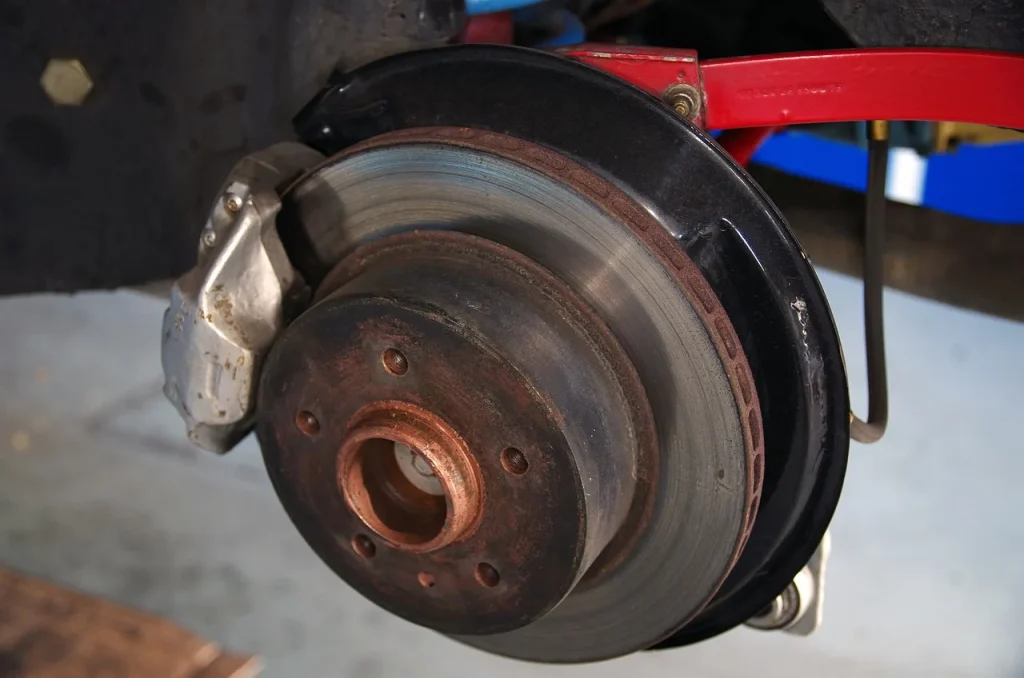
A brake pedal that vibrates only during stops from highway speeds is often associated with rotor thickness variation, pad deposits, sticking calipers, wheel or tire issues, or ABS activation; if the shake starts above about 45 mph, check the pattern before blaming “warped rotors.” Ignoring it can mean longer stopping distances and can turn a minor brake fault into rotor, pad, or hub damage. This guide shows how to match vibration timing, speed, and heat clues to the most likely cause.
Why does my brake pedal vibrate when I slow down from highway speeds?
A pedal shake that shows up mainly during high-speed stops usually means the brake system is reacting to a surface, hydraulic, or control problem that becomes more obvious under heat and load. The key clues are when it starts, where you feel it, whether the brakes were already hot, and whether ABS was active.
What the vibration timing tells you
If the vibration appears on the first hard stop from highway speed, rotor variation, pad deposits, or a caliper that is not applying evenly are common suspects. If it appears after repeated stops, heat-related pad transfer, pad glazing, fluid fade, or a caliper that is hanging up becomes more likely.
Picture a car that feels smooth around town but shudders after a high-speed exit-ramp stop. That pattern points more toward heat-sensitive brake parts than a suspension problem that would usually show up over bumps, coasting, or general road speed.
Why pedal, wheel, and seat feedback matter
A vibration felt mostly in the pedal often points to the brake system itself. A shake in the steering wheel usually points more toward the front axle, while a shudder in the seat can point to the rear axle. Mixed feedback can happen when a front brake issue is amplified by loose suspension or steering parts.
Is ABS causing the pulse?
ABS can create a noticeable pulsing or jumping sensation in the brake pedal during emergency stops, and that can be normal. The system is cycling pressure rapidly to prevent wheel lockup. If the pulse happens only at the threshold of a hard stop, ABS may be doing its job rather than signaling a brake fault.
Normal ABS pulsation during hard stops
ABS activation usually feels rapid, coarse, and linked to a near-lockup stop on a slippery or uneven surface. The pedal may push back or chatter, and the car may keep steering control better than a locked-wheel stop would allow. That behavior is not the same as a steady shake that repeats every stop at highway speed.
Signs of a false ABS trigger
A faulty wheel speed sensor can cause unexpected ABS activation. If the system thinks a wheel is slowing too fast, it may pulse the brakes even when the road surface is normal. An ABS warning light, activation at low-risk stops, or a pulse that arrives too early can point to a sensor, tone ring, or wiring issue rather than a rotor problem.
Brake rotor causes matrix
Rotor-related vibration is common, but two different faults are often lumped together. Lateral runout means the rotor wobbles as it turns. Disc Thickness Variation, abbreviated DTV, means the rotor thickness changes around its face. Both can make the pedal jump, but they do not behave the same way.
Runout versus disc thickness variation
Lateral runout can push the pads in and out once per wheel rotation. DTV changes braking force as the rotor turns through thicker and thinner spots. Either one can produce a pedal that jumps, but DTV is often more noticeable during braking because the friction force changes rhythmically.
Warped brake rotors are often blamed first, but the metal is not always bent. A rotor may be within shape tolerance and still vibrate because of DTV or uneven pad material on the face.
| Symptom pattern | Likely cause | Wheel heat | ABS involved | Next inspection step |
|---|---|---|---|---|
| First hard stop from highway speed, steady pedal shake | Rotor runout or DTV | Usually normal or slightly warm | No | Measure rotor runout and thickness variation |
| Vibration gets worse after repeated stops | Pad deposits, glazing, heat-related DTV | Hot | No | Inspect rotor face for transfer bands and pad condition |
| Sharp pulse only during panic braking on loose or wet pavement | Normal ABS activity | Any | Yes | Check for ABS warning light and road-surface trigger |
| Pedal shake plus steering wheel wobble | Front brake rotor issue or front suspension looseness | Often hot | No or uncertain | Inspect front rotors, wheel bearings, tie rods, and control arms |
| Pedal shake plus seat vibration | Rear rotor or rear brake issue | Often hot at rear wheel | No or uncertain | Check rear rotors, calipers, and parking brake hardware |
| Vibration after mountain driving, pedal still firm | Pad transfer layer or rotor imprinting | Very hot | No | Inspect for uneven pad deposits and rotor hot spots |
| One wheel much hotter than the others | Sticking caliper or seized piston | Hot at one corner | No | Inspect slide pins, piston movement, and hose condition |
| Pulse with ABS light on or stored fault | Wheel speed sensor or ABS control fault | Any | Yes, unexpectedly | Scan ABS codes and inspect sensor wiring and tone rings |
Transfer layers, imprinting, and heat-related shake
Repeated hard stops and heat cycles can create uneven pad transfer on the rotor face. That transfer layer can feel like a warped rotor because the pads grip more strongly on some spots than others. Pad imprinting after a hot stop can do the same thing, especially if the car sits with the brakes clamped hard while the rotors are very hot.
Suppose a sedan brakes smoothly for the first few miles after a cold start, then starts to pulse after two fast freeway exits. That pattern is a strong clue that heat is changing the rotor face or pad material, not that the symptom is random.
Front axle versus rear axle symptom patterns
Front brake problems more often send vibration into the steering wheel as well as the pedal. Rear brake trouble can be felt more through the seat or the floor, and the pedal may still pulse. So a pedal vibration does not automatically mean the front brakes are at fault.
Rotors above minimum thickness may be resurfaced on a brake lathe, but only if the surface problem can be corrected and the rotor still has enough material left. If the rotor is at or below minimum thickness, it gets replaced. That limit matters because a thin rotor sheds heat poorly and may return with the same complaint.
Can brake pads cause vibration?
Yes. Worn brake pads can contribute to vibration when the friction material is glazed, unevenly worn, or contaminated. Pads are not just a wear item, their surface condition affects how evenly they grip the rotor, and that can change how the pedal feels under braking.
Glazing, uneven wear, and contamination
Glazed pads have a hardened surface that can slide and grab irregularly. Uneven wear can happen when the caliper or slides are not moving freely. Oil, brake fluid, grease, or road contamination on the pad face can also change friction enough to create vibration or pull.
When pads should be replaced with rotors
If the rotor has DTV, heat spots, or deep scoring, pads often need replacement with the rotor or they may carry the same uneven contact pattern into the new part. A pad with damaged friction material should not be reused just because the rotor was machined.
Could a sticking caliper be the cause?
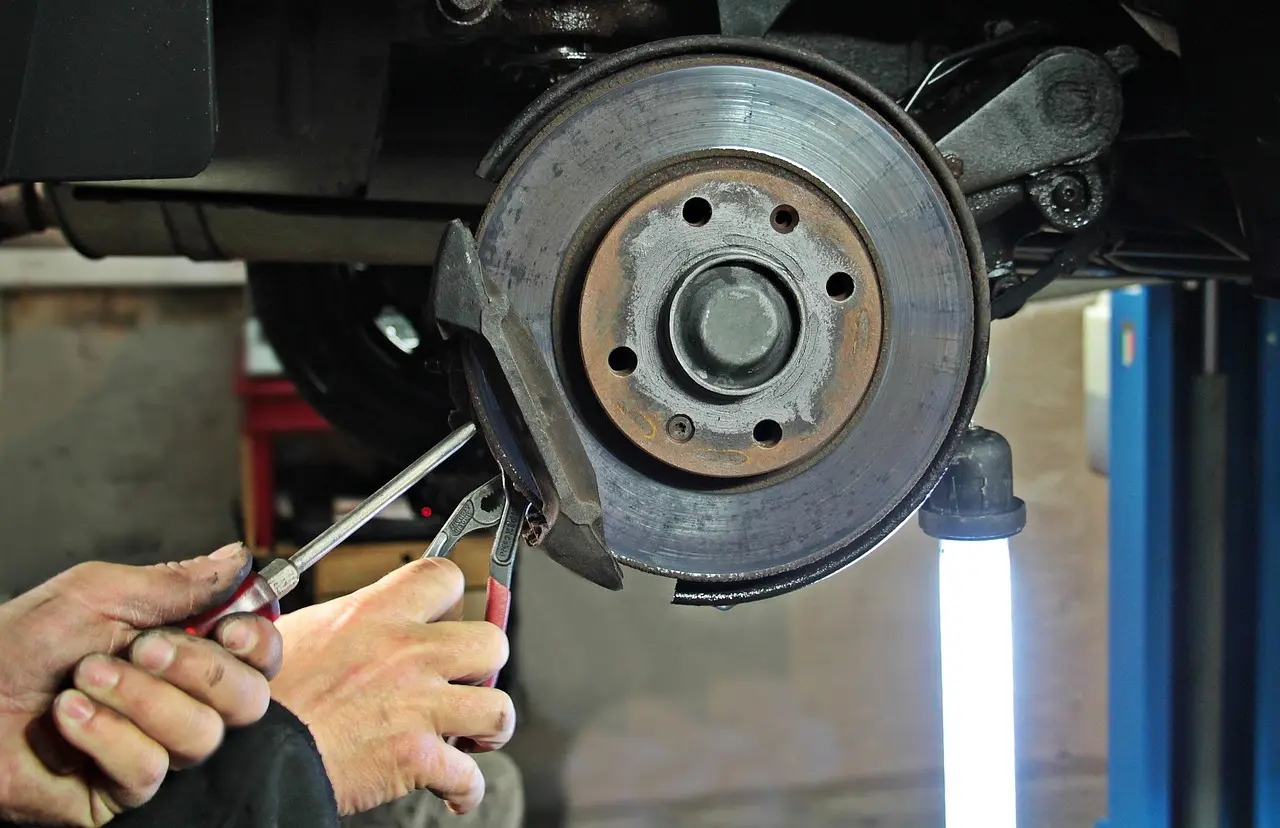
Yes. A seized caliper can cause brake vibration and a pull to one side. If a piston sticks or the slide pins corrode, one pad may drag, overheat, or wear unevenly. That creates heat, uneven braking force, and a hot-wheel clue that points to a corner-specific problem.
Seized pistons and slide pin corrosion
A caliper piston that does not retract cleanly can keep one pad in contact with the rotor. Corroded slide pins can prevent the caliper from centering itself, so one pad does more work than the other. Both faults can create repeat vibration after the brakes heat up.
Hot-wheel clues and pull-to-one-side symptoms
If one wheel is much hotter than the others after a normal drive, inspect that corner first. A pull to one side during braking often points to a caliper, hose, or pad issue on that side. The steering wheel may also shift if the problem is on the front axle.
Brake fluid and hydraulic faults
Brake fluid absorbs moisture from the air through vented reservoirs and service events. Hot fluid with moisture can boil sooner and turn to vapor. A pedal that feels fine cold can grow soft on a long downhill or in stop-and-go traffic, and soft pedals can increase stopping distance, especially in panic stops.
Moisture absorption and boiling point drop
Moisture lowers fluid resistance to heat. That matters most after repeated high-speed braking, towing, or long downhill use, when the brake fluid and calipers run hotter than usual. Old fluid can turn a firm pedal into a softer one under heat.
Air in lines, bleeding, and master cylinder bypass
Air pockets act like cushions, so the pedal moves farther before the pads bite. If the pedal is soft, spongy, or inconsistent, bleeding the hydraulic system may be needed. Some ABS systems need a scan-tool bleed routine, not just a manual bleed. If the pedal slowly sinks with steady pressure, the master cylinder may be bypassing internally.
A brake pedal that feels soft or “spongy” can mean the system is compressing something it should not. That is a different problem from a rhythmic shake, but the two can occur together if a car has both heat-related rotor issues and old fluid.
Brake symptom diagnosis matrix
This matrix is meant to separate common patterns before parts are replaced. Match the stop count, heat, pedal force, and where the vibration is felt, then move to the next inspection step that fits the pattern best.
- First-stop highway shake, no ABS, pedal only: inspect front and rear rotors for runout and DTV.
- Shake after repeated hard stops, hot wheels: inspect for pad deposits, glazing, and caliper drag.
- Pulse only in panic stops, ABS light off: consider normal ABS activity first.
- Unexpected pulse with ABS light on: scan for wheel speed sensor or ABS faults.
- Pedal soft or long travel with heat: check fluid age, air in lines, and master cylinder performance.
| Pattern | When it appears | Where felt | Wheel temp | Most likely next step |
|---|---|---|---|---|
| Steady pedal tremor on first highway stop | First stop | Pedal | Normal | Measure rotor runout and DTV |
| Shake gets stronger after two or three hard stops | Repeated stops | Pedal and sometimes wheel | Hot | Check for transfer layers and pad glazing |
| Pulse during emergency braking on wet pavement | Hard stop only | Pedal | Any | Confirm ABS activity is normal |
| Pulse with ABS warning light | Any time | Pedal | Any | Inspect wheel speed sensors and ABS codes |
| One corner much hotter than the rest | After driving | Pedal and pull | Hot at one wheel | Inspect caliper piston, slide pins, and hose |
| Soft pedal that worsens in traffic | Heat buildup | Pedal travel | Often hot | Bleed the system and inspect fluid condition |
| Pedal shake plus steering wobble | Brake application | Pedal and steering wheel | Often hot | Check front brakes and front-end components |
| Pedal shake plus seat vibration | Brake application | Pedal and seat | Often hot | Check rear brakes and rear suspension |
When should you stop driving?
Stop driving and arrange towing if the brake pedal feels soft, sinks, goes near the floor, or if the car pulls hard to one side while braking. Towing is also safer if the brake warning light or ABS light comes on with strong vibration, or if one wheel is overheating badly.
Warning signs that justify towing
If braking distance has clearly increased, if the pedal is spongy, or if fluid loss is visible, do not keep driving. A soft pedal can increase stopping distance, especially in panic stops, and hot fluid with moisture can boil sooner and turn to vapor. That is a safety issue, not a cosmetic one.
Signs that allow a careful drive to a repair shop
If the pedal is firm, the car stops straight, and the vibration is limited to a repeatable shake on highway-speed stops, a careful drive to a shop may be reasonable. Keep speed down, leave extra following distance, and avoid repeated hard braking. If the symptom gets worse, stop and reassess.
Frequently asked questions
Is a vibrating brake pedal a warped rotor problem?
Often, but not always. Rotor runout and DTV are common causes, yet pad glazing, uneven pad deposits, ABS activation, and caliper drag can feel similar. The best clue is whether the shake happens on the first stop, only after heat builds, or only during ABS intervention.
Can ABS make the brake pedal pulse during normal braking?
ABS can pulse the pedal during emergency braking if a wheel is near lockup, and that is normal. It should not pulse during calm, straight, moderate braking on dry pavement. If it does, a wheel speed sensor fault or another ABS input problem needs attention.
Why does the vibration happen more after hard braking from high speed?
Heat is the reason in many cases. Repeated hard stops can create uneven pad transfer, pad imprinting, or more noticeable rotor variation. Hot fluid can also become less stable if moisture is present, and a weak caliper can drag more as temperatures rise.
Could a sticking caliper cause brake pedal vibration?
Yes. A seized piston or corroded slide pin can make one pad drag and overheat, which can create vibration, a pull to one side, and a hot wheel. If one corner is much hotter than the others after a normal drive, inspect the caliper first.
Can worn brake pads cause the pedal to vibrate?
Yes. Pads with glazing, uneven wear, or contamination can change how the brakes grab the rotor and create a shake in the pedal. If the pads are badly worn or the friction surface is damaged, they often need replacement along with the rotors to stop the symptom from returning.

Hi, I’m Melvin, an automobile engineer with extensive experience in automobile equipment. I currently work for a local automobile firm, where I specialize in the car parts industry. I’ve had the opportunity to collaborate with seasoned inspectors, gaining invaluable hands-on experience that goes beyond just theory.
My passion for automotive care started at a young age, which led me to create CarSpareCare. Through CarSpareCare, I share the knowledge and skills I’ve acquired over the years to help others navigate the world of car maintenance and repairs.
My goal is to provide practical tutorials, essential safety advice, and the latest industry insights so that anyone—whether a beginner or an expert—can confidently tackle their automotive projects.

