Treat fresh ink within about 5 to 10 minutes with blotting and the right solvent for the material. If it has set, use a stronger cleaner in short passes and stop before color transfer starts. Done badly, you can smear the stain deeper, strip dye, haze trim, or leave a permanent pale patch. This guide gives material-by-material steps for cloth, vinyl/PVC, leather, and Alcantara, plus the stop point and failure signs for each.
Introduction
Why the material matters more than the stain name
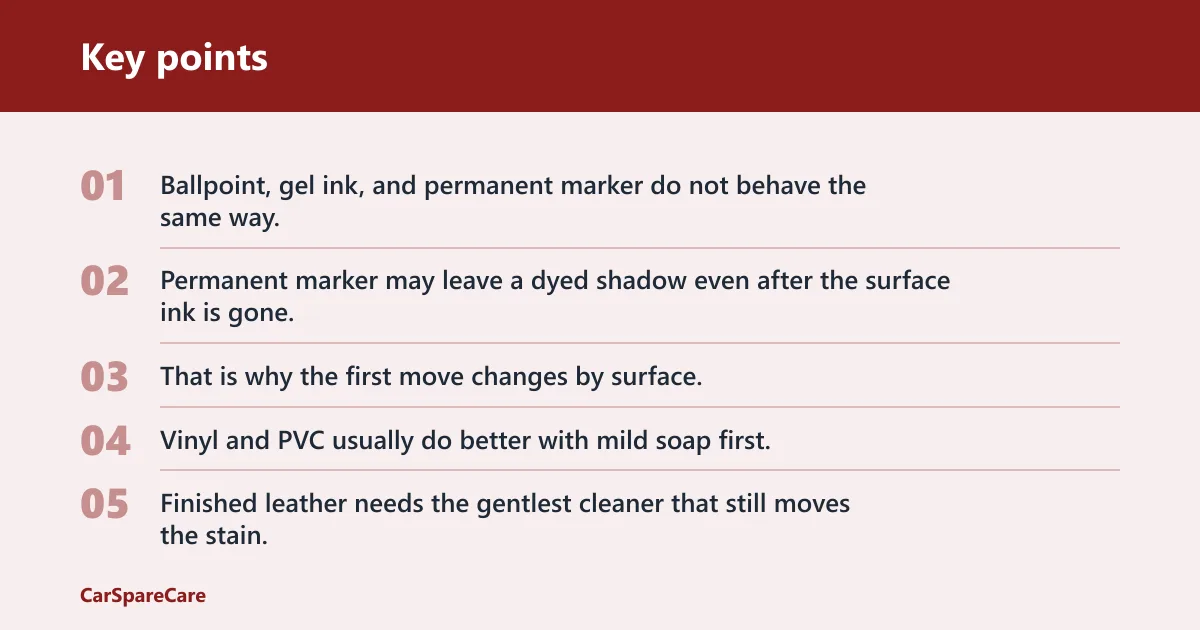
Ballpoint, gel ink, and permanent marker do not behave the same way. Ballpoint often lifts in stages. Gel ink can smear with too much liquid. Permanent marker may leave a dyed shadow even after the surface ink is gone.
That is why the first move changes by surface. Cloth can take a controlled alcohol pass. Vinyl and PVC usually do better with mild soap first. Finished leather needs the gentlest cleaner that still moves the stain. Alcantara needs the most restraint of all.
📊 That vinegar solution is left on the stain for about 10 minutes. Source: Wikihow.
What you’ll need
- White microfiber cloths, so you can see ink transfer and switch to a clean section often
- Vacuum with upholstery attachment, to clear seams and crevices before any wet cleaning
- Isopropyl alcohol, preferably 90% when available; 70% can be used if 90% is unavailable
- Dish soap
- White vinegar
- Warm or cold water, depending on the mix you choose
- Leather cleaner made for finished automotive leather
- Leather conditioner for the final step on leather
- Commercial upholstery cleaner matched to the seat material
- Cotton swabs for seams, stitching, and narrow spots
Ink and interior decision table
| Material | Fresh pen ink | Dried pen ink | Gel ink | Permanent marker |
|---|---|---|---|---|
| Cloth/fabric | First: vacuum, then alcohol on the cloth. Second: dish soap solution. Stop: if the shadow stays after two light passes. | First: alcohol on a white microfiber cloth. Second: vinegar and dish soap in water. Stop: if the dye stops transferring but the mark remains pale gray. | First: alcohol in short passes. Second: upholstery cleaner. Stop: if the weave starts to fuzz or the stain spreads. | First: alcohol. Second: upholstery cleaner. Stop: if a dyed halo remains after the surface ink lifts. |
| Vinyl/PVC | First: mild dish soap solution. Second: alcohol on the cloth, lightly. Stop: if the finish dulls or feels tacky. | First: dish soap solution. Second: alcohol only on the cloth for stubborn transfer. Stop: if color changes or softening begins. | First: soap solution. Second: alcohol in a very small amount. Stop: if the surface sheen changes. | First: soap solution. Second: commercial upholstery cleaner made for vinyl. Stop: if the coating hazes or lifts. |
| Finished leather | First: leather cleaner. Second: minimal alcohol only if the finish allows it. Stop: if color transfer starts on the cloth or the sheen changes. | First: leather cleaner. Second: brief alcohol spot method on the cloth. Stop: if the topcoat looks dry, sticky, or lighter. | First: leather cleaner. Second: professional leather-safe product. Stop: if the finish softens or the dye moves. | First: leather cleaner. Second: specialist leather product or pro help. Stop: if the stain remains after one careful pass. |
| Alcantara | First: vacuum, then dry blotting. Second: very light upholstery cleaner made for microsuede. Stop: if nap matting starts. | First: dry blotting and vacuum. Second: material-safe cleaner on the cloth only. Stop: if the pile darkens unevenly. | First: dry blotting. Second: professional cleaning product made for suede-like trim. Stop: if the nap flattens or rings appear. | First: dry blotting only, then a specialist cleaner. Stop: after the first sign of matting or color loss. |
How do you remove ink from cloth seats?
Vacuum first, then blot the area, then move to isopropyl alcohol on a white microfiber cloth. Cloth seats tolerate the most direct ink lifting, but they also hold dye in the weave, so you need short passes, clean cloth sections, and a clear stop point if the stain stops transferring.
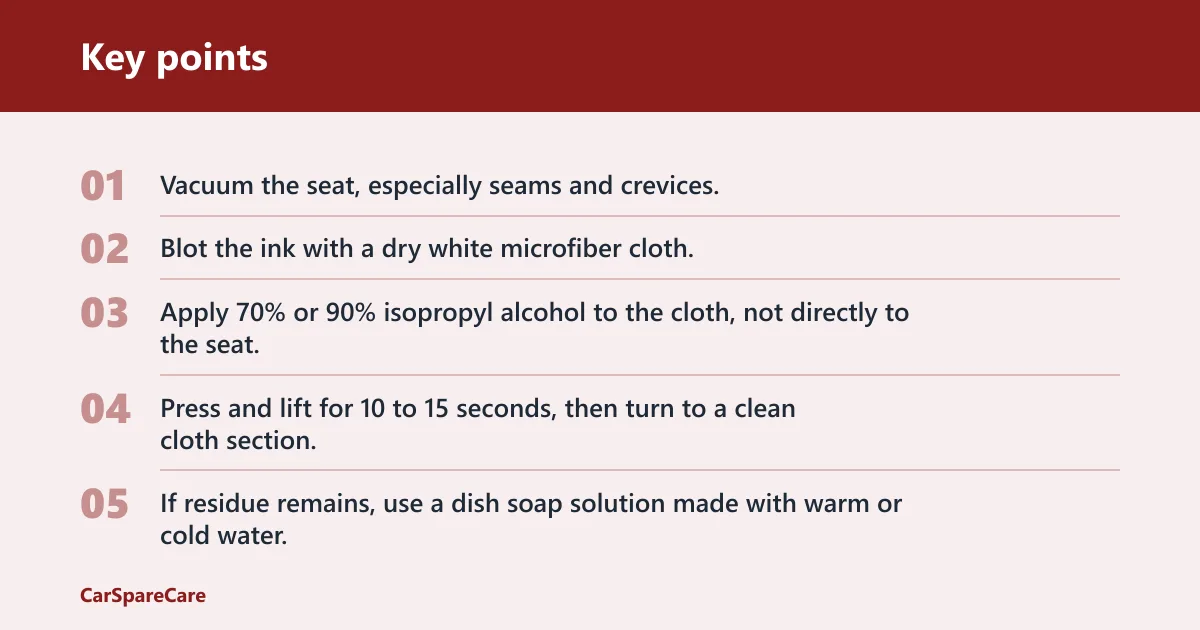
- Vacuum the seat, especially seams and crevices.
- Blot the ink with a dry white microfiber cloth.
- Apply 70% or 90% isopropyl alcohol to the cloth, not directly to the seat.
- Press and lift for 10 to 15 seconds, then turn to a clean cloth section.
- If residue remains, use a dish soap solution made with warm or cold water.
- For a vinegar backup, use 1 tablespoon of dish soap and 2 teaspoons of white vinegar in water, then leave it on the stain for about 10 minutes.
- Blot with clean water, then dry fully.
Suppose the mark is a fresh ballpoint line on gray cloth. One alcohol pass may lift most of the ink, but a dark ghost can remain in the fibers. Stop once the cloth stops picking up color and the stain no longer shrinks.
How do you remove ink from vinyl and PVC?
Use soap first on vinyl and PVC. These surfaces usually clean better with a mild solution than with alcohol right away, because too much solvent can dull the finish or make it tacky. Move to alcohol only if the stain still transfers after gentle washing.
- Vacuum the seat and wipe away loose grit.
- Mix dish soap with warm or cold water, then dampen a white microfiber cloth.
- Wipe the stain gently, keeping liquid off seams when possible.
- If ink remains, touch the cloth with isopropyl alcohol and test a hidden spot first.
- Use short dabs, then switch to a clean cloth section before the ink spreads.
- Stop if the vinyl looks dull, sticky, or discolored.
For a stubborn marker line on a door insert, the first signs of trouble are usually sheen loss or a softer surface feel. That is your stop point. Do not keep wetting the same area.
How do you remove ink from leather seats?
Use a leather-safe cleaner first, not alcohol. Finished leather can lose its topcoat, dry out, or show color transfer if you go straight to solvent. Alcohol is a backup only when the finish is stable and the cleaner has already failed.
- Vacuum the leather, including stitching and perforations.
- Apply a leather cleaner to a white microfiber cloth, not to the seat.
- Blot the stain in short passes.
- If ink remains, use a cotton swab or cloth with a little 70% or 90% isopropyl alcohol on the cloth only.
- Work around seams with almost no pressure so liquid does not soak into stitching or foam.
- Wipe the area dry, then apply leather conditioner after the surface is clean and dry.
Leather conditioner matters after soap or alcohol use because it helps replace moisture that cleaning can pull from the finish. Stop if the leather lightens, the topcoat hazes, or the cloth picks up dye from the seat itself.
Common mistakes
- Rubbing the stain. That pushes ink deeper into the weave or grain.
- Pouring liquid onto the seat. Always put cleaner on the cloth first.
- Skipping the test spot. Hidden areas can react differently than the main panel.
- Soaking seams, piping, or perforations. Ink can migrate into stitching and foam.
- Chasing a ghost stain too long. Once the surface ink stops moving, repeated passes can do more harm than good.
- Using one method on every surface. Alcantara, vinyl, cloth, and leather do not tolerate the same treatment.
Say your sedan has a 2-inch pen mark on cloth near the seat belt buckle. A few alcohol dabs may lift the top layer, but the seam beside it can wick the ink sideways if the cloth gets too wet. That is the point to stop and switch to a dry blot.
How do you remove ink stains from car seats?
Match the cleaner to the seat material, then stop as soon as the stain stops transferring. Cloth can usually take alcohol first. Vinyl and PVC usually do better with soap first. Finished leather needs leather cleaner first. Alcantara needs the least liquid and the quickest stop point.
Always clean seams, stitching, and perforations with extra care. Ink that reaches those areas is harder to remove, and too much liquid can drive it farther in. If the stain leaves a dyed shadow after two careful passes, switch to a commercial upholstery cleaner matched to the surface or stop before the finish is damaged.
How do you remove ink stains from car upholstery?
Car upholstery can mean cloth, microfiber, or a synthetic trim panel, so start by identifying the material before you add liquid. For fabric, alcohol on the cloth is a strong first step. For vinyl-like trim, start milder. For suede-like inserts, keep moisture low and act quickly.
If the stain is still visible after cleaning, check whether the cloth is still picking up color. If it is not, the remaining mark is likely a ghost stain, not active surface ink. At that point, use a material-matched commercial cleaner or stop.
How do you remove ink stains from leather car seats?
Use a leather-safe cleaner first, then a minimal alcohol spot method only if the finish still looks stable. Leather can react badly to heavy wetting, especially around seams, perforations, and bolsters. Finish damage often shows up as dulling, tackiness, or a lighter patch.
After cleaning, dry the area fully and apply leather conditioner. That step helps reduce the dry, chalky look that can follow soap or alcohol use. If the stain remains after one careful round and the finish starts changing, the next move is a leather specialist, not more scrubbing.
How do you remove ink from car interior?
Start with the surface, the ink type, and the stop point. Fresh ballpoint ink on cloth often responds to alcohol. Gel ink may need a second pass with upholstery cleaner. Permanent marker is the one most likely to leave a shadow after the top layer lifts.
If ink has reached stitching, piping, or perforations, use cotton swabs and very light pressure. Do not flood the area. For any surface, stop once the cloth no longer lifts color, the finish starts to dull, or the mark turns into a pale ghost that is no longer moving.
Frequently asked questions
How to remove pen ink from leather car interior
Choose a leather-safe cleaner first, then use a minimal alcohol spot method only on the cloth if needed. Do not soak the leather. If the seat changes color, loses sheen, or the cloth starts lifting dye from the leather itself, stop and switch to a leather specialist.

Hi, I’m Melvin, an automobile engineer with extensive experience in automobile equipment. I currently work for a local automobile firm, where I specialize in the car parts industry. I’ve had the opportunity to collaborate with seasoned inspectors, gaining invaluable hands-on experience that goes beyond just theory.
My passion for automotive care started at a young age, which led me to create CarSpareCare. Through CarSpareCare, I share the knowledge and skills I’ve acquired over the years to help others navigate the world of car maintenance and repairs.
My goal is to provide practical tutorials, essential safety advice, and the latest industry insights so that anyone—whether a beginner or an expert—can confidently tackle their automotive projects.