

A rough idle can come from a misfire, vacuum leak, dirty throttle body, fuel-supply fault, or sensor issue, and a common rule of thumb is: if it idles rough but drives normally, start with idle-control faults and air leaks. Ignore it, and you can waste money on parts that do nothing. A small misfire can also damage the catalyst. This guide shows how to sort the symptom pattern and what to check first.
What rough idle feels like


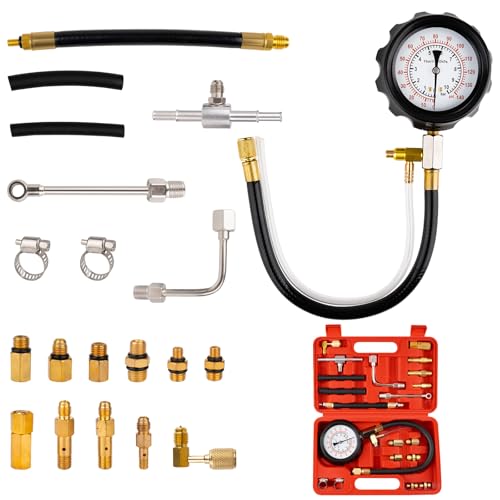
Rough idle is an engine that feels bouncy, unstable, or shaky while the car is stationary. You may notice surging RPM, a stumble, a misfire feel, or even stalling at stoplights. It is often more obvious in Park or Neutral than while driving because the engine is under light load.
Why it shows up most when stopped
At idle, the engine depends on very small, carefully metered air and fuel amounts. A small vacuum leak, weak spark, dirty throttle body, or sticky idle valve can matter a lot here, while the same fault may be less obvious once RPM and airflow rise. Engine mounts can also make the vibration feel worse without causing the rough running itself.
Picture a car that feels smooth at 35 mph, then shakes at every red light. That pattern points you toward idle-specific systems first, not mounts or a random full-engine failure.
What should you check first for rough idle?
Start with OBD-II codes, but do not treat them as the whole diagnosis. Then separate true engine roughness from vibration caused by worn mounts, and next sort the symptom pattern: idle-only, cold-only, warm-only, or idle-plus-driving. That order narrows the fault faster than replacing parts one by one.
Read codes before parts replacement
Codes can point you toward misfire, fuel trim, airflow, or EGR problems, but they do not replace symptom patterning. A lean-code plus idle-only roughness fits an air leak far better than a coil failure. If there is a flashing check-engine light, severe misfire, stalling, fuel smell, or clear loss of power, stop driving and diagnose immediately.
Separate engine vibration from a true rough idle
A bad mount can shake the cabin at idle even when the engine is running evenly. A true rough idle usually brings RPM fluctuation, stumble, or a misfire feel, not just a cabin shake. If the tach is steady and the engine sounds normal, inspect mounts before chasing fuel or ignition parts.
Use the symptom pattern to narrow the fault
AutoUpdateZone’s patterning is useful here: rough at idle but smooth while driving points to idle-specific systems, while rough at idle and while driving points more toward misfire, fuel delivery, or ignition failure. Cold-only roughness points to cold-start enrichment or coolant-temperature issues. Warm-only roughness often follows heat-sensitive sensors or components.
Rough idle decision matrix
This decision matrix is the fastest way to sort likely causes before you touch a part. It is built around four common symptom patterns: idle-only, cold-only, warm-only, and idle-plus-driving. Each pattern points to a different shortlist, a different first test, and a different level of urgency.
| Symptom pattern | Likely causes | First test | Likely DIY fix | Stop-driving warning signs |
|---|---|---|---|---|
| Idle-only | Vacuum leak, PCV valve, dirty throttle body, sticky IACV, MAF drift | Check RPM behavior at idle, inspect hoses, read codes, inspect throttle body buildup | Clean throttle body or MAF if appropriate, replace cracked hose, service PCV valve | Flashing CEL, stalling, severe shaking, fuel smell |
| Cold-only | Coolant-temp input issue, cold-start fueling issue, marginal spark plug, sticky throttle body | Note whether the problem fades as coolant warms up | Inspect plugs, clean throttle body, check sensor data and intake leaks | Hard starting, repeated stalls, misfire that worsens from cold |
| Warm-only | EGR valve stuck open, heat-sensitive ignition coil, failing sensor, low compression that shows up hot | Check for codes and compare idle quality cold versus hot | Inspect EGR operation, scan live data, confirm spark and compression clues | Loss of power, stalling at stops, flashing CEL |
| Idle plus driving | Ignition coil, fuel injector, fuel delivery issue, major vacuum leak, low compression | Scan for misfire and fuel trim codes; note whether acceleration also suffers | Replace worn plugs, test coils, inspect injectors, verify fuel pressure | Severe misfire, strong fuel smell, stalling, power loss |
One guide lists several common rough-idle causes, and the first two to keep high on the list are a vacuum leak or a failed PCV valve. Kwik Fit also places fuel system issues first and common ignition faults close behind, while low compression is most noticeable at idle. That combination explains why symptom pattern matters so much.
Could it be an air leak?
Yes. Air leaks are one of the first things to check because unmetered air can make the air/fuel mixture lean and cause rough idle, especially when the engine is at its most sensitive. Vacuum leaks, PCV faults, throttle body buildup, and a sticking idle air control valve can all create the same basic symptom.
Vacuum leaks: hoses, gaskets, and unmetered air
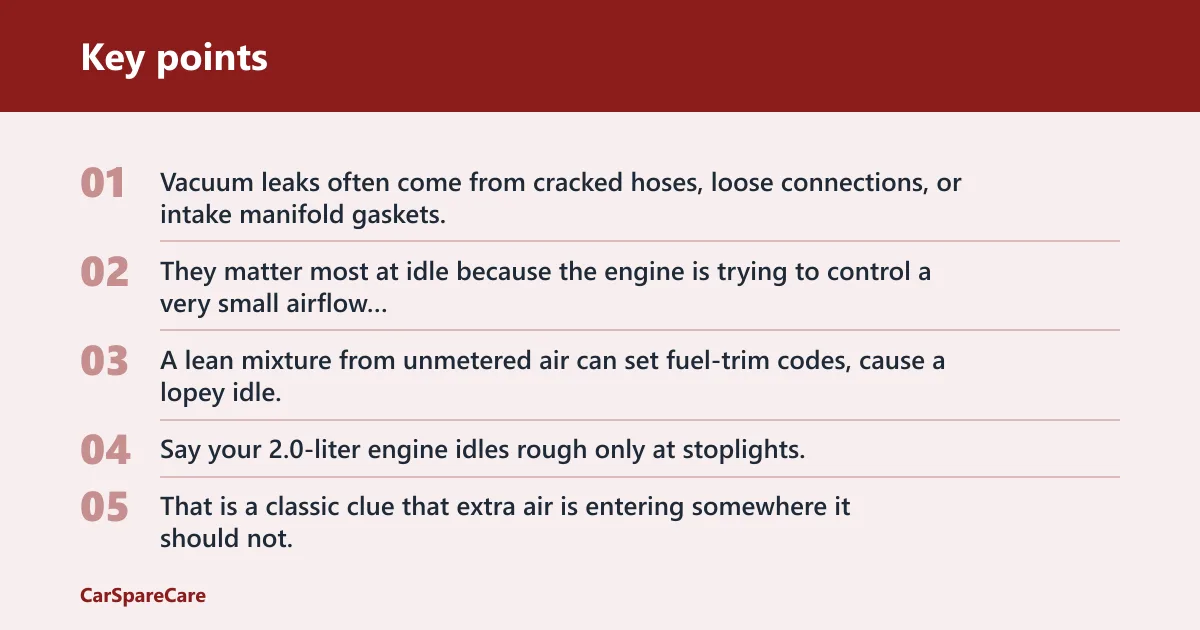
Vacuum leaks often come from cracked hoses, loose connections, or intake manifold gaskets. They matter most at idle because the engine is trying to control a very small airflow target. A lean mixture from unmetered air can set fuel-trim codes, cause a lopey idle, or make the engine stumble when stopped.
Say your 2.0-liter engine idles rough only at stoplights, but the moment you hold 1,500 rpm it smooths out. That is a classic clue that extra air is entering somewhere it should not.
PCV valve problems and lean idle
The positive crankcase ventilation valve can clog with dirt or sludge. When it sticks or restricts flow, it can upset idle air control and lean the mixture. Depending on design and condition, you may clean it or replace it, but a failed PCV valve is usually a simple, low-cost repair compared with deeper engine faults.
Throttle body carbon buildup and idle airflow
Carbon buildup around the throttle plate can restrict idle airflow and create a hunting or shaky idle. Cleaning the throttle body is often a good first repair when the engine roughness is idle-only and the rest of the drive feels normal. On drive-by-wire systems, a relearn procedure may be needed after cleaning.
Idle air control valve sticking or failure
The idle air control valve, or IACV, meters bypass air at idle. If it sticks or fails, the engine may surge, dip, or stall when the throttle closes. Cleaning can help if the valve is only dirty. Replacement is more likely when the valve is electrically faulty or mechanically worn.
Could the fuel or spark system be the cause?
Yes. If the problem moves beyond idle-only, or if the check-engine light points to misfire, fuel trim, or ignition faults, move to fuel and spark. Dirty MAF readings, worn spark plugs, weak coils, and restricted injectors can all upset combustion. Kwik Fit specifically lists faulty spark plugs, plug leads, and ignition coils among common causes.
MAF sensor dirt or incorrect airflow readings
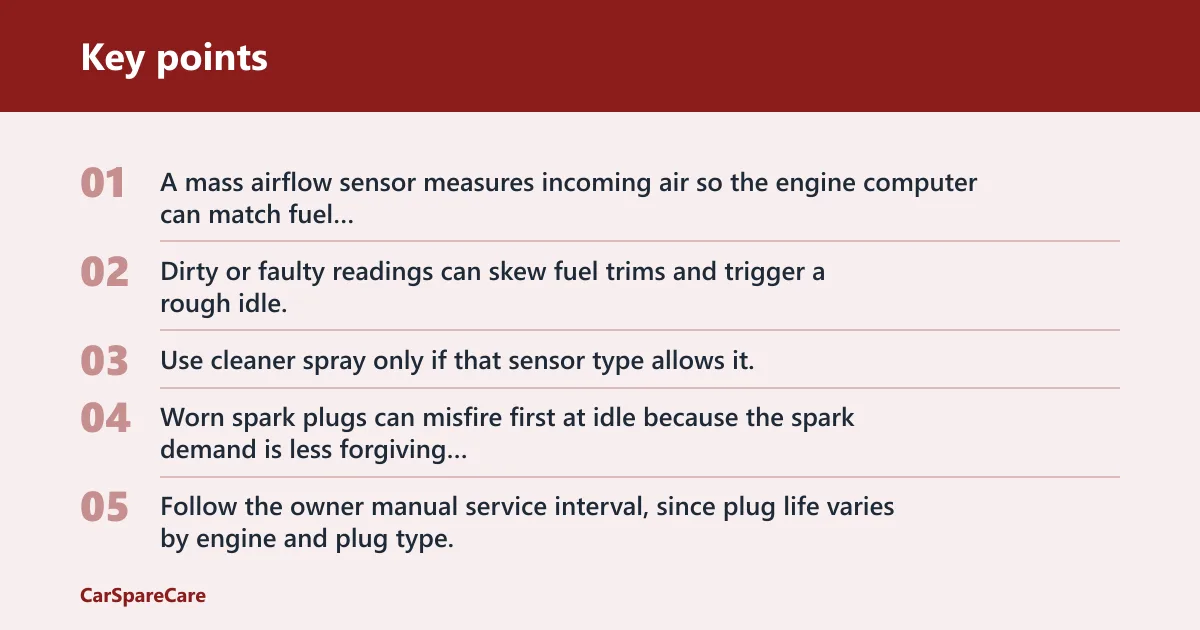
A mass airflow sensor measures incoming air so the engine computer can match fuel delivery. Dirty or faulty readings can skew fuel trims and trigger a rough idle, often with a check-engine light. Use cleaner spray only if that sensor type allows it. Do not touch the sensing element.
Spark plug wear and idle misfire
Worn spark plugs can misfire first at idle because the spark demand is less forgiving when airflow and cylinder filling are low. Follow the owner manual service interval, since plug life varies by engine and plug type. If plugs are overdue, inspect them before buying coils or injectors.
Ignition coil weakness under light load
Weak ignition coils can cause a rough idle plus loss of power, and sometimes stalling. A coil that barely keeps up at cruise may still misfire at idle or under acceleration. If the roughness affects driving, not just stopping, ignition becomes more likely than an idle-control issue alone.
Fuel injector restriction or poor spray pattern
Fuel injectors must deliver very small, precise fuel amounts at idle, so a dirty or restricted injector can show up there first. A rough idle combined with worse fuel economy is a useful clue. Injector issues often need testing, cleaning, or replacement rather than a simple spray-can fix.
Could emissions or engine wear cause it?
Yes. EGR and compression problems can create rough idle, but they often feel different from a simple dirty-throttle or vacuum-leak issue. A bad EGR valve can stick open and lead to rough idle or stalling. Low compression is a mechanical engine issue and is most noticeable at idle.
EGR valve stuck open at idle
The EGR valve should not flow exhaust gas the same way at idle as it does under other conditions. If it sticks open, the engine can stumble, shake, or stall because the mixture is diluted when it should be stable. This fault often needs a scan tool or test procedure, not just cleaning the throttle body.
Low compression and mechanical misfire
Low compression can come from worn rings, valve sealing problems, or other internal engine wear. It often stands out first at idle because cylinder pressure is already low and combustion is less forgiving. If one cylinder keeps misfiring after plugs, coils, fuel, and air leaks check out, compression testing becomes important.
How these faults differ from simple sensor issues
Sensor faults often shift fuel trims or cause repeatable pattern changes, while mechanical wear usually leaves a persistent misfire or unevenness that does not improve much with cleaning. If the engine roughness is accompanied by one-cylinder misfire codes, long-term instability, or poor compression readings, deeper diagnosis is warranted.
What fixes are worth trying first?
Start with the cheapest, most reversible checks: inspect hoses, read codes, clean the throttle body, and clean the MAF only if that sensor design allows it. Replace a bad PCV valve, worn spark plugs, or a cracked vacuum hose before buying more expensive parts. If the symptom pattern suggests misfire plus driving issues, move faster to testing rather than cleaning.
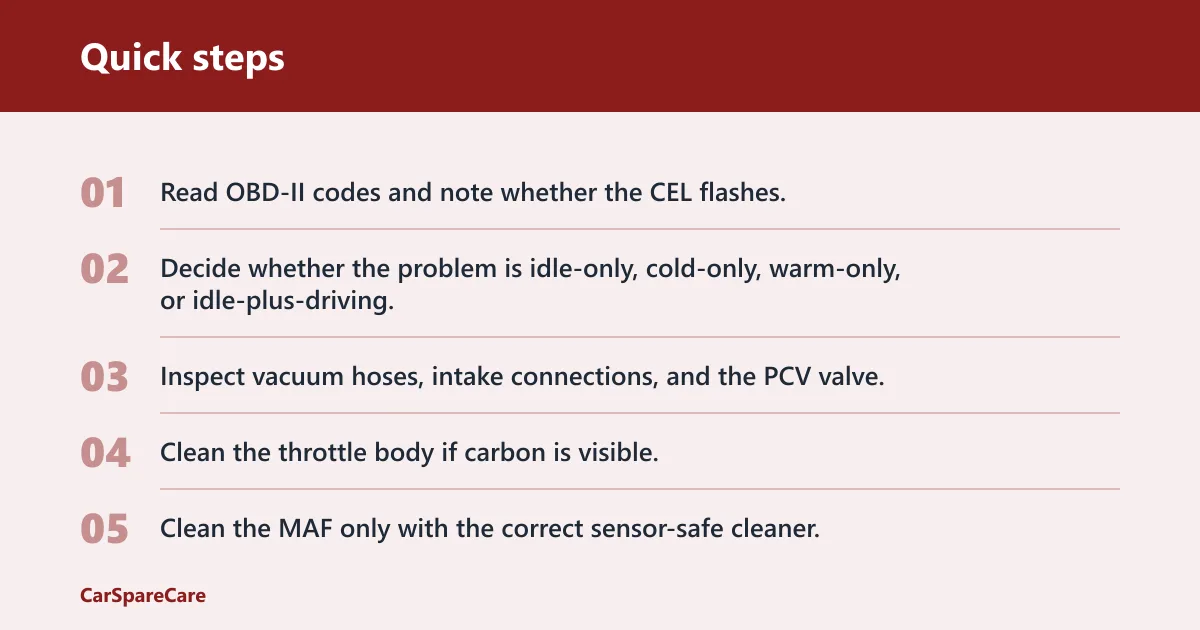
- Read OBD-II codes and note whether the CEL flashes.
- Decide whether the problem is idle-only, cold-only, warm-only, or idle-plus-driving.
- Inspect vacuum hoses, intake connections, and the PCV valve.
- Clean the throttle body if carbon is visible.
- Clean the MAF only with the correct sensor-safe cleaner.
- Check spark plugs and ignition coils if misfire reaches driving conditions.
- Test injectors, EGR operation, and compression if the rough idle persists.
AutoUpdateZone notes that rough only when cold points toward cold-start enrichment or coolant-temp issues, which is why warm-up behavior matters so much. Kwik Fit also says rough idle can lead to poor gas mileage, starting issues, and major engine problems, so a lingering fault should not be ignored. Routine maintenance helps, but the symptom pattern should guide the repair order.
Cheap clean vs likely repair
Cleaning is worth trying first for a dirty throttle body, a dirty MAF, or a light carbon film that is clearly visible. Replacement is more likely for a failed PCV valve, worn spark plugs, weak coils, a stuck EGR valve, a damaged injector, or a low-compression cylinder. AutoUpdateZone also notes that a throttle body cleaning can cost $5 to $15 in cleaner spray.
A common first-timer mistake is replacing a coil because the car shakes at a stoplight, even though a split vacuum hose is the real issue. Another is blaming an engine mount for every shake, when the tachometer and misfire behavior point to combustion instead.
Frequently asked questions
What causes rough idle in a car?
The most common causes are a vacuum leak, failed PCV valve, dirty throttle body, misfire from worn spark plugs or weak coils, fuel delivery problems, and sensor faults. Rough idle is usually more obvious when the car is stationary because idle airflow and fuel control are narrow targets.
What causes a rough idle?
A rough idle usually comes from unmetered air, poor combustion, or unstable fuel delivery. Vacuum leaks can make the mixture lean, plugs and coils can misfire, and a dirty throttle body or sticky idle valve can upset idle airflow. OBD-II codes help narrow which system is failing.
What is rough idle in cars?
Rough idle is an engine that feels unstable while stopped, often with shaking, surging, stumbling, or stalling. Kwik Fit describes it as bouncy or unstable while stationary. It is a symptom, not a diagnosis, so the fix depends on whether the issue appears only at idle, when cold, or while driving too.
Why does my car idle rough but drive smooth?
That pattern usually points to idle-specific systems such as a vacuum leak, PCV valve problem, dirty throttle body, or sticky idle air control valve. The same source says this pattern narrows the fault to idle control and air leaks first. Engine mounts can worsen the vibration feel, but they do not cause rough running.
Why is my car idling rough when stopped?
When stopped, the engine runs on a very small airflow and fuel window, so small faults show up more clearly. A lean air/fuel mixture from a vacuum leak, carbon at the throttle body, or a weak idle control valve can make the engine stumble most at stoplights or in Park.

Hi, I’m Melvin, an automobile engineer with extensive experience in automobile equipment. I currently work for a local automobile firm, where I specialize in the car parts industry. I’ve had the opportunity to collaborate with seasoned inspectors, gaining invaluable hands-on experience that goes beyond just theory.
My passion for automotive care started at a young age, which led me to create CarSpareCare. Through CarSpareCare, I share the knowledge and skills I’ve acquired over the years to help others navigate the world of car maintenance and repairs.
My goal is to provide practical tutorials, essential safety advice, and the latest industry insights so that anyone—whether a beginner or an expert—can confidently tackle their automotive projects.

