For toddlers, seat protectors and wipeable bins are often helpful for keeping the interior cleaner. Toddlers need seat protectors and wipeable bins, school-age kids need a back-seat trash habit, and sports families need a trunk caddy plus a weekly reset. If you ignore it, crumbs, odors, stains, and sticky surfaces build fast and make cleanup take longer. This guide gives age-based setup, supplies, and cleaning routines that stay low-effort.
Kid messes by age and activity


Toddlers: spills, crumbs, and dropped toys
Toddlers make the mess that spreads fastest. Drinks tip, snack crumbs fall into seams, and toys end up under the seat before the trip is over.
Use spill-proof cups and snack holders at this stage, because they cut down on liquid drips and crumb scatter. Pair them with a seat protector or kick mat on the back of the front seats, since shoe marks and booster wear show up there first.
Preschoolers: snacks, sticky hands, and seat kicking
Preschoolers usually bring sticky fingers, half-finished snacks, and enough energy to tap or kick the seat in front of them. That means the mess is less about one big spill and more about repeated contact.
Keep wipes in the glove box, a trash bag within reach, and a simple rule for wrappers and cups. A backseat organizer helps here too, because it keeps snacks and toys out of the footwell.
School-age kids: sports gear, wrappers, and paper clutter
School-age kids usually leave behind wrappers, water bottles, papers, books, and small bits of gear. The clutter gets worse after school runs because items move from backpack to car and back again without a clear home.
A backseat organizer is useful for older kids because it holds drinks, snacks, toys, and books while keeping clutter off the floor and seats. A trash bag in the car still matters, because paper trash piles up quickly when children eat on the go.
Sports days and wet-weather pickups: mud, grass, and damp gear
Sports days change the mess profile. Mud, grass, damp uniforms, and wet shoes add grit plus moisture, which is harder to clean than dry crumbs. Wet-weather pickups can also leave a smell behind if gear stays in the cabin too long.
Use a trunk caddy or bin for dirty gear, keep floor mats out of the cabin until they are cleaned, and do a quick vacuum before the dirt gets ground into the carpet. If shoes are muddy, put the worst items in the trunk first.
Family car cleanup matrix
| Kid age/stage | Most likely messes | Exact prevention + cleanup response |
|---|---|---|
| Toddlers | Spilled drinks, soft crumbs, dropped toys, seat kicks | Use spill-proof cups and snack holders, add a seat protector on the front seat backs, and keep a trash bag in the trunk or seatback pocket. After the trip, vacuum seams and the floor edges, then wipe hard surfaces with a microfiber cloth. |
| Preschoolers | Sticky hands, snack debris, wrapper clutter, cup drips | Keep wipes in the glove box, set up a clear snack spot, and place a small trash bag within reach. Clean up right after the ride, before sticky residue dries. Use a microfiber cloth for plastic and trim, and spot-clean cloth seats only if a stain remains. |
| School-age kids | Wrappers, books, paper clutter, water bottles, loose gear | Use a backseat organizer for drinks, books, and snacks, plus a trash bag for wrappers and cups. Once a week, vacuum under the seats and along the floor edges, wipe dust from the console, and reset the organizer so items do not drift onto seats or the floor. |
| Sports/activity days | Mud, grass, damp gear, dirty shoes, sweat smell | Keep wet and dirty items in the trunk, shake out floor mats first, then vacuum grit before wiping. Wash mats with soap and hot water, dry them fully, and air out the cabin after unloading. If cloth seats picked up a stain, use upholstery cleaner sparingly after spot-testing. |
Car interior clean checklist
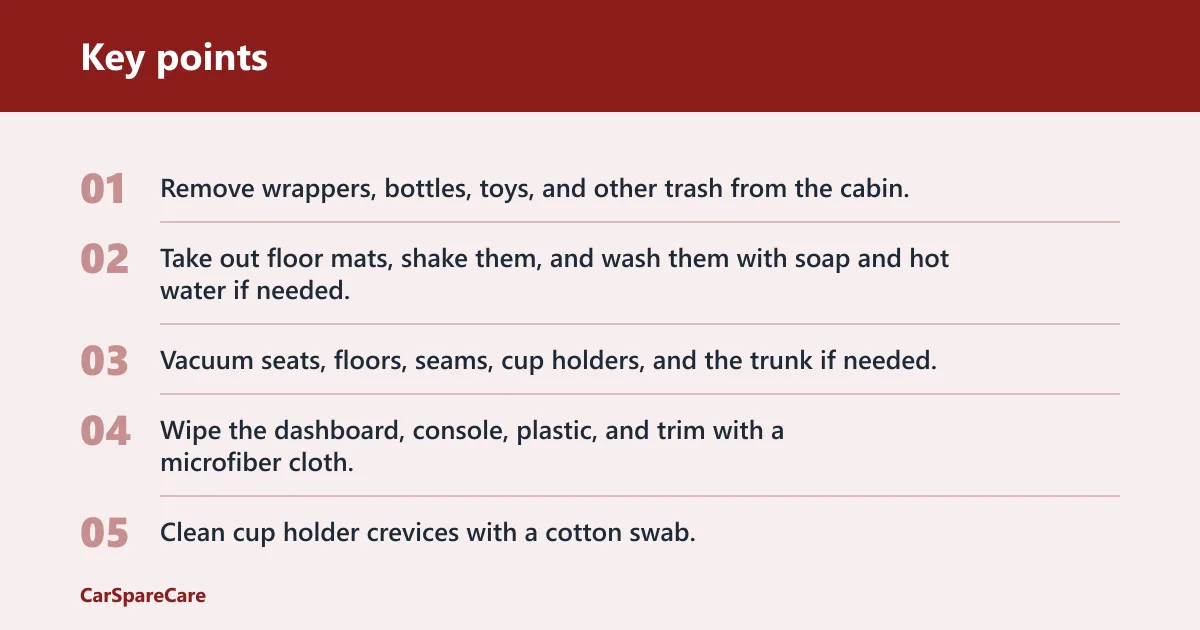
- Remove wrappers, bottles, toys, and other trash from the cabin.
- Take out floor mats, shake them, and wash them with soap and hot water if needed.
- Vacuum seats, floors, seams, cup holders, and the trunk if needed.
- Wipe the dashboard, console, plastic, and trim with a microfiber cloth.
- Clean cup holder crevices with a cotton swab.
- Spot-clean cloth seats only where stains remain, using little product.
- Air out the cabin and replace any odor absorber or freshener mix.
- Put trash bags, wipes, and snack holders back where they belong.
What setup keeps mess down?
The right setup keeps the same mess from coming back after every ride. Start with a trash bag, add storage for the child’s age, and protect the seats that get kicked or spilled on most often. That cuts cleanup time more than any one cleaner does.
Trash bag placement that is easy to reach
Keep a kitchen-sized trash bag in the car, either in the trunk or in a seatback pocket, so wrappers, cups, and muddy shoe covers have one place to go. The goal is quick disposal before trash lands on the floor or gets wedged into a door pocket.
Backseat organizer placement for drinks and toys
A backseat organizer works best for older kids because it holds drinks, snacks, toys, and books without spreading them across the seat. Put it where each child can reach it without stretching across the cabin. That keeps clutter off the floor and makes cleanout faster after school runs.
Spill-proof cups and snack holders for younger kids
For toddlers and younger kids, spill-proof cups and snack holders are the first line of defense. They reduce liquid mess and loose crumbs, and they work best when paired with a quick-access storage spot so children do not drop items on the seat while reaching for them.
Seat protectors and kick mats for high-wear seats
Use a seat protector or kick mat on the back of front seats when booster wear or repeated shoe contact is the problem. A seat cover upgrade is one of the best bang-for-the-buck options, and a protector with an easy-clean surface makes it simpler to wipe off marks before they set.
How do you clean the car fast?
A common cleanup order is trash first, vacuum second, wipe third, then treat stains only where needed. That sequence keeps grit from being rubbed into surfaces and reduces the chance of smearing dirt across plastic, cloth, or glass.
Vacuum crumbs and grit first
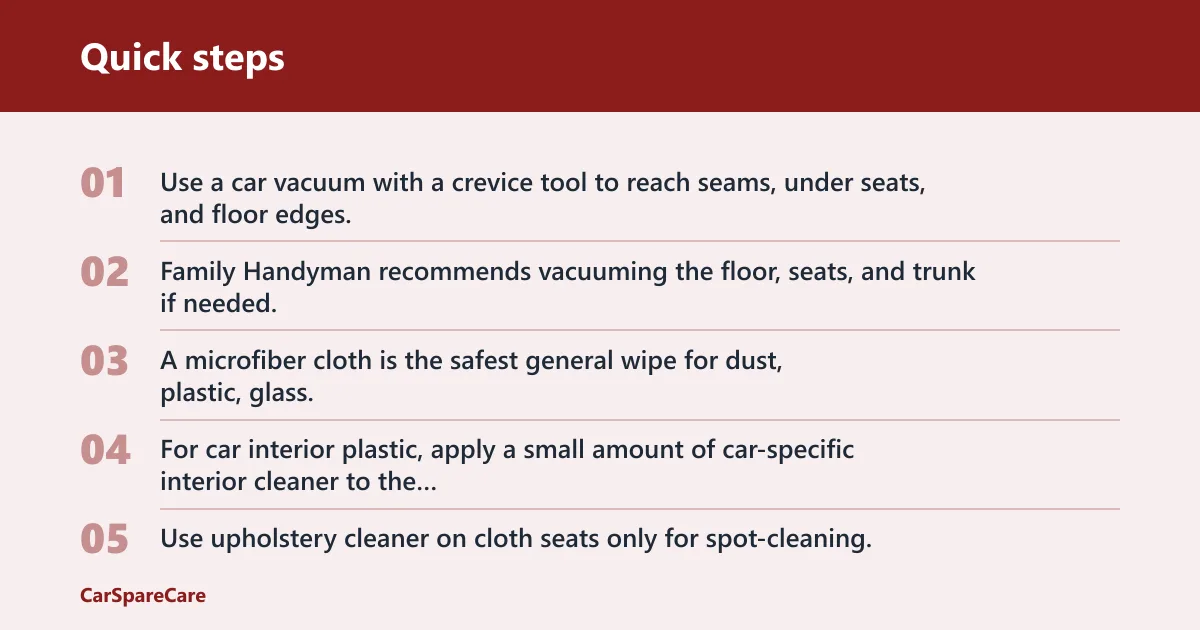
Use a car vacuum with a crevice tool to reach seams, under seats, and floor edges. Family Handyman recommends vacuuming the floor, seats, and trunk if needed, and the narrow nozzle helps pull out grit from deep joints in seats and backrests. Vacuuming first also makes wiping easier.
Wipe dust, plastic, and trim with microfiber
A microfiber cloth is the safest general wipe for dust, plastic, glass, and trim because it removes residue without aggressive rubbing. For car interior plastic, apply a small amount of car-specific interior cleaner to the cloth, then wipe the console, steering wheel, and trim in short passes.
Treat cloth-seat stains with upholstery cleaner
Use upholstery cleaner on cloth seats only for spot-cleaning, and test it on a hidden area first. Apply sparingly so the fabric does not get soaked. That matters because foam under cloth seats can take days to dry if too much liquid goes in.
Suppose a juice box tips over in the second-row seat and leaves a damp ring on cloth. Blot first, then use a little upholstery cleaner on the stain only. Do not flood the area; extra liquid can push the spill deeper into the foam and make drying slow.
Use the right cleaner on console and steering wheel
For the console, steering wheel, and trim, use a car-specific interior cleaner in small amounts. That helps remove fingerprints and sticky residue without using a harsh all-purpose spray on delicate surfaces. Avoid heavy wetting, especially around buttons, seams, and display edges.
What should you not do?
Some cleaning mistakes create more work later. The biggest ones are too much liquid, too much scrubbing, and the wrong product on the wrong surface. Those errors can damage trim, trap moisture, or leave a streaky finish that attracts more dirt.
Do not soak seats or carpets
Do not soak cloth seats or carpets. How a Car Works warns that foam can take days to dry, so keep water and cleaner use controlled. If a stain needs more than a light spot treatment, stop and repeat in small passes rather than flooding the area. (Howacarworks)
Do not scrub delicate trim too hard
Do not scrub hard plastic, stitched surfaces, or headlining with force. How a Car Works recommends cleaning the headlining gently to avoid sagging, and the same caution applies to soft trim and headliners near child seats and grab handles.
Do not skip spot testing cleaners
Do not use an upholstery cleaner or interior spray on a visible area first. Spot testing is the safest way to check for discoloration, dulling, or residue on cloth, plastic, or trim. Use the smallest useful amount and wipe clean after the product does its job.
Do not reinstall wet floor mats
Remove floor mats, shake them out, and wash them with soap and hot water when they need more than a shake. Let them dry fully before putting them back. Wet mats can hold odor and put moisture back into the cabin as soon as they return to the floor.
How do you keep odors from building up?
Odors come from leftovers, wet gear, and dirt that stays trapped in soft surfaces. If you remove the source quickly and let the cabin dry, the smell usually stays manageable without heavy fragrance.
Remove food wrappers and wet items quickly
Clear wrappers, bottles, and wet gear after the trip, not the next day. Trash left in the car keeps smells in the cabin, and damp clothing or sports gear can leave a stale odor behind. A trash bag in the trunk or seatback pocket makes this easier.
Use baking soda in a simple odor-control mix
Baking soda works well as part of a simple DIY odor-control mix. Place a small open container of baking soda in a stable spot, or use it alongside other gentle freshness methods after spills. Keep it dry and replace it as needed so it stays effective.
Airing out the cabin after spill cleanup
After a spill or muddy pickup, open the doors or windows for a short period so moisture does not linger. That helps after cleaning, especially if you used upholstery cleaner or washed mats. Dry air reduces the chance that the cabin keeps smelling like damp fabric.
How do you keep kids from making it dirty again?
Kids need simple rules that match the trip. A preschool snack ride needs a different setup from a school run or sports pickup, and the rules should be short enough that children can remember them. Fewer rules work better than a long lecture.
Set simple car rules before each trip
Before leaving, name the one or two rules that matter most: trash goes in the bag, drinks stay in the holder, and shoes stay off the seat back if possible. A common first-timer mistake is setting up storage but never telling children what belongs where.
Give each child a small storage zone
Give each child a small zone in the back seat or organizer so snacks, books, and toys do not spread across the cabin. This is especially useful for older kids who carry more items. Clear zones make it easier for them to return things instead of leaving them loose.
Match the rules to snack trips, school runs, and sports days
For snack trips, limit loose food. For school runs, require wrappers and papers to go in the trash bag right away. For sports days, dirty gear goes straight to the trunk, and wet items do not sit on the seat. The routine should change with the mess.
Frequently asked questions
How to clean your car inside
Vacuum first, wipe second, and clean stains last. Use a car vacuum with a crevice tool for seams and floor edges, a microfiber cloth for hard surfaces, and upholstery cleaner only on spot-tested cloth seats. Do not reinstall floor mats until they are fully dry.
How do I stop kids from making my car dirty?
You cannot stop every mess, but you can reduce the repeat ones. Give toddlers spill-proof cups, older kids a backseat organizer, and every child a clear trash habit. Set the rule before the ride starts, and clean spills right away so sticky residue and crumbs do not spread.

Hi, I’m Melvin, an automobile engineer with extensive experience in automobile equipment. I currently work for a local automobile firm, where I specialize in the car parts industry. I’ve had the opportunity to collaborate with seasoned inspectors, gaining invaluable hands-on experience that goes beyond just theory.
My passion for automotive care started at a young age, which led me to create CarSpareCare. Through CarSpareCare, I share the knowledge and skills I’ve acquired over the years to help others navigate the world of car maintenance and repairs.
My goal is to provide practical tutorials, essential safety advice, and the latest industry insights so that anyone—whether a beginner or an expert—can confidently tackle their automotive projects.