
A power steering leak at the rack and pinion usually starts at the input shaft seal, rack end seals, or a pressure hose or fitting that wets the housing and drips down. If you ignore it, the reservoir can empty, the pump can wear out, and steering effort can rise fast. This guide shows the exact leak path, how to spot internal seal failure versus hose or fitting leaks, and when inspection, reseal, or replacement makes sense.
This guide is part of our Power steering and brake problems series.
Common leak points and why they spread

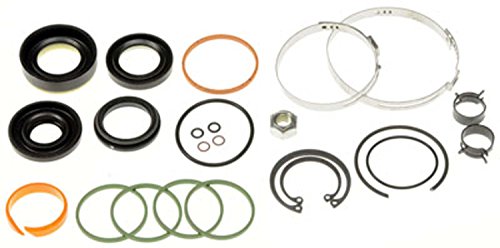
Most rack leaks start where moving parts and fluid pressure meet: the pinion input seal, internal rack piston seals, end seals, or the hose connections at the rack body. Age, corrosion, contaminated fluid, and overheating can weaken those seals until fluid seeps out or gets pushed into the bellows boots.
Leak path inside the rack
The rack and pinion steering rack is the hydraulic steering gear that turns steering wheel rotation into side-to-side rack movement. Pressurized fluid enters the housing, acts on the rack piston seal, and returns through the opposite side. If the pinion input seal fails, fluid can wet the shaft and run down the housing. If the rack piston seal fails, fluid can move past the internal chamber seal before any obvious drip appears.
Common leak points are easy to confuse. Line fittings can seep at the connection. Hose crimps can weep at the metal-to-rubber transition. End seals can leak near the inner tie rod area. The bellows boot may hide fluid that never reaches the driveway right away.
Why the leak often spreads beyond the source
Fluid follows the housing, subframe, and steering gear contours before it drops. That means the wet spot you see under the car may not be the failure point. A pinion seal seep can look like a rack housing leak. A hose leak above the rack can coat the gear and mimic an internal seal problem.
Power steering fluid is a hydraulic fluid that provides assist and lubrication. It can foam, darken, or smell burnt if overheated or contaminated. Check the wetness start point, the fluid behavior, and which reservoir is dropping so you do not confuse it with engine oil or transmission fluid.
How do I know if my rack and pinion is leaking power steering fluid?
A leaking rack and pinion often leaves wetness on the housing, damp lines, or fluid inside a bellows boot. Low fluid is common, but the first driving symptom may be a whining pump, heavier steering, or inconsistent assist. If the reservoir keeps dropping, the leak is active even when the ground stays clean.
Common symptom pattern
A steering assist system can become noisy or heavy when fluid is low. Air gets pulled into the system, the pump whines or groans, and assist can come and go during parking maneuvers. If the fluid level falls far enough, the pump can be damaged by running dry.
If the steering gets stiff only at low speed and the pump starts whining after a turn into a parking space, that pattern points to air ingestion from a fluid loss, not just a worn tire or alignment issue.
What the leak looks like under the car
What a leaking rack and pinion looks like under the car depends on the source. A pinion seal seep usually wets the steering shaft area and top of the rack housing. A hose or fitting leak tends to leave wet crimps, shiny fittings, or spray marks below the line connection. A rack housing leak may show dampness across the gear body and fluid tracking along the subframe.
A torn bellows boot matters because it can hide trapped fluid. If the boot is full, the rack may be leaking from an internal seal even when there is no fresh puddle. A torn boot also exposes the inner tie rod area to dirt and moisture, which can speed wear and complicate the repair.
Rack leak source matrix
This decision table helps separate the source before parts are ordered. Clean the area first. Then recheck after running the engine or turning lock-to-lock so fresh seepage stands out.
| Symptom | Likely leak point | What to inspect first | Repair path |
|---|---|---|---|
| Wet shaft at the top of the rack, fluid running down from the pinion area | Pinion input seal seep | Steering shaft entry, dust area around the pinion, top of the housing | Reseal if the rack is serviceable and the shaft is not worn; replace if the bore or shaft is damaged |
| Boot swollen or heavy, fluid inside the bellows, little or no outside drip | Rack piston seal leak | Remove the boot clamp carefully, check for pooled fluid, inspect the inner tie rod area | Rack reseal or replacement, depending on design, mileage, and labor access |
| Wet crimp, damp fitting, or fluid spray near the hose connection | High-pressure or return line leak | Hose ends, fittings, clamps, crimp sleeves, adjacent metal line sections | Replace the hose or sealing washer; a rack replacement is usually not needed |
| Fluid on the rack body with no obvious line leak | External rack housing leak | End seals, housing seams, pinion area, boot edges | Reseal if possible; replace the rack if the housing is cracked or corroded |
| Reservoir keeps dropping, but nothing drips on the floor | Internal rack seal or hidden hose seep | Boots, subframe, hose crimps, underbody shields, fluid level trend | Clean and recheck; repair the confirmed source after a pressure and visual check |
How do you tell the source apart?
The key is to trace the fluid path, not just the wet area. Clean the rack, hoses, and nearby subframe, then drive briefly or turn lock-to-lock while watching for fresh seepage. Boot fluid, hose wetness, and pinion-area wetness point to different repairs.
Cleaning and recheck steps
- Mark the current wet area with a rag or chalk line.
- Clean the rack housing, hose ends, fittings, and nearby subframe.
- Inspect the reservoir level and fluid condition before restarting.
- Run the engine and turn the wheel from lock to lock a few times.
- Look again for fresh wetness at the pinion, hose crimps, boot edges, and end seals.
If the wettest point is the hose fitting, the rack may be fine. If fluid reappears inside the boot or at the rack end after cleaning, the internal rack seal is more likely to be the cause. If the top of the housing gets wet first, the pinion input seal is the first suspect.
Separate rack leaks from hose or pump leaks
High-pressure and return power steering lines can leak at the rack connection points and are often mistaken for rack failure. Wet crimps, loose fittings, and cracked hose ends are the clues. A pump leak usually shows wetness near the pump body or reservoir rather than at the rack.
Power steering fluid versus engine oil or transmission fluid can often be sorted by location and condition. Power steering fluid usually starts near the reservoir, lines, pump, or rack, then runs downward. Engine oil is usually darker and more viscous. Transmission fluid may share a similar color on some vehicles, so the source path matters more than color alone.
On a front-wheel-drive car, fluid on the left side of the subframe and a dry rack top usually points away from the rack itself. If the hose above the rack is wet and the boot is empty, the hose or fitting is the better first repair than a rack replacement.
Can you repair it without replacing the whole rack?
Yes, sometimes. A rack seal leak can be repaired without replacing the whole rack if the unit is designed to be resealed, the shaft and housing are in good shape, and the leak is truly from the seal. If the rack is worn, corroded, or internally damaged, replacement is usually the better call.
When reseal is possible
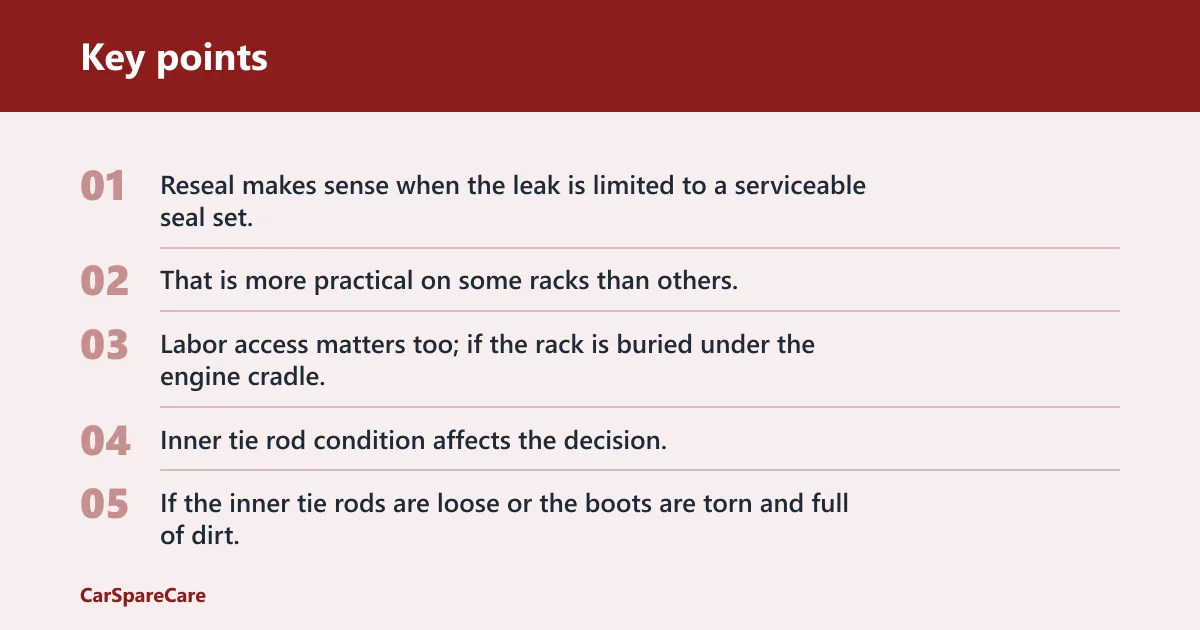
Reseal makes sense when the leak is limited to a serviceable seal set, the rack housing is not cracked, and there is no heavy shaft wear or pitting. That is more practical on some racks than others. Labor access matters too; if the rack is buried under the engine cradle, the labor may approach replacement time.
Inner tie rod condition affects the decision. If the inner tie rods are loose or the boots are torn and full of dirt, a reseal may save the rack body but still leave you buying more parts and labor. A rack replacement can be the cleaner choice when multiple wear points are present.
When replacement makes more sense
Replacement is often chosen when the rack is heavily corroded, the housing is damaged, the piston bore is worn, or the leak is internal and not practical to reseal. It also makes sense when labor overlap is high and the rack must come out for the same job anyway. Old seals plus contamination or overheating usually shorten the life of the repair if the rest of the gear is already tired.
Stop-leak products are not a fix for a worn rack seal or damaged housing. They may slow a minor seep in some systems, but they do not repair corrosion, cracked hose ends, or a leaking internal seal. They can also leave deposits that make diagnosis harder later.
What happens if fluid keeps dropping
Low fluid can lead to whining, heavy steering, and uneven assist. As air enters the system, the pump has to compress foam instead of moving solid fluid, and that raises noise and wear. If you keep driving after the fluid is low, the pump can be damaged and steering effort can increase suddenly.
That is why the repair choice should follow the leak source. A hose replacement may be enough. A pinion seal seep may call for a reseal. A boot full of fluid usually means the leak is inside the rack, and the repair path shifts toward rack service or replacement.
Frequently asked questions
Can a rack and pinion leak be repaired without replacing the whole rack?
Sometimes. A reseal can work on racks designed for service, but only if the shaft, housing, and internal bore are in good condition. If the rack is corroded, cracked, or worn inside, replacement is the more sensible repair. Labor access often affects the choice.
Is it safe to drive with a power steering leak at the rack?
Only for a short, cautious trip to a repair location if the fluid level is still safe. A continuing leak can lead to air ingestion, pump noise, and loss of assist. If steering becomes heavy or the reservoir is nearly empty, stop driving and repair it first.
How much does it cost to fix a leaking rack and pinion?
Cost depends on whether the repair is a hose, fitting, reseal, or full rack replacement. Labor access and parts availability matter as much as the part itself. Because prices vary widely by vehicle, a proper inspection is the only reliable way to estimate the bill.
Can a power steering leak be confused with engine oil or transmission fluid?
Yes. Fluid running along the underbody can come from above the rack and appear to be a rack leak. Power steering fluid usually starts near the steering gear, pump, or hoses. Engine oil and transmission fluid may have different color and texture, but location and path are the better clues.
Will stop-leak products fix a rack and pinion leak?
No reliable fix. They may reduce a minor seep in some cases, but they do not repair a worn seal, damaged housing, or corroded shaft. They can also leave residue that complicates future diagnosis. The confirmed leak source still needs inspection and a real repair.

Hi, I’m Melvin, an automobile engineer with extensive experience in automobile equipment. I currently work for a local automobile firm, where I specialize in the car parts industry. I’ve had the opportunity to collaborate with seasoned inspectors, gaining invaluable hands-on experience that goes beyond just theory.
My passion for automotive care started at a young age, which led me to create CarSpareCare. Through CarSpareCare, I share the knowledge and skills I’ve acquired over the years to help others navigate the world of car maintenance and repairs.
My goal is to provide practical tutorials, essential safety advice, and the latest industry insights so that anyone—whether a beginner or an expert—can confidently tackle their automotive projects.

