
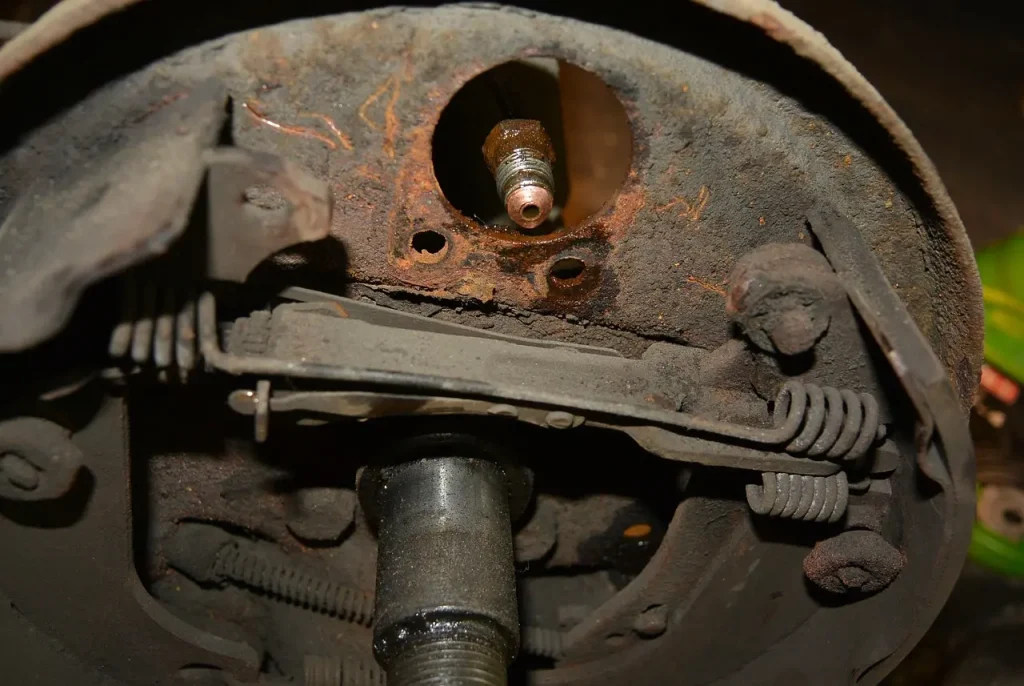
A brake pedal that sinks to the floor is often linked to a brake fluid leak, air in the hydraulic system, or a failing master cylinder; if the pedal drops during steady pressure, stop driving and inspect it before replacing parts. Ignoring it can leave you with little or no braking when you need it most. This guide shows how to separate external leaks, internal hydraulic bypass, and ABS-related faults fast.
Brake pedal sink triage
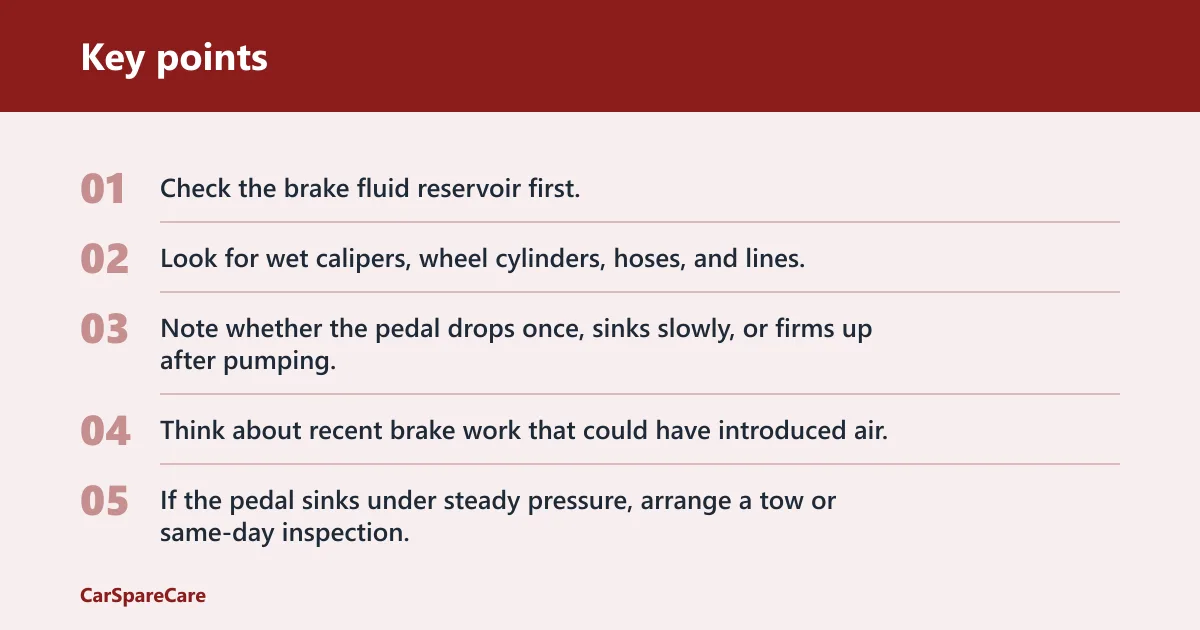

The quickest way to narrow this down is to sort the pedal feel, the reservoir level, and any wet areas before you buy parts. A sinking pedal means the brake hydraulic system is losing the sealed pressure it needs to work, and that loss can come from a leak, trapped air, or an internal bypass inside the master cylinder or ABS unit.
| Symptom pattern | Most likely cause | Quick check | Urgency |
|---|---|---|---|
| Sudden floor drop | Major brake fluid leak or complete hydraulic failure | Look under the car and at each wheel for wet spots or puddles | Tow now |
| Slow sink at stoplight | Master cylinder internal bypass | Hold firm pressure on the pedal; if it creeps downward, suspect an internal seal fault | Stop driving today |
| Temporary firmness after pumping | Air in the lines or a slow internal leak | Press the pedal a few times; if it firms briefly, then sinks again, the system is still losing usable pressure | Inspect today |
| Low reservoir level | Brake fluid leak or component failure | Check the reservoir on top of the master cylinder | Do not ignore |
| Wet wheel or line area | Leak at caliper, wheel cylinder, hose, or line | Inspect the inside of the wheel, hose crimps, and metal lines | Tow if the pedal is sinking |
| No visible leak | Master cylinder or ABS modulator internal bypass | Check for a sinking pedal with no puddle underneath | Repair soon, not later |
| Recent brake work | Air introduced during service | Ask whether the system was opened for pads, calipers, hoses, or fluid service | Bleed and retest |
| Vehicle-specific ABS bypass suspicion | ABS modulator or ABS pump internal valve or seal fault | On some Citroen and Peugeot cases, there may be no obvious fluid leak | Diagnose with the ABS system in mind |
- Check the brake fluid reservoir first.
- Look for wet calipers, wheel cylinders, hoses, and lines.
- Note whether the pedal drops once, sinks slowly, or firms up after pumping.
- Think about recent brake work that could have introduced air.
- If the pedal sinks under steady pressure, arrange a tow or same-day inspection.
Say your sedan has a pedal that feels normal for the first inch, then drops nearly to the floor when you hold it at a stop. That pattern fits a pressure loss problem, not a pad-wear problem. A brake pad issue changes stopping distance; it does not usually make the pedal keep moving downward under your foot.
What causes a sinking brake pedal?
A sinking brake pedal is usually caused by brake fluid loss from a leak, air in the hydraulic lines, or internal bypass in the master cylinder or ABS modulator. Champion says a pedal that keeps sinking usually means the system cannot build or hold pressure, and Direct Brakes classifies a soft, spongy, or low pedal as a hydraulic failure.
Brake fluid loss from a leak
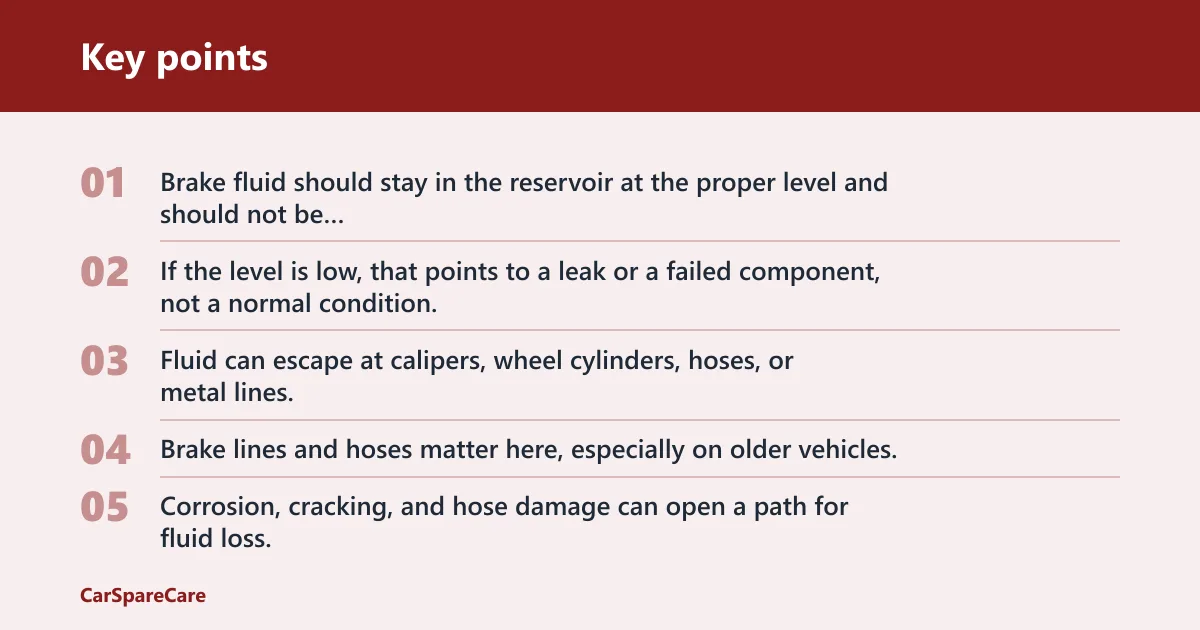
Brake fluid should stay in the reservoir at the proper level and should not be compressible. If the level is low, that points to a leak or a failed component, not a normal condition. Fluid can escape at calipers, wheel cylinders, hoses, or metal lines, and a pinhole leak can cause progressive pedal drop before you see a puddle.
Brake lines and hoses matter here, especially on older vehicles. Corrosion, cracking, and hose damage can open a path for fluid loss, and Bud’s Auto Repair notes that damaged brake lines can compromise hydraulic pressure. A leak can make the pedal sink gradually, or it can drop it suddenly if the line bursts.
Air in the hydraulic lines
Air is compressible, so it can create a soft pedal and make the pedal sink toward the floor. That often happens after repairs or after fluid loss, because the system has been opened and air entered the lines. Bleeding is the normal repair step after the leak is fixed or the component is replaced, and the system should be bled before you judge the repair complete.
Internal bypass in the master cylinder or ABS unit
The master cylinder sits behind the brake booster and generates pressure for the whole system. If its internal seals wear out, fluid can bypass inside the cylinder even when there is no obvious external leak. That can make the pedal creep downward under steady pressure, which is why the problem can look like a leak without leaving wet spots.
ABS faults can mimic that same pattern. ECU Fix reports some Citroen and Peugeot cases with no obvious fluid leak, and identifies an internal ABS valve or seal failure as the cause in some cases. That means a no-puddle brake problem is not always the master cylinder alone.
Why does pumping the pedal change it?
Pumping can make a sinking pedal feel firmer for a moment, but that does not prove the system is fixed. It often points to air in the lines or a slow internal leak that still lets pressure escape. Direct Brakes says the pump test can indicate air in the lines or a slow internal leak, which is why the pedal should not be trusted just because it firms up briefly.
What temporary firmness means
If the pedal firms after a few pumps and then sinks again, the system is still losing pressure or compressing trapped air. A healthy hydraulic system should hold pedal height without repeated pumping. The key detail is the repeat drop. One firm stroke is not enough to clear the fault.
A common first-timer mistake is replacing pads because the pedal feels low. That does nothing for a hydraulic problem. If the pedal improves after pumping, the next check is still the reservoir, the wheel areas, and the recent service history.
What pumping does and does not prove
Pumping can move fluid past a worn seal long enough to raise pedal height, but it does not confirm the master cylinder alone is bad. It can also push trapped air into a different spot and briefly mask the symptom. Treat the pump response as a clue, not a diagnosis.
What should you check first?
Check the reservoir level first, then inspect for wet calipers, wheel cylinders, hoses, and lines. After that, look at whether the car had recent brake work that could have introduced air. That order helps separate a leak from air entry before you start replacing major hydraulic parts.
Reservoir level
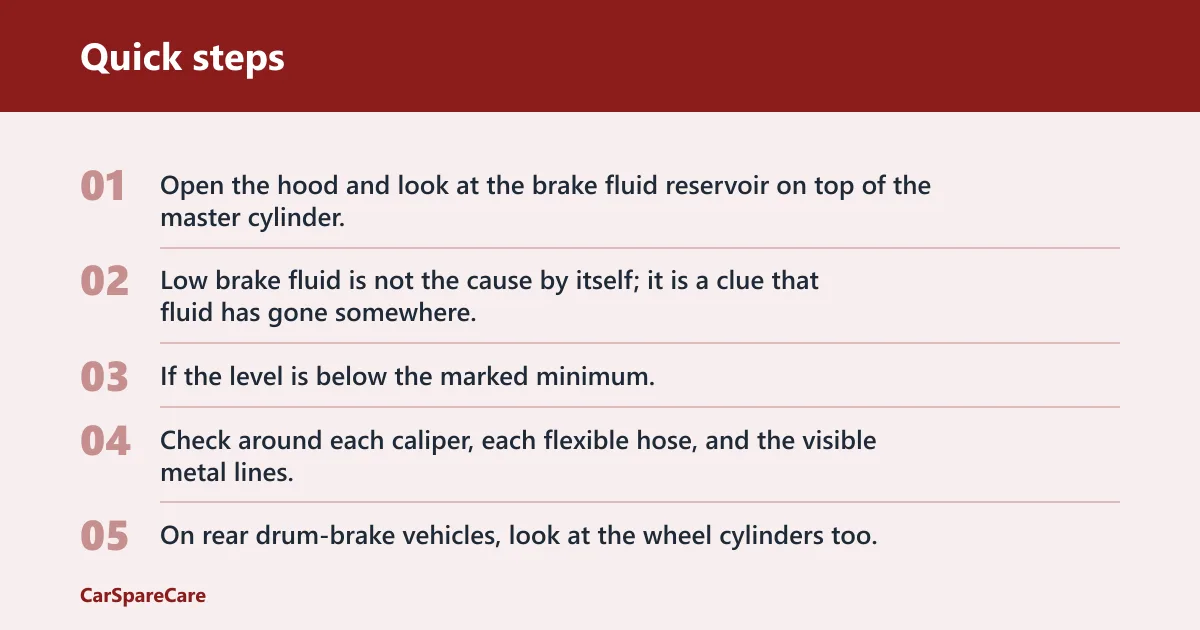
Open the hood and look at the brake fluid reservoir on top of the master cylinder. Low brake fluid is not the cause by itself; it is a clue that fluid has gone somewhere. If the level is below the marked minimum, treat that as a sign of leakage or component failure until proved otherwise.
Wet spots at the wheels and lines
Check around each caliper, each flexible hose, and the visible metal lines. On rear drum-brake vehicles, look at the wheel cylinders too. Fresh wetness, damp dust, or a drip trail gives you a likely leak point. That is more useful than guessing at the master cylinder first.
Recent brake work
If the brakes were recently opened for a hose, caliper, wheel cylinder, or fluid service, air may still be trapped in the system. Brake bleeding is used to purge that air and restore pedal firmness after repairs. If the issue started right after service, air entry moves higher on the list.
Suppose a small crossover was serviced yesterday, and today the pedal feels soft after the first stop but firms a little on the second press. That pattern fits air introduced during the repair, especially if the reservoir is full and no wheel is wet. A slow sink under steady pressure still deserves immediate attention.
Can the master cylinder or ABS cause this?
Yes. A bad master cylinder can make the pedal sink slowly, and an ABS modulator or ABS pump can cause a similar feel. If the hydraulic system cannot hold pressure, the pedal may go down with no puddle underneath. That is why a no-leak inspection does not end the diagnosis.
Master cylinder internal seal failure
Inside the master cylinder, worn seals can let pressure bypass instead of staying in the brake circuit. The result is often a pedal that creeps downward while you hold steady force on it. You may not see fluid outside the car, because the loss is internal.
ABS modulator or ABS pump internal fault
Some ABS units can bypass pressure through an internal valve or seal fault. That can look like master-cylinder failure, and it may not leave obvious fluid loss. If the pedal sinks but the reservoir stays full and the wheels are dry, the ABS unit belongs on the short list.
What to do when there is no puddle
No puddle does not mean the car is safe. It may mean the leak is internal, or the problem is trapped air after service, or the ABS unit is bypassing pressure. The next step is not random parts replacement. It is a focused inspection of the reservoir, the wheels, and the hydraulic components that hold pressure.
Is it safe to drive if my brake pedal goes to the floor?
No. A brake pedal that sinks to the floor is an immediate safety risk, and you should stop driving if the pedal drops during steady pressure. The brake hydraulic system depends on sealed fluid pressure, so a pedal that keeps sinking means the system cannot be trusted to stop the vehicle consistently.
When to tow instead of driving
Tow the car if the pedal drops suddenly, if the reservoir is low, or if you cannot get a firm pedal that stays firm. A sudden floor drop can point to a burst line or complete master-cylinder failure, both of which can leave very little braking. That is not a symptom to test on the road.
Frequently asked questions
What causes a brake pedal to sink to the floor?
The most common causes are brake fluid leak, air in the hydraulic lines, master cylinder internal bypass, or an ABS modulator fault. The pattern matters. A sudden drop points more toward a major leak or burst line, while a slow sink under steady pressure points more toward an internal seal problem.
Can low brake fluid cause the pedal to sink?
Low brake fluid can be part of the problem, but it is usually a sign of a leak or a failed component. Brake fluid should stay at the proper level in the reservoir. If it is low, inspect the system for wet calipers, hoses, lines, or wheel cylinders before driving farther.
Does air in the brake lines make the brake pedal go to the floor?
Yes. Air is compressible, so it can make the pedal feel soft and let it sink toward the floor. This often happens after repairs or after fluid loss. The fix is brake bleeding after the source of the air has been addressed, not just topping up the reservoir.
Can a bad master cylinder make the pedal sink slowly?
Yes. A master cylinder with worn internal seals can let pressure bypass inside the unit, so the pedal creeps downward under steady pressure. That can happen with no visible external leak. If the pedal slowly drops while the reservoir stays dry and full, the master cylinder becomes a strong suspect.
Can the ABS pump cause a brake pedal to go to the floor?
Yes. An ABS modulator or ABS pump can have an internal valve or seal fault that mimics master-cylinder failure. Some cases show no obvious fluid leak. If the pedal sinks but you cannot find wet lines or a low reservoir, the ABS unit should be checked along with the master cylinder.
What should I check first when the brake pedal suddenly drops?
Check the reservoir level first, then look for wet spots at the calipers, wheel cylinders, hoses, and lines. Next, think about any recent brake work that could have introduced air. If the pedal drops during steady pressure, stop driving and arrange a tow or same-day inspection.

Hi, I’m Melvin, an automobile engineer with extensive experience in automobile equipment. I currently work for a local automobile firm, where I specialize in the car parts industry. I’ve had the opportunity to collaborate with seasoned inspectors, gaining invaluable hands-on experience that goes beyond just theory.
My passion for automotive care started at a young age, which led me to create CarSpareCare. Through CarSpareCare, I share the knowledge and skills I’ve acquired over the years to help others navigate the world of car maintenance and repairs.
My goal is to provide practical tutorials, essential safety advice, and the latest industry insights so that anyone—whether a beginner or an expert—can confidently tackle their automotive projects.

