
Check the brake fluid reservoir first. If the reservoir level is below MIN, treat it as a leak and do not drive unless you only need to move a short distance to a safe spot. A low reservoir can turn a soft pedal into sudden brake loss, plus a tow or repair bill. This guide shows how to spot the source fast, judge urgency, and decide whether to tow.
Brake leak triage table

| Symptom | Likely leak source | Urgency | Next action |
|---|---|---|---|
| Puddle by one front wheel, fluid around tire or inside wheel | Brake hose, brake caliper, or wheel cylinder area near that corner | High | Do not keep driving normally; move only to a safe spot if braking still feels normal, then inspect or tow |
| Puddle by one rear wheel | Rear brake hose, rear caliper, or wheel cylinder in a drum brake | High | Stop driving if the pedal feels soft, spongy, or sinks; tow if the level is falling or the warning light is on |
| Puddle near the center line under the engine bay | Brake line, master cylinder, or reservoir connection | High to critical | Treat as a serious leak; if the pedal changes at all, stop and arrange a tow |
| Reservoir below MIN, but no puddle | Internal master-cylinder bypass, fluid loss inside caliper or wheel cylinder, or pad wear | Medium to high | Do not ignore it; check pedal feel and warning light, then have the system inspected |
| Pedal soft, spongy, or sinks toward the floor | Air in the lines from fluid loss, major leak, or master-cylinder fault | Critical | Stop driving; do not rely on a top-up alone |
| Brake warning light on, especially with low fluid | Low fluid or braking-system fault | High | Check the owner’s manual, then inspect the reservoir and do not drive far |
| Fresh wet spot with clear to amber slippery fluid near a wheel | Possible brake fluid from hose, caliper, or wheel cylinder | High | Stop and confirm the source before moving the vehicle farther |
What does a brake fluid leak mean?
A brake fluid leak means the hydraulic system is losing the fluid that creates pressure at the wheels. Brake fluid sends that pressure to the brakes, so a leak can leave the pedal soft, spongy, or sinking. If pressure drops far enough, braking can fail.
What happens next depends on how much fluid has escaped and whether air has entered the lines. A small seep may start with a lower reservoir and little else. A larger leak can make the pedal travel farther, feel weak, or go to the floor and not return if the loss is bad enough.
A brake fluid problem can also involve air in the lines or old contaminated fluid, so a low reservoir is a warning, not a full diagnosis. Low fluid can happen from normal brake pad wear too. That is why the pedal, warning light, and puddle location matter together.
How do you check the reservoir first?
Find the brake fluid reservoir in the engine bay and read the MIN and MAX marks before you do anything else. On many cars, the reservoir sits above the master cylinder, and the master cylinder is usually at the back of the engine bay on the driver’s side. (Wikipedia)
Transparent reservoirs let you see the level from the outside. Older systems may use a metal reservoir or a less obvious body, so you may need to open the cap only long enough to confirm the level. Brake fluid can absorb moisture from the air when the reservoir cap is removed, so do not leave it open longer than needed.
Fresh brake fluid can range from colorless to light brown or amber. Color helps with context, but the level and the pedal tell you more than color alone.
- Park on level ground and switch the engine off.
- Locate the reservoir and look for MIN and MAX marks.
- Compare the fluid level with both marks.
- If the level is below MIN, confirm the brake fluid spec on the reservoir cap or in the owner’s manual before adding any fluid.
- If the level is below MIN, treat it as a problem and check for a leak source.
Where is the leak likely coming from?
Start with where the fluid lands. A puddle by a wheel usually points to a hose, caliper, or wheel cylinder. A puddle near the center line under the engine bay points more toward a brake line or the master cylinder. If the reservoir is low and there is no puddle, the leak may be inside a brake assembly or the master cylinder may be bypassing internally.
Puddle near a wheel
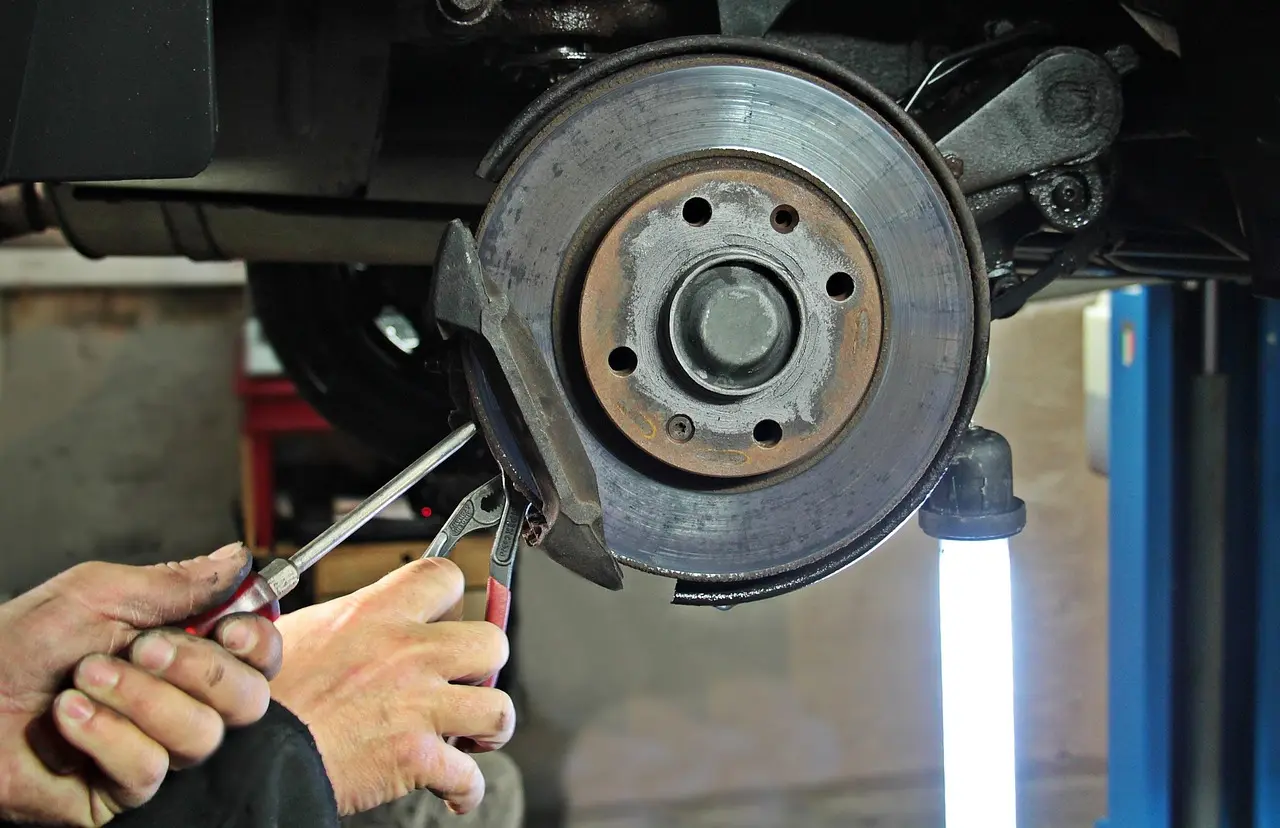
Brake hoses flex with steering and suspension movement, so they can crack or deteriorate near the wheel end. Brake calipers can leak at the piston seal or the bleeder screw, which often leaves fluid around the wheel area. On drum-brake vehicles, a wheel cylinder can leak inside the brake assembly and hide the fluid behind the drum.
Puddle at the center line
Brake lines are high-pressure hydraulic lines, and metal line corrosion is a common failure point. A cracked or damaged line often leaks under the car rather than at a wheel. The master cylinder creates hydraulic pressure, and it can leak externally where it bolts to the booster or internally where pressure bleeds past seals.
No puddle but low fluid
A low reservoir with no driveway spot can mean fluid is going into a brake assembly instead of onto the ground. It can also mean the master cylinder is leaking internally, which may not leave an obvious external wet spot. Low fluid from pad wear is possible too, so the pedal feel and warning light decide the next step.
Picture a sedan with a damp left front wheel and a reservoir just under MIN. That combination points more toward a hose or caliper leak than a center-line line failure. Suppose the same car has a low reservoir, no puddle, and a pedal that slowly sinks. That points the urgency higher because the master cylinder may be bypassing internally.
How can you tell if the puddle is brake fluid?
Start with location, feel, and appearance, not color alone. A clear-to-amber slippery fluid near a wheel may be brake fluid. A/C condensation usually appears as plain water under the front or middle of the car and feels thin, not oily. Engine oil tends to be darker and thicker. Coolant often looks colored and may leave a sweet smell.
Brake fluid color can range from clear to amber or brown, so a dark fluid is not enough to rule it in or out. A wet spot near a wheel, a low reservoir, and a changing pedal together are stronger clues than color alone. If the fluid is slippery and the car’s braking has changed, treat it as brake fluid until proven otherwise.
False alarms to rule out fast
- A/C condensation: usually a clean water spot with no oily feel.
- Engine oil: thicker, darker, and more likely under the engine area than by a wheel.
- Coolant: often colored and may leave residue after drying.
- Transmission or power-steering fluid: can appear oily, but the location and reservoir check do not match brake-system clues.
Common leak points to inspect next
After the first look, inspect the master cylinder and reservoir area, then the brake lines, hoses, calipers, and wheel cylinders. The goal is not a repair on the spot. It is to match the symptom to the most likely source so you can choose the safest next move.
Master cylinder and reservoir area
The reservoir sits above the master cylinder on many cars, so wetness at the back of the engine bay is a warning sign. An external master-cylinder leak can leave dampness around the mounting area. An internal leak can lower fluid without a clear puddle and can also change pedal feel.
Brake lines and corrosion points
Brake lines carry high-pressure hydraulic fluid, so corrosion or impact damage matters. Wet metal tubing, flaking rust, or a dripping section under the car points toward a line issue. A damaged line often produces a fast reservoir drop and a pedal that starts to lose support.
Brake hoses, calipers, and wheel cylinders
Brake hoses move with the suspension and steering, so cracks often show near the wheel end or where the hose bends. Calipers can leak at the piston seal or bleeder screw, leaving fluid around the wheel area. Drum-brake wheel cylinders leak inside the assembly, so the wheel may stay dry while the drum-side parts are wet.
When should you stop driving?
Stop immediately if the pedal feels soft, spongy, or sinks toward the floor, or if the brake warning light is on and braking feels poor. If the reservoir is dropping fast, the loss is more than a minor seep and the safest move is a tow.
Do not keep driving normally after a warning light, a low pedal, or a fresh puddle by a wheel. A short move to a safe spot is different from using the car as usual. The first priority is keeping enough braking to stop the vehicle safely.
What to do if brake fluid is leaking
The safest next step is to stop driving, confirm the reservoir level, and match the symptom to the likely source. If the pedal is normal and the level is only slightly low, do not keep driving normally; check the exact brake fluid spec listed on the reservoir cap or in the owner’s manual before adding any fluid, then get the vehicle inspected. If the pedal changes, tow the vehicle.
- Check the reservoir on level ground.
- Look for MIN/MAX and note whether the level is below MIN.
- Check the driveway for a puddle and note its position.
- Watch the brake warning light and confirm its meaning in the owner’s manual.
- Do not drive far if the pedal feel changes or the level drops quickly.
DOT brake fluid compatibility matters if you top up for diagnosis. Some brake systems call for DOT 4, DOT 5, or DOT 5.1 fluid. Use only the type listed for your vehicle. Do not assume all brake fluids mix safely.
Brake fluid problems often become dangerous because fluid loss, air in the lines, and pedal changes can happen together. A vehicle with a changing pedal or a warning light should not be treated as normal transport. Tow it if the leak looks active or the pedal is already affected.
Frequently asked questions
How fast does brake fluid leak?
It can leak slowly enough to show only a damp spot, or fast enough to drop the reservoir quickly and affect the pedal in one drive. The risk jumps when the level falls between checks, the pedal softens, or the brake warning light comes on. Fast loss calls for a tow.
What does it mean when brake fluid is leaking?
It means the hydraulic system is losing the fluid that creates braking pressure, and air may be entering the lines. The source can be external, such as a hose, caliper, line, or wheel cylinder, or internal, such as the master cylinder bypassing seals.
What happens when your brake fluid leaks?
The system loses hydraulic pressure, so the pedal may travel farther and stopping power can drop. If the leak continues, air can enter the lines and the pedal may feel spongy or fall toward the floor. In severe cases, the brakes can fail.
Can I drive with a brake fluid leak?
Only for the briefest move to a safe spot if the pedal still feels normal. If the pedal is soft, the warning light is on, or the reservoir is dropping quickly, do not drive normally. Tow the vehicle instead of risking sudden brake loss.
Why is my brake fluid low but I don’t see a puddle?
The fluid may be leaking inside a brake assembly, such as a caliper or wheel cylinder, or the master cylinder may be bypassing internally. Low fluid can also come from normal brake pad wear. A low reservoir without a puddle still deserves a full inspection.

Hi, I’m Melvin, an automobile engineer with extensive experience in automobile equipment. I currently work for a local automobile firm, where I specialize in the car parts industry. I’ve had the opportunity to collaborate with seasoned inspectors, gaining invaluable hands-on experience that goes beyond just theory.
My passion for automotive care started at a young age, which led me to create CarSpareCare. Through CarSpareCare, I share the knowledge and skills I’ve acquired over the years to help others navigate the world of car maintenance and repairs.
My goal is to provide practical tutorials, essential safety advice, and the latest industry insights so that anyone—whether a beginner or an expert—can confidently tackle their automotive projects.

