Clean car carpet by hand when the mess is on the surface: loose dirt, small drink spills, or isolated stains. Use a vacuum, a soft-bristle brush, microfiber towels, and a mild cleaner. Stop and escalate if the carpet backing or padding stays damp, if odor returns after drying, or if you see mildew or flood saturation.
Hand cleaning works best when the soil is shallow and the fibers still spring back. It is not the right fix for soaked padding, recurring pet odor, or visible mildew. Clean floor mats separately before you work on the fixed carpet, because mats hold grit that can redeposit into the cabin.
How to clean car carpet by hand
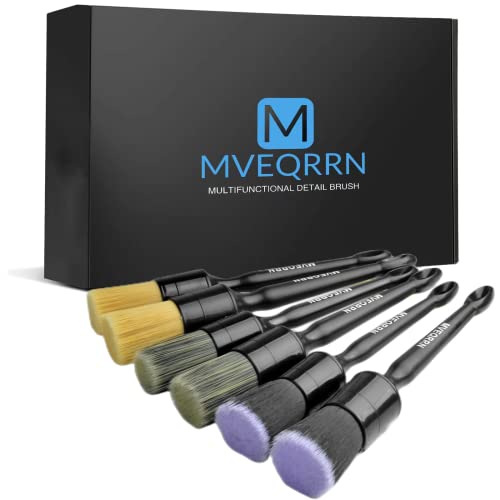


What you’ll need
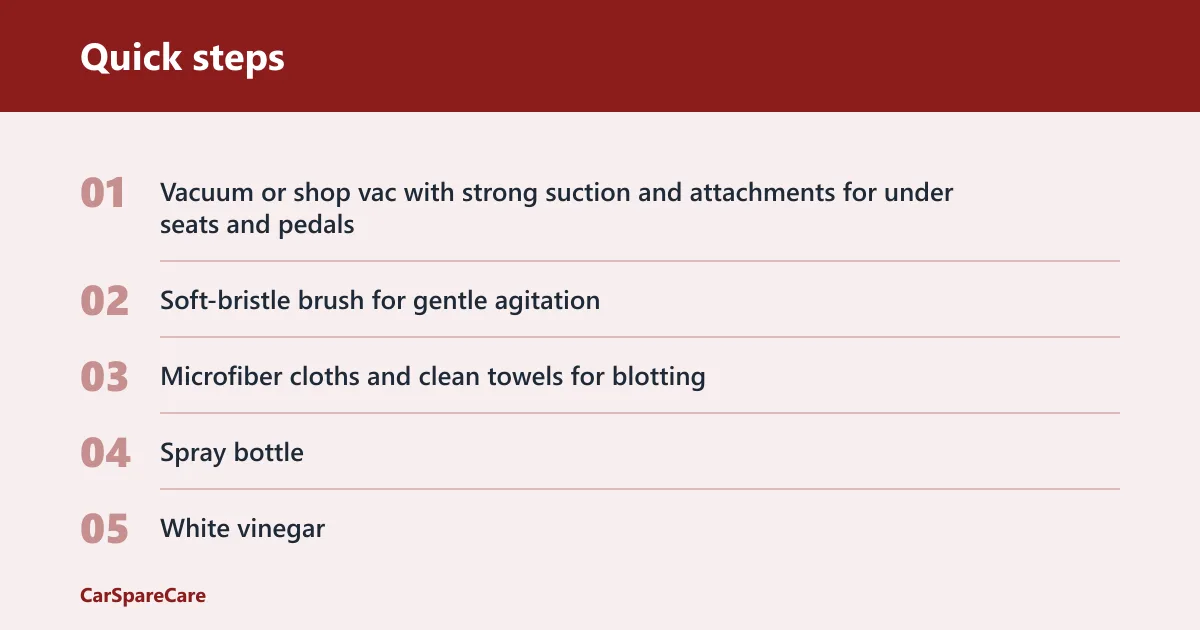
- Vacuum or shop vac with strong suction and attachments for under seats and pedals
- Soft-bristle brush for gentle agitation
- Microfiber cloths and clean towels for blotting
- Spray bottle
- White vinegar
- Liquid dish soap
- Baking soda for odor control after drying
- Carpet cleaner for stubborn spots, used sparingly
- Use a wet-dry shop vacuum if the carpet gets too damp.
Which cleaner should you use?
Choose the mildest cleaner that matches the mess. Vacuuming and a damp towel are enough for dust and dry soil. Vinegar and water can handle many light spots. A store-bought carpet cleaner is better for older stains that resist a simple rinse, but use it sparingly and stop if the carpet starts to feel wet underneath.
Flood damage, recurring mildew, and pet accidents with deep odor are different problems. If the padding is soaked, the backing is wet, or the smell returns after drying, topical cleaner is not enough. In those cases, extraction, pad removal, or replacement is usually the safer endpoint.
| Mess type | Safest hand method | Recommended cleaner | Agitation level | Drying warning | When to stop and escalate |
|---|---|---|---|---|---|
| Dusty soil | Vacuum first, then mist and wipe | 1:1 white vinegar and water | Very light; short brush strokes | Do not soak the backing | Stop if dirt smears or the carpet feels wet through |
| Muddy footprints | Let mud dry, vacuum solids, then spot clean | 1:1 vinegar and water, or a small amount of carpet cleaner | Light to moderate; lift, do not grind | Wet mud turns into slurry fast | Stop if the stain spreads or the pile mats down |
| Drink spill | Blot immediately, then clean the ring | Vinegar and water, then a damp cloth wipe | Light | Sugary spills need full drying | Stop if the spot still feels sticky after two passes |
| Pet accident | Blot, clean, then treat odor after drying | Carpet cleaner first, then baking soda after dry | Moderate, with controlled strokes | Odor can return if moisture stays trapped | Stop if odor remains after drying or padding stays damp |
| Flood or mildew | Remove water first, then treat only if the carpet is still salvageable | Hydrogen peroxide and water, 1:1, after patch test | Minimal; blot only | Soaked padding and backing are a mold risk | Stop if color changes, padding stays wet, or mildew smell remains |
How do you clean car carpet without a machine?
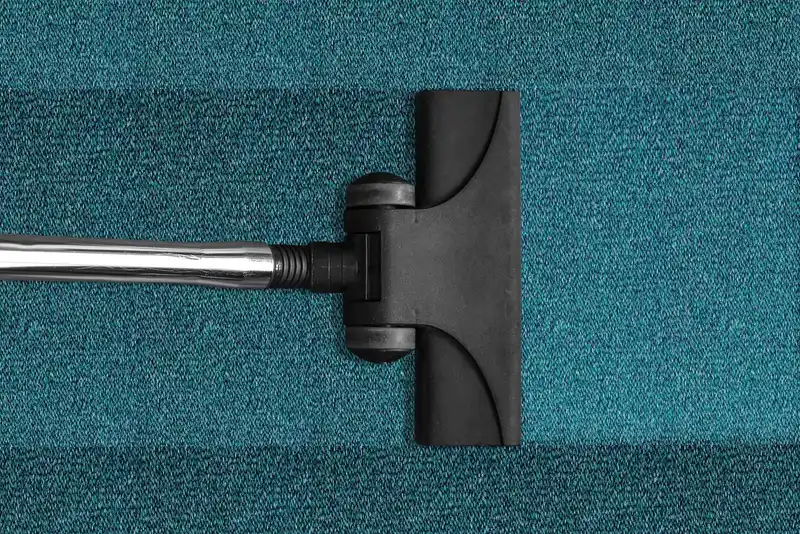
Use hand cleaning only for surface messes. Vacuum first, apply a small amount of cleaner, agitate gently, then blot until the towel stops picking up soil. If the carpet backing or padding is saturated, hand cleaning has reached its limit. A wet-dry shop vacuum or professional extraction is the better next step.
- Remove the floor mats and clean them separately.
- Vacuum the carpet thoroughly, including under pedals, seats, and narrow gaps where grit collects.
- Spot-test the cleaner in a hidden area and wait to see whether any color change occurs before you continue.
- For light soil, mist a 1:1 mix of white vinegar and water; for tougher older stains, use a small amount of carpet cleaner.
- Brush with a soft-bristle brush using short, straight strokes. Keep the pressure light enough that the fibers lift instead of flatten.
- Blot with a clean towel, then repeat with fresh towel sections until the stain lifts.
- Let the area dry with doors open or windows cracked. If moisture remains after blotting, pull it out with a wet-dry shop vacuum.
- After the carpet is dry, sprinkle baking soda if odor remains, then vacuum it up thoroughly once the area is dry.
Suppose a coffee spill covers a 4-inch patch near the center tunnel. Blot first, then use a few spray passes of the vinegar mix and short brush strokes. If the towel comes back only lightly damp and the stain fades, stop there. More liquid is usually the wrong next move.
A common first-timer mistake is to scrub hard when a stain looks stubborn. That can fray fibers and push grime deeper into the pile. A soft-bristle brush with controlled strokes removes more soil than heavy pressure, especially on looped or thin automotive carpet.
If that didn’t work, try this next
- Repeat the spot treatment once with a fresh towel and clean brush.
- If the stain is still visible, use a small amount of carpet cleaner on the spot and wipe it back with a damp cloth.
- If the carpet is too wet after two passes, stop wet cleaning and extract moisture with a wet-dry shop vacuum.
- If odor, dampness, or discoloration stays after drying, stop and consider professional extraction or replacement.
Common mistakes
Over-wetting is the biggest mistake. Moisture that reaches the backing or padding can linger long after the surface looks clean, and that trapped water is what drives odor and mold risk. Keep the cleaner in the surface fibers, not the foam underneath.
Another mistake is using the wrong motion. Do not scrub in circles. Use short, straight passes and blotting instead. Circular scrubbing can spread the stain outward and make a small spot larger. Strong suction from a vacuum or shop vac helps remove loose grit before any liquid touches the carpet.
Harsh chemicals are another problem. Check the label first, because harsh cleaners can discolor trim, stiffen fibers, or leave residue that attracts more soil. For a gentler approach, see also how to clean car upholstery and how to clean car floor mats for spill-safe methods that fit adjacent surfaces.
How do you keep car carpet from getting moldy after cleaning?
Dry it quickly and completely. Open doors or windows, use towels, and pull out remaining water with a wet-dry shop vacuum. Do not reinstall floor mats until both the carpet and the backing are dry. If odor returns after drying, treat that as a warning that moisture is still trapped below the surface.
The EPA Mold Course advises removing wet materials promptly and drying them within 24 to 48 hours when possible, because lingering moisture supports mold growth. If the carpet was flood-damaged, or if the padding stays wet after blotting, stop trying to salvage it with more cleaner. Extraction, pad removal, or replacement is the safer choice.
Baking soda can help only after the carpet is fully dry. Use it for odor on dry carpet, then vacuum it out thoroughly. It does not solve trapped moisture, and it will not fix mildew that has already taken hold in the backing.
Frequently asked questions
What can I use to clean my car carpet?
For light soil, use white vinegar mixed 1:1 with water. For tougher stains, use a small amount of carpet cleaner, then wipe it back with a damp cloth. Baking soda belongs after drying for odor control. Hydrogen peroxide is reserved for selected flood or mildew cases only, not as a general cleaner.
How do I remove stains from car carpet by hand?
Blot the stain first, then work from the outside edge inward with short brush strokes. Use the least liquid that loosens the spot. If the mark is still visible after one careful repeat, escalate to a stronger spot cleaner or moisture extraction instead of adding more water.
How do I clean car carpet without a shampooer?
Use a vacuum, a soft-bristle brush, towels, and one mild cleaner at a time. Start with a 1:1 vinegar-and-water mix for light soil. For older, tougher stains, use a small amount of carpet cleaner and keep the application limited. If the stain needs repeated wetting, the job has moved beyond hand cleaning.
How do I clean carpet without a shampooer?
The method is the same: remove loose debris, vacuum well, test a cleaner in a hidden spot, and blot after brushing. Use baking soda only after drying. If the carpet stays damp beneath the surface or the smell lingers, hand cleaning has reached its limit.

Hi, I’m Melvin, an automobile engineer with extensive experience in automobile equipment. I currently work for a local automobile firm, where I specialize in the car parts industry. I’ve had the opportunity to collaborate with seasoned inspectors, gaining invaluable hands-on experience that goes beyond just theory.
My passion for automotive care started at a young age, which led me to create CarSpareCare. Through CarSpareCare, I share the knowledge and skills I’ve acquired over the years to help others navigate the world of car maintenance and repairs.
My goal is to provide practical tutorials, essential safety advice, and the latest industry insights so that anyone—whether a beginner or an expert—can confidently tackle their automotive projects.