
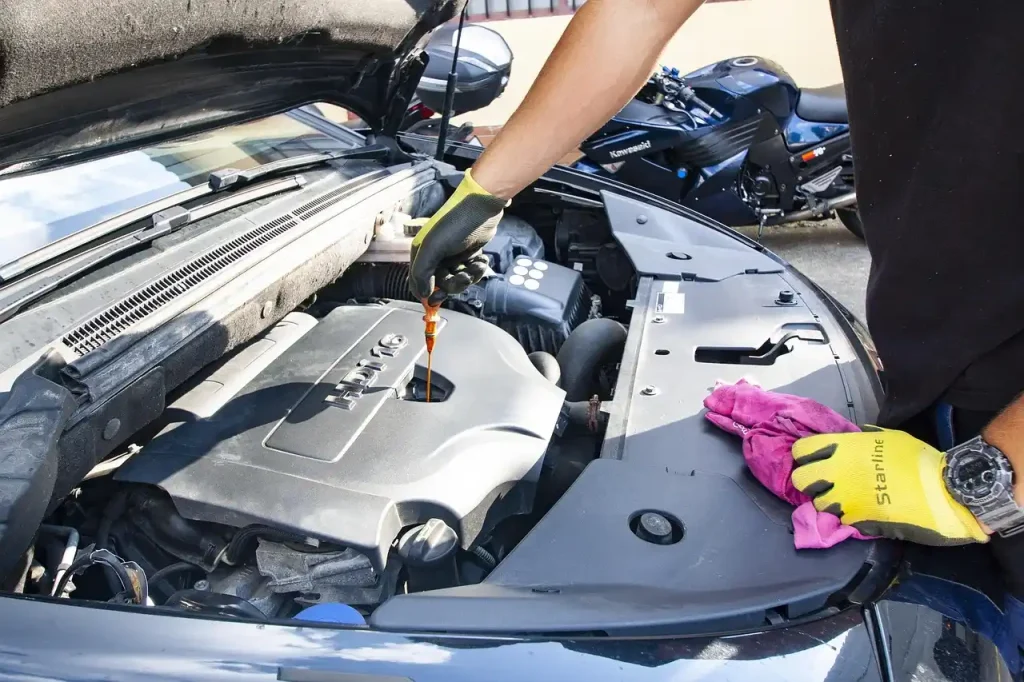
Check engine oil with the car parked on level ground, engine off for 5 to 10 minutes, and the dipstick read at the full-mark range after wiping and reinserting it; on cars with an electronic oil-level system, use the dash or infotainment check instead of guessing from a dipstick. Read it wrong, and you can end up overfilled or low, which can trigger engine wear, leaks, or warning lights. This guide shows the exact dipstick method, the best timing, and the exceptions that matter on modern cars.
How to read the dipstick
Use the owner’s manual first, then park on level ground, shut the engine off, wait long enough for oil to drain back, and read the dipstick only after a clean wipe and full reinsert. The safe zone is between the minimum and maximum marks, with a level near MAX usually preferred.
What you’ll need
- Owner’s manual
- Clean paper towel or lint-free rag
- Gloves, if desired
- The correct oil grade for your engine, such as 0W-20, 5W-30, 5W-40, or 10W-30
- Funnel for topping up
- Check the owner’s manual first. Look for the dipstick location, the correct oil grade, and whether your model calls for a warm or cold check. Some BMW and Porsche models, among others, may require a warm-oil reading.
- Park on level ground. Use a flat parking surface and set the parking brake. Even a slight slope can move oil to one side of the pan and give a false reading.
- Switch off and wait. Let the engine sit for about 5 to 10 minutes so oil can drain back to the sump. Check it too soon and the dipstick may read low because oil is still clinging to upper engine parts.
- Find and pull the dipstick. Remove the engine oil dipstick fully, then wipe it clean with a rag or towel. Reinsert it all the way so the reading comes from the same surface every time.
- Read the second pull. Pull the dipstick back out and hold it level. Read the oil line against the markings, not the smear from the first pull. Near MAX is usually best; below MIN means the engine needs oil.
- Add oil in measured amounts. If the level is low, add about 0.5 quart, then wait a minute and recheck. Do not pour in a full quart blindly, because the difference between MIN and MAX on most dipsticks is about 1 quart.
- Stop before overfilling. Keep the level below the top of the safe range and recheck after each addition. Overfilled oil is a problem and should not be left that way for long-term driving.
Suppose the dipstick is marked MIN and MAX and the oil sits halfway between them. That is usually acceptable, but a small top-up may still make sense if the level is trending down between checks. Add 0.5 quart, then read it again before adding more.
A common first-timer mistake is checking three minutes after shutdown on a steep driveway. That can show a false low or a misleading streak across the dipstick. Flat ground and a short wait matter more than most drivers expect.
How do you check engine oil level?
To check it properly, you need a level surface, a fully stopped engine, and a dipstick reading taken after the oil has settled. The basic sequence is remove, wipe, reinsert, and read again. That second reading is the one that counts.
- Open the bonnet. Make sure the engine is off and cool enough to handle safely, then locate the oil dipstick using the manual if needed.
- Clean the dipstick. Wipe away every trace of oil from the first pull. A clean stick makes the mark easier to read and avoids mixing old streaks with the real level.
- Reinsert it fully. Push the dipstick back until it seats completely. A partial insert can make the oil line appear higher or lower than it really is.
- Check the level once more. Pull it straight out and compare the oil line with the manufacturer’s markings. If the mark sits at or near MAX, the level is fine; if it is below MIN, add oil before driving far.
Many dipsticks are reported to use L and H marks, holes, or a crosshatched area rather than plain lines. Some use L and H marks, some use holes, and some show a crosshatched area. Read the shape your car gives you, not the shape you expected to see.
What does the dipstick reading mean?
The reading tells you whether the engine is within its safe oil range, near full, low, or overfilled. In most cases, the target is between MIN and MAX, with a reading near MAX preferred. The exact marking style varies, so the safe zone is what matters most.
| dipstick marking style | what the level means | the exact action to take |
|---|---|---|
| MIN/MAX lines | Between the lines is the safe zone; near MAX is preferred | Drive normally if the level is in range. Add oil if it sits below MIN. |
| L/H marks | L means low, H means high, and the area between them is acceptable | Keep the level between the two marks. Add oil in 0.5 quart increments if it is near L. |
| Crosshatch zone | The hatched area shows the acceptable range | Keep the oil line inside the crosshatch. Stop adding when it reaches the upper part of the zone. |
| Single-hole markings | Each hole marks a set level, with the upper hole usually closer to full | Match the oil line to the correct hole. If it is below the lower hole, top up and recheck. |
| No dipstick / electronic monitor | The car uses a dashboard or infotainment oil check instead | Use the menu path in the owner’s manual and meet the required conditions, such as engine temperature or idle state. |
| Overfilled reading | The level is above MAX or above the top of the marked area | Do not keep adding oil. Remove excess oil or have it corrected before long-term driving. |
Oil condition matters too. Healthy oil is often amber or light brown. Dark black oil can be normal after some use, but milky, sludgy, or fuel-smelling oil needs attention.
| oil condition clue | what it can mean | recommended next step |
|---|---|---|
| Amber or light brown | Usually normal | Continue regular checks. |
| Dark black | May be normal darkening from use | Check the service interval and watch for other symptoms. |
| Milky or creamy | Can indicate coolant contamination | Stop and have the engine inspected. |
| Fuel smell | May suggest fuel dilution | Arrange a diagnosis before continued driving. |
| Sludgy | May point to severe oil degradation or neglect | Have the engine checked and do not ignore it. |
What if your car has no dipstick?
Some modern vehicles, including certain BMW, Mercedes-Benz, and other models, do not have a dipstick. In that case, use the electronic oil monitor in the car’s menu system or instrument display, following the owner’s manual exactly.
- Open the vehicle menu. Go to Settings or Vehicle status, then choose the oil level screen or service menu named in the manual.
- Meet the required conditions. Some systems need the engine at operating temperature, the car idling, or the vehicle parked on level ground before they will show a valid result.
- Read the digital result. Add oil only if the display says low or near minimum, and use the specified grade listed on the filler cap or in the manual.
Do not treat a no-dipstick car like a standard one. The monitor may ignore a check if the engine is too cold, too hot, or not idling as required.
Oil dipstick reading decoder
This table helps when the dipstick markings are not obvious. Some sticks mix lines, holes, and shaded zones, so the rule is simple: use the top of the safe range as your reference, then add oil only if the level falls below the lower mark.
Oil Dipstick Reading Decoder: dipstick marking style what
| dipstick marking style | what the level means | the exact action to take |
|---|---|---|
| MIN/MAX lines | Level is safe when the oil sits between the two lines | Leave it alone if it is between the marks. Top up only if it is below MIN. |
| L/H marks | L is low and H is full enough for normal use | Keep the oil between L and H, with the reading closer to H if possible. |
| Crosshatch zone | The shaded band shows the acceptable range | Keep the oil inside the band. Stop when it reaches the upper part of the hatch. |
| Single-hole markings | The lower hole shows low and the upper hole shows full | Top up if the level is below the lower hole, then recheck after each addition. |
| No dipstick / electronic monitor | The car needs a screen-based oil check, not a physical stick | Use the dashboard or infotainment procedure in the manual and do not guess from the filler neck. |
| Overfilled readings | The oil line is above MAX or above the top of the marked area | Stop adding oil. Remove some oil or have it corrected before the next long drive. |
Common mistakes
The biggest errors are checking too soon, reading on a slope, and adding oil without rechecking. Those mistakes can create a false low reading or push the engine over the safe limit.
- Checking on a slope. A slight incline can move oil away from the dipstick tube and distort the reading.
- Skipping the wait time. If you read it immediately after shutdown, oil can still be draining from the top of the engine.
- Not wiping the stick. The first pull can leave a smear that is not a true level.
- Adding too much at once. Add 0.5 quart, then check again. That is safer than dumping in a full quart.
- Using the wrong grade. The manual or oil filler cap should specify the correct viscosity, such as 0W-20 or 5W-30.
Say your dipstick shows oil just below MIN after a 7-minute wait on flat ground. Add 0.5 quart, wait a minute, and check again. If it still sits low, repeat in small increments until the level moves into the safe range.
Check the level at least once a month, and more often if the engine uses oil between services or the dashboard warns of low oil.
Frequently asked questions
How long should you wait after turning off the engine to check oil?
A common wait time is approximately 5 to 10 minutes. That gives oil time to drain back to the sump so the dipstick can show a more accurate level. Some models ask for a warm check instead, so the manual comes first.
What does the oil dipstick reading mean?
The reading shows whether the oil is in the safe range, low, or overfilled. Between MIN and MAX is acceptable, with the level near MAX usually preferred. If the oil appears below the lower mark, add oil in measured amounts and recheck.
What should you do if the oil level is below the minimum mark?
Add about 0.5 quart, then recheck after a minute. Repeat in small amounts until the level moves into the marked range. If it keeps dropping quickly, the engine needs a leak check or other diagnosis, not just more oil.
What if my car does not have an oil dipstick?
Use the electronic oil monitor in the vehicle’s menu or dash display. The exact path varies, but it is usually under Vehicle status, Service, or Settings. Follow the manual, because some systems need the engine warm and idling before they will show a valid reading.
How to check the car’s oil level — Learn how to check your car’s oil level with the dipstick or digital dashboard, and when to add more
Use the dipstick if the car has one, or the dashboard oil monitor if it does not. On a dipstick car, wait 5 to 10 minutes, read the second pull, and keep the level between the marked limits. Add oil only if the level is below the lower mark.

Hi, I’m Melvin, an automobile engineer with extensive experience in automobile equipment. I currently work for a local automobile firm, where I specialize in the car parts industry. I’ve had the opportunity to collaborate with seasoned inspectors, gaining invaluable hands-on experience that goes beyond just theory.
My passion for automotive care started at a young age, which led me to create CarSpareCare. Through CarSpareCare, I share the knowledge and skills I’ve acquired over the years to help others navigate the world of car maintenance and repairs.
My goal is to provide practical tutorials, essential safety advice, and the latest industry insights so that anyone—whether a beginner or an expert—can confidently tackle their automotive projects.

