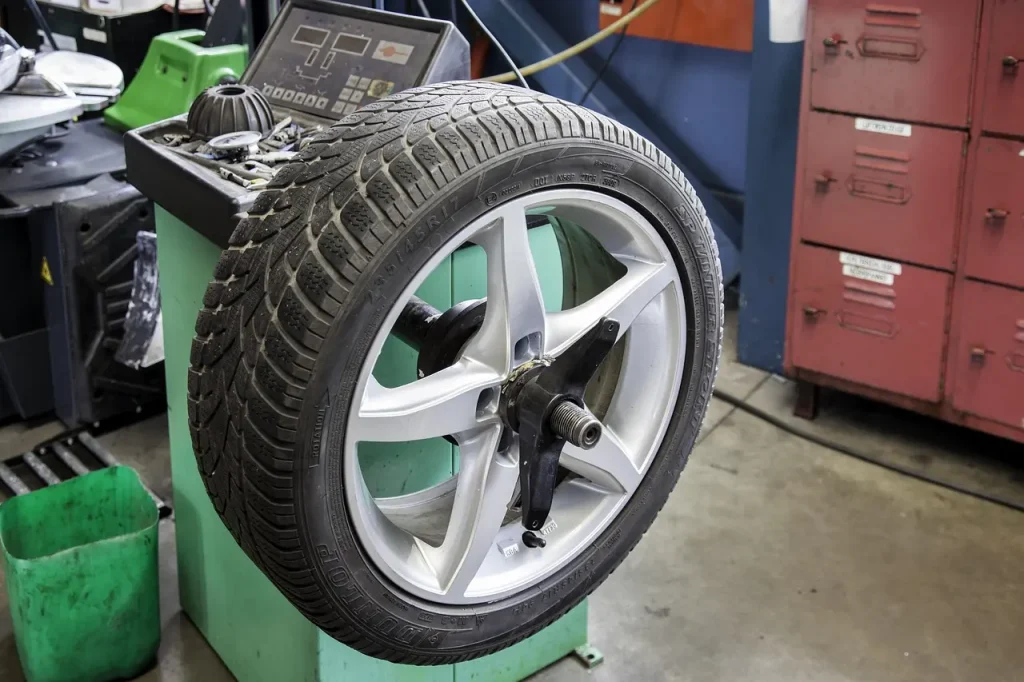
Use a static home balancer to place small weights opposite the heavy spot, but stop if the vibration still shows up above 50–60 mph or you find runout, a bent rim, or tire damage. Poor balancing can keep the car shaking, wear tires unevenly, and hide a fault that needs repair. This guide shows how to tell imbalance from other faults, do a limited off-car static balance at home, and know when to hand the wheel to a shop.
What symptoms point to imbalance?


A true imbalance usually shows up as vibration in one speed range, then fades above or below that range. Front-wheel imbalance is often felt in the steering wheel, while rear-wheel imbalance is more often felt in the seat or floor. That pattern points to the wheel and tire assembly, not alignment alone.
BFGoodrich says a wheel is out of balance when one area is heavier or lighter than the rest. It links imbalance to bouncing or wobbling at speed, and notes that the vibration can increase stress on the vehicle. Static imbalance makes the assembly hop up and down. Dynamic imbalance makes the wheel shake side to side.
Speed range clues
The best clue is repeatability. If the shake begins around one road speed, stays strongest for a narrow band, then eases off at higher or lower speeds, balance is a likely suspect. If the wheel is bent or the tire is damaged, the vibration may feel less consistent and can appear with visible wobble.
Steering wheel, seat, and floor shake
Front imbalance often shows up in the steering wheel. Rear imbalance is more likely to show in the seat or floor. That difference matters because it helps you avoid guessing. A steering pull, by itself, points more toward alignment than balance.
What you need for a home static balance
A static balancer is an off-car tool that is cheaper than a dynamic balancer, which is the electronics-based machine tire shops use to spin the assembly and calculate correction. A home balancer depends on a flat, level surface and support through cones or an axle sleeve so the wheel can rotate freely. WikiHow notes that debris can skew the test results, and that a level should be used to check evenness.
- Static balancer with cone or axle sleeve support
- Wheel weights, adhesive or clip-on type
- Valve core tool or tire pressure gauge if pressure needs checking first
- Clean rag and brake cleaner for the wheel face
- Level surface with no slope
Wheel weights sit on the inner or outer rim and cancel the heavy spots in the tire and wheel assembly. If a weight has moved or gone missing, the assembly is no longer balanced as mounted. That is why a missing weight is often the simple reason for new vibration after a pothole, curb strike, or recent tire service.
How to static-balance a wheel at home
Use a static balancer only for a temporary off-car correction. It can help with up-and-down hop, but it cannot fully correct dynamic imbalance, bent rims, or tire defects. If the wheel still shakes side to side after a careful static balance, stop and plan on machine balancing or inspection.
Off-car setup with a static balancer
- Clean the assembly. Remove dirt, mud, and old adhesive from the rim and weight area. Debris can skew the balance test results, and even small buildup can send you toward the wrong correction.
- Mount the wheel correctly. Place the wheel on the balancer with the cone or axle sleeve centered as the tool requires. The balancer must sit on a flat, level surface so the wheel can settle without side load.
- Let the heavy spot settle. Rotate the wheel gently and wait for it to stop. Mark the bottom point. On a static balancer, the bottom is the heavy side, so the opposite side is where the correction belongs.
- Add a small weight. Attach a weight opposite the bottom mark. Start with the smallest practical weight and recheck. Static imbalance is corrected by adding weight to the light side, not by guessing a large amount all at once.
- Recheck the settle point. Spin the wheel again and let it stop several times. If the same area keeps dropping to the bottom after a correction, move the weight slightly or change the weight size.
- Confirm a clean settle. The wheel should, as a common rule of thumb, stop in different positions or stay near neutral rather than drifting to one spot. If it still prefers one position, the problem may be runout, a bent wheel, or a tire defect instead of simple imbalance.
Say your 17-inch front wheel keeps shaking the steering wheel around 55 mph, and you find a missing clip-on weight on the inner rim. A temporary static balance may reduce the hop if the wheel itself is straight. If the vibration remains after correction, the wheel or tire needs a shop check.
Dynamic balancing is different. A shop machine spins the wheel and finds where correction is needed on the inner and outer rim edges. That matters because a dynamic problem can shake side to side even when a static balancer looks close. A home method cannot measure that correction with the same accuracy.
Wheel balance decision table
This table helps you separate a simple imbalance from problems that need more than a home correction. Treat it as a stop-or-go decision aid, not a final diagnosis.
| Symptom | Likely cause | Safe home action | Stop-and-go-to-shop threshold |
|---|---|---|---|
| Vibration in one speed band, strongest in steering wheel | Front wheel imbalance or missing weight | Check for lost weights, clean the wheel, try a temporary static balance off-car | If the shake remains above 50–60 mph after correction, stop |
| Vibration felt in seat or floor | Rear wheel imbalance or rear tire issue | Inspect rear wheels for lost weights and repeat the static balance off-car | If the same speed range still shakes, plan machine balancing |
| Up-and-down hop | Static imbalance or a tire with a heavy spot | Static balance may help if the wheel is straight and the tire is sound | If hop remains after correction, inspect for runout or tire damage |
| Side-to-side shake | Dynamic imbalance or bent wheel | Check for obvious missing weights and visible wheel damage | Go to a shop if the shake persists; dynamic correction needs a machine |
| Fresh vibration after pothole or curb strike | Bent rim or shifted weight | Look for a lost weight and obvious rim deformation | Stop if the rim is bent or the tire shows cuts, bulges, or runout |
| Tread wear in scallops or cups | Cupped tread, worn suspension, or alignment issue | Do not chase balance alone; inspect wear pattern and pressure first | Go to a shop for tire and suspension diagnosis |
A common first-timer mistake is to add weight because the wheel “looks off” on the balancer, then ignore a bulge or a bent lip. That can hide the real fault for a short time and still leave the vehicle unsafe at speed.
When should you stop and go to a shop?
Stop when the wheel still shakes after a careful static balance, when you find runout, when the rim is bent, or when the tire is damaged. A temporary home correction is useful only if the wheel and tire are otherwise sound. If the defect is structural, weights will not fix it.
Bent rim or damaged tire
A bent wheel can mimic imbalance because the tire no longer turns true. A damaged tire can do the same, especially if there is a bulge, cut, separated belt, or cupped tread. In those cases, balancing may reduce one symptom but will not repair the source.
Suppose the rear wheel feels fine at 35 mph but starts to thrum at 62 mph after a pothole hit. If the rim lip is visibly bent, do not keep driving on the assumption that more weight will solve it. The correct next step is inspection, straightening if allowed, or replacement.
Lost wheel weight or repeated correction
If a weight keeps falling off or the same wheel needs correction every short interval, look for a bad adhesive surface, clip-on fit issue, corrosion, or a tire problem that keeps changing the balance point. Wheel weights are meant to stay put. If they do not, the wheel needs a proper shop check.
Dynamic balancers at tire shops can measure both static and dynamic imbalance. That is why a shop is the right place for repeated vibration, especially if the vehicle is still shaking after a clean off-car static correction.
Wheel balance vs rotation and alignment
Wheel balance, tire rotation, and wheel alignment are different jobs. Balance corrects weight distribution in the tire and wheel assembly. Rotation changes tire position on the vehicle. Alignment adjusts caster, camber, and toe. The same source recommends rotating tires every 6,000 to 8,000 miles, and many shops rebalance during every rotation.
Tire rotation timing
Rotation does not fix vibration by itself. It moves tires to different positions so wear stays more even, and it is a good time to rebalance if a wheel was already off the car. If a vibration appears after rotation, check whether a weight was knocked off during service.
Alignment faults that feel similar
Misalignment can scrub tread and pull the vehicle, which can feel like a balance problem to a driver. But alignment does not correct a heavy spot in the wheel. If the car pulls left, the steering wheel is off-center, or the tires wear unevenly across the tread, balance is not the only suspect.
Wheel balance vs tire rotation is simple: balance corrects vibration, rotation changes location. Wheel alignment vs tire balance is also simple: alignment changes the way the wheels point, while balance changes how the assembly spins. Keep those jobs separate so you do not chase the wrong fix.
Frequently asked questions
How to balance car tires at home
You can only do a limited static balance at home. That works for a simple heavy spot and a missing weight, but it does not match a shop machine for dynamic correction. If the shake is side to side, if the wheel is bent, or if the tire is damaged, home balancing is the wrong fix.
How is a tire balanced?
A tire is balanced by adding wheel weights to counter the heavy spot in the mounted assembly. Shops use a dynamic balancer that spins the wheel and calculates the correction. At home, you can only make a temporary static correction, which helps with hop but not every shake pattern.
Wheel balance vs tire rotation
Balance fixes how the wheel spins. Rotation changes where each tire sits on the vehicle. They are related because many shops rebalance during rotation, but they are not the same job. The same source recommends tire rotation every 6,000 to 8,000 miles, which is a practical time to inspect balance too.
Wheel alignment vs tire balance
Alignment changes caster, camber, and toe. Balance corrects a heavy spot in the wheel and tire assembly. If the car pulls, the steering wheel sits off-center, or the tread wears unevenly across the width, look at alignment. If vibration appears in a narrow speed range, balance is a stronger suspect.

Hi, I’m Melvin, an automobile engineer with extensive experience in automobile equipment. I currently work for a local automobile firm, where I specialize in the car parts industry. I’ve had the opportunity to collaborate with seasoned inspectors, gaining invaluable hands-on experience that goes beyond just theory.
My passion for automotive care started at a young age, which led me to create CarSpareCare. Through CarSpareCare, I share the knowledge and skills I’ve acquired over the years to help others navigate the world of car maintenance and repairs.
My goal is to provide practical tutorials, essential safety advice, and the latest industry insights so that anyone—whether a beginner or an expert—can confidently tackle their automotive projects.