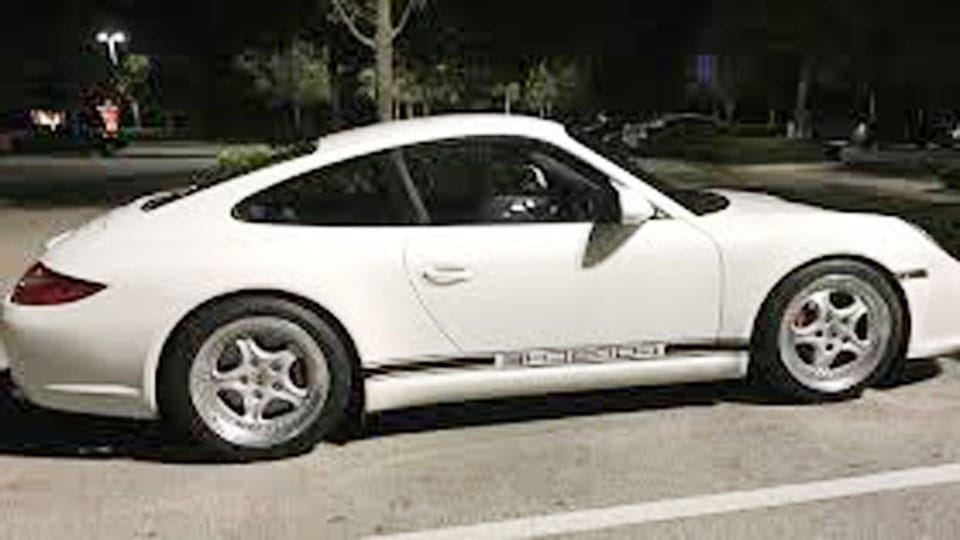
Inspect the wheel right after a pothole strike. If you find a crack, bend, bulge, bead-seat leak, or steering pull, treat the wheel as unsafe and stop driving. Hidden damage can cause rapid air loss, tire failure, vibration, or a wheel that worsens under load. This guide shows how to inspect the wheel, tire, and nearby suspension parts at home, and how to separate cosmetic scuffs from damage that needs repair or replacement.
What you’ll need

- Flashlight or phone light
- Tire pressure gauge
- Gloves and a rag
- Jack and wheel chocks, if you need a closer look
- Wheel lug wrench, if removal is required by the vehicle setup
How do I inspect my wheels after hitting a pothole?
Start with the wheel, not the road test. Park on level ground, check for a flat tire or obvious wheel damage, then inspect the rim edge, inner lip, bead seat, and sidewall before you drive again. A hard pothole hit can damage the tire, bend the rim, shift alignment, and wear suspension parts.
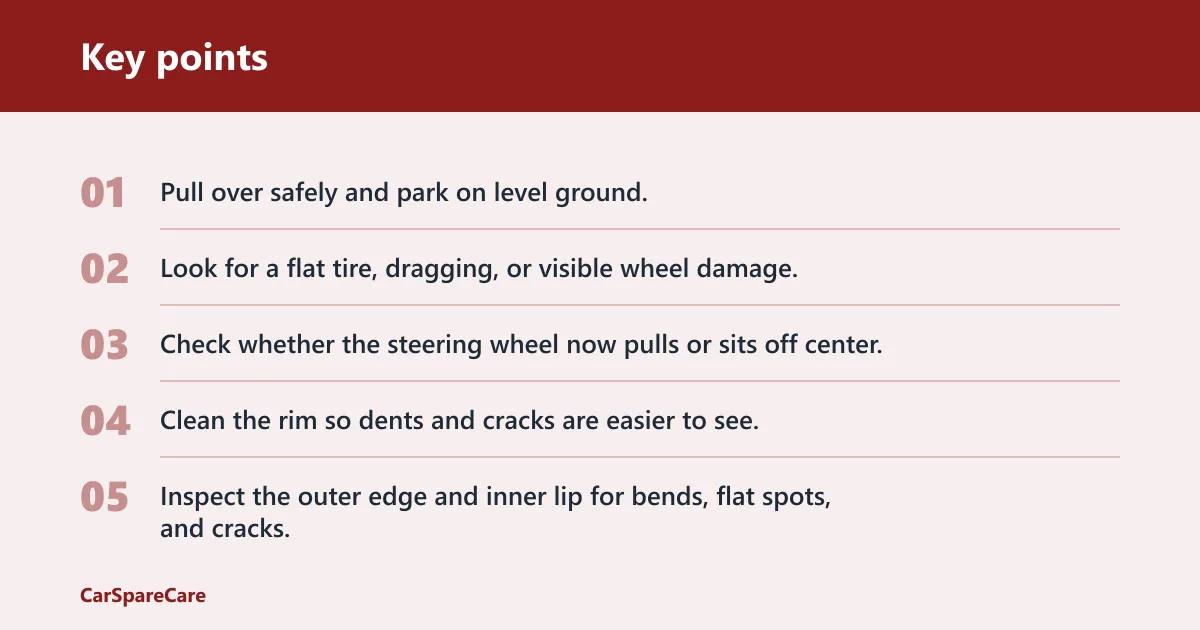
- Pull over safely and park on level ground.
- Look for a flat tire, dragging, or visible wheel damage.
- Check whether the steering wheel now pulls or sits off center.
- Clean the rim so dents and cracks are easier to see.
- Inspect the outer edge and inner lip for bends, flat spots, and cracks.
- Check the bead seat for wetness, scuffing, or escaping air.
- Inspect the sidewall for bulges, cuts, cracks, or exposed cords.
- Measure tire pressure and compare it with the placard value.
What to check first
Look for anything that changes the safe answer before you move the car again. A flat tire, a visible crack, a steering pull, or a tire bubble means the wheel or tire needs close attention right away. TPMS may warn after pressure loss, but it cannot replace a manual pressure check after impact.
How to check the wheel rim
Examine the rim edge in bright light, especially the inner lip. That area takes the first hit from many potholes, and APEX recommends checking it first. Look for dents, bends, cracks, and a section that no longer matches the rest of the wheel’s shape. Alloy wheels often crack or bend visibly, while steel wheels more often deform.
Check the bead seat too. A pothole can damage a rim and let a tire leak where it meets the rim. Wetness, fresh scrape marks, or a pressure drop after the hit points toward that leak path.
How to inspect the tire sidewall
Look for bulges, bubbles, cuts, cracks, and exposed cords. A sidewall bulge means the internal structural cords have broken, so treat it as internal ply damage and a blowout risk. Do not keep driving on a tire with a bubble, cord exposure, or a fresh deep cut.
Also watch for a clean scuff line that starts at the impact side and runs across the sidewall. That can mark where the tire was pinched hard against the rim.
Can a wheel look fine and still be damaged after a pothole?
A wheel can have a hidden bend or crack that may not stand out from the outside, especially if the damage is on the inner lip. Slow leaks, steering-wheel vibration, and intermittent pulling can point to wheel damage even when the face of the wheel looks normal. If that happens, a balancer or runout check is needed.
Why hidden damage gets missed
Cosmetic scuffs are common after an impact, but they are not the same as structural damage. A rim can still be round enough to look normal at a glance while showing excess runout on a balancing machine. That matters because runout changes how the tire rolls and can trigger vibration at highway speed.
Suppose a 17-inch alloy wheel only shows a scrape near the spokes, but the steering wheel starts vibrating at 60 mph after the pothole. The face may look harmless, yet the inner lip can be bent enough to need a shop check on a balancer or straightening machine.
What hidden wheel damage can a pothole cause?
A pothole can damage the wheel, tire, alignment, suspension, and wheel bearing. The first problem is often the wheel rim, especially the inner lip, but the impact can also shift toe or camber, stress control arms and bushings, or shorten bearing life. These are separate faults and should be diagnosed separately.
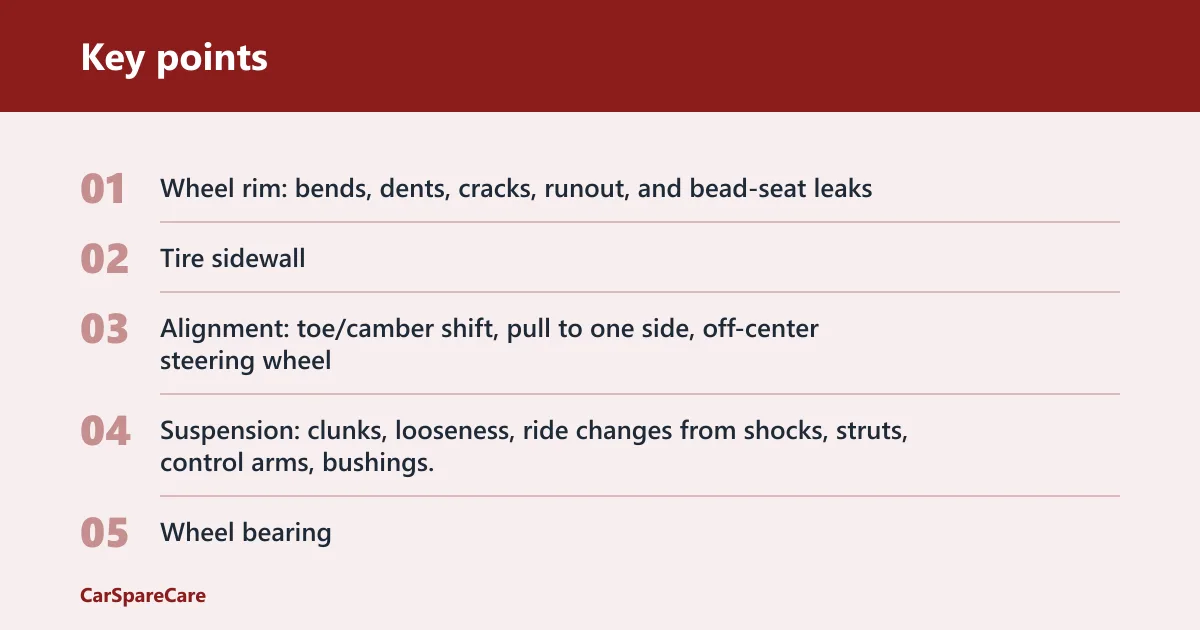
- Wheel rim: bends, dents, cracks, runout, and bead-seat leaks
- Tire sidewall: bulges, cuts, cracks, exposed cords, and ply damage
- Alignment: toe/camber shift, pull to one side, off-center steering wheel
- Suspension: clunks, looseness, ride changes from shocks, struts, control arms, bushings, ball joints, or tie rods
- Wheel bearing: humming or grinding that starts after impact
Wheel damage decision table
| Visible symptom | Likely hidden failure mode | Safe next action |
|---|---|---|
| Alloy wheel shows a sharp edge bend, crack, or flat spot | Structural rim damage or excess runout | Stop driving and arrange a shop check; do not treat it as cosmetic |
| Steel wheel looks dented or slightly out of round | Wheel deformation that can affect balance or bead sealing | Limit driving and have the wheel inspected for straightness and leakage |
| Slow leak after the hit, even with no visible puncture | Bead-seat leak or rim damage at the tire seal | Recheck pressure, inspect the bead area, and get a shop leak test |
| Steering wheel vibration that changes with speed | Bent wheel, runout, or tire damage | Get a wheel balance and runout check; do not assume alignment alone will fix it |
| Steering wheel sits off center after the pothole | Alignment shift from toe or camber change | Book an alignment check within a week, sooner if the pull is strong |
| Sidewall bubble or bulge | Internal ply damage and blowout risk | Stop driving on that tire and have it replaced or inspected immediately |
Should I drive after hitting a pothole?
Only if the wheel, tire, and steering feel normal and you have no loss of pressure, vibration, pull, or new noise. If you see a crack, bulge, bead-seat leak, or a severe steering change, stop driving. Hidden damage can show up hours or days later, especially slow leaks and intermittent vibration.
Road-test symptoms that matter
After the visual check, drive only far enough to confirm whether the car tracks straight and rolls smoothly. Watch for steering wheel vibration, rhythmic thumping, new noises over bumps, and changes at highway speed. These symptoms help separate a bent wheel from alignment or suspension trouble.
A common first-timer mistake is to assume a steering shimmy after a pothole means the tires are unbalanced, rather than checking the wheel for a bent rim or cracked spoke. If the vibration began right after a pothole, the wheel may be bent, the tire may be damaged, or both.
Do I need an alignment after hitting a pothole?
Often yes, especially if the steering wheel is off center or the car pulls to one side. A pothole can shift toe or camber even when the wheel itself is still usable. APEX advises an alignment check within a week even if everything seems normal, and the sooner check is better when the steering feels changed.
How to separate alignment from wheel damage
An alignment issue usually changes how the car tracks. A bent wheel more often causes vibration, runout-related shimmy, or a thump that rises with speed. If both happen after the same hit, the wheel and alignment both need inspection.
Can a pothole damage the wheel bearing or suspension?
Yes. A hard hit can damage shocks and struts, control arms and bushings, ball joints and tie rods, and a wheel bearing. Signs include clunks, looseness, new vibration, humming, grinding, or a changed ride. A bearing issue often adds noise that rises with speed and may show up after the pothole rather than immediately.
What to listen and feel
Go over a few bumps at low speed first, then listen for new clunks. On a smooth road, note whether a hum or grind appears and changes with speed. If the noise is there with the wheel straight and the tire pressure is correct, the problem may sit beyond the wheel itself.
How do I check for a slow leak after a pothole hit?
Use a tire pressure gauge right away, then check again after a short drive if the tire still looks healthy. TPMS can warn after pressure loss, but it only detects at least one tire that is losing air after the drop gets far enough. A bead-seat leak may not be obvious until pressure changes over time.
- Record the cold tire pressure with a gauge.
- Compare it with the door-jamb placard value.
- Inspect the bead area for wetness or fresh scuffing.
- Add air in about 2 psi increments if pressure is low, then recheck for loss.
- If pressure falls again, stop driving and have the wheel and tire leak-tested.
Common mistakes
Do not judge the wheel by the outer face alone. The inner lip is where many pothole bends hide. Do not ignore a sidewall bubble, even if the tire still holds air. And do not assume an alignment fix will solve vibration from a bent wheel.
Do not keep driving with a cracked rim, exposed cords, a rapid pressure drop, or a strong pull. Those signs point to a wheel or tire that can fail under load.
What damage can show up later?
Some pothole damage appears after the first stop. Slow leaks can start when the bead seat is disturbed, alignment can drift after suspension movement, and wheel bearing noise can start later. Keep checking pressure and watch for vibration or pull over the next few days, especially after highway driving.
Picture a car that feels fine leaving the parking lot but drops 4 psi overnight after the impact. That pattern fits a slow leak at the bead or a rim issue much better than a simple cosmetic scuff.
Frequently asked questions
What signs mean a pothole bent my rim?
Watch for steering-wheel vibration, a rhythmic thump, a bead-seat leak, or a section of rim that looks flat instead of round. A bent rim may also show runout on a balancer even when it looks minor from the outside.
How do I tell if my wheel is cracked after a pothole?
Use bright light and clean the rim first. Look for a hairline break, fresh dark line, or a crack that opens when the wheel is rotated. If you find one, stop driving and have the wheel removed from service.

Hi, I’m Melvin, an automobile engineer with extensive experience in automobile equipment. I currently work for a local automobile firm, where I specialize in the car parts industry. I’ve had the opportunity to collaborate with seasoned inspectors, gaining invaluable hands-on experience that goes beyond just theory.
My passion for automotive care started at a young age, which led me to create CarSpareCare. Through CarSpareCare, I share the knowledge and skills I’ve acquired over the years to help others navigate the world of car maintenance and repairs.
My goal is to provide practical tutorials, essential safety advice, and the latest industry insights so that anyone—whether a beginner or an expert—can confidently tackle their automotive projects.