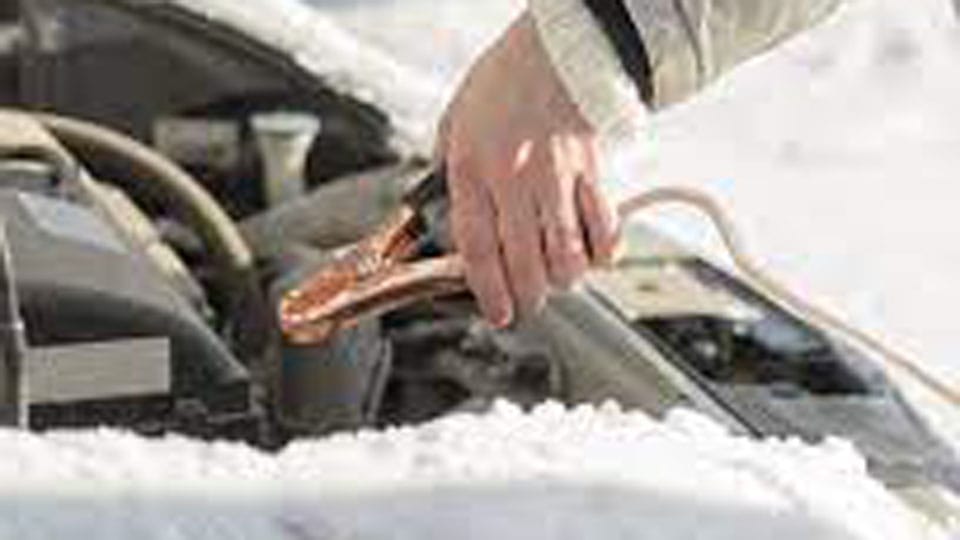
Prevent battery terminal corrosion by fixing the source first: replace a battery that leaks or swells, keep charging voltage in the normal range for the battery type, tighten loose clamps and cable ends, and protect the posts with petroleum jelly, grease, or battery-terminal spray. Left alone, corrosion raises resistance, slows starts, and can damage cables or the battery case. Many OEM and battery makers note that flooded lead-acid systems normally charge in the low-to-mid 14-volt range, with exact targets varying by vehicle and temperature ([Interstate Batteries], [Delphi Technologies/PHINIA]).
Battery terminal corrosion causes matrix


Use the pattern on the battery to match the fix. White, blue, or green buildup does not come from the same source, so the wrong coating can leave the problem untouched.
| Corrosion pattern | Likely root cause | Quick check | Best prevention | When to replace battery or cable |
|---|---|---|---|---|
| Negative-terminal-only buildup | Undercharging, acid vapor, or a weak seal around the post | Check whether the buildup is concentrated at the negative post and whether starts are sluggish | Clean, dry, tighten, and verify charging voltage; protect with grease or spray after cleaning | Replace the battery if the case leaks, swells, or keeps venting residue after charging checks |
| Positive-terminal buildup | Overcharging, excess hydrogen gas, or poor venting | Measure charging voltage with a multimeter at revs; look for readings above 14.5 volts | Repair the charging system first, then clean and protect the terminal | Replace the battery if it is old, swollen, or still pushes residue after charging correction |
| Blue-green clamp corrosion | Copper-clamp reaction, moisture, or looseness at the joint | Check for green staining on the clamp or cable end and for a clamp that moves on the post | Refit or replace the clamp, dry the area, and use anti-corrosive spray or grease after cleaning | Replace the clamp or cable end if pitting, cracks, or severe green corrosion keep returning |
| Recurring corrosion after cleaning | Leakage, overcharging, loose fit, or environmental exposure | Inspect battery age, cable fit, charging voltage, and any signs of acid mist around the case | Fix the root cause, then consider corrosion washers or copper compression terminals | Replace the battery, damaged cable, or charging-system part when buildup returns within days or weeks |
What battery terminal corrosion looks like
Battery terminal corrosion usually appears as a white, blue, or green crusty deposit around the posts or clamps. It often forms on the negative terminal, and it can reduce electrical connection quality by increasing resistance at the joint.
White, blue, and green residue
White residue is common around acid exposure, while blue or green crust often points to copper-clamp corrosion. Corrosion often starts where gas, moisture, and metal meet, so the post, clamp, and cable end all matter.
Why buildup can reduce connection quality
The crust does not conduct like clean metal. Even a thin layer can weaken cranking power, slow charging transfer, and make the battery seem weaker than it is.
Why one terminal may corrode first
A lead-acid car battery can be flooded or sealed/maintenance-free, and age can increase venting or leakage risk. A battery can release acid mist or hydrogen gas, so one terminal may show buildup first when a seal, vent, or clamp is less stable than the rest.
What causes corrosion on a car battery?
Battery terminal corrosion usually comes from acid vapor or electrolyte escaping around a post, overcharging, loose fit, copper-clamp reaction, or outside exposure. The right prevention depends on which of those is actually happening.
Electrolyte leak or acid mist
Battery-terminal corrosion often forms when acid vapor or electrolyte escapes around a battery post. Flooded lead-acid batteries are more exposed to venting and leakage issues than many sealed or maintenance-free units, especially as they age. Clarios and battery makers generally advise checking for case damage, wet residue, and poor venting before deciding on a cleaning-only fix ([Clarios], [Interstate Batteries]).
If crust returns on the same side after a wash and a clean, check the case near the post. Dampness or staining around the vent points to a leak or too much venting, not a surface problem.
Overcharging and charging voltage
Positive-terminal corrosion can be associated with overcharging, especially when the charging system is pushing voltage too high for the battery design. A common rule of thumb is that many 12-volt systems should sit in the low-to-mid 14-volt range while running, but exact targets depend on the vehicle, temperature, and battery type, so verify with the service information for the vehicle and battery manufacturer ([Interstate Batteries], [Delphi Technologies/PHINIA]).
Overcharging also increases hydrogen-gas production, which can dry out the electrolyte and push residue toward the terminals. Cleaning the post will not stop that pattern if the alternator or regulator is still charging out of spec.
Loose clamps and poor fit
A loose connection can contribute to battery terminal corrosion. A clamp that rocks on the post, sits crooked, or has a fatigued bolt can let gases and moisture enter the joint, then corrosion starts again after cleaning. Tightening the hardware matters before any protective coating goes on.
Check the clamp before you choose a coating. If the clamp does not grip firmly, grease alone will not hold back repeat buildup.
Copper clamp reaction and environmental exposure
Blue-green corrosion often points to the clamp or cable end, especially where copper or copper-alloy parts meet moisture and residue. Road splash, humidity, and engine-bay heat can speed the reaction.
A common first-timer mistake is wiping the battery post spotless while leaving the cable end damp, which lets corrosion return quickly. If the clamp itself is green, pitted, or loose, the corrosion source may remain on the cable end even after the battery looks clean.
How do you stop battery terminal corrosion?
Start with the battery type, the terminal pattern, and the charging system. If you clean first and diagnose later, you may hide the symptom without stopping the cause. The right sequence is inspect, test, then protect.
Check the battery type and age
Look at whether the battery is flooded or sealed/maintenance-free, because leakage risk and venting behavior are not identical. Older lead-acid batteries are more likely to vent residue or seep around the posts, so an aging battery with repeat corrosion deserves closer scrutiny.
Inspect clamps, posts, and cable ends
Check for loose fit, cracked insulation, green staining, and damaged cable strands. If the cable end is swollen, split, or badly pitted, surface coating will not restore a solid electrical connection.
Measure charging voltage with a multimeter
Check charging voltage with the engine running and again while revving it. If the reading climbs above the battery maker’s recommended range for that vehicle and battery, the charging system needs attention before you rely on any protective coating.
Decide whether cleaning or replacement is the right fix
Cleaning helps when the deposit is on the surface. Replacement is the better call when the battery leaks, swells, vents repeatedly, or the clamp and cable end are damaged enough that tightening no longer gives a solid fit.
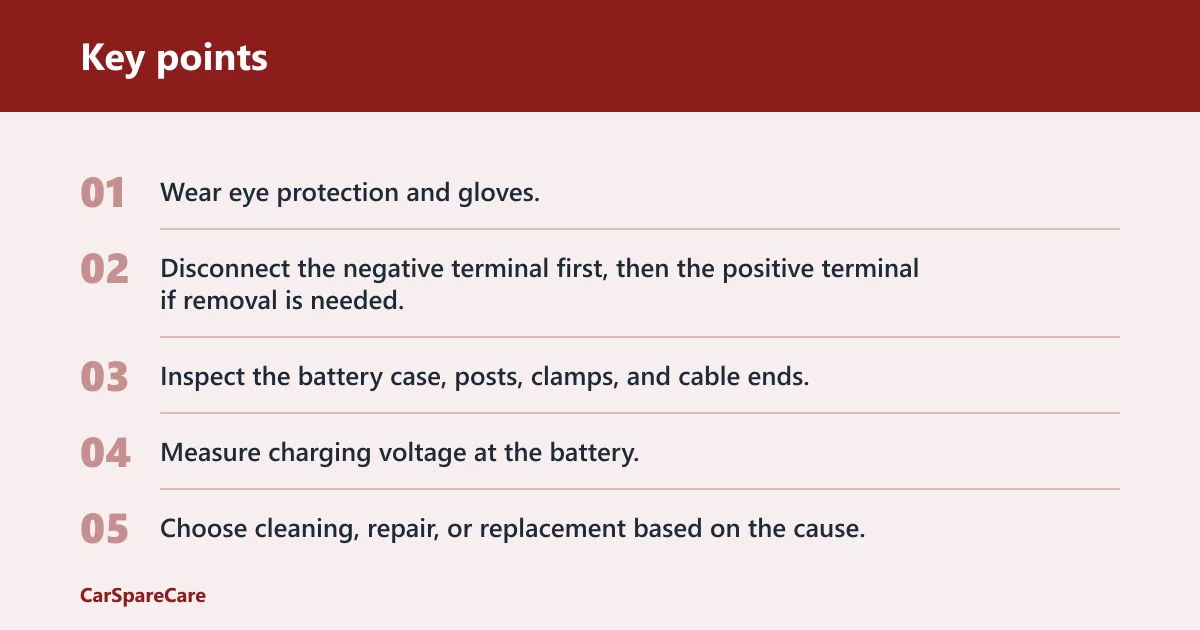
- Wear eye protection and gloves.
- Disconnect the negative terminal first, then the positive terminal if removal is needed.
- Inspect the battery case, posts, clamps, and cable ends.
- Measure charging voltage at the battery.
- Choose cleaning, repair, or replacement based on the cause.
How to clean terminals before prevention
Use cleaning to remove residue, not as the final fix. A common service approach is to disconnect the negative terminal first, then clean, rinse, dry, and refit the parts correctly. A baking soda-and-water mix is widely used for neutralizing acid residue, and many battery-safety guides recommend eye protection because splashes can occur during cleaning ([Clarios], [Interstate Batteries]).
Disconnect the negative terminal first
Disconnect the negative terminal before the positive terminal to reduce the chance of an accidental short while you work around the battery posts and clamps. That order is standard shop practice because it breaks the ground path first.
Use baking soda and water to neutralize residue
Mix baking soda and water, then scrub the crust with a brush or toothbrush. Work the cleaner into the clamp, post, and cable end until the residue loosens, then wipe away the loosened material.
Rinse, dry, and reinstall correctly
Rinse off the cleaner after use, then dry the parts fully before refitting them. A damp terminal can start the cycle again. Tighten the connection so the clamp does not move on the post.
What should you put on battery terminals?
After cleaning, use a protective coating that matches the situation. Petroleum jelly, grease, wheel bearing grease, anti-corrosive spray, and corrosion-control hardware all have a place, but they are not the same fix.
Petroleum jelly
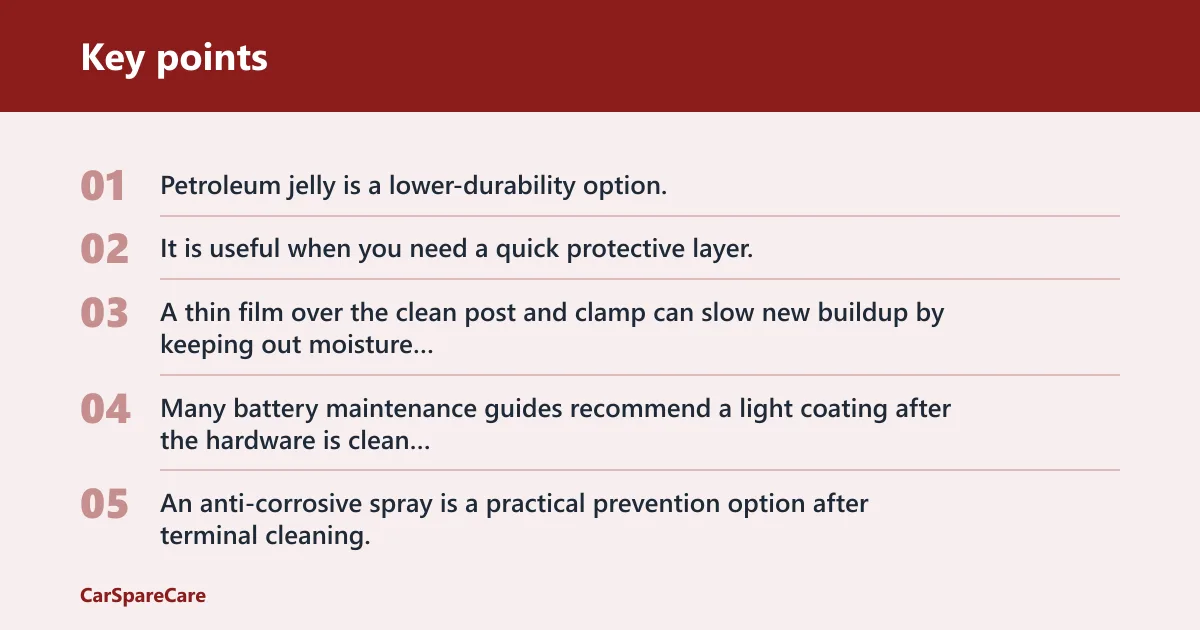
Petroleum jelly is a lower-durability option, but it can help exclude moisture after cleaning. It is useful when you need a quick protective layer, though it may not last as long as a heavier grease coating.
Grease or wheel bearing grease
A thin film over the clean post and clamp can slow new buildup by keeping out moisture and acid residue. Many battery maintenance guides recommend a light coating after the hardware is clean and tight, rather than relying on grease to solve a loose connection ([Interstate Batteries], [Clarios]).
Anti-corrosive spray
An anti-corrosive spray is a practical prevention option after terminal cleaning. It is useful when you want a cleaner finish than grease alone, especially on terminals that are inspected often.
Battery corrosion washers and copper compression terminals
For recurring corrosion, aftermarket battery corrosion washers and copper compression terminals can help reduce future buildup. Tinted or tinned copper parts are often used to limit reaction and improve long-term contact at the joint.
What should you put on battery terminals to prevent corrosion? Use the coating that fits the failure mode. Grease can slow recurrence after a proper clean, petroleum jelly can work as a lighter barrier, and spray can be useful where regular service checks are easy.
When prevention is not enough
Surface protection cannot fix a leaking battery, a damaged cable, or a charging fault. If corrosion returns soon after cleaning, move from maintenance to repair.
Replace a leaking or swollen battery
If the case is swollen, wet near a post, or showing repeat residue from the same spot, replacement is the safer path. A battery that keeps venting acid mist can keep causing corrosion to build up again.
Replace damaged cables or loose clamps
Loose or damaged clamps should be replaced when tightening no longer gives a stable fit. Corroded cable ends, cracked clamps, and green copper damage can all keep resistance high even after cleaning.
Repair charging-system faults
If the voltage is too high, fix the charging system first. If corrosion is mostly on the negative side, do not assume undercharging from appearance alone; instead verify charging and battery condition with a multimeter and the vehicle’s service specifications, because leakage, poor fit, and other faults can produce similar residue patterns.
Frequently asked questions
What to put on battery terminals to prevent corrosion
Use grease, wheel bearing grease, petroleum jelly, or anti-corrosive spray after the terminal is clean and dry. Grease usually lasts longer than petroleum jelly, while spray can be a cleaner option for regular maintenance. Do not apply any coating over loose or damaged hardware.
Does vaseline prevent battery terminal corrosion?
Petroleum jelly can help slow moisture and residue from reaching the metal, so it is better than leaving the post bare. It is less durable than grease, though, so it is best treated as a lighter-duty barrier after proper cleaning and tightening.
How do I stop battery terminal corrosion in car?
Check the battery case, the clamps, and the charging voltage before you clean again. If the charging system is outside the battery maker’s recommended range for that vehicle, fix that first. If the clamp is loose or the battery is leaking, replacement matters more than another coat of grease.

Hi, I’m Melvin, an automobile engineer with extensive experience in automobile equipment. I currently work for a local automobile firm, where I specialize in the car parts industry. I’ve had the opportunity to collaborate with seasoned inspectors, gaining invaluable hands-on experience that goes beyond just theory.
My passion for automotive care started at a young age, which led me to create CarSpareCare. Through CarSpareCare, I share the knowledge and skills I’ve acquired over the years to help others navigate the world of car maintenance and repairs.
My goal is to provide practical tutorials, essential safety advice, and the latest industry insights so that anyone—whether a beginner or an expert—can confidently tackle their automotive projects.