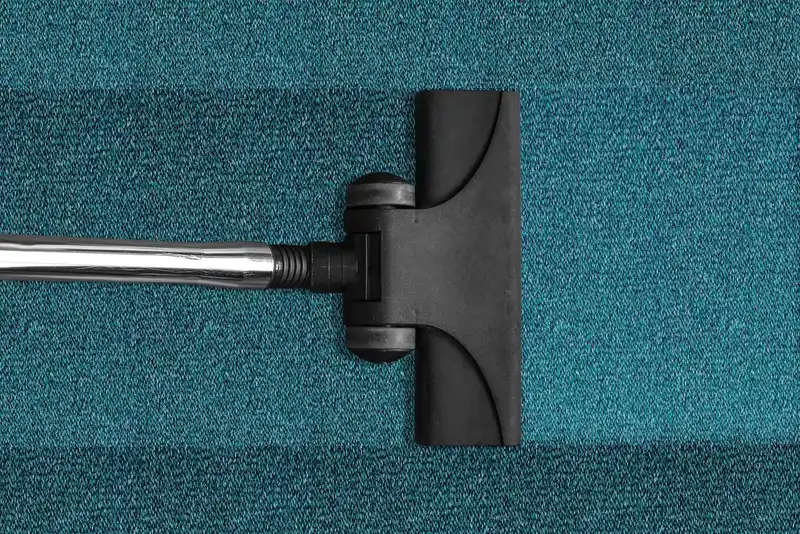
Common vacuum attachments for car interior cleaning include a crevice tool, a soft-bristle brush, and a rubber pet-hair tool. Add a flexible hose adapter if your vacuum’s nozzle does not fit tight spaces. The wrong attachment leaves grit in seams, scuffs trim, and can push debris deeper into vents and upholstery. This guide matches each attachment to seats, vents, seams, cup holders, pet hair, and footwells, with fit checks and damage-avoidance tips.
Quick picks
- Best for most car interiors: a crevice tool plus a soft brush. That pairing covers seams, vents, cup holders, and dashboard dust without needing a full accessory kit.
- Best for pet hair: a rubber pet-hair attachment. It is better suited to embedded hair on fabric than a plain dust brush.
- Best for delicate dash and vents: a horsehair or soft-bristle brush. It lowers scratch risk on soft plastics and gloss trim.
- Best for tight gaps and seat rails: a thin crevice tool, ideally paired with a hose or wand for reach under seats and behind pedals.
Quick comparison
| Product | Badge | Best for | Price | ||
|---|---|---|---|---|---|
 | Premium 1-1/4" Dust Brush with Double Thick Soft HorsehairMerchandise Mecca | Our pick | 1-1/4" dust brush | $9.95 Price as of 14 Nov 2026 | View |
 | WORKSHOP Wet/Dry Vacs WS12502A 1-1/4-in. Crevice Tool VacuumWORKSHOP Wet/Dry Vacs | Pair with it | 1-1/4" crevice tool | $6.72 Price as of 14 Nov 2026 | View |
 | Horse Hair Vacuum Attachment for 1-1/4" HoseSaillong | Also great | 1-1/4" soft brush | $9.99 Price as of 14 Nov 2026 | View |
 | Fur-EEL PRO 1.0 Pet Hair Vacuum AttachmentFurEater | Also great | Pet hair removal tool | $19.50 Price as of 14 Nov 2026 | View |
 | Kodahome Shop Vac Vacuum Attachments with Extension HoseKodahome | Upgrade pick | Car detailing kit | $18.90 Price as of 14 Nov 2026 | View |
Use this as a fit-and-task filter, not a brand ranking. The right choice depends on the surface, the gap size, and whether your vacuum needs a 1.25-inch adapter.
If your vacuum already accepts common 1.25-inch accessories, buy only the attachment that matches the task. If it does not, add the adapter first and then choose the tool.
How we chose
These picks are based on fit, surface safety, reach, failure modes, and value across common accessory bundles. The goal is practical car use: seams, vents, seat rails, cup holders, floor mats, and pet hair.
Compatibility mattered as much as shape. A tool that looks right but misses the hose diameter is wasted money.
Surface risk also matters. Soft plastics, infotainment surrounds, and gloss trim need gentler bristles than seat fabric or floor mats.
Finally, bundles were judged on whether they cover several car jobs without forcing you to buy duplicate tools.
Crevice tool: best for seams and tight gaps
A crevice tool is often the best choice for tight spaces, under seats, between cushions, around seat rails, and along door gaps. Its thin angled tip can reach where broad attachments leave grit behind, especially in the narrow channel where crumbs and sand settle first.
Where it works best in a car
Use it on seat seams, the gap beside the center console, seat rails, pedal edges, and the narrow opening around door pockets. It also helps at the base of the windshield where debris collects near the dash edge.
Say your passenger seat has a 1-inch seam filled with cereal and sand. A crevice tool can lift that debris before it gets rubbed deeper into the fabric by sliding movement.
When it clogs or falls short
Crevice tools struggle with bulky debris such as larger cereal pieces, damp dirt, and tangled hair. A narrow tip can also stall if the opening gets blocked by lint, pet hair, or sticky residue.
If the mess is spread across fabric rather than trapped in a line, switch to a brush or upholstery tool first. A crevice tool works best after the loose layer has already been lifted.
Fit checks before you buy
Check the hose collar diameter before ordering. A common listing size is 1.25-inch, and many universal kits use that fit or a simple adapter. If your vacuum uses a different round hose size, confirm the adapter route before buying.
For cars with deep footwells, a crevice tool is much easier to use with a hose or wand. That extra reach reduces awkward wrist angles and helps you clean under pedals without moving the unit every few seconds.
Dust brush and horsehair brush: best for vents and delicate trim
A dust brush or horsehair brush is often the safer choice for dashboard dust, air vents, infotainment surrounds, and soft-touch trim. The bristles lift dust without the scraping risk of hard plastic nozzles, which matters on glossy panels and narrow vent fins.
Dash, vents, and infotainment use
Use a soft brush on the upper dash, climate vents, steering-column trim, and piano-black console pieces. It is also useful for dusting cup holder lips and door-pocket edges before switching to a crevice tool for the deep corners.
What attachment should I use to clean car vents without scratching them? A soft-bristle brush or horsehair brush is the safest starting point because the bristles can sweep dust from vent fins without digging into the plastic.
Soft-bristle differences
A horsehair brush is usually the gentler option for detailing work on delicate surfaces. A synthetic dust brush can still be safe, but it may be stiffer depending on the maker and bristle length.
If the trim is glossy or the vent fins are thin, softer bristles matter more than a wide head. The goal is to loosen dust, not press it into the gaps.
Scratch risk and fit notes
Soft brushes lower scratch risk, but they are not damage-proof. Grit trapped in the bristles can still mark a soft panel if the brush is dragged sideways across the surface.
Clean the bristles often and shake out loose debris before moving from the dash to the screen surround. A brush loaded with sand is no longer a gentle tool.
Upholstery tool and turbo brush: best for seats and pet hair
An upholstery tool is the better choice for fabric seats, floor mats, lint, and embedded dirt. A turbo brush is the stronger option when pet hair is the main problem, especially on woven upholstery and carpeted mats where hair sits below the surface.
Fabric seats and floor mats
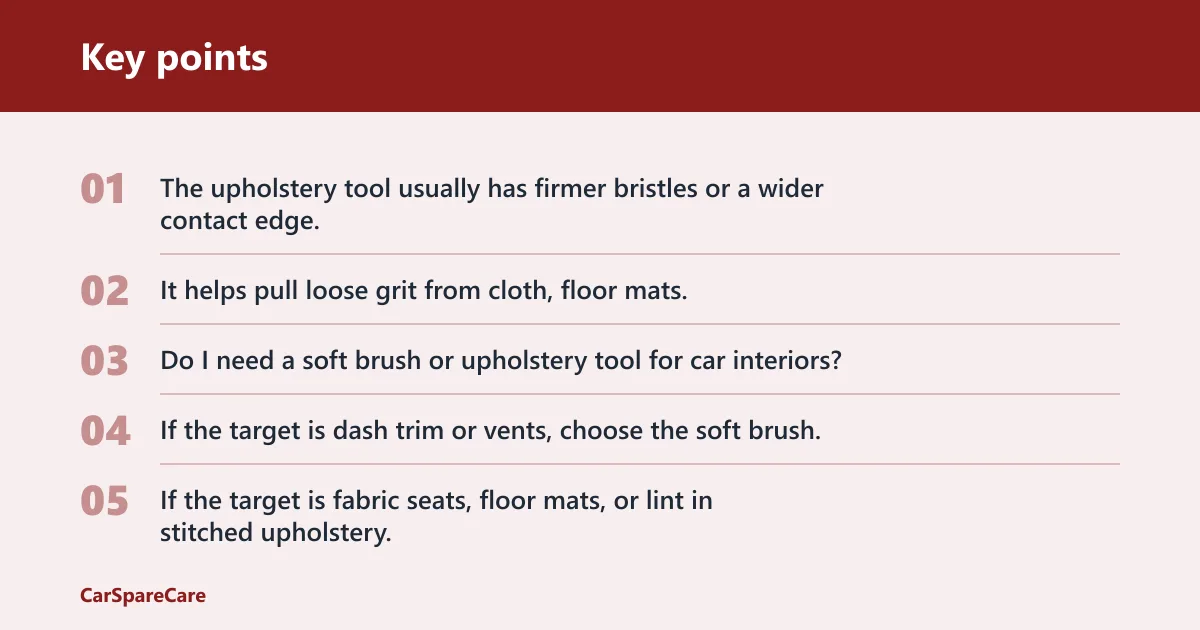
The upholstery tool usually has firmer bristles or a wider contact edge, which makes it more useful on seat fabric than a dust brush. It helps pull loose grit from cloth, floor mats, and trunk liners without the narrow contact patch of a crevice tool.
Do I need a soft brush or upholstery tool for car interiors? If the target is dash trim or vents, choose the soft brush. If the target is fabric seats, floor mats, or lint in stitched upholstery, choose the upholstery tool.
Pet hair and embedded lint
For pet hair in a car, a turbo brush or rubber pet-hair tool is often the better pick because the rotating bristles or rubber edges can grip hair instead of sliding over it. That matters on cloth seats and cargo areas where hair knits into the weave.
Vacext says its tool cleans pet hair on couch cushions, upholstery, carpeted stairs and car carpet, which matches the same task pattern in a car: fiber surfaces need a hair-lifting tool, not a soft dusting brush.
When rotating bristles help or hurt
Rotating bristles help on stubborn hair and compacted lint, but they can be too aggressive for fragile trim, loose stitching, or brittle plastic edges. They also tend to be less useful on very flat hard surfaces where there is nothing for the roller to grip.
A turbo brush is best when the problem is embedded material, not loose dust. If the seat only needs a light pass, a gentler brush is faster and less likely to snag fabric edges.
Flexible hose and extension wand: best for reach
A flexible hose or extension wand helps when the problem is reach, not suction. It is the right choice for under seats, behind pedals, deep footwells, and the back side of seat cushions, where moving the vacuum body would be slower than extending the tool.
Under seats and behind pedals
An extension wand adds straight-line reach, and common wand lengths are about 18 inches. That extra length helps you keep the nozzle low and controlled while reaching under the seat frame or into the pedal box.
A flexible hose is better when the route is awkward rather than long. It bends into footwells and around seat mounts without forcing you to hold a rigid tube at a bad angle.
Seat backs, cargo edges, and footwells
Use the hose or wand with a crevice tool for the seam behind the front seats, the cargo floor edge, and the lower back of the seat. Those spots often trap sand, hair, and crumbs where a hand tool cannot get square to the surface.
Suppose the driver’s footwell has gravel near the dead pedal and the vacuum body sits outside the door. A flexible hose lets you reach the corner without lifting the whole unit into the cabin.
When extra reach beats a stronger vacuum
Reach often matters more than raw suction in a car interior. A strong handheld vacuum still fails if the nozzle cannot get to the debris. That is why flexible hoses and wands matter even when the vacuum itself is already decent.
Family Handyman lists BLACK+DECKER dustbuster FLEX Cordless Handheld Vacuum as best flexible hose vacuum for car detailing, which fits the same logic: the hose is the feature that solves the access problem.
Car interior attachment decision table
| Car-cleaning job | Best attachment type | Required hose size or adapter | Surface risk | Common failure mode |
|---|---|---|---|---|
| Seat seams | Crevice tool | 1.25-inch fit or matching adapter | Low on fabric, higher on soft trim edges | Can push crumbs deeper if the tip is too wide |
| Under seats | Crevice tool with hose or wand | About 18-inch wand or flexible hose; confirm collar size | Low | Can snag seat rails or leave debris at the far edge |
| Dash vents | Soft brush or horsehair brush | Common 1.25-inch fit; adapter if needed | Low if bristles are clean | Dust can smear across fins if the brush is loaded with grit |
| Infotainment surround | Horsehair brush | 1.25-inch fit is common in accessory listings | Low to moderate on gloss trim | Hard bristles can mark soft plastic or piano-black surfaces |
| Fabric seats | Upholstery tool | 1.25-inch fit or universal adapter | Moderate on loose stitching | May miss embedded lint if the bristles are too soft |
| Pet hair on seats | Turbo brush or rubber pet-hair tool | Check whether the kit includes 1-1/4, 1-3/8, or adapter pieces | Moderate on delicate fabric loops | Hair wrap around the head or clogging on dense fur |
| Cup holders | Crevice tool, then soft brush | Narrow tip plus adapter if the hose is oversized | Moderate on sticky residue and scratches from grit | Debris bridges the opening and stays in the lower groove |
| Door pockets | Soft brush or crevice tool, depending on shape | 1.25-inch fit common; adapter for universal kits | Low to moderate | Loose paper, sand, and coins can jam the nozzle |
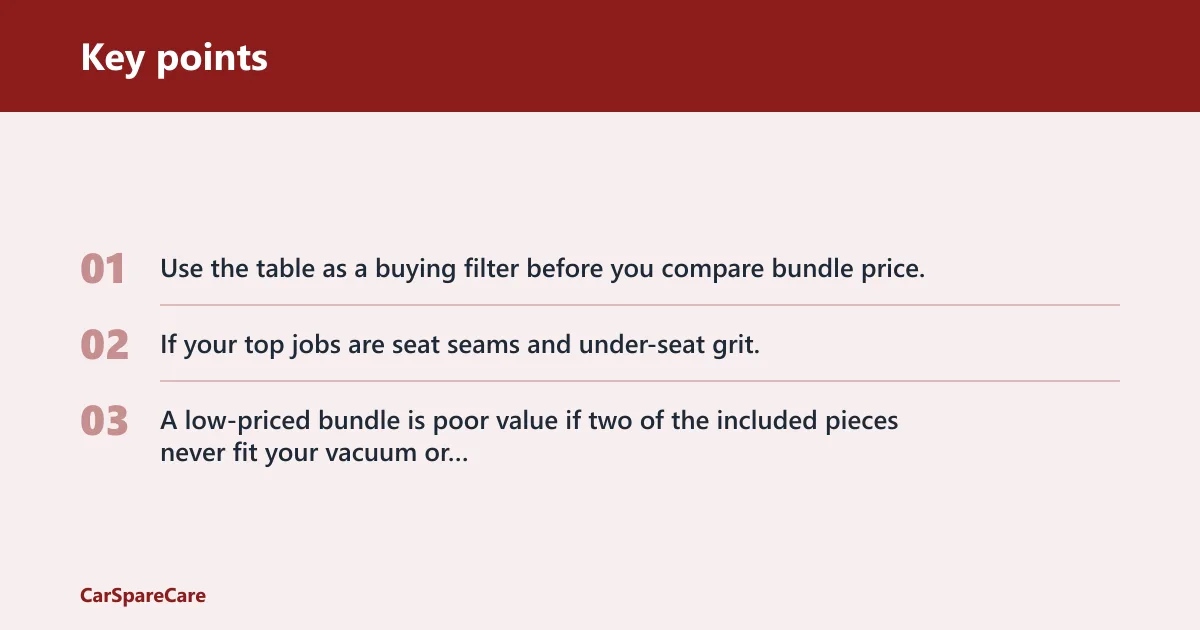
Use the table as a buying filter before you compare bundle price. If your top jobs are seat seams and under-seat grit, a crevice tool plus hose is more useful than a multi-tool kit that lacks reach.
Cost-per-attachment matters. A low-priced bundle is poor value if two of the included pieces never fit your vacuum or are too blunt for the spaces you need to clean.
Best vacuum attachments for car interior cleaning
The best vacuum attachments for car interior cleaning are the crevice tool for tight spaces, the soft brush for delicate trim, and the upholstery or pet-hair tool for seats and mats. If your vacuum needs a nonstandard fit, add the adapter before you buy extra tools.
Top pick and why it wins
For most drivers, a crevice tool paired with a soft-bristle brush is the strongest starting point. That combination handles the highest-frequency car jobs: seams, vents, cup holders, dash dust, and the narrow spaces beside seats and consoles.
Halfords says car vacuums are designed for tight areas and awkward angles in cars, and the accessories are what make that design useful in practice.
Best attachment by cleaning job
For pet hair, start with a rubber pet-hair tool or turbo brush. For vents and trim, use a horsehair or soft dust brush. For floor rails, seams, and under-seat debris, use a crevice tool with extra reach.
For hard-to-reach footwells, a flexible hose can matter more than suction alone. For fabric seats and mats, the upholstery tool is the more efficient middle ground.
Best attachment by interior surface
Hard plastics, vents, and infotainment trim need the softest bristles you can get. Fabric seats, mats, and trunk liners tolerate firmer contact. Gloss surfaces and soft-touch panels sit in the middle and reward careful, low-pressure passes.
A common first-timer mistake is trying to clean the dashboard vents, floor mats, and seat seams with the same bulky nozzle. That usually means dust on the dash, skipped debris in seams, and scratches where a soft brush would have been safer.
Which one should you buy?
For most drivers, buy a crevice tool and a soft brush first. That pair covers the widest set of common car tasks without wasting money on unused pieces, and it works well if your vacuum already has a 1.25-inch accessory fit.
Best choice for most drivers
If you clean a normal daily-driver cabin, the crevice tool is the anchor purchase. Add a soft brush so you can move from seams to dash trim without changing kits.
Best choice for pet owners
If you carry dogs or cats, prioritize a rubber pet-hair attachment or turbo brush. Standard dust brushes are too gentle for hair that is worked into fabric and carpet fibers.
Best choice for families
Families usually need a crevice tool, a brush, and a hose or wand. That mix handles crumbs in seat tracks, cereal in cup holders, and sand in footwells without constant repositioning.
Best choice for ride-share or high-mileage cars
High-mileage cars benefit most from reach and versatility. A flexible hose, crevice tool, and soft brush cover fast turnarounds between passengers, especially when the problem is mixed debris rather than one heavy mess.
When a universal kit is worth it
Universal kits are worth it when they include the right hose size or an adapter and at least one useful crevice tool plus one brush. The same source states its attachment kit uses a standard 1.25 inch or 32 mm inner diameter, and that kind of clear sizing is what makes a universal kit practical.
They are less useful when the kit is packed with duplicate heads but no clear diameter information. If the listing does not say whether your vacuum needs 1.25-inch fit, 1-3/8-inch conversion, or another adapter, treat it as a risk rather than a deal.
Merchandise Mecca horsehair dust brush: best for delicate surfaces
This brush is for dashboards, vents, infotainment surrounds, and other delicate surfaces where a soft touch matters more than scrubbing power. The horsehair bristles make it a sensible pick for fine dust and light pet hair on trim.
Its main strength is surface safety. The main drawback is that it is not the right tool for packed debris, seat seams, or heavy lint on fabric.
WORKSHOP 1-1/4-inch crevice tool: best for tight spaces
This tool is for seat rails, seams, under-seat gaps, and narrow openings around the console and door pockets. The compact shape makes it easier to steer into the places that collect the most trapped grit.
The drawback is reach by itself. Without a hose or wand, it may still be awkward in deep footwells, and a narrow tip can clog on bulky debris.
Saillong horse hair vacuum brush: best for dash trim
This brush suits dash trim, vents, and other delicate areas where a soft brush is safer than a firmer upholstery head. The slim shape also helps in narrow spaces where a broad brush would be clumsy.
Its limitation is task range. It is better for dusting than for seat fabric, floor mats, or pet hair that needs more grip.
FurEater Fur-EEL PRO 1.0: best for pet hair
This attachment is aimed at pet hair on seats, carpet, mats, and trunk liners. The rubber bristles are the key feature, because they grab hair that a soft brush often leaves behind.
The drawback is that it is more specialized than a general brush. It may be overkill for a cabin without pets, and dense hair can still wrap or slow the tool if the buildup is heavy.
Kodahome car detailing kit: best for a mixed bundle
This kit is for buyers who want a broader accessory set in one package, especially if they need a flexible extension hose along with basic dusting and crevice tools. It makes sense for mixed car jobs and for people who want one order to cover several surfaces.
The drawback is that bundle value depends on fit. If the included pieces do not match your vacuum’s collar diameter, the extra tools do not solve the main problem.
Frequently asked questions
What vacuum attachment is best for cleaning car seats?
An upholstery tool is usually best for car seats because it has enough contact area and bristle stiffness to lift lint, dirt, and crumbs from fabric. If the seat also has pet hair, a rubber pet-hair tool or turbo brush can do more on embedded fibers than a standard dust brush.
Which vacuum attachment works best for car crevices and under seats?
A crevice tool is the best fit for car crevices and under-seat areas because its narrow profile can reach seat rails, seam channels, and the edge of the floor pan. Add a hose or wand if you need better access in deeper footwells or behind pedals.
What attachment should I use to clean car vents without scratching them?
Use a soft-bristle brush or horsehair brush for car vents. The bristles can lift dust from the fins without the scraping risk of a hard nozzle, provided the brush is clean and free of grit that could mark soft plastic or gloss trim.
Do I need a soft brush or upholstery tool for car interiors?
You need both if you want the most useful setup. A soft brush is better for delicate trim, vents, and dash dust, while an upholstery tool is better for fabric seats, floor mats, and the kinds of lint and dirt that need firmer contact.
Which vacuum attachment is best for pet hair in a car?
A rubber pet-hair attachment or turbo brush is usually best for pet hair in a car. These tools grip hair better than a standard dust brush, especially on cloth seats, cargo mats, and trunk liners where hair gets worked into the fibers.
Are universal vacuum attachment kits worth it for car cleaning?
Universal kits are worth it if the hose diameter is clearly stated and the set includes the attachments you actually need, such as a crevice tool, soft brush, and adapter. If sizing is vague, you risk buying a kit that fits the wrong hose and does little for car use.

Hi, I’m Melvin, an automobile engineer with extensive experience in automobile equipment. I currently work for a local automobile firm, where I specialize in the car parts industry. I’ve had the opportunity to collaborate with seasoned inspectors, gaining invaluable hands-on experience that goes beyond just theory.
My passion for automotive care started at a young age, which led me to create CarSpareCare. Through CarSpareCare, I share the knowledge and skills I’ve acquired over the years to help others navigate the world of car maintenance and repairs.
My goal is to provide practical tutorials, essential safety advice, and the latest industry insights so that anyone—whether a beginner or an expert—can confidently tackle their automotive projects.