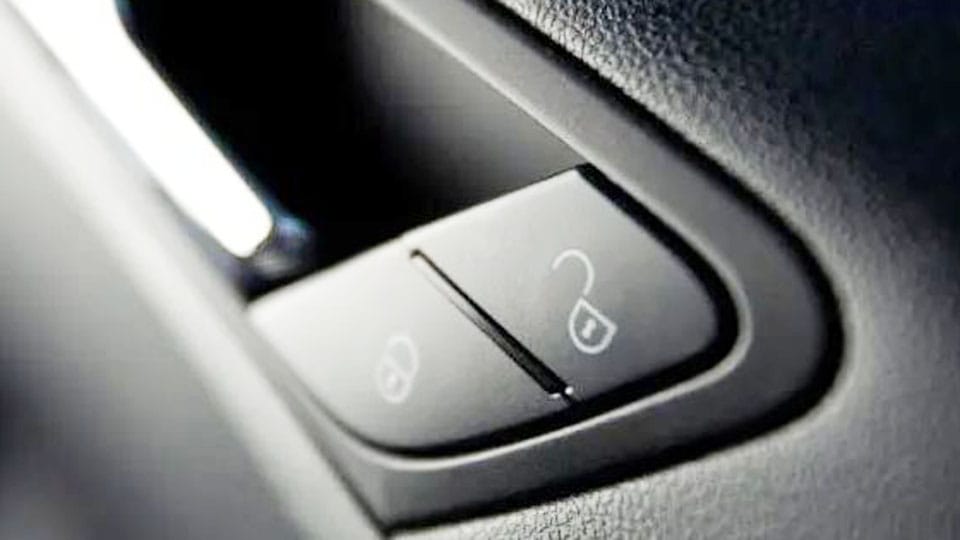
Choose the brush by crevice shape: thin, flexible detailing brushes for seams and vents, firmer short-bristle brushes for textured trim, and a soft, narrow brush for screens and buttons. The wrong shape drives grit deeper, marks soft plastics, and leaves dust packed in corners. This guide compares brush head size, ferrule flex, and bristle type for common interior gaps.
A common default for most interior crevices is an ultra-soft detailing brush. It gives enough agitation for dust and light grime without forcing bristles into delicate switchgear, piano-black edges, or stitched leather seams.
Quick comparison
| Product | Badge | Best for | Price | ||
|---|---|---|---|---|---|
 | Detail Dudes Car Detailing Brush Set 3-pcDetail Dudes | Our pick | 3-pc · soft boar hair · metal-free | $15.99 Price as of 13 Nov 2026 | View |
 | Detail Factory – Synthetic Detailing Brushes – BlackDetail Factory | Also great | 2-pack · ultra-soft synthetic · metal-free | $21.95 Price as of 13 Nov 2026 | View |
 | 12 Pcs Fan Cleaner BrushQixiang CB | Budget pick | 12-pack · microfiber · washable cover | $7.49 Price as of 13 Nov 2026 | View |
 | 9Pcs Double-Ended Cleaning Brushes Set Nylon All PurposeWY LIGHTING LEVEL | Pair with it | 9-pc · dual-ended nylon · mini crevice | $8.49 Price as of 13 Nov 2026 | View |
 | Detail Factory Boar Hair Detailing Brush SetDetail Factory | Upgrade pick | Boar hair · heavy-duty scrub · metal-free | $21.95 Price as of 13 Nov 2026 | View |
Start with the gap, then match the tool. A vent slot, a button cluster, and a textured dash grain need different head shapes, even when all three look “small.”
For most cabin cleaning, keep one dry dusting brush and one brush reserved for wet cleaner application. That split helps prevent streaks, residue, and moisture in switches.
How we chose
The main filter is crevice shape. A brush that fits flush in a vent slat can be a poor choice at a stitched seam or around a piano-black bezel.
Surface risk comes next. Ultra-gloss trim, screens, and soft-touch plastics need a softer head and better control than textured plastics or rubberized trim.
Head size and ferrule control decide reach. Smaller heads fit tighter gaps; flexible ferrules help where a rigid ferrule cannot sit flat.
Dusting tools and wet-application tools are kept separate. That avoids dragging moisture into switches and keeps dressing off the wrong surface.
Ultra-soft detailing brush: best for sensitive crevices
This is the safest default for screens, buttons, vents, and leather seams. Based on the published product details, it uses ultra-soft synthetic bristles and a metal-free build, which suits sensitive interior surfaces where scratch risk matters more than scrubbing force.
The useful size range here is 16–24 mm. That lines up with the guide’s interior-control and vent guidance, and it gives enough contact area to lift dust without bunching bristles into the gap.
It is a good fit when you want the softest brush that still removes dirt. The drawback is simple: very sticky residue or packed grit may need a second pass, a dedicated cleaner, or a different brush with more bite.
Detail Dudes boar hair set: best for dusting vents and trim
This set suits vents, seams, trim edges, and door handles where gentle agitation helps lift dust. The published details call out soft boar hair, metal-free handles, and compatibility with interior cleaners and degreasers, which makes it a practical all-round dusting option for cabin work.
Boar hair can feel better than firmer synthetic bristles on textured plastics because it dusts without a harsh edge. It is still a brush for controlled dusting and light cleaning, not a cure for heavy, oily buildup in narrow switch gaps.
The drawback is that natural bristles can vary a bit more in feel from one brush to another, and they are less precise than an ultra-soft synthetic head on screens or glossy black trim.
Qixiang CB microfiber vent brush: best for cleaner application
This is the better pick when the job is product placement rather than scrubbing. The published details describe a microfiber fan cleaner brush with a washable cover, built for narrow car vents and other tight spots, which makes it useful for applying cleaner or dust collection in vent channels.
Foam and microfiber-style tools are best treated as application aids. They can spread cleaner evenly into vent slats or apply dressing to plastic trim accurately, but they are not the main answer for dried-on grime packed into seams.
The drawback is that these tools can hold moisture longer than a dry detailing brush, so they are easy to overuse. Too much liquid can leave residue in textured plastics or get pushed toward switches.
Detail Factory boar hair set: best for textured plastics
This set is aimed at textured plastic, trim, and longer interior sessions where grip matters. Based on the published product details, it uses boar hair bristles with a metal-free build and an ergonomic handle, which fits repeat dusting and light scrub work on harder cabin textures.
For interior crevices, boar hair is useful when a surface needs more agitation than an ultra-soft synthetic brush provides. It works well on textured plastics and trim grains, but it is still not the first choice for screens, piano-black edges, or tiny switch seams.
The drawback is that the heavier scrub feel can be too much for sensitive gloss trim. If the gap is delicate, step down to a softer, smaller head.
WY LIGHTING LEVEL mini crevice brushes: best for awkward gaps
This set is the budget option for small gaps that need a narrow head and a firmer touch. The published details describe dual-ended nylon brushes with flexible bristles, which gives you two sizes in one tool for maintenance work around corners, small seams, and compact gaps.
It can help in places where dust sits in a tight corner and a soft brush bends away too easily. The drawback is that nylon crevice brushes are easier to misuse on glossy trim and soft plastics, especially if you press hard or use them dry on dusty paint-like surfaces inside the cabin.
For the most delicate interior surfaces, this is not the first pick. Use it where the material is tougher and the shape is awkward.
What is the best brush for cleaning car interior crevices?
The best brush is the one that matches the gap and the surface. For most interior crevices, an ultra-soft detailing brush is the safest default because it reaches seams, vents, and buttons without adding much scratch risk. Use boar hair for textured plastics, foam for cleaner application, and a flexible ferrule where the gap angle is awkward.
That is the main rule. A soft brush with the wrong shape still fails if the head is too large, the ferrule is too stiff, or the bristles are wrong for the finish.
Can I use a detailing brush on car air vents?
Yes, and vents are one of the main reasons to buy a detailing brush. Use a small, soft head that can follow the slat shape, and keep the motion light so dust lifts out instead of getting pushed deeper into the vent track. The safest pairing is a dry ultra-soft brush for dust and a foam or microfiber tool for cleaner application.
For very narrow vent vanes, 16 mm is the precision size that usually makes the most sense. If the vent face is larger or the grille has more open area, 24 mm can give better coverage without losing control.
Should you use soft or stiff bristles?
Soft bristles are the safer choice for most interior cleaning because they reduce the chance of marking screens, piano-black trim, and soft plastics. Stiffer bristles have a place on textured plastics and heavier soil, but they should stay away from delicate edges, stitched leather, and gloss bezels where pressure marks show quickly.
A firmer brush only makes sense when the surface is already tough and the dirt is bonded. Even then, it should be a controlled brush with a small head, not a stiff household brush with an unforgiving ferrule.
Interior crevice brush selector
Use this matrix before you buy. It maps the shape of the gap to the brush geometry, so you are choosing by access and surface risk instead of by softness alone.
| Crevice type | Surface risk | Recommended brush type | Ideal head size | Safe cleaner | Common mistake |
|---|---|---|---|---|---|
| Vents | Medium, with dust trapped behind slats | Ultra-soft detailing brush or boars-hair dash brush | 16 mm to 24 mm | Interior detail cleaner on the brush, light mist only if needed | Pushing dust deeper between vanes |
| Button clusters | High, due to switches and printed icons | Ultra-soft detailing brush | 16 mm | Dry dusting first, then a lightly dampened brush | Overspray into switches |
| Stitching | High, because threads can snag | Ultra-soft detailing brush | 16 mm | Dry brush or very light cleaner on the bristles | Scrubbing across the stitch line |
| Piano-black trim | Very high, because marks show easily | Ultra-soft detailing brush | 16 mm | Dry dusting only unless the cleaner is panel-safe and minimal | Using a stiff brush or heavy pressure |
| Leather seams | High, due to finish sensitivity and thread edges | Ultra-soft detailing brush | 16 mm | Leather-safe cleaner applied lightly to the brush | Soaking the seam |
| Textured plastics | Medium, but residue can lodge in grain | Boars-hair dash brush or rubber-ferrule detailing brush | 24 mm | Trim-safe cleaner or interior APC diluted to label directions | Leaving cleaner in the grain |
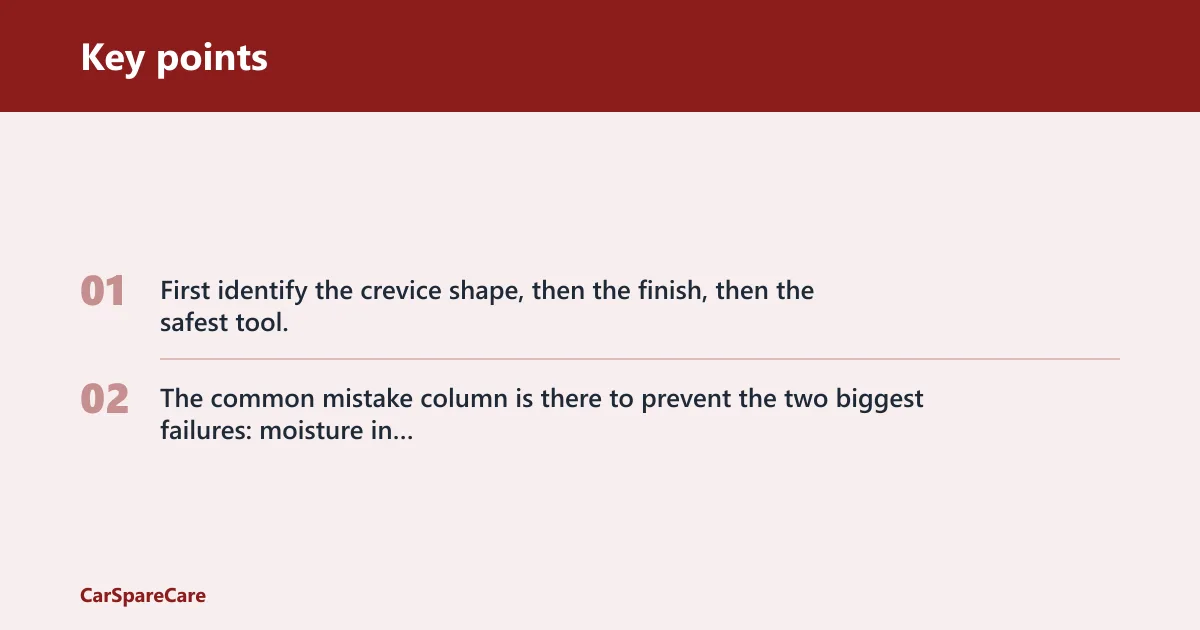
Read the matrix from left to right. First identify the crevice shape, then the finish, then the safest tool. The common mistake column is there to prevent the two biggest failures: moisture in controls and residue in textured grain.
How do I clean tight car crevices without scratching surfaces?
Work dry first, then add cleaner only where needed. Start with a soft brush sized to the gap, use short strokes that follow the crevice shape, and keep the bristles from loading up with loose grit. That sequence lowers scratch risk and keeps dust from smearing into a film.
A common first-timer mistake is hitting a dusty seam with a wet brush right away. That turns loose grit into slurry, which then gets trapped in stitching, buttons, and the corners of piano-black trim.
- Vacuum loose debris around the gap before brushing.
- Use a dry ultra-soft brush for the first pass.
- Choose 16 mm for vents, stitching, and button gaps; move to 24 mm only when the gap is larger and the surface is less delicate.
- For textured plastics, use a boar hair brush with short, controlled strokes.
- Apply cleaner to the brush, not directly into the crevice, unless the product label allows direct application.
- Wipe residue immediately with a clean microfiber towel.
Say your center stack has narrow buttons beside piano-black trim. A 16 mm ultra-soft brush can clear the edges without flooding the switches, while a damp towel would leave streaks and may push cleaner into the button gaps.
What size detailing brush works best for vents and seams?
For vents and seams, 16 mm is the precision size and the best place to start. It fits small controls, badges, stitching, and tight crevices without opening the bristles so far that control drops. Move up to 24 mm for knobs, emblems, wheel nuts, and latches when the area is a bit larger.
Use 30 mm only when the surface is wider, such as trims or grills, and soil remains after a second pass. Reserve 40 mm for larger panels and tougher plastics, not for delicate gloss trim or tiny cabin gaps.
Are boars hair brushes better than synthetic brushes for interiors?
Neither is always better. Boar hair is often better for textured plastics, vents, and dusting around buttons because the natural bristles have gentle agitation and good feel. Ultra-soft synthetic brushes are better for screens, piano-black trim, and other delicate surfaces where consistency and softness matter most.
The practical split is simple: use boar hair for texture and dust, and use ultra-soft synthetic for sensitive finishes. A mixed interior kit usually needs both.
Can foam detailing brushes clean air vents?
Yes, but mainly for cleaner application rather than scrubbing. Foam detailing brushes can place cleaner into vent slats and can also apply dressing to plastic trim accurately. They are useful when you want coverage without a wet spray hitting switches or surrounding trim.
They are not the main tool for dried-on dirt. Heavy buildup still needs a proper detailing brush with enough bristle action to lift the grime before you wipe it away.
How do I stop dust from coming back after cleaning car crevices?
Dust returns faster when residue is left behind. Keep cleaners light, wipe away any film, and avoid overapplying dressing to textured plastics. A dry final pass with a clean ultra-soft brush can remove loose debris that settled after the first wipe.
Also separate interior and exterior tools. A brush used on wheel arches or lower body panels can carry grit that belongs nowhere near vents, seams, or screens.
Which one should you buy?
For most owners, the best single buy is the Ultra-Soft Detailing Brush from Detail Factory. It has the safest profile for vents, buttons, screens, and leather seams, which makes it the easiest all-purpose interior pick when you want one brush to cover the highest-risk areas.
For delicate interiors, choose the ultra-soft synthetic brush first and keep it dry for dusting. For textured trim and mixed dusting, the Detail Dudes boar hair set or the Detail Factory boar hair set gives more bite while staying gentle enough for cabin use.
For awkward angles and tight, irregular gaps, add the rubber-ferrule style only if the brush can sit flush where a rigid ferrule cannot. That matters around mirror bases, trim joins, and similar compound shapes.
Suppose a dash has dusty vents, sticky buttons, and a piano-black surround. Start with the 16 mm ultra-soft brush on the buttons and edge trim, then use a boar hair brush on the textured vent frame, and keep any wet cleaner on the brush rather than in the switch openings.
Frequently asked questions
What brush is safe for dashboard buttons and seams?
The safest choice is an ultra-soft detailing brush in the 16 mm range. It gives enough reach for button edges, stitching, and small gaps without the harder contact that can mark glossy trim or press debris into the seam. Keep the brush nearly dry around switches.
Should you use soft or stiff bristles for car interior cleaning?
Soft bristles are safer for most interior work. Stiff bristles can help on textured plastics or stubborn dirt, but they are easier to misuse on screens, piano-black trim, and leather seams. If the surface is delicate, start soft and only move firmer when the material is clearly tough.

Hi, I’m Melvin, an automobile engineer with extensive experience in automobile equipment. I currently work for a local automobile firm, where I specialize in the car parts industry. I’ve had the opportunity to collaborate with seasoned inspectors, gaining invaluable hands-on experience that goes beyond just theory.
My passion for automotive care started at a young age, which led me to create CarSpareCare. Through CarSpareCare, I share the knowledge and skills I’ve acquired over the years to help others navigate the world of car maintenance and repairs.
My goal is to provide practical tutorials, essential safety advice, and the latest industry insights so that anyone—whether a beginner or an expert—can confidently tackle their automotive projects.