For fabric seats, start with a water-based upholstery cleaner for light dust, a dedicated enzyme or oxygen cleaner for set-in organic stains, and an extractor-safe pre-spray plus wet vac for deep spills; match the cleaner to the stain, not the brand. The wrong product can leave rings, stiffen fibers, or push the stain deeper. This guide shows how to pick the best cleaner by stain type, fabric safety, and cleaning method.
Quick comparison
| Product | Badge | Best for | Price | ||
|---|---|---|---|---|---|
 | Chemical Guys, Citrus Fabric & Carpet Cleaner, Ready-to-UseChemical Guys | Our pick | 16 oz · ready-to-use · citrus spray | $10.99 Price as of 12 Nov 2026 | View |
 | BISSELL Little Green Mini Portable Carpet CleanerBissell | Upgrade pick | Portable cleaner · tough stain tool · upholstery | $79.99 Price as of 12 Nov 2026 | View |
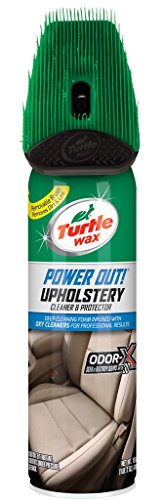 | Turtle Wax T-246R1 Power Out! Upholstery Cleaner OdorTurtle Wax | Also great | 18 fl oz · odor eliminator · brush | $5.29 Price as of 12 Nov 2026 | View |
 | Resolve Carpet Cleaner SprayResolve | Budget pick | 32 fl oz · trigger spray · spot remover | $9.46 Price as of 12 Nov 2026 | View |
Fabric seats need a different approach than hard trim because textile fibers hold soil, body oils, and moisture. The right pick depends on the problem: quick dust, stubborn spots, or a seat that needs deep moisture removal.
The table below maps the problem to the safest product category, with the tool, dwell time, and drying risk that matter most on cloth.
How we chose
We compared the listed products by four things that matter on fabric seats: cleaning strength on textile stains, residue and drying risk, tool needs and ease of use, and whether the formula is also safe on other interior surfaces. The ranking also reflects the product details published for each item and the known strengths called out in the source review of eight products.
For general interior detailers, finish matters. A lighter finish usually feels cleaner on cloth because it is less likely to leave a film that attracts dust. For upholstery cleaners, the key is whether the product can lift soil from fibers without overwetting the seat.
| Problem type | Seat material | Safest product category | Recommended tools | Dwell time | Drying-risk note |
|---|---|---|---|---|---|
| Light dust and body oils | Cloth or fabric seat | Water-based interior cleaner or light upholstery cleaner | Microfiber cloth, soft interior brush | 30 to 60 seconds | Low risk if you mist lightly and wipe dry; avoid soaking the bolsters |
| Coffee, soda, food stains | Porous textile upholstery | Dedicated upholstery spot cleaner or enzyme cleaner | Microfiber cloth, soft-bristled interior brush | 2 to 5 minutes | Moderate risk of wicking if you overapply; blot before full wipe |
| Grease, smoke residue, pet mess | Cloth seat with embedded soil | Upholstery cleaner with agitation, or enzyme formula for odor-prone spots | Brush, microfiber cloth, wet/dry vacuum if available | 3 to 7 minutes | Higher risk if residue stays in the fibers; repeat with light passes instead of one heavy soak |
| Deep spill or repeated buildup | Fabric seat, especially cushion seams | Extractor-safe pre-spray plus wet extraction | Extractor or wet/dry vacuum, brush, microfiber towel | 5 minutes pre-spray, then extract | Highest drying risk; remove moisture quickly to limit wicking and water spots |
Chemical Guys Citrus Fabric & Carpet Cleaner: best for quick fabric stains
This fits drivers who want a ready-to-use spray for common seat spills, light grime, and small fabric stains. Based on the product details, the foaming action helps lift dirt from fibers, and it works on seats, carpet, and mats, so it suits a quick spot-clean routine.
The main advantage is convenience. You do not need to mix anything, and the foam helps keep the spray localized on the stain instead of flooding the panel.
The drawback is that a spray-only product is not the right answer for deep, set-in stains or a wet extraction job. On heavily soiled cloth, you may need multiple light passes and a separate drying step.
Bissell Little Green Mini Portable Carpet Cleaner: best for deep extraction
This is the strongest fit for fabric seats that need spray, scrub, and suction in one tool. It suits deep spills, repeated buildup, odor-prone seats, and any cloth upholstery where removing moisture matters as much as lifting the stain.
Its 4-inch tough stain tool gives you a focused cleaning path for seat cushions and bolsters. For wet-cleaning fabric, that matters because you want to control the amount of liquid you put in and pull back out.
The drawback is cost and bulk. It is more tool than many owners need for a light dusting job, and it makes less sense if you only want a quick wipe-down.
Turtle Wax Power Out! Upholstery Cleaner: best for ground-in fabric grime
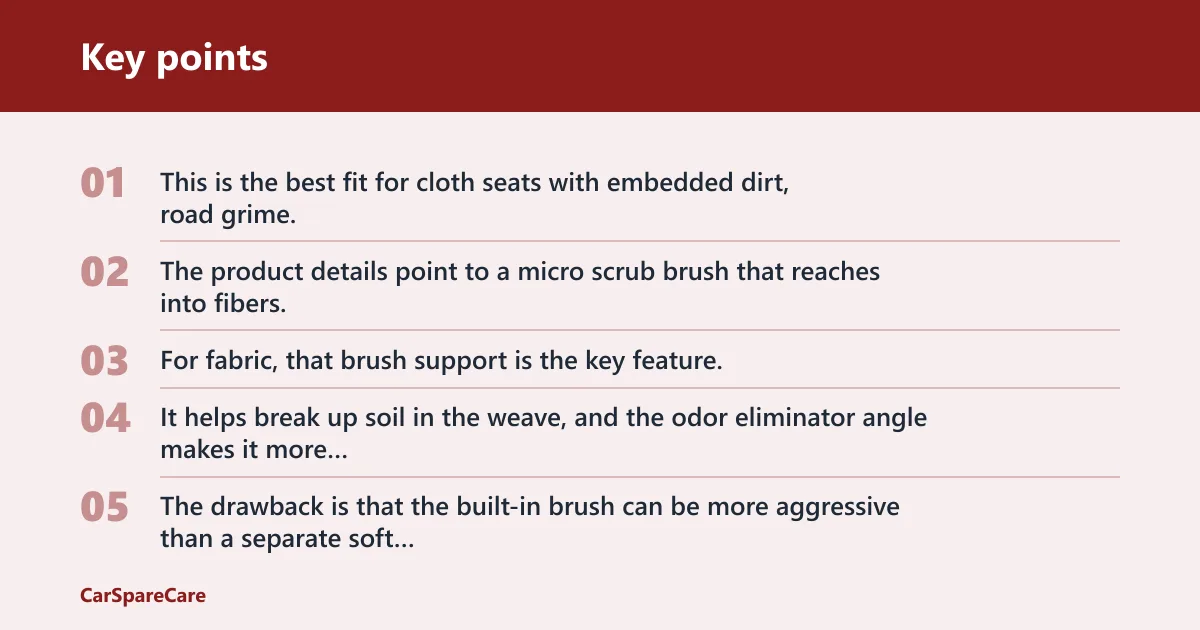
This is the best fit for cloth seats with embedded dirt, road grime, and odor-prone buildup. The product details point to a micro scrub brush that reaches into fibers, which is useful when stain removal needs agitation instead of a simple wipe.
For fabric, that brush support is the key feature. It helps break up soil in the weave, and the odor eliminator angle makes it more practical for seats that have picked up stale smells from spills or daily use.
The drawback is that the built-in brush can be more aggressive than a separate soft interior brush if you press too hard. Use light pressure on delicate fabric and stop once the soil starts to move.
Clean upholstery by matching the method to the fiber and the soil level. Light buildup needs a low-residue spray and microfiber wipe. Heavier buildup needs controlled agitation, then moisture removal so the fabric does not dry with a halo or stiff patch.
For cloth seats, keep the cleaner off the cushion as much as possible. Spray lightly, brush in small circles, and blot. If the seat foam is already saturated, use extraction instead of more spray.
What to avoid on fabric seats
Avoid bleach, harsh solvent cleaners, and soaking the seat until it feels wet through the cushion. Avoid stiff brushes that can fuzz the fibers. Avoid thick protectants on the seating surface unless the product is designed for fabric, because a heavy finish can change the feel and attract more dust.
Also avoid assuming that an interior detailer is enough for every cloth-seat problem. Some detailers leave a light finish and no UV protection, which may be fine for a quick wipe on hard trim but is not a full answer for embedded stains in porous textile upholstery.
Resolve Carpet Cleaner Spray: best for stubborn spot treatment
This is a practical choice for isolated stains that need targeted treatment, such as coffee marks, food spills, or other set-in spots on compatible upholstery. The trigger spray makes it easier to aim at the stain without soaking the whole seat.
It is a better fit for spot removal than for a full-seat refresh. That helps when you want to treat one seat panel, not the entire cabin.
The drawback is that a spot remover can be too narrow in scope for smoke residue, heavy pet mess, or deep buildup in seam lines. Those cases usually need more agitation or extraction.
Which one should you buy?
Choose by problem first. For light dust, body oils, and small touch-ups, pick a ready-to-use upholstery spray such as Chemical Guys Citrus Fabric & Carpet Cleaner. For stubborn stains, go with a spot remover like Resolve, or Turtle Wax if the seat needs more agitation and odor help. For deep spills and repeated buildup, the Bissell extractor is the safest route.
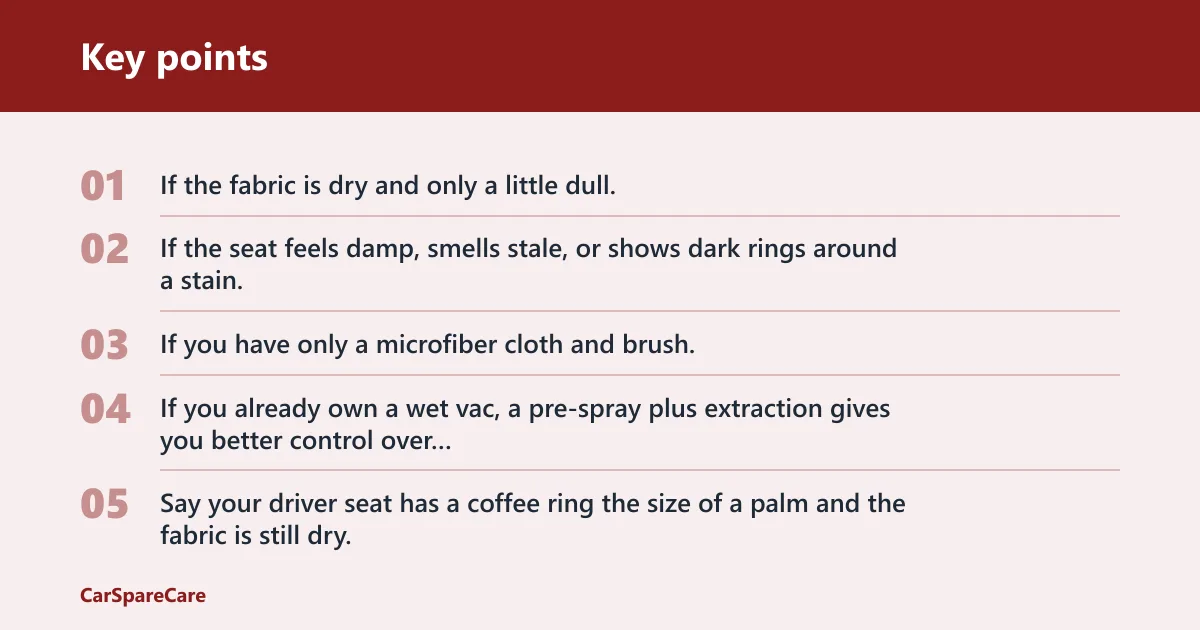
Choose by seat condition next. If the fabric is dry and only a little dull, a low-residue cleaner and microfiber towel are enough. If the seat feels damp, smells stale, or shows dark rings around a stain, use less liquid per pass and remove moisture with a wet/dry vacuum or extractor.
Choose by the tools you already own. If you have only a microfiber cloth and brush, buy a spray cleaner that can be agitated lightly. If you already own a wet vac, a pre-spray plus extraction gives you better control over wicking and drying time. Say your driver seat has a coffee ring the size of a palm and the fabric is still dry; a spot cleaner with gentle brushing is enough. Suppose the same spill soaked into the cushion seam and left a dark halo; extraction becomes the safer choice.
Light dust and body oils
Use a low-residue interior cleaner or upholstery spray. Mist the fabric, work it with a microfiber cloth, then blot dry. A soft interior brush can help lift the top layer of soil without roughing up the weave.
Coffee, food, and drink stains
Use a targeted upholstery cleaner or enzyme formula. Apply a small amount, let it dwell for a short window, agitate gently, and blot before it dries on the surface. Too much liquid can push the stain deeper into the cushion.
Grease, smoke residue, and pet mess
Use a stronger upholstery cleaner with brush agitation, and move to extraction if odor or residue stays in the fibers. Grease and smoke residue are harder to remove with a wipe alone because they cling to textile surfaces. Pet mess often needs odor treatment as well as stain removal.
When to use extraction
Use extraction when the stain is large, repeated, or already wicked into the cushion. A wet/dry vacuum or extractor pulls moisture back out, which lowers the chance of water spots and stale damp smell. It is the safest route for deeper cleaning jobs on porous fabric.
Quick comparison
For a fast decision, match the product to the stain type and the amount of moisture the seat can handle. The table above is the simplest way to avoid overwetting a porous seat, especially if the fabric already has visible rings or a rough feel from old residue.
If you are choosing between a general interior cleaner and an upholstery cleaner, use the upholstery cleaner for the seat itself. A general car interior cleaner can still be useful on dashboards, steering wheels, and other hard surfaces, but cloth seats often need a formula made for textile fibers.
Start with a spot test in a hidden area, then remove loose dirt before you add cleaner. For fabric seats, the goal is to lift soil without saturating the cushion, so use short passes, light pressure, and dry the surface as you go.
- Vacuum the seat to remove loose dirt, crumbs, and pet hair.
- Test the cleaner on an unseen section, such as under the seat or near a rear seam.
- Apply a small amount of cleaner to the stain or to a microfiber cloth.
- Agitate gently with a soft-bristled interior brush if the stain is embedded.
- Blot with a clean microfiber cloth until the loosened soil transfers out.
- If needed, repeat with another light pass rather than one heavy soak.
- Dry with a towel and allow airflow; use extraction for larger wet jobs.
A common first-timer mistake is treating fabric like a hard plastic panel. A seat panel that looks only damp on top can still hold enough liquid inside to wick upward later, which leaves a ring after it seems dry.
What to use to clean car interior seats
Use a fabric-safe upholstery cleaner for cloth seats, a microfiber cloth for wiping and drying, and a soft interior brush for agitation. For deep spills, add a wet/dry vacuum or extractor so you can remove moisture before it migrates back to the surface.
If the seat has only dust or body oils, a light cleaner is enough. If the stain has set in, move up to a dedicated upholstery formula or a stain remover designed for textile surfaces. If the seat is still wet from a spill, skip heavy scrubbing and remove liquid first.
Which is the best car upholstery cleaner?
The best upholstery cleaner is the one that matches the stain and the cleaning method you can actually use. For most cloth seats, a ready-to-use upholstery spray is the safest all-around choice for light to moderate soil. For deep stains or odors, an extractor-safe cleaner with suction is better.
Based on the published product details and the source review of eight products, Turtle Wax Power Out! is the strongest fit for ground-in upholstery grime, while Bissell Little Green Mini is the better choice when you need spray, scrub, and suction together. Chemical Guys Citrus Fabric & Carpet Cleaner is the simplest quick-use option.
Best interior cleaner: light cleanup
A light cleanup cleaner should be safe on seats and other cabin surfaces, leave minimal residue, and wipe off cleanly. That makes it useful for dashboards, steering wheels, door cards, and other hard surfaces where you want a clean finish without a thick protective layer.
For cloth seats, this kind of cleaner works best when the seat only needs a refresh. It is not the right pick for stains that have sunk into the fibers, because a cleaner made for general interior surfaces may not agitate or lift textile soil well enough.
The source review named Mothers Speed Interior Detailer as Best Overall, and it notes that the finish is relatively light and leaves no UV protection. That kind of profile suits quick wipe-downs more than stain removal, which is why it belongs in the light-cleanup lane rather than the deep-fabric lane.
Which cleaner works best on stubborn seat stains?
For stubborn seat stains, a dedicated upholstery stain remover or a portable extractor works best. Use a spot cleaner for isolated marks and move to extraction when the stain is large, old, greasy, or already trapped deep in the fabric.
Coffee and soda stains usually respond to a spot cleaner plus light brushing. Grease and smoke residue often need more agitation and repeated passes. Pet mess is different again, because odor control matters along with visible stain removal.
If a stain keeps returning after drying, that usually means residue is still in the cushion. A wet vac or extractor is the cleaner choice because it removes more of the liquid that causes wicking.
Frequently asked questions
What to use to clean car interior seats: use a fabric-safe upholstery cleaner
Use a fabric-safe upholstery cleaner for cloth seats, plus a microfiber cloth and a soft brush. For deep spills, add a wet/dry vacuum or extractor. Match the cleaner to the stain: light dust gets a mild spray, while coffee, grease, or odor needs a stronger upholstery formula.
Which is the best car upholstery cleaner: the best upholstery cleaner?
The best upholstery cleaner is the one that matches the seat condition and your tools. For most cloth seats, a ready-to-use upholstery spray is the easiest safe choice. For heavier buildup, a portable extractor is stronger because it cleans and removes moisture in one step.
Can I use an interior detailer on cloth seats?
You can use some interior detailers on cloth seats for light cleanup, but they are not the best choice for stains. Many are built for dashboards, steering wheels, and trim, and may leave too much finish or too little cleaning power for porous fabric.
What should I avoid using on fabric car seats?
Avoid bleach, harsh solvents, and soaking the seat with too much liquid. Avoid stiff brushes that can rough up fibers. Also avoid thick protective products on the seat surface unless they are made for fabric, because they can change the feel and attract dust.

Hi, I’m Melvin, an automobile engineer with extensive experience in automobile equipment. I currently work for a local automobile firm, where I specialize in the car parts industry. I’ve had the opportunity to collaborate with seasoned inspectors, gaining invaluable hands-on experience that goes beyond just theory.
My passion for automotive care started at a young age, which led me to create CarSpareCare. Through CarSpareCare, I share the knowledge and skills I’ve acquired over the years to help others navigate the world of car maintenance and repairs.
My goal is to provide practical tutorials, essential safety advice, and the latest industry insights so that anyone—whether a beginner or an expert—can confidently tackle their automotive projects.